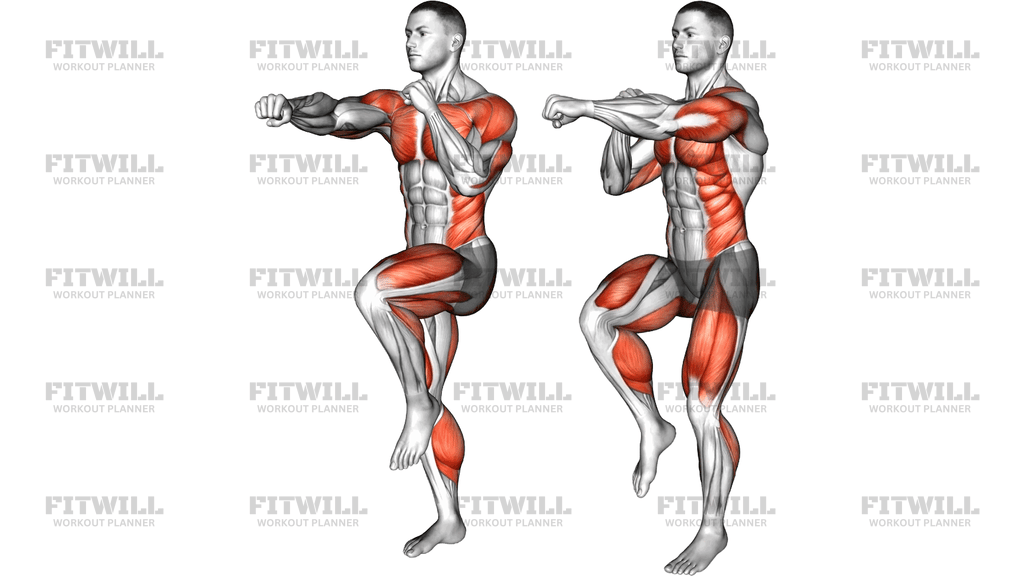
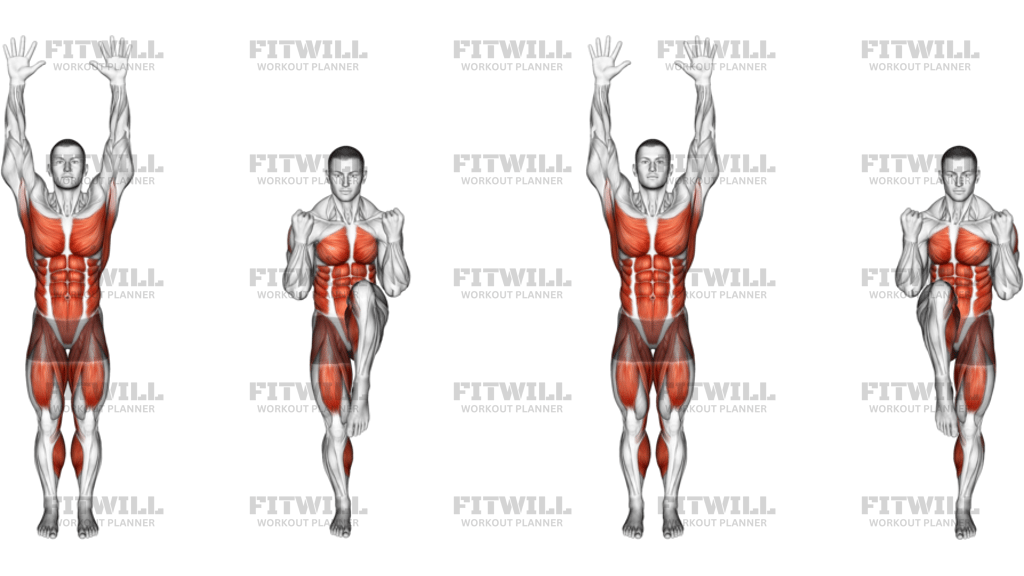
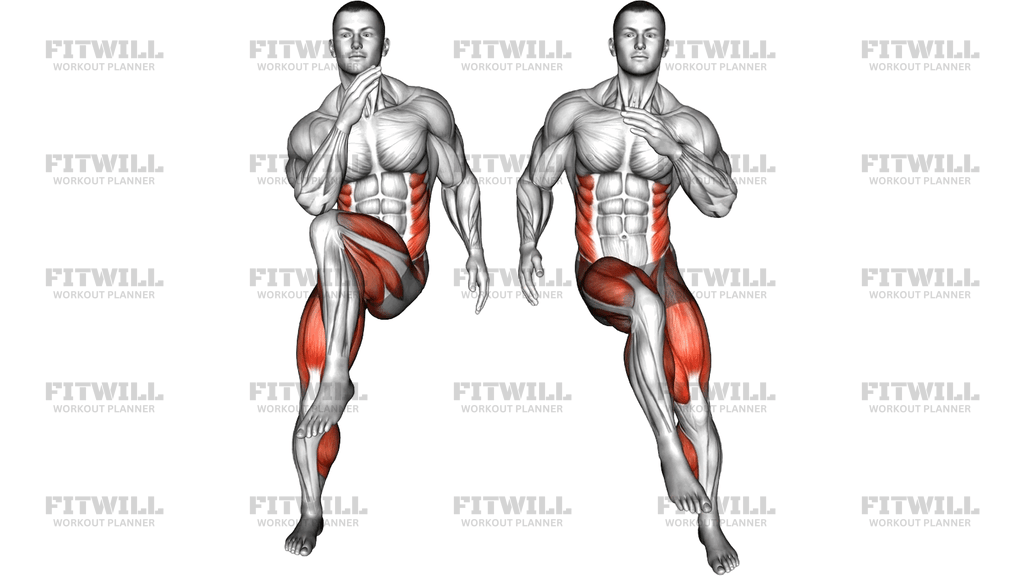
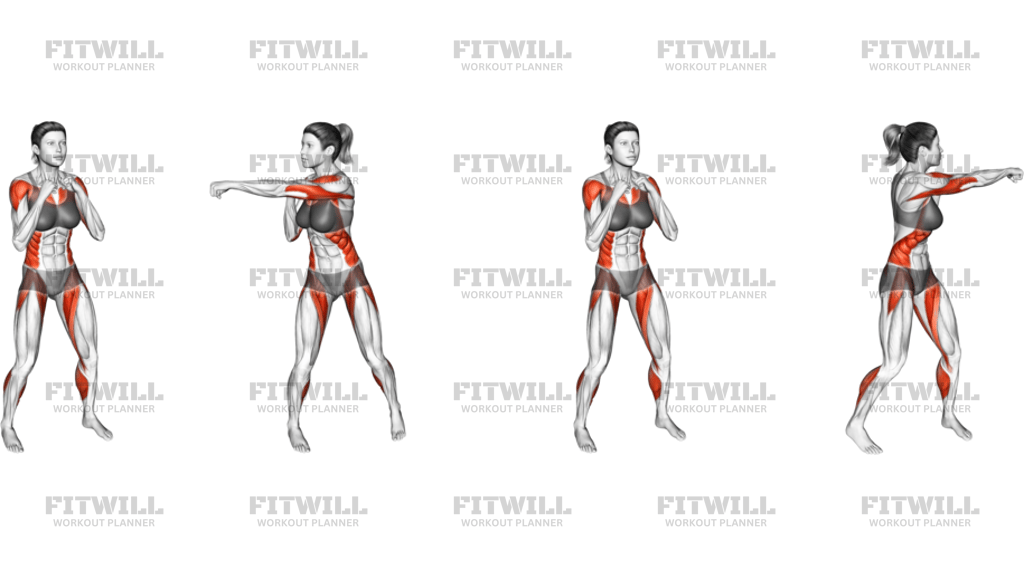
Side Kick Burpee
Side Kick Burpee is a bodyweight plyometric drill that combines a burpee with a side kick for conditioning, coordination, and total-body power. The burpee portion raises the heart rate and loads the shoulders, trunk, and legs, while the side kick adds a sharper hip-driven finish that challenges balance, timing, and control. It is a useful choice when you want explosive work without external load.
The exercise works best when the burpee and the kick stay connected instead of feeling like two separate movements. A clean rep starts from a stable standing position, drops to a strong plank, then rebounds into a controlled stand before the kick fires from the hip. If the body folds, twists, or lands heavily, the movement turns into rushed cardio instead of a quality plyometric drill.
The side kick is the detail that makes this variation different from a standard burpee. Keep the kicking knee chambered, rotate from the hip, and let the leg extend on a line you can control. The torso should stay tall enough to support the kick without leaning away or collapsing sideways. That makes the glutes, core, and stabilizers do useful work instead of letting momentum do the rep.
Because the movement is fast and repetitive, setup and spacing matter. Give yourself enough room to step or jump the feet back, stand fully, and kick without hitting a wall or another person. If your version includes a push-up, keep it crisp and shallow rather than forcing range. If not, move directly from plank to the pop-up and kick. The best sets stay smooth, quiet, and repeatable.
Use Side Kick Burpee for conditioning blocks, combat-sport style training, athletic circuits, or finishers where power and fatigue resistance matter. It is a good fit for intermediate exercisers who can hold a plank, land softly, and control the side kick. Beginners can regress it by stepping back instead of jumping and using a smaller kick until the sequence stays clean.
[ Workout Log & Planner ]
Put your next workout in Fitwill
Keep your plan and training log ready when you are.


Instructions
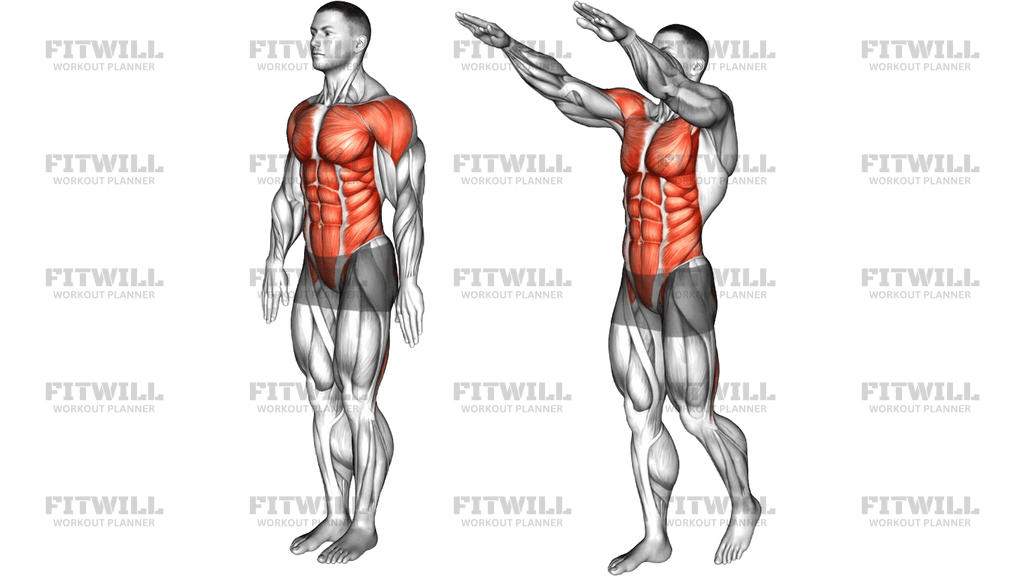
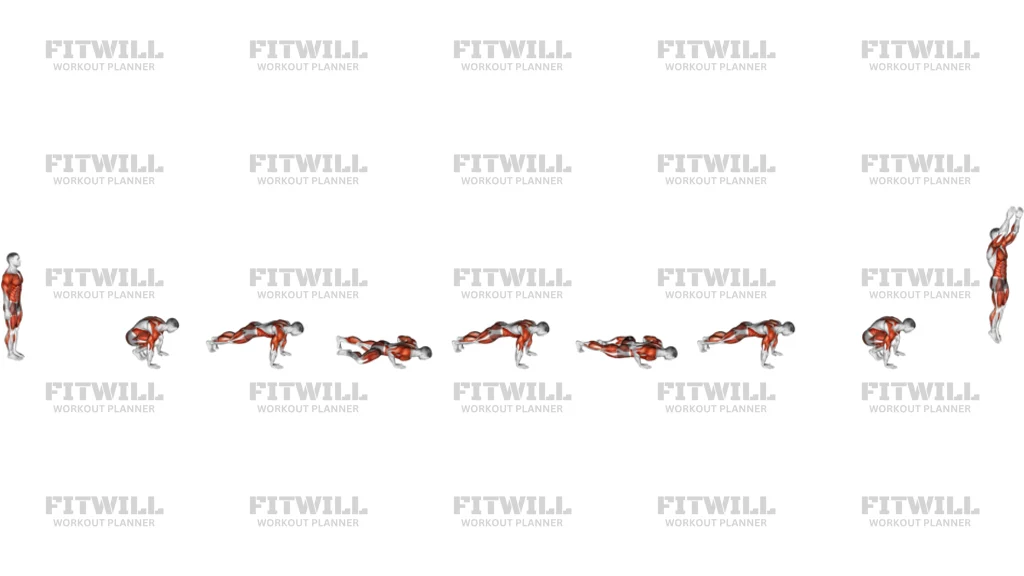
- Stand tall with your feet about hip-width apart and your hands relaxed in front of your chest or at your sides.
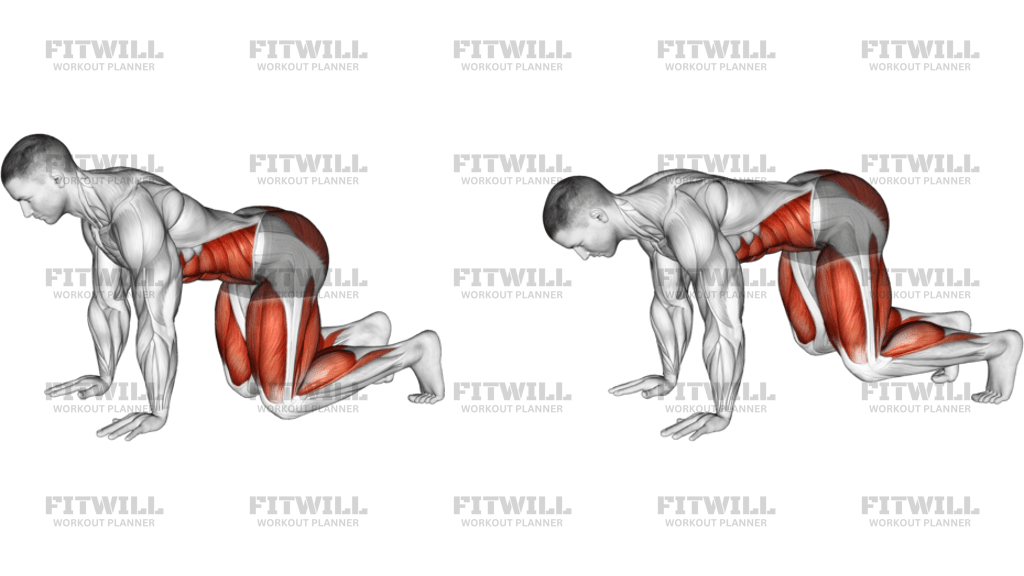
- Squat down, place both hands on the floor under your shoulders, and keep your weight centered over the whole foot.
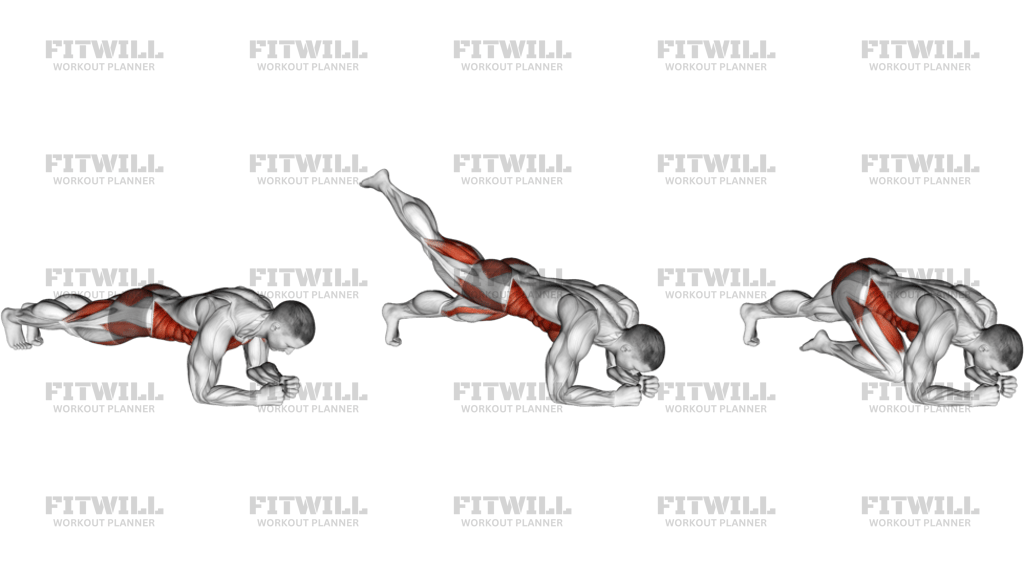
- Kick or step both feet back into a high plank so your shoulders stay stacked over your wrists and your body forms a straight line.
- Lower into the burpee portion only if your version includes a push-up; keep the chest and hips moving together instead of sagging at the waist.
- Press the floor away, then snap or step your feet back underneath you into a low squat.
- Stand up powerfully and shift onto the kicking leg while the other knee chambers toward the chest or hip.
- Drive the side kick out from the hip, keeping the torso upright and the supporting foot planted and stable.
- Retract the kicking leg, set the foot down softly, and flow directly into the next rep or alternate to the other side on the following rep.
Tips & Tricks
- Treat the plank as the checkpoint: if your low back sags before the kick, shorten the set or step the feet back instead of jumping.
- Keep the side kick chambered first; a sloppy swing from a straight leg usually means the hip is doing less work and the trunk is doing more.
- Land the feet quietly after the burpee. Loud landings usually mean the knees are collapsing inward or the rep is too fast.
- If the push-up portion breaks your rhythm, make it a plank-only burpee and preserve the quality of the kick.
- Aim the kick slightly above waist height only if you can keep the torso tall and the pelvis steady.
- Exhale on the stand and kick so the trunk stays braced through the explosive part of the rep.
- Use a smaller kick and slower tempo when the set starts to blur; speed should come from crisp transitions, not from losing shape.
- Clear enough floor space that the hands, feet, and kicking leg can all move freely without shortening the pattern.
Frequently Asked Questions
What muscles do Side Kick Burpees work?
They train the legs, glutes, shoulders, and core, with the side kick adding extra demand on the hip and trunk stabilizers.
Do I need to do a push-up in every rep?
Not always. Some versions include a push-up, while others go straight from plank back to the stand before the side kick.
Should I alternate the kicking leg?
Usually yes. Alternating sides keeps the drill balanced, but you can also finish a set on one side if the workout is written that way.
How high should the side kick go?
Only as high as you can kick without leaning away, twisting the low back, or losing balance on the support leg.
Is this a good beginner exercise?
Yes, if you scale it. Step the feet back instead of jumping and use a smaller kick until the burpee and kick stay coordinated.
What is the biggest form mistake?
Rushing the transition from burpee to kick. If the stand-up collapses or the kick becomes a swing, the rep loses its training value.
When should I use Side Kick Burpees in a workout?
They fit well in conditioning blocks, athletic circuits, or finishers where you want fast full-body effort and coordination work.
What can I do if my wrists or shoulders get tired?
Reduce the speed, step back instead of jumping, and shorten the set so the plank position stays solid.