Frankenstein Squat
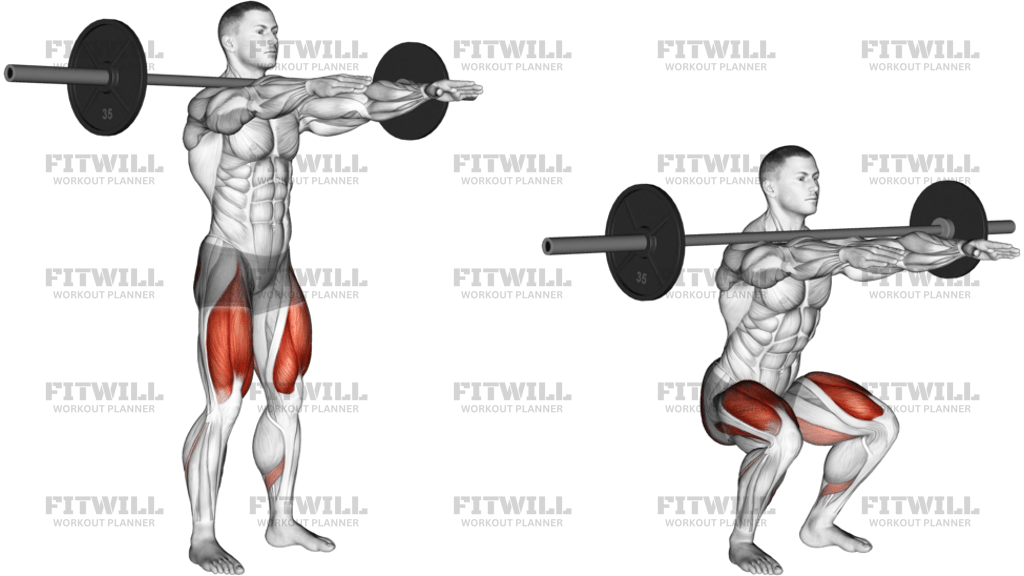
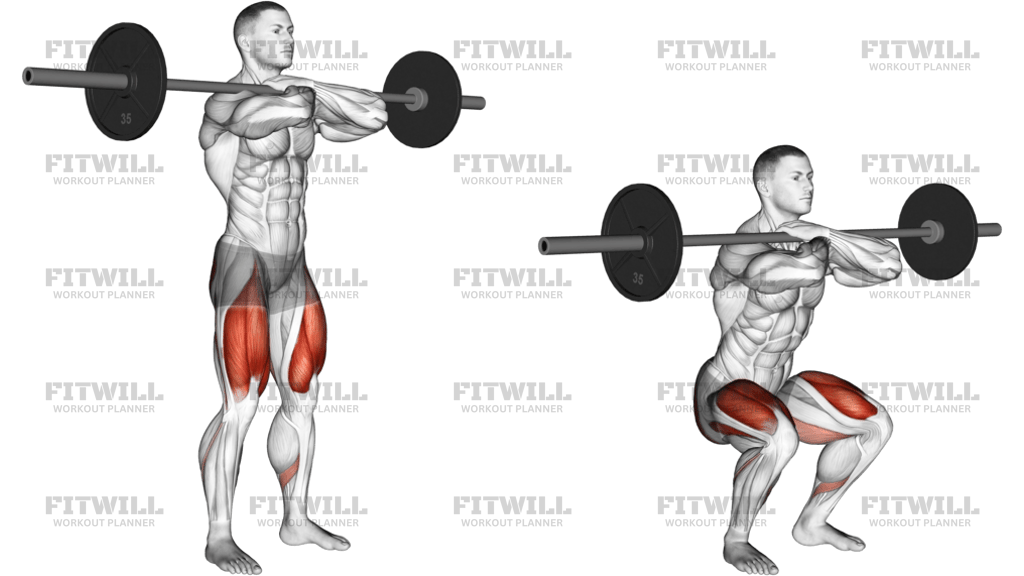
Frankenstein Squat is a barbell squat variation that keeps the arms straight out in front of the body while the bar sits across the front of the shoulders. That front-held position shifts the balance forward and forces a more upright torso, so the squat becomes a demanding test of quad strength, upper-back position, and trunk control rather than a relaxed sit-back pattern.
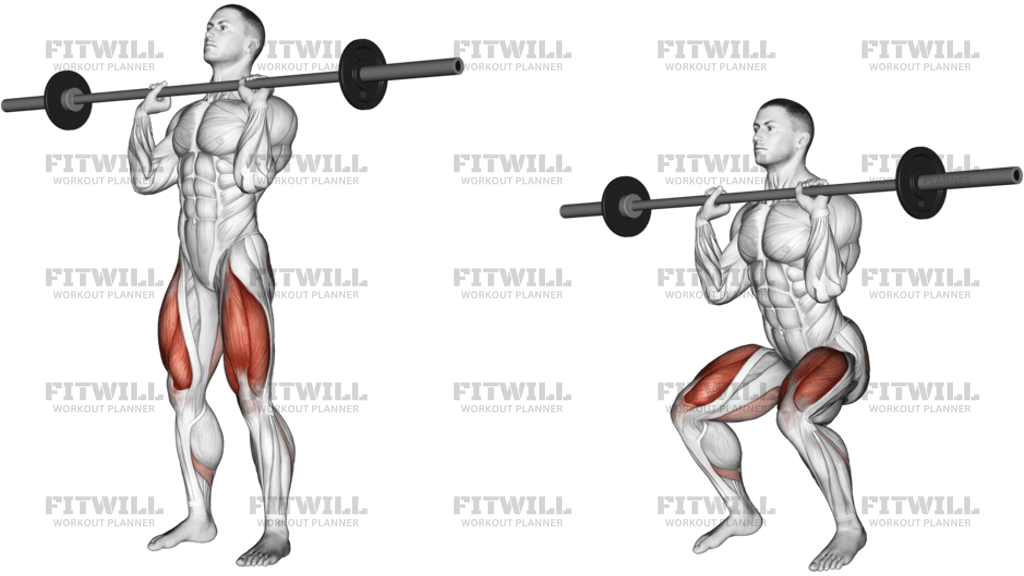
The exercise is especially useful when you want the knees, quads, and midline to do the work. In this version, the image shows the bar at shoulder height with the elbows extended, which makes it easier to spot a collapse in the chest, a soft brace, or a forward pitch. Because the load sits in front of the body, the rep feels honest very quickly: if the rack position or brace is off, the squat immediately gets harder.
A good Frankenstein Squat starts before the descent. Set the feet, lift the chest, brace the abdomen, and keep the upper arms parallel to the floor so the bar stays stable on the front of the shoulders. The goal is not to chase depth by rounding forward. The goal is to descend between the heels with control, keep the knees tracking over the toes, and stay tall enough that the bar does not roll or pull you forward.
This movement carries over well to front squats, clean receiving positions, and any training that benefits from stronger quads and better posture under load. It can also be a useful teaching tool for lifters who struggle to keep their torso upright in regular squats. The limiting factors are usually front rack comfort, thoracic extension, and core endurance, so the best progress comes from crisp reps with a load you can hold in position from start to finish.
Use a lighter load than you would for a back squat, especially if the shoulders, wrists, or upper back are the weak link. The safest reps are controlled on the way down, stable at the bottom, and smooth as you stand back up without bouncing, twisting, or letting the elbows drop. When the position stays clean, the movement becomes a strong quad-and-core builder with a very clear technique demand.
[ Workout Log & Planner ]
Put your next workout in Fitwill
Keep your plan and training log ready when you are.


Instructions
- Set a barbell across the fronts of your shoulders and lift your arms straight forward until they are parallel to the floor.
- Stand with your feet about shoulder-width apart, toes slightly turned out, and keep your chest tall before you descend.
- Grip the bar lightly with the hands, but do not let the elbows drop or the bar drift off the shoulder shelf.
- Take a breath and brace your trunk before you start the first rep.
- Sit down between your legs by bending the knees and hips together while keeping the torso as upright as you can.
- Keep your knees tracking over your toes and let the hips travel straight down instead of folding the chest forward.
- Reach the bottom with control, then drive through the midfoot and heels to stand back up.
- Keep the bar steady on the shoulders as you rise and avoid letting the elbows sag on the way up.
- Exhale near the top, reset your brace, and repeat for the planned number of reps.
Tips & Tricks
- Treat the straight-arm position as part of the exercise, not an afterthought; if the arms drop, the torso usually follows.
- Use a lighter barbell than your back squat because the front-held balance point makes the lift much stricter.
- Keep the rib cage stacked over the pelvis so the lower back does not take over as you descend.
- If your heels rise early, widen the stance slightly or reduce depth until your ankles can support the position.
- Let the knees travel forward enough to keep the torso upright; holding them too far back usually shifts the work away from the quads.
- Pause briefly at the bottom only if you can keep the bar fixed and the chest tall; do not relax in the hole.
- A controlled lowering phase makes this exercise more productive than bouncing out of the bottom.
- If the front of the shoulders feels strained, check bar placement and hand height before adding load.
Frequently Asked Questions
What muscle does Frankenstein Squat target most?
It primarily targets the quadriceps, with the glutes and core working hard to keep the torso upright and the bar stable.
Can beginners perform this exercise?
Yes, if they start light and can hold the front-held bar position without letting the chest collapse or the elbows drop.
How heavy should I train this movement?
Use a load that lets you keep the bar fixed on the shoulders and the torso tall for every rep; most lifters need less weight than in a back squat.
What is a common mistake to avoid?
The most common mistake is turning it into a forward-folding squat by letting the elbows drop, which sends the load onto the lower back.
Why are the arms held straight out in front?
The straight-arm position helps keep the bar on the front shoulders and forces a more upright torso, which makes the squat more quad-dominant.
How deep should I squat in the Frankenstein position?
Go as deep as you can without losing the bar position or rounding the chest; depth is only useful if the torso stays controlled.
Does this replace a front squat?
It is a front-squat style variation, but the straight-arm setup makes it stricter and less forgiving than a normal front rack.
What should I do if the bar feels unstable?
Lower the load, raise the elbows and chest, and shorten the range until you can keep the bar anchored across the shoulders through the full rep.