Modified Hindu Push-Up
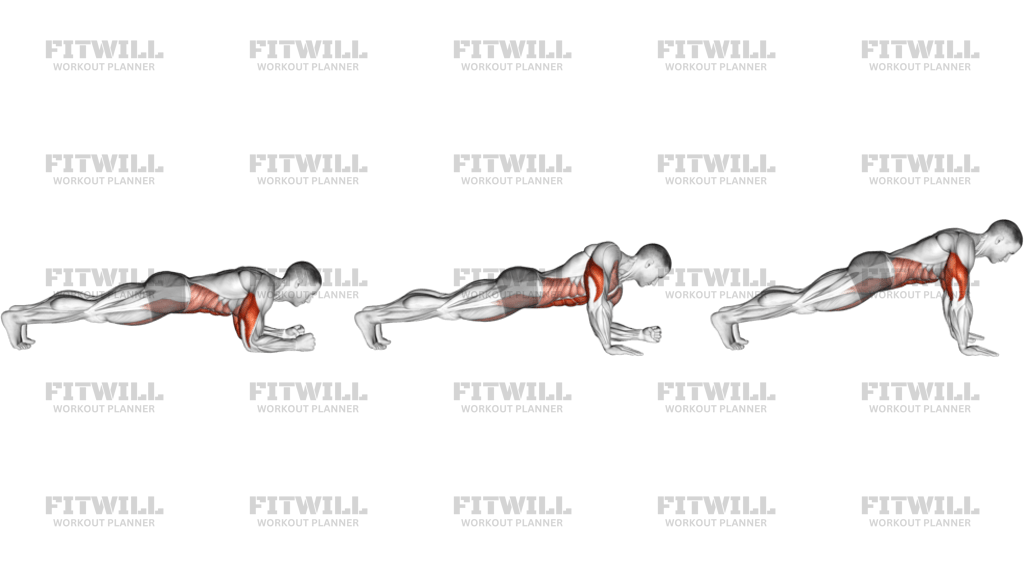
Modified Hindu Push-Up is a bodyweight flow that blends a pressing pattern with shoulder and spine mobility. The movement usually starts in a pike or downward-dog position, then travels forward in a smooth arc as the chest lowers between the hands, the shoulders pass over the wrists, and the torso opens before returning to the start. It is not just a chest exercise or just a stretch; the value comes from connecting strength, control, and range of motion in one repeatable pattern.
This exercise mainly trains the chest, shoulders, and triceps while demanding steady trunk control through the abs and obliques. The core works hard to keep the ribs from flaring and the hips from collapsing as the body moves through the dive and press. Because the shoulders and thoracic spine are asked to travel through a larger range than a standard push-up, the setup matters. Hand placement, foot spacing, and the amount of hip elevation all change how smooth and comfortable the rep feels.
A good repetition begins with the hands firmly planted, fingers spread, and pressure distributed across the whole palm. From there, the chest should glide forward and down instead of simply dropping vertically. At the bottom, press the floor away and open the chest without dumping into the lower back. On the way back, return through the same arc with control so the motion stays fluid rather than segmented. Breathing should match the rhythm of the movement instead of being held until the set is over.
The modified version is especially useful when you want a push-up variation that also exposes shoulder stiffness, core loss of position, or poor scapular control. It fits well in warm-ups, bodyweight circuits, and accessory blocks where quality repetitions matter more than load. Keep the range pain-free, shorten the dive if your shoulders or wrists complain, and stop the set when you can no longer control the transition between the forward glide and the return to the pike.
[ Workout Log & Planner ]
Put your next workout in Fitwill
Keep your plan and training log ready when you are.


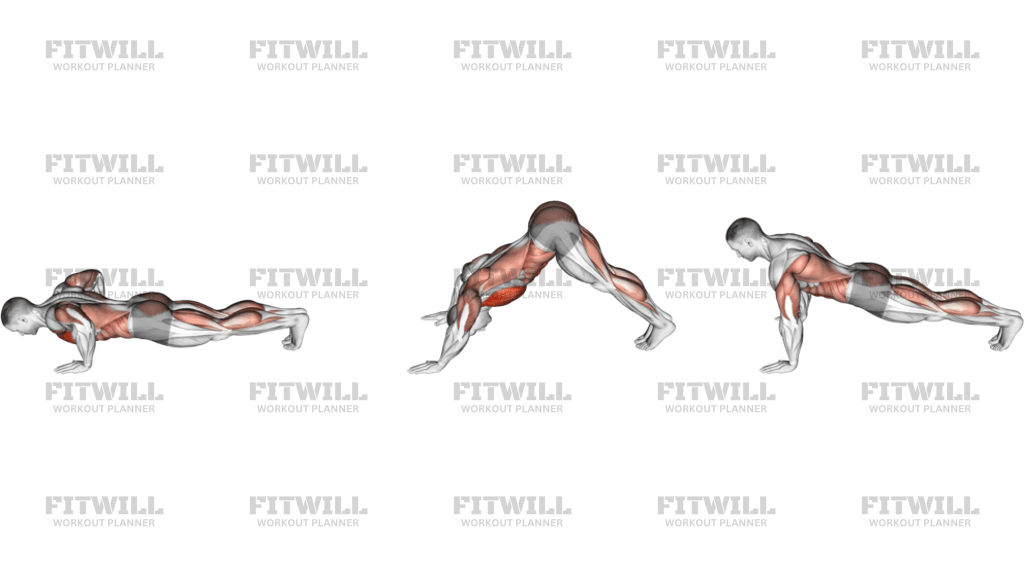
Instructions
- Start in a pike or downward-dog position with your hands planted slightly wider than shoulder-width, feet hip-width apart, hips high, and heels reaching toward the floor.
- Spread your fingers and press through the whole palm so your wrists, shoulders, and upper back feel stacked and stable before you move.
- Tighten your midsection and keep your ribs down so your lower back does not overarch as you begin the descent.
- Bend your elbows and sweep your chest forward and down between your hands, letting your torso travel in a smooth arc instead of dropping straight toward the floor.
- Keep your elbows angled back and slightly out from your sides as you lower, with your head moving naturally between your arms.
- As your chest passes through the bottom, press the floor away and open your chest into the forward press or slight upward-dog position without letting your hips collapse.
- Reverse the same path back to the pike position by lifting your hips and pushing your shoulders back over your hands under control.
- Inhale on the lowering phase and exhale as you press forward and return, keeping the breathing steady for every rep.
- Reset fully at the top before starting the next repetition so each rep begins from a strong, organized position.
Tips & Tricks
- If your lower back arches on the press, shorten the bottom range and keep the chest closer to the floor.
- Treat the movement like a smooth dive, not a push-up plus a separate stretch, so the torso stays connected through the whole rep.
- Keep pressure through the base of the index finger and thumb to reduce wrist collapse at the start of the descent.
- Let the shoulders glide forward naturally, but do not shrug them up toward your ears when you open the chest.
- A slight elbow flare is normal, but a hard flare usually shifts stress away from the chest and into the shoulders.
- If the hamstrings limit the pike position, bend the knees slightly so you can keep the chest and shoulders moving freely.
- Slow the return phase if you tend to rush through the transition back to the hips-high start.
- Choose a surface that gives the hands enough grip, because slipping at the bottom makes the transition messy fast.
Frequently Asked Questions
What muscles do Modified Hindu Push-Ups work?
They mainly train the chest, shoulders, and triceps, while the abs and obliques stabilize the torso through the moving plank-to-pike pattern.
Is the modified version easier than a full Hindu push-up?
Usually yes. The modified version keeps the movement more compact and less extreme, which makes the shoulder and spine transition easier to control.
Do my hands need to stay under my shoulders the whole time?
No. In the pike start the hands are slightly wider than shoulder-width, then the chest travels forward between them as you lower and press through.
Should I feel this in my lower back?
No. You should feel tension in the chest, shoulders, and trunk. If the lower back takes over, shorten the range and keep the ribs down.
Can beginners do Modified Hindu Push-Ups?
Yes, if they keep the range short and move slowly. It is a good bodyweight drill for learning control, but the shoulder transition should stay pain-free.
What is the biggest form mistake with this exercise?
Dropping the chest without controlling the arc. The rep should glide forward, open, and return instead of collapsing into the floor and then muscling back up.
Where does this exercise fit in a workout?
It works well in warm-ups, bodyweight circuits, and accessory blocks when you want pressing work plus shoulder mobility in the same movement.
How can I progress the movement?
First improve the control of the arc, then add reps or tempo. You can also lower a little deeper before returning, as long as the shoulders and lower back stay comfortable.