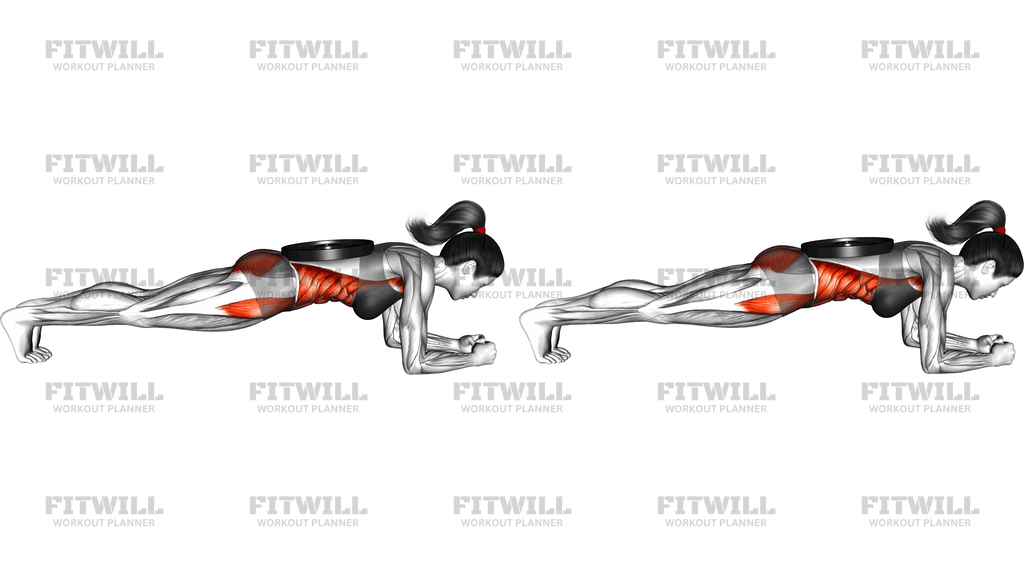
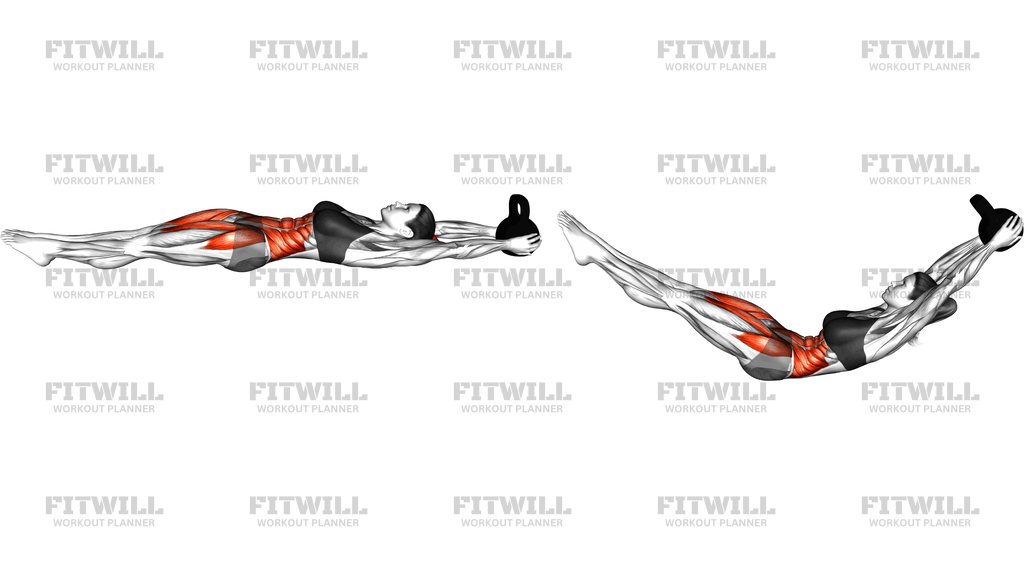
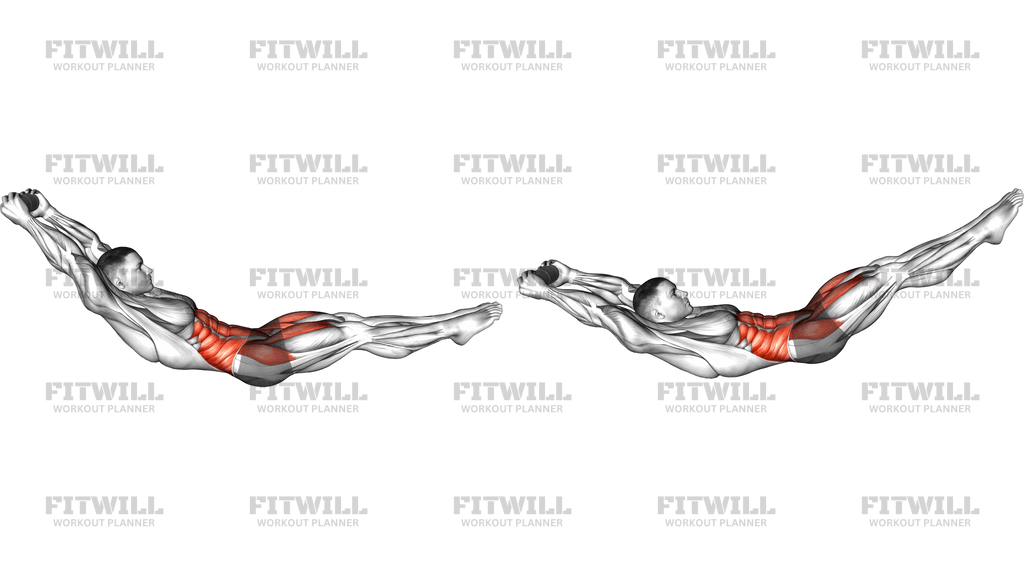
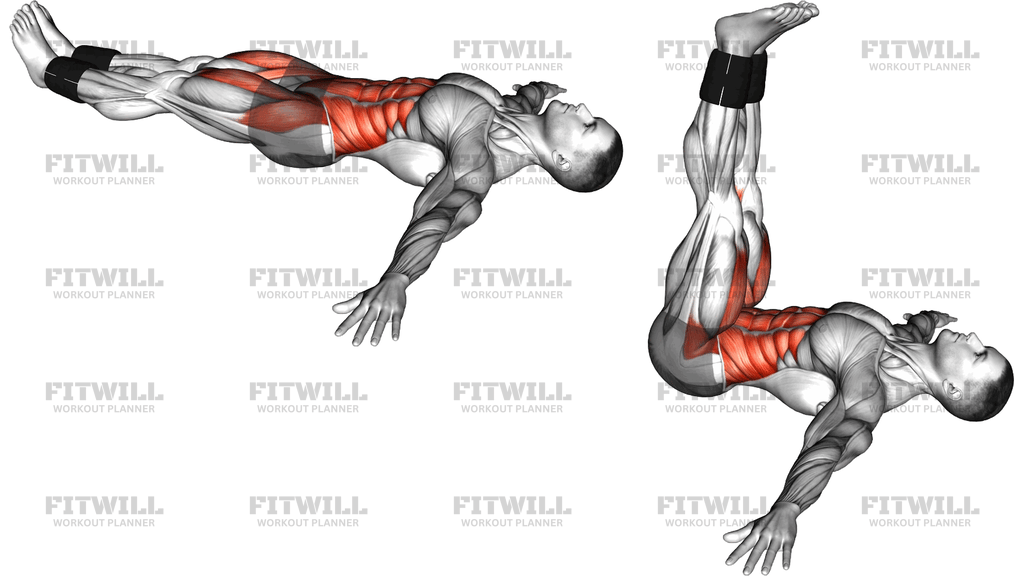
Weighted Stability Ball Crunch Full Range
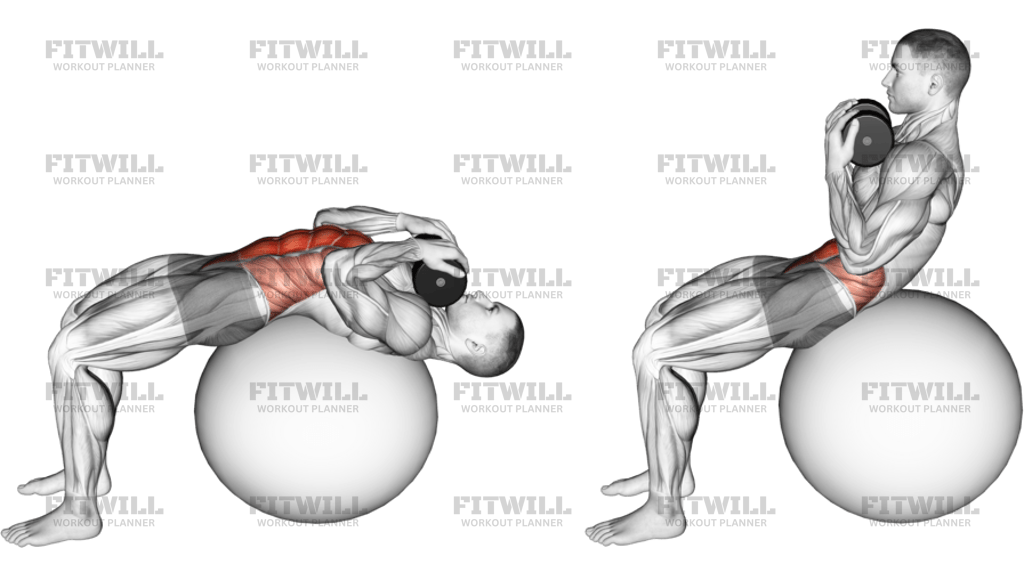
Weighted Stability Ball Crunch Full Range is a loaded abdominal crunch built around a large, smooth arc over the ball. The support lets your torso open into extension on the way down and curl back into flexion on the way up, so the abdominals work through more range than a floor crunch. It is useful when you want a direct core exercise that still lets you keep the load close to the body and the movement easy to control.
The main muscles are the rectus abdominis, with the obliques and deep core helping keep the ribcage and pelvis organized. If you hold a plate or dumbbell against your chest, the resistance stays honest without turning the movement into a neck-driven pull. The full-range version matters because the abs are trained not only at the top, but also while lengthening over the ball on the descent.
Set the ball under your lower shoulder blades or mid-back, plant both feet flat, and keep your knees bent and roughly over your ankles. Hug the weight to your chest, then find a position where your head, upper back, and hips feel balanced before you start the first rep. If the ball sits too high or too low, the motion becomes awkward and the lower back tends to take over.
Crunch by exhaling, drawing the ribs down toward the pelvis, and lifting the shoulder blades off the ball without yanking the head forward. At the top, keep the weight pinned to the chest and let the abs do the shortening, not the hips. Lower slowly until the torso opens back over the ball and the abs feel lengthened again, then repeat with the same path on every rep.
This exercise fits well as accessory core work, after your main lifts or in a focused ab session, because it rewards clean tempo more than heavy loading. Start with bodyweight or a light plate if you cannot keep the ball still and the neck relaxed, then add resistance only when the range stays smooth. If the lower back pinches or the ball slides, reduce the range, widen the stance, or lower the load before continuing.
[ Workout Log & Planner ]
Put your next workout in Fitwill
Keep your plan and training log ready when you are.


Instructions
- Sit on the floor and place the stability ball behind your lower shoulder blades, then walk your feet forward until your knees are bent and both feet are flat.
- Lie back over the ball and plant your head and upper back on it, keeping your hips supported and your feet about hip-width apart.
- Hold a weight plate or dumbbell against the center of your chest with both hands and keep your elbows slightly in, not flared wide.
- Brace your abdomen, tuck your chin slightly, and let your torso open over the ball until your ribs and hips feel stacked for the first rep.
- Exhale as you crunch, drawing your ribcage toward your pelvis and lifting your shoulder blades off the ball.
- Keep the weight pinned to your chest and stop the upward phase when your upper abs are fully shortened, without jerking your neck forward.
- Lower yourself slowly back over the ball until your upper back is supported again and your abs are stretched, then inhale before the next rep.
- Finish the set by lowering your hips carefully, setting the weight down under control, and stepping away from the ball.
Tips & Tricks
- Keep the ball centered under your lower shoulder blades, not under the neck.
- Pin the weight to the sternum; if your arms straighten, the chest load becomes harder to control.
- Keep both feet flat and quiet; if the heels lift, move them a little farther forward or reduce the load.
- Think "ribs down" on the way up, not "sit up"; that keeps the curl in the abs.
- Lower slowly enough that the ball does not roll under your spine.
- Stop the descent before your lower back feels pinched; the goal is a long abdominal stretch, not lumbar strain.
- If your neck works harder than your abs, look straight up and keep the chin slightly tucked.
- Choose a lighter plate if you cannot keep both shoulder blades clear of the ball without momentum.
Frequently Asked Questions
What muscles does Weighted Stability Ball Crunch Full Range target?
It mainly targets the rectus abdominis, with the obliques and deep core helping stabilize the trunk.
Should the weight stay on my chest or go overhead?
Keep the weight hugged to your chest. That keeps the load manageable and reduces the chance of pulling through the neck.
How high should I crunch on the ball?
Lift until your shoulder blades clear the ball and your abs finish the curl, then lower before you start leaning on momentum.
Is Weighted Stability Ball Crunch Full Range good for beginners?
Yes, but beginners should start with bodyweight or a very light plate and learn the ball position before adding more load.
Why does my neck get tired during this crunch?
The neck usually takes over when the chin reaches forward or the weight drifts away from the chest. Keep your eyes up and your chin slightly tucked.
Can I use a dumbbell instead of a plate?
Yes, as long as you can hold it tight to your chest without letting it pull your shoulders forward.
What is the advantage of using a stability ball here?
The ball lets your torso move through a longer range, so the abs work both as they shorten and as they lengthen under control.
How do I make Weighted Stability Ball Crunch Full Range harder?
Use a slightly heavier chest load, but only if you can keep the ball stable and the rep path smooth from start to finish.