Standing Arms Flinging _shoulders
Standing Arms Flinging _shoulders is a standing shoulder mobility and activation drill done with body weight. The movement opens and closes the shoulder complex through a smooth arm sweep, so the goal is not to chase speed or fatigue but to keep the path clean, the torso quiet, and the shoulders moving without pinching.
The exercise mainly trains coordination through the deltoids, upper back, and the smaller stabilizers that control the shoulder blade and upper arm. Because the arms travel through a broad arc, the setup matters: if your ribs flare, your neck tenses, or your stance feels unstable, the movement usually turns into a back extension or a shrug instead of a controlled shoulder drill.
Start from a tall standing posture with the feet planted and the elbows bent in front of the chest. From there, the arms sweep outward and upward in a controlled flinging motion until they reach overhead or as high as your shoulders allow comfortably. If one side is tighter, the arc may be slightly smaller on that side, but the path should still be smooth and deliberate rather than jerky.
This is useful in a warm-up, between upper-body sets, or as a shoulder reset before pressing, throwing, or other overhead work. It can also help newer lifters learn how to coordinate the shoulders without loading the joints. The best reps feel smooth and organized, with the shoulder blades moving naturally and the spine staying stacked instead of leaning back to create fake range.
Use the exercise to find a comfortable, repeatable overhead path, not to force a dramatic stretch. If the top position feels tight, reduce the range and keep the elbows softly bent. If the movement creates a sharp pinch or neck tension, shorten the sweep and make the motion smaller until it feels controlled again.
[ Workout Log & Planner ]
Put your next workout in Fitwill
Keep your plan and training log ready when you are.


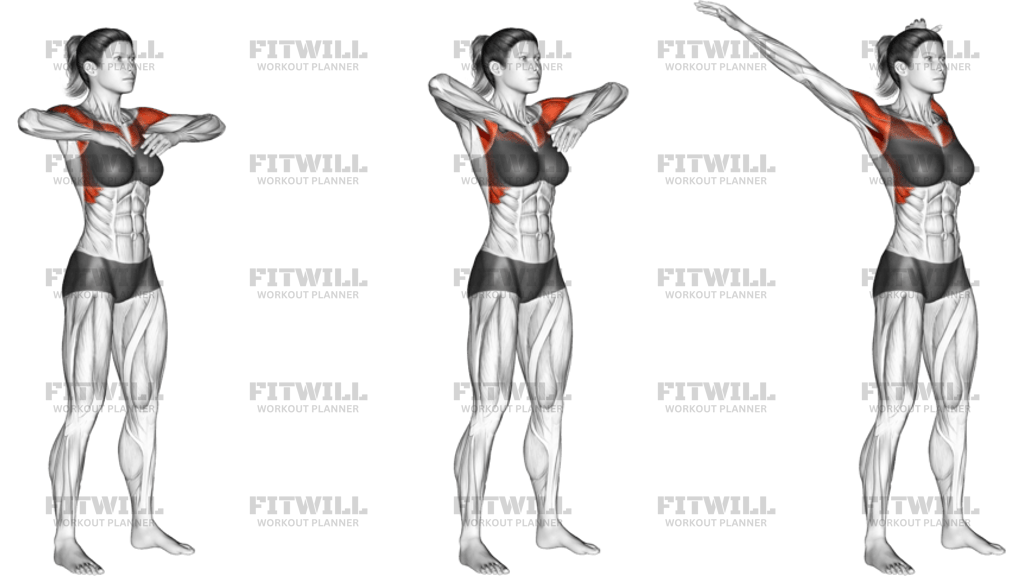
Instructions
- Stand tall with your feet about hip-width apart and soften your knees so you can keep your balance.
- Lift your elbows in front of your chest with a gentle bend in both arms, keeping your shoulders down and your neck long.
- Brace your midsection and keep your ribs stacked over your pelvis before you begin the sweep.
- Sweep both arms outward and upward in one smooth arc, leading with the elbows instead of snapping the hands.
- Continue the arc until your hands reach overhead or just short of the point where your shoulders start to pinch.
- Pause for a moment at the top without leaning back or shrugging your shoulders toward your ears.
- Lower the arms along the same controlled path until you return to the bent-elbow starting position in front of the chest.
- Exhale as the arms rise and inhale as they return, keeping the breathing steady and unforced.
- Repeat for the planned number of reps, keeping every repetition as smooth as the first.
Tips & Tricks
- Keep your rib cage stacked over your pelvis; if your low back arches, the shoulders are losing the work.
- Lead the motion with the elbows so the arms sweep in a shoulder-friendly arc instead of flapping from the wrists.
- Use a smaller range if one shoulder reaches overhead sooner than the other.
- Keep the neck soft and the traps quiet; the top position should feel like elevation through the arms, not a shrug.
- If the movement is meant to alternate sides, park the non-working arm near the chest instead of letting it drift wildly.
- Do not force the hands farther back than your shoulders can comfortably open.
- Move slow enough that you can reverse the same path on the way down without swinging the torso.
- Stop the set if you feel a sharp pinch in the front or top of the shoulder, especially near the overhead finish.
Frequently Asked Questions
What does Standing Arms Flinging _shoulders work most?
It mainly trains the shoulders, upper back, and the stabilizers that control the shoulder blades and upper arms.
Is this a strength exercise or a mobility drill?
It is primarily a shoulder mobility and activation drill. The value comes from control and range, not from adding load.
Should my elbows stay bent through the whole rep?
Yes, keep a soft bend in the elbows so the shoulders control the arc instead of locking out and turning the movement into a swing.
What is the biggest form mistake in this movement?
The most common mistake is flaring the ribs and leaning back to fake more overhead range. Keep the torso stacked and let the shoulders do the work.
Can beginners do Standing Arms Flinging _shoulders?
Yes. Beginners usually do best with a smaller, pain-free arc and a slower tempo until the shoulder path feels natural.
What should I do if one shoulder feels tighter overhead?
Shorten the range on the tight side and keep the motion smooth. Do not force both arms to match if one side reaches comfortably sooner.
When is this exercise most useful?
It works well in a warm-up before pressing or throwing, between upper-body sets, or whenever the shoulders need a reset after sitting.
What should I feel at the top position?
You should feel the shoulders opening without a pinch, the upper back staying organized, and the neck staying relaxed.