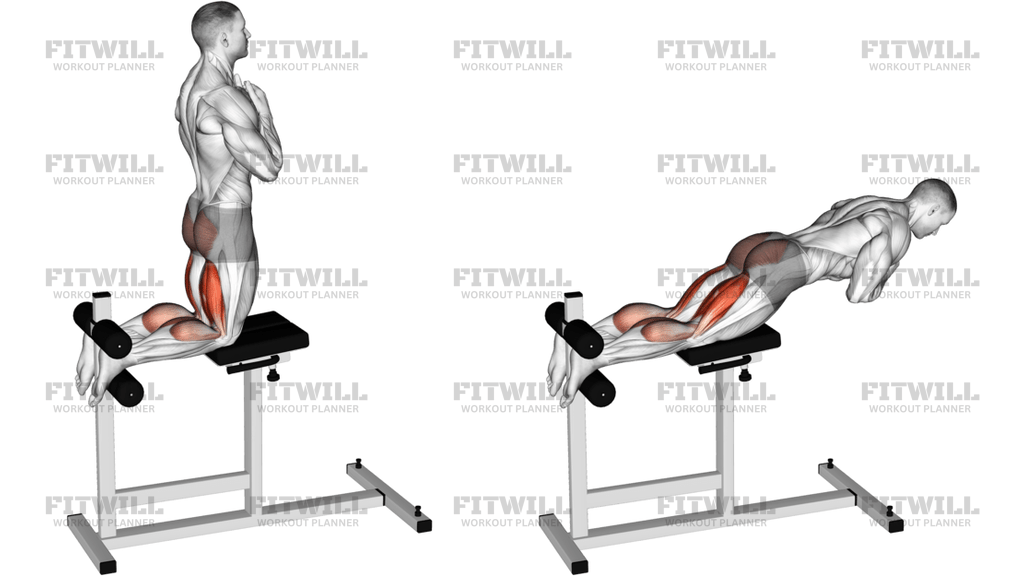
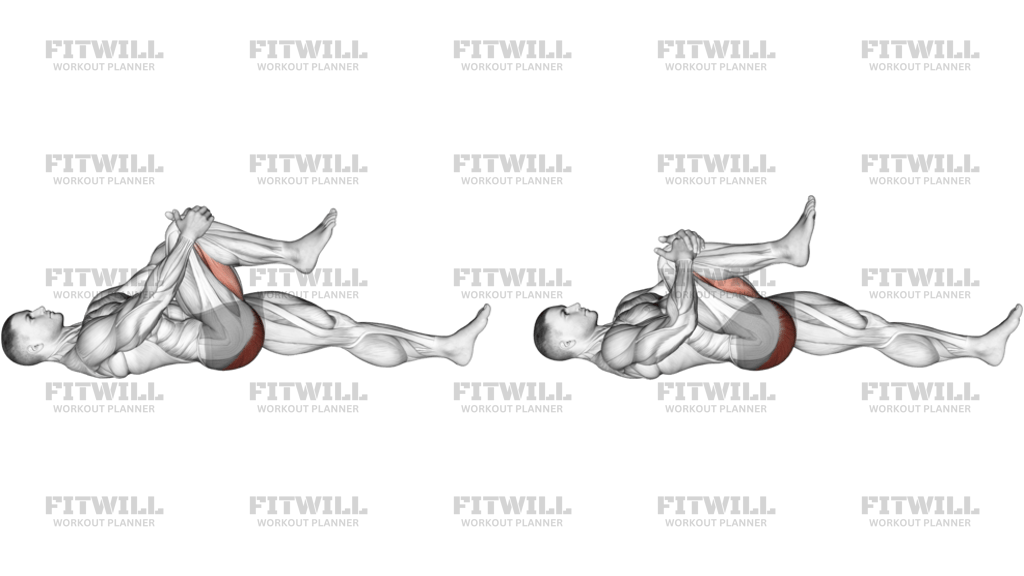
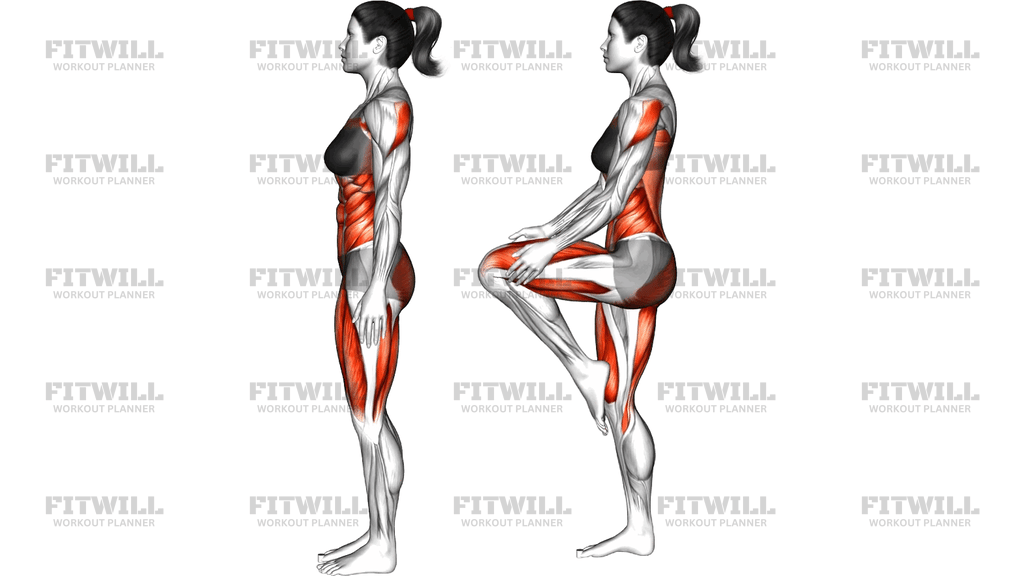
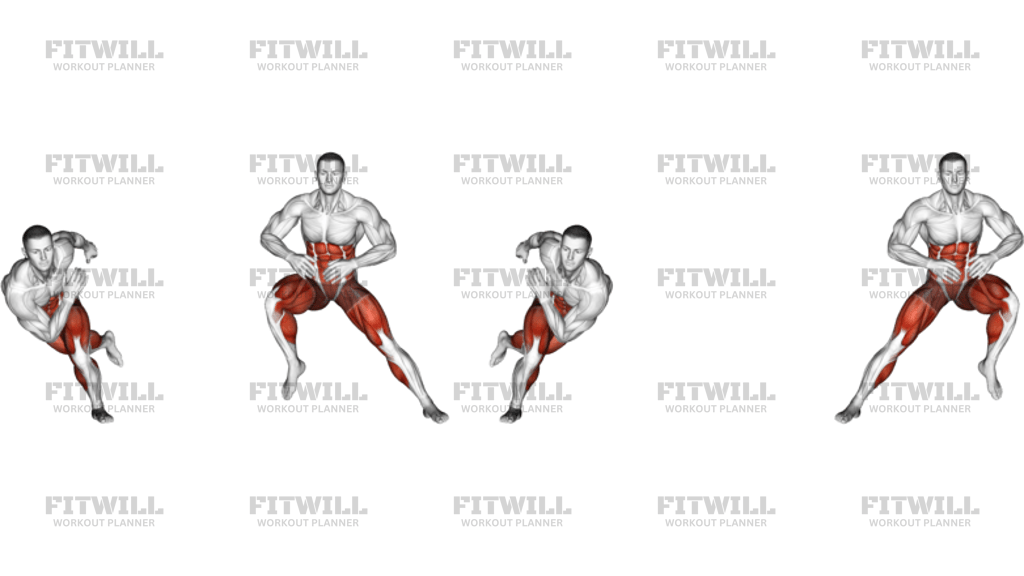
Lying Leg Raise
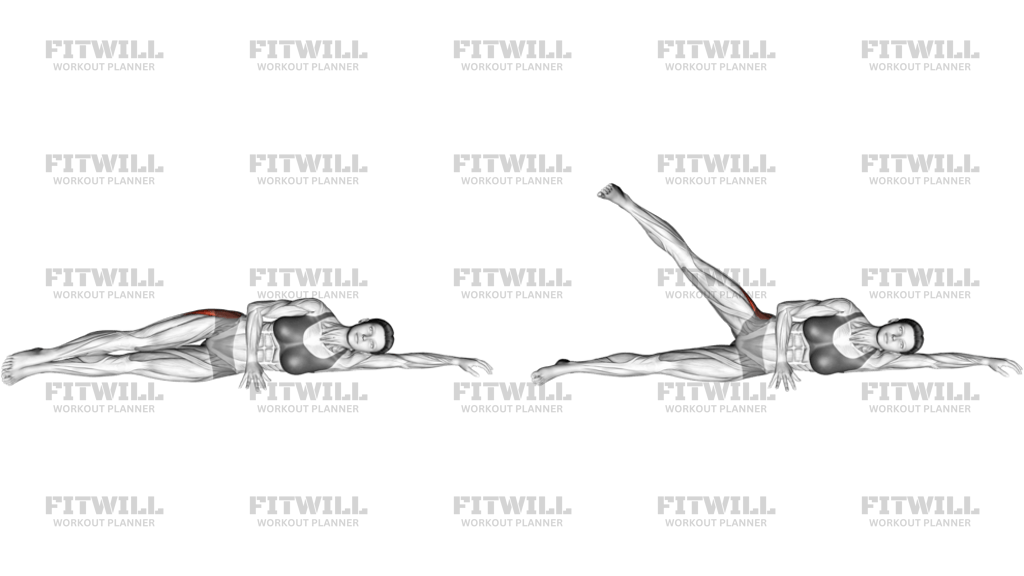
Lying Leg Raise in this payload is performed as a side-lying straight-leg raise: you lie on one side, stack the legs, and lift the top leg away from the floor with the knee mostly straight. The movement trains the outer hip and glute complex while also asking the trunk to stay quiet so the pelvis does not roll backward or forward. It is a controlled isolation exercise, so the goal is not height for its own sake but a clean hip-driven arc with steady body position.
This pattern is useful when you want to build hip abduction strength, improve pelvic control, or add low-load accessory work around squats, lunges, running, and change-of-direction training. The lifted leg should move from the hip, not by swinging the low back or hiking the waist. When the setup is right, you should feel the upper side of the glute and the outer hip working much more than the lower back or the front of the thigh.
Set up on your side with the bottom leg long and quiet, the top leg straight, and the feet roughly stacked or slightly staggered for balance. Brace lightly through the waist, keep the ribs from flaring open, and hold the pelvis still before the first rep. A hand can rest on the floor in front of your chest for support, but do not use it to twist the torso as the leg rises.
On each repetition, lift the top leg in a smooth line until the hip stops moving cleanly, then pause briefly and lower it under control without letting it drop or roll behind you. Keep the toes pointed forward or only slightly down so the lift stays in the outer hip instead of turning into a front-of-hip or lower-back compensation. Breathe steadily and keep the motion rhythmic, with no kicking, bouncing, or rocking.
Use this exercise as an accessory movement, activation drill, or part of a hip-focused warmup and finishers. It works best with slow, repeatable reps and a range you can keep honest from start to finish. If the pelvis starts to rotate, the waist collapses, or the leg swing becomes snappy, the set is too hard or too long. Keep the movement strict and let the outer hip do the work.
Fitwill
Log Workouts, Track Progress & Build Strength.
Achieve more with Fitwill: explore over 9600 exercises with images and videos, access built-in and custom workouts, perfect for both gym and home sessions, and see real results.
Start your journey. Download today!




Instructions
- Lie on your side on a mat or bench surface, with your body in one straight line and the lower leg relaxed beneath you.
- Stack the top leg on top of the bottom leg, then place the upper hand on the floor in front of your chest or lightly on your hip for balance.
- Brace your waist so your ribs and pelvis stay stacked instead of rolling backward as you move.
- Keep the top knee straight or only very slightly soft, and point the toes forward or a touch down.
- Lift the top leg upward from the hip in a smooth arc, stopping before your torso shifts or your low back starts to help.
- Pause for a beat at the top while keeping the pelvis still and the foot aligned with the leg.
- Lower the leg slowly to the start without letting it swing, tap, or collapse into the bottom leg.
- Reset your side-lying position before the next rep and keep the same stacking and body angle throughout the set.
Tips & Tricks
- If your pelvis rolls open, slightly bring the top toes forward or down and shorten the range until the torso stays quiet.
- The lift should feel like the outside of the hip working, not like a kick from the thigh or a twist through the lower back.
- Keep the bottom leg long and relaxed so it does not push the hips off the floor.
- A small pause at the top is more useful here than trying to lift the leg high.
- Move slower on the way down than on the way up to keep tension in the outer hip.
- If you feel the front of the hip taking over, lower the leg less and keep the toes slightly turned down.
- Use a mat or folded towel under the waist if the floor position makes it hard to keep the ribcage stacked.
- Stop the set when the leg starts swinging or the torso starts leaning backward to cheat the rep.
Frequently Asked Questions
What does this lying leg raise work most?
It primarily targets the outer hip and glute area, with the trunk working to keep the pelvis stacked and stable.
Is this the same as a supine leg raise?
No. The image shows a side-lying raise, where one leg lifts away from the other rather than both legs lifting from a flat-on-the-back position.
How high should the top leg go?
Only as high as you can lift without rolling the hips or arching the low back. A smaller clean range is better than a big sloppy one.
Should my toes point up or down?
Keep them mostly forward or slightly down to keep the motion centered on the outer hip instead of turning into a hip-flexor swing.
Where should I feel the exercise?
You should feel it along the outer glute and side of the hip on the lifting leg, with very little strain in the low back.
Can beginners do this exercise?
Yes. It is usually beginner-friendly because it uses body weight, but the key is keeping the pelvis still and the lift slow.
What is a common mistake on this movement?
The biggest mistake is rolling backward and turning the lift into a torso twist instead of a pure hip raise.
How can I make it harder without adding weight?
Slow the lowering phase, add a brief hold at the top, or use a longer set while keeping the same strict side-lying position.