Side Plank Leg Raise
Side Plank Leg Raise is a bodyweight side-core and hip exercise that combines a side plank with an active top-leg lift. It is a strong choice for training the outer hip, glute medius and minimus, obliques, and shoulder stabilizers at the same time. Because the movement is done with a long side lever, small changes in body line matter more than how high the leg rises.
The setup is what makes the exercise work. In the image, the body is supported on one hand with the shoulder stacked over the wrist, the torso is turned fully to the side, and the feet are aligned so the body can stay in one straight line from head to heels. From that position, the free leg lifts without letting the ribs flare, the pelvis tip forward, or the low back take over.
Each repetition should feel like a controlled side plank first and a leg raise second. Press the floor away, keep the supporting shoulder firm, and lift the top leg only as far as you can without rolling the trunk. A short pause at the top helps you own the position, and the lowering phase should be just as deliberate so the outer hip stays under tension instead of the movement turning into a swing.
Side Plank Leg Raise works well in warmups, core sessions, glute-focused accessory blocks, and corrective work for hip stability. It can be regressed by dropping to the lower knee, shortening the hold, or using a forearm side plank before adding the leg lift. If the shoulder feels unstable, the wrist is irritated, or the low back starts doing the work, reduce the leverage and keep the body line cleaner before trying more range.
Fitwill
Log Workouts, Track Progress & Build Strength.
Achieve more with Fitwill: explore over 9600 exercises with images and videos, access built-in and custom workouts, perfect for both gym and home sessions, and see real results.
Start your journey. Download today!




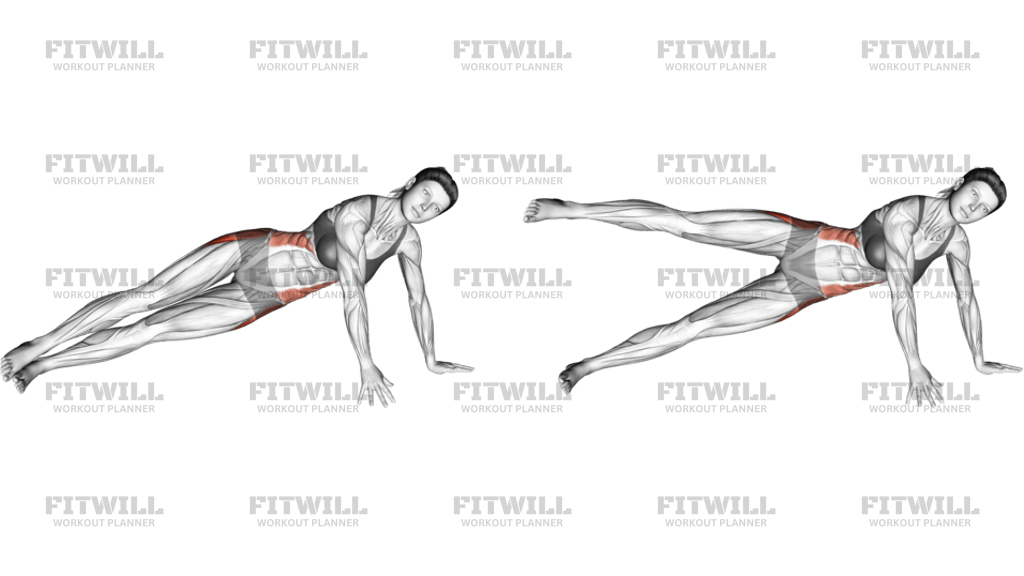
Instructions
- Lie on your right side and place your right hand under your right shoulder, with your feet stacked or the top foot slightly in front for balance.
- Press firmly through the right palm, straighten the body into a side plank, and keep the left hand on your hip or reaching straight up.
- Set the right shoulder down and away from the ear, then lift the hips so your body makes one long line from head to heels.
- Brace your ribs and glutes so the torso stays square to the wall in front of you instead of rolling forward.
- Lift the left leg a few inches until you feel the outer right hip and side waist working, but do not let the pelvis tip or rotate.
- Pause briefly at the top and keep the supporting side steady while the lifted leg stays controlled.
- Lower the left leg slowly to the start position without letting the hips drop or the trunk twist.
- Complete the planned reps on the first side, reset with control, and repeat on the other side.
Tips & Tricks
- If stacked feet make you wobble, stagger the top foot slightly in front so the side plank line is easier to control.
- Keep the supporting shoulder packed and the wrist directly under it so the arm feels like a strong post instead of a collapsed hinge.
- Raise the leg only as high as you can keep the pelvis level; the goal is lateral hip control, not a huge kick.
- Think about reaching the lifted heel long rather than swinging the whole leg, which helps the outer hip do the work.
- Keep the ribs from flaring up as the leg rises; that usually means the low back is trying to finish the rep.
- Exhale on the leg lift and inhale on the lower to keep the trunk from bracing too hard or losing position.
- Turn the top toe slightly down if the hip flexors dominate or if the pelvis keeps opening toward the ceiling.
- Use a forearm side plank or a shorter hold if the wrist, elbow, or shoulder cannot stay stable through the set.
Frequently Asked Questions
What muscles work during Side Plank Leg Raise?
The outer hip of the supporting side, especially the glute medius, does a lot of the work, while the obliques and shoulder stabilizers help keep the body stacked.
Should I do this on my hand or my forearm?
The image shows a straight-arm version, but a forearm side plank is a good regression if your wrist or shoulder does not tolerate the hand-supported position well.
How high should the top leg lift?
Lift only until you can keep the pelvis level and the trunk still. A smaller, cleaner lift is better than a high rep that twists the body.
Why does my lower back feel this exercise?
That usually means the ribs are flaring or the leg is being lifted by lumbar extension instead of the outer hip. Shorten the range and re-stack the torso.
Can beginners use Side Plank Leg Raise?
Yes, but many people should start with a basic side plank, a bent-knee side plank, or a forearm version before adding the leg lift.
Do my feet need to stay stacked?
Stacked feet create a harder lever, but a slightly staggered stance is fine and often helps you keep better balance and hip alignment.
What is the biggest form mistake?
The most common mistake is letting the torso roll forward or letting the hips sag while the top leg swings up.
How do I make this exercise harder?
Add a longer pause at the top, slow the lowering phase, increase the hold time, or add light ankle resistance once the side plank stays perfectly stacked.