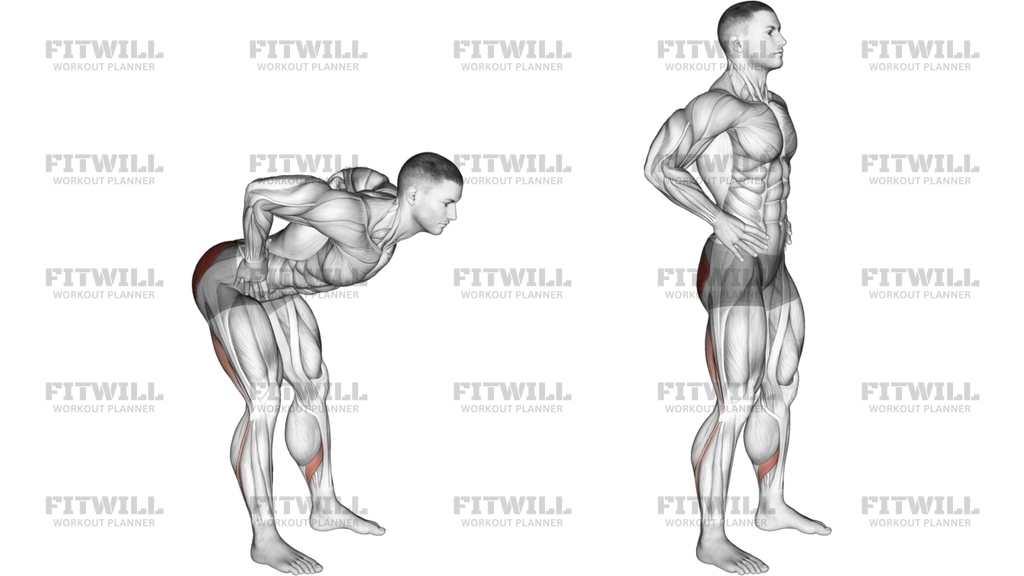
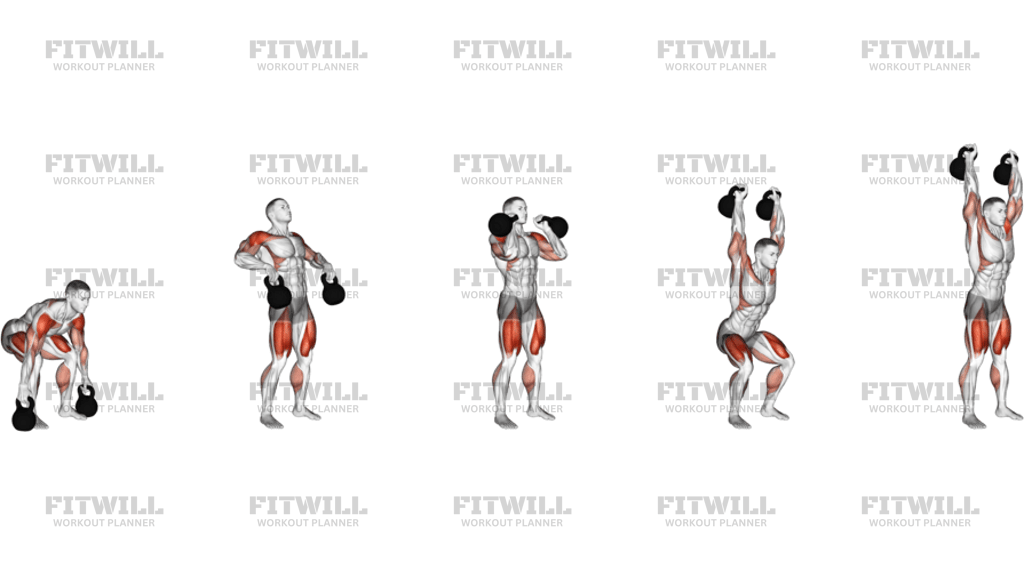
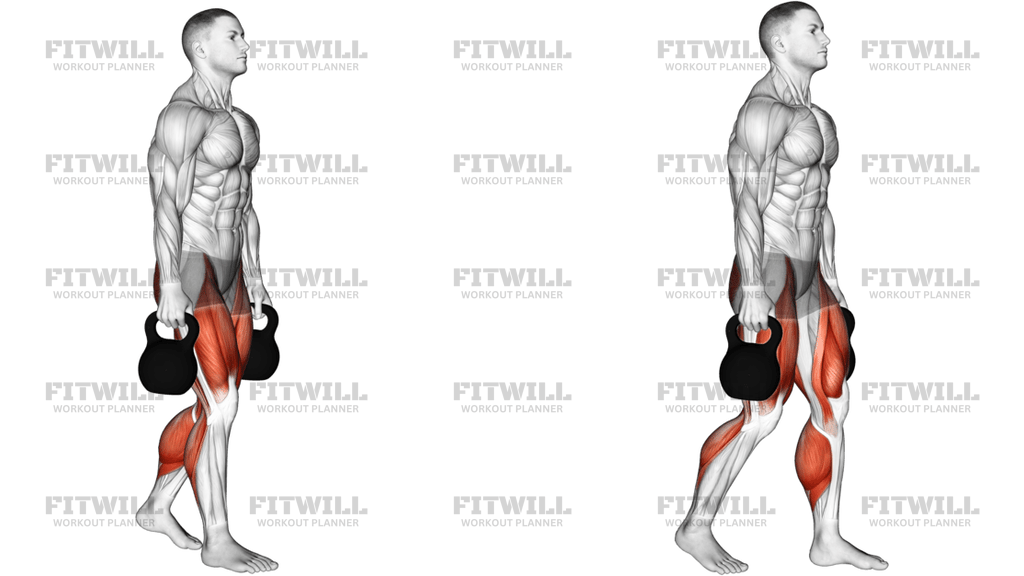
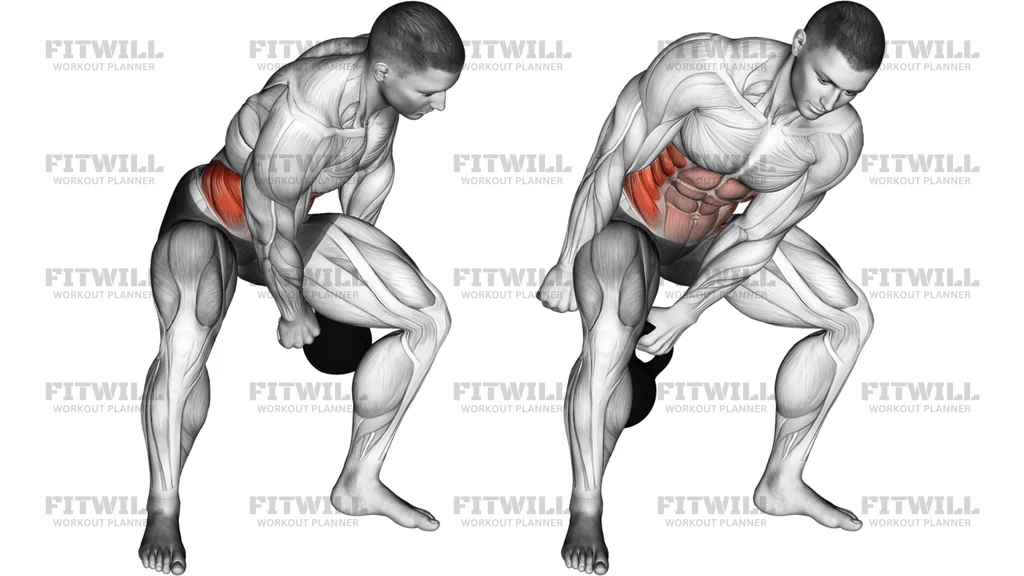
Kettlebell Deadlift
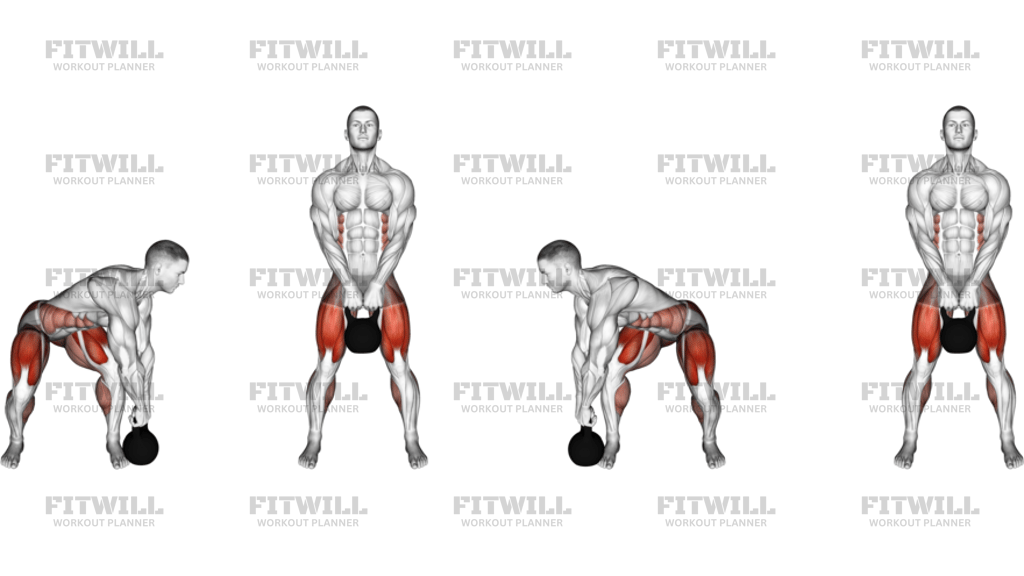
Kettlebell Deadlift is a hinge-based strength exercise that builds the glutes, hamstrings, and trunk while teaching you how to load the hips without turning the movement into a squat. The kettlebell starts on the floor between the feet, so the setup matters: if the bell is too far forward, the lift turns into a tug with the lower back; if it is too close, the shins and hips lose room to move cleanly.
The exercise is most useful when you want a simple, repeatable way to train hip extension and posterior-chain strength. In anatomy terms, the main work comes from the Gluteus maximus, with help from the Biceps femoris, Rectus abdominis, and Erector spinae. That makes Kettlebell Deadlift a solid choice for beginners learning the hinge pattern and for experienced lifters who want a controlled accessory lift that reinforces position and bracing.
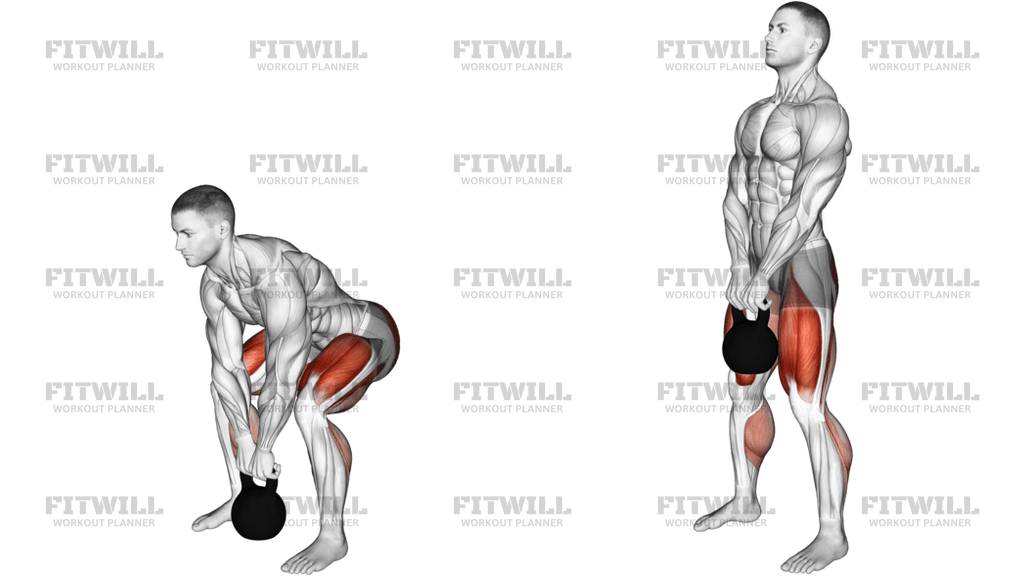
A good rep begins with the feet planted, the kettlebell centered between the mid-feet, and the shoulders set slightly in front of the bell before the pull starts. From there, the hips drive the movement: you push the floor away, keep the bell close to the legs, and stand up by extending the hips and knees together. At the top, finish tall without leaning back or shrugging, then lower the bell the same way by sending the hips back first.
The descent should feel deliberate, not dropped. As the bell passes the knees, the torso stays long and the spine stays neutral while the hips travel back to load the glutes and hamstrings again. That controlled return is what makes the exercise valuable; it teaches you to own the bottom position and keeps tension on the working muscles instead of letting the weight swing away from the body.
Kettlebell Deadlift fits well in lower-body days, full-body sessions, warmups, and accessory work for squats or running because it trains force production from a stable position. It is also a useful pattern for people who need a simpler deadlift variation before moving to a barbell. Keep the range pain-free, choose a load you can repeat cleanly, and stop the set when your back starts rounding, your hips shoot up faster than your chest, or the kettlebell drifts forward.
[ Workout Log & Planner ]
Put your next workout in Fitwill
Keep your plan and training log ready when you are.


Instructions
- Set the kettlebell on the floor between your feet, with your toes turned slightly out and your shins close enough to reach the handle without leaning forward.
- Stand with your mid-foot under the handle, hinge at the hips, and grab the kettlebell with both hands while keeping your chest long and your shoulders slightly in front of the bell.
- Flatten your back, pull your ribs down, and take a breath to brace before the bell leaves the floor.
- Press through the floor and drive your hips forward until you stand tall with the kettlebell hanging in front of your thighs.
- Keep your arms straight and let the hips, not the arms, do the work as the bell rises.
- At the top, finish with the glutes tight, knees straight, and torso stacked over the hips without leaning back.
- Lower the kettlebell by sending your hips back first, then bend the knees only after the bell passes them.
- Let the kettlebell settle back to the floor between your feet, reset your brace, and repeat for the next rep.
- Exhale as you stand up and inhale again as the bell returns to the floor.
Tips & Tricks
- Keep the kettlebell close enough to brush the shins on the way up and down; if it swings forward, the hinge usually turns into a back pull.
- Think 'hips back, chest long' at the start so the movement stays in the posterior chain instead of becoming a squat.
- Your shoulders should be slightly in front of the bell at setup, which helps you load the hamstrings before you start the pull.
- Do not yank the kettlebell off the floor; build tension first, then stand up by driving the floor away.
- Finish tall without leaning back at lockout, because overextending the lower back steals work from the glutes.
- If your hips rise faster than your chest, reduce the load and practice keeping the torso angle steady through the first half of the lift.
- The descent should be a controlled hinge, not a drop; the bell should pass close to the thighs before the knees bend more.
- A heavier kettlebell is only useful if you can still keep the handle centered and the spine neutral from the first rep to the last.
Frequently Asked Questions
What muscles does Kettlebell Deadlift work most?
It mainly trains the glutes and hamstrings, with the core and lower back working to keep your torso rigid while you hinge.
How should the kettlebell sit before I lift it?
Place it on the floor between the mid-feet, close enough to grab without reaching forward or rounding the shoulders.
Is Kettlebell Deadlift more of a squat or a hinge?
It should be a hinge. Your hips travel back first, your shins stay fairly vertical, and the kettlebell stays close to the legs.
Should my back stay flat the whole time?
Yes, keep a neutral spine from setup to lockout. If your back rounds on the way down, the bell is usually too heavy or the hips are dropping too low.
Can beginners do Kettlebell Deadlift safely?
Yes. It is one of the better beginner hinge drills because the floor gives you a clear start and reset point, as long as the load is light enough to control.
What if I feel it mostly in my lower back?
Usually the bell is too far from the body or the hips are not moving back enough. Reset with the handle over the mid-foot and start by loading the hamstrings first.
How is this different from a dumbbell deadlift?
The kettlebell sits lower and centered between the feet, so it often encourages a more compact setup and a very clear hip hinge.
Can I use Kettlebell Deadlift as a warm-up for barbell deadlifts?
Yes, it works well as a patterning drill before heavier barbell work because it reinforces bracing, hinge mechanics, and floor contact.