Kettlebell Lateral Lunge
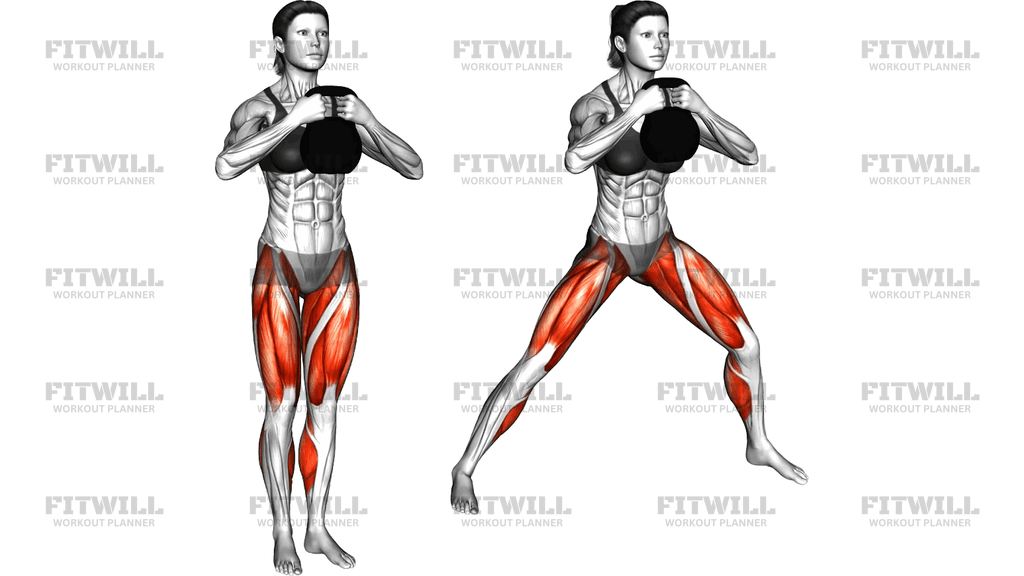
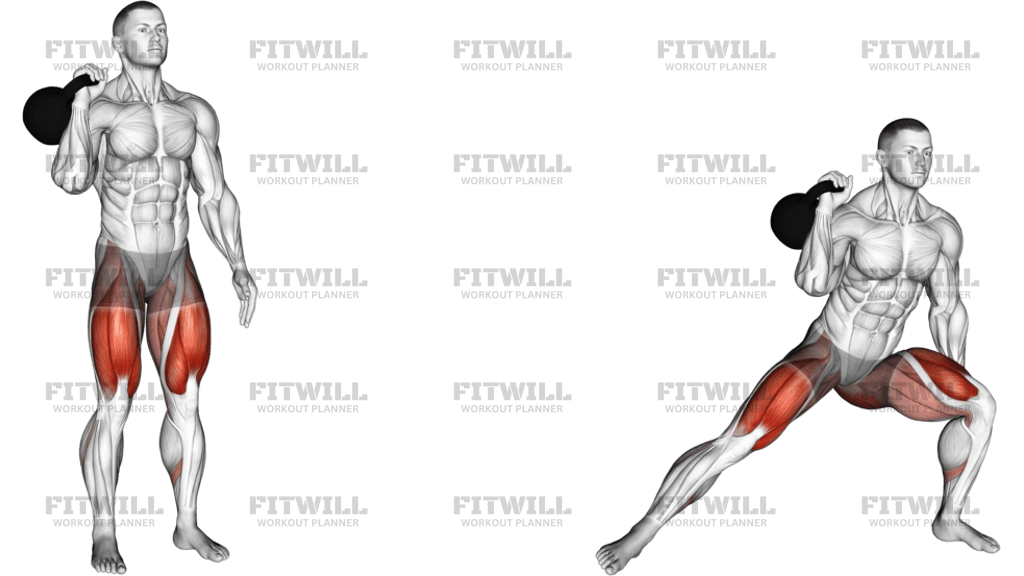
Kettlebell Lateral Lunge is a side-to-side lower-body exercise that loads one shoulder while you step out and sit back into one hip. It is a practical way to train the thighs, hips, and trunk together because the body has to control both knee bend and side-to-side balance at the same time.
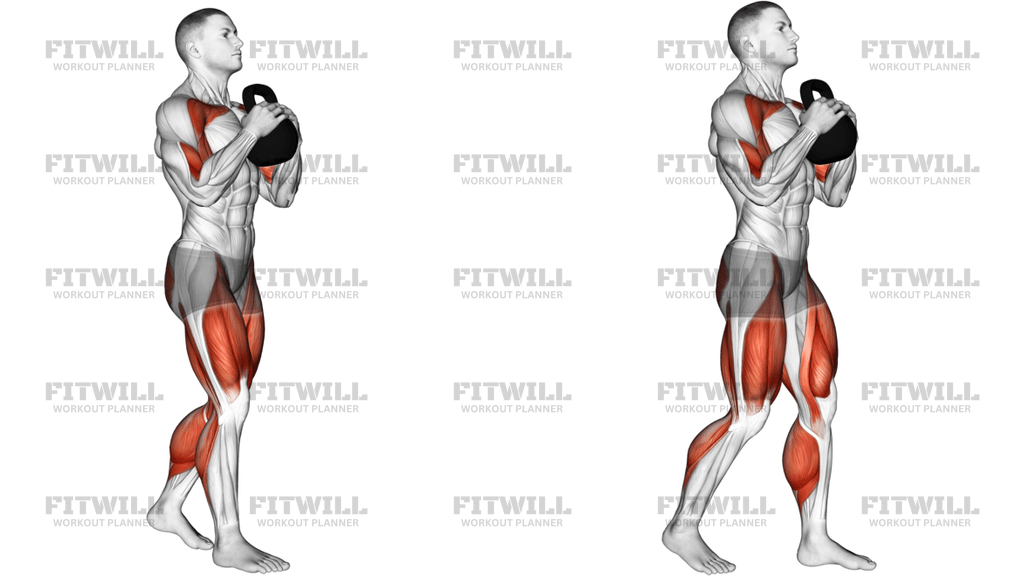
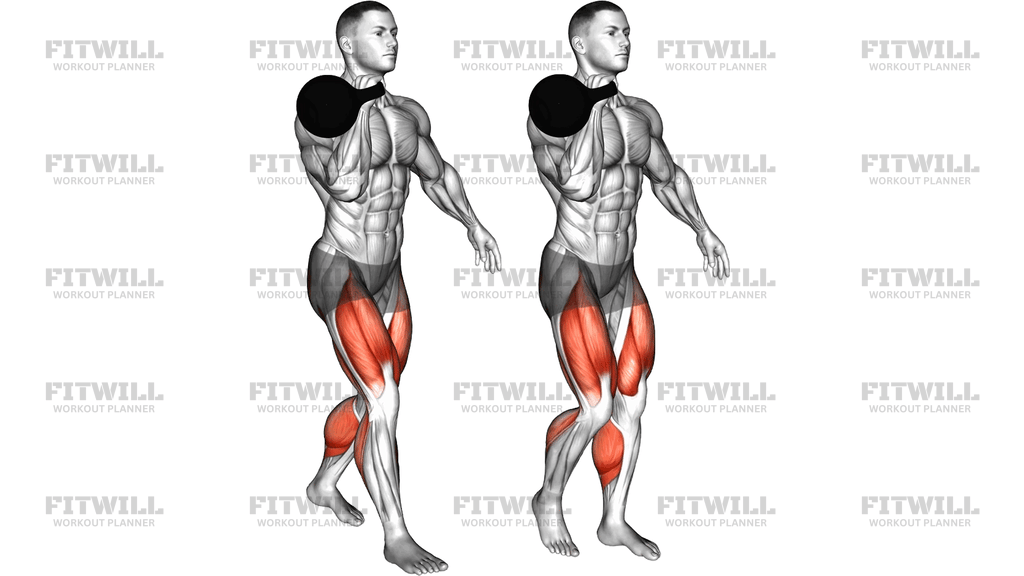
The rack position matters. Holding the kettlebell at one shoulder keeps the torso honest and asks the core to resist twisting as you move into the lunge. That makes the exercise more demanding than an unweighted side lunge, but it also means the best results come from a bell that stays close to the body and does not pull you forward.
Mechanically, the working leg should accept most of the load while the other leg stays long and supportive. Step wide enough to create room for the hips, then send the hips back toward the stepping side instead of dropping straight down. The goal is a controlled shift into the side hip and inner thigh, not a collapse into the knee or a quick reach for depth.
This exercise fits well in lower-body strength work, athletic preparation, or any session that needs frontal-plane control and adductor strength. It can also help people who want a more complete leg session than straight-ahead squats and hinges provide. The movement should feel smooth and repeatable, with the torso staying tall and the foot staying planted through the whole rep.
Use a shallow range at first if the groin, ankle, or knee feels tight, and only go as deep as you can keep the pelvis level and the knee tracking cleanly. If the bell drifts away from the shoulder or the torso starts to rotate, the load is too heavy or the step is too short. Clean mechanics matter more here than chasing speed or exaggerated depth.
[ Workout Log & Planner ]
Put your next workout in Fitwill
Keep your plan and training log ready when you are.


Instructions
- Stand tall with the kettlebell racked at one shoulder, feet about hip-width apart, and the free arm relaxed for balance.
- Brace your torso, keep your chest up, and soften both knees before you move.
- Step one foot out to the side and plant it flat with the toes mostly forward.
- Shift your hips back toward the stepping leg while keeping the opposite leg long and straight.
- Lower until the working thigh is close to parallel or as deep as you can control without losing position.
- Keep the kettlebell pinned to the shoulder and avoid letting your torso twist toward the load.
- Drive through the whole foot of the working leg to stand back up, bringing the hips and chest up together.
- Reset your stance under you before the next rep, then repeat on the same side or alternate sides as programmed.
Tips & Tricks
- Keep the kettlebell tight to the shoulder; if it floats away from your body, your trunk will tip and rotate more.
- Step far enough to make room for the hip, but not so far that you lose balance or have to reach for the floor.
- Let the working foot stay rooted through the heel, base of the big toe, and base of the little toe.
- The non-working leg should stay long and supportive, not bent into a second squat.
- Track the knee over the middle toes instead of letting it cave inward as you descend.
- Use a controlled tempo on the way down so the inner thigh and glute have to own the bottom position.
- Exhale as you drive back to standing to keep the ribs stacked over the pelvis.
- If the groin pinches or the bell starts pulling you off line, shorten the range and lighten the load.
Frequently Asked Questions
What muscles does the kettlebell lateral lunge train?
It strongly targets the thighs, especially the adductors and quads, while the glutes and core help control the side-to-side shift.
Why is the kettlebell held at one shoulder?
The rack position makes the torso work harder to stay upright and resist twisting, so you get more trunk and hip control than with a free bodyweight side lunge.
How wide should I step in the lateral lunge?
Step wide enough that you can send the hips back and keep the opposite leg long, but not so wide that you lose balance or can’t keep the working foot flat.
Should my torso lean forward during the rep?
A small forward hinge is normal, but the chest should stay proud and the bell should not drag you into a deep fold at the waist.
Can beginners do this exercise?
Yes, but start with a very light kettlebell or bodyweight and use a shorter range until the side step and hip shift feel stable.
What if I feel this in my groin?
A stretch in the inner thigh is normal, but sharp pain means you should reduce depth, narrow the step slightly, or lower the load.
How is this different from a side squat?
The lateral lunge sends most of the load into one side while the other leg stays long, so it trains side-to-side control more directly than a symmetric squat.
How do I progress the kettlebell lateral lunge?
Add load only after your knee tracking, foot pressure, and torso position stay consistent; pauses at the bottom and deeper but clean range are also good progressions.