Kettlebell Deck Squat
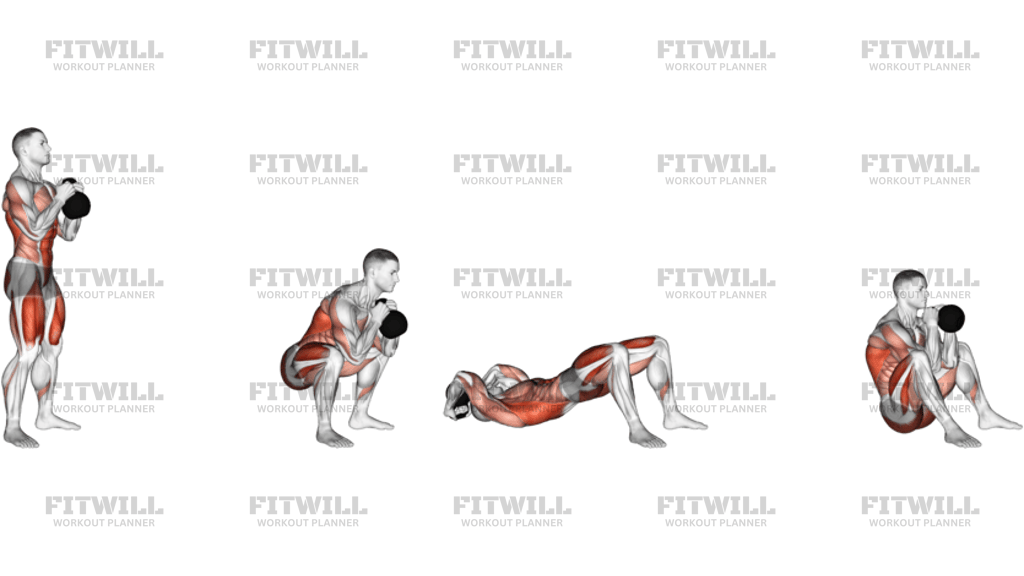
Kettlebell Deck Squat is a floor-to-stand squat variation that combines a deep goblet squat, a controlled roll to the deck, and a rock back to standing. It is a demanding patterning exercise because it asks the hips, knees, trunk, and upper body to stay organized while the body changes orientation. The kettlebell held at the chest also makes the movement more honest: if you lose tension, the transition becomes awkward immediately.
This exercise is useful when you want more than a plain squat. It trains leg strength, hip mobility, trunk control, and the ability to keep breathing and bracing while moving from the floor back to standing. The goblet hold adds an upper-back and arm isometric demand, but the main job still comes from the legs and core coordinating the transition without collapsing into the floor or swinging the kettlebell away from the body.
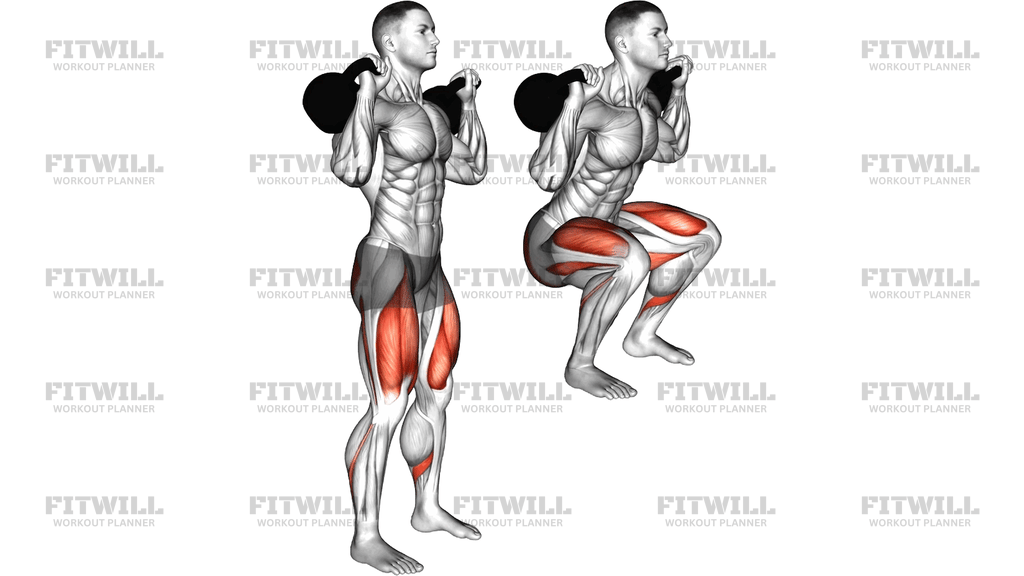
The setup matters because the movement starts from a stable goblet position and a squat depth you can actually own. Hold the kettlebell close to the chest, sit into a deep squat with the heels down, and keep the knees tracking over the toes as you lower to the floor. The better your squat position, the smoother the roll or sit-back to the deck will feel, and the easier it is to reverse the movement without twisting or drifting side to side.
From the floor, use a controlled rock and a tight torso to bring yourself back to a squat rather than muscling the kettlebell upward. Keep the bell tucked in, keep the feet active, and let the hips and abs drive the return as the shoulders stay packed. The transition should feel smooth and repeatable, not explosive or sloppy. If the kettlebell starts pulling your posture forward or your lower back rounds hard, the load is too heavy or the range is too aggressive.
Kettlebell Deck Squat works well as a technique drill, a conditioning accessory, or a mobility-strength bridge on days when you want squat practice with a little more coordination. It is especially useful for lifters who need better squat depth, better floor-to-stand efficiency, or more control in deep hip flexion. Keep the reps crisp, stop before the rock-back becomes messy, and treat each repetition as a controlled sequence rather than a speed test.
[ Workout Log & Planner ]
Put your next workout in Fitwill
Keep your plan and training log ready when you are.


Instructions
- Stand with your feet about shoulder-width apart and hold the kettlebell in a goblet rack position at chest height.
- Keep your elbows close to your ribs, chest tall, and feet flat as you sit your hips down into a deep squat.
- Lower under control until you can sit back to the floor and bring your weight onto your hips and upper back without dumping the kettlebell forward.
- Tuck your chin slightly and keep the kettlebell hugged to your chest as you roll back to the deck.
- Plant your feet and use a tight brace to reverse the motion, rocking your body back toward a squat position.
- Keep the kettlebell close while you bring your torso upright and find a stable deep squat with your heels still grounded.
- Drive through the whole foot to stand up, finishing tall without leaning back or letting the bell drift away from your body.
- Reset the goblet hold before the next rep and repeat with the same smooth floor-to-stand path.
Tips & Tricks
- Keep the kettlebell pinned high on your chest; letting it drift forward makes the rock-back much harder.
- Use a load you can control in the transition, not one that forces you to flop onto the floor.
- If your heels pop up in the bottom squat, narrow the depth slightly or use a lighter kettlebell.
- Think about pulling yourself into the squat with the hips and abs instead of throwing the bell to create momentum.
- Keep your knees tracking in line with your toes during both the descent and the stand-up.
- Exhale as you rise from the deck back into the squat, then finish the stand with a full brace.
- A small pause in the deep squat can help if you are losing balance before the floor transition.
- Stop the set when your lower back starts rounding hard during the roll or the rock-back becomes uneven.
Frequently Asked Questions
What does Kettlebell Deck Squat train most?
It trains squat strength, hip mobility, core control, and the ability to move smoothly from the floor back to standing.
Why is the kettlebell held at the chest in Kettlebell Deck Squat?
The goblet hold keeps the load close, encourages a tall torso, and makes it easier to control the deep squat and floor transition.
Is Kettlebell Deck Squat good for beginners?
Yes, if you start with a light kettlebell and use a shallow, controlled range until the floor-to-stand pattern feels natural.
Should my heels stay down during Kettlebell Deck Squat?
Yes, keep them grounded as long as you can. If they lift, reduce the depth or open your stance slightly so the squat stays stable.
What is the hardest part of the movement?
Most people struggle with the rock from the deck back into the squat, because it requires timing, trunk tension, and a clean foot plant.
Can I do Kettlebell Deck Squat without touching the floor?
You can shorten the descent, but the floor contact is part of the exercise. If you cannot control it, practice a goblet squat first.
What muscles should I feel working?
You should feel the quads, glutes, adductors, and core doing most of the work, with the upper back and arms holding the kettlebell steady.
How heavy should the kettlebell be for this exercise?
Choose a bell that lets you keep the goblet hold, floor transition, and stand-up smooth. If the bell pulls you forward, it is too heavy.