Kettlebell Front Squat
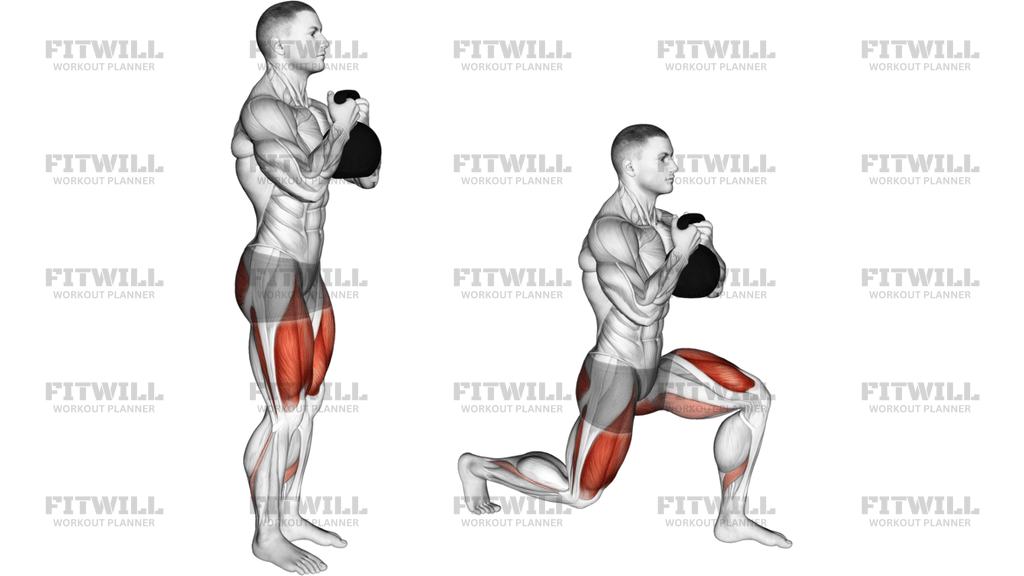
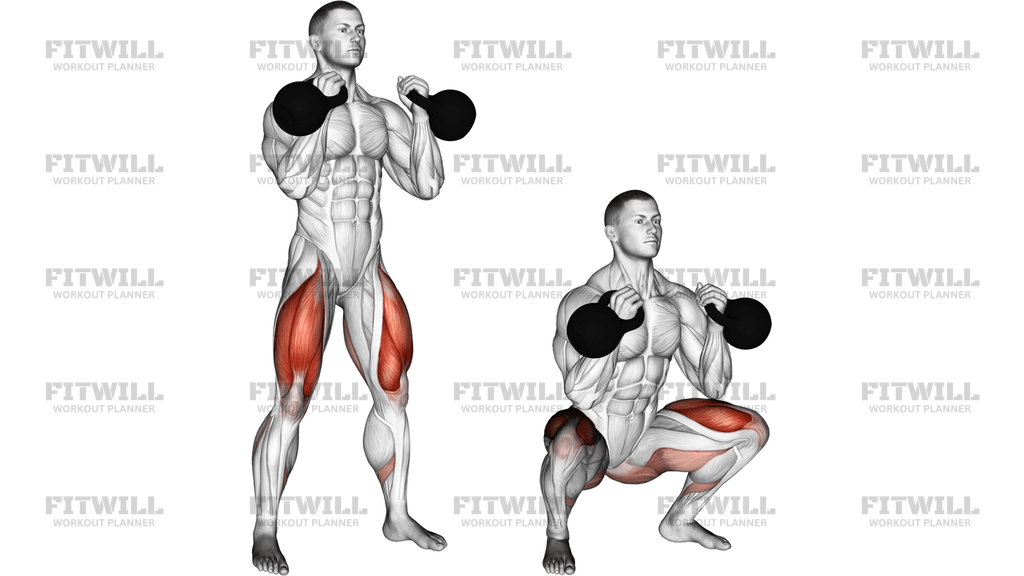
The Kettlebell Front Squat is a loaded squat pattern performed with the bells held in a front rack at shoulder height. In this variation, the kettlebells sit close to the body, the elbows stay forward, and the torso has to remain upright enough to keep the bells balanced while the hips and knees do the work. That front-loaded position shifts the emphasis toward the thighs and glutes while also demanding steady bracing through the trunk.
Because the load is carried in front of the shoulders, the setup matters as much as the squat itself. A stable stance, a tall chest, and even pressure through the whole foot help the lifter stay organized from the first rep to the last. If the rack position drifts, the torso folds, or the heels lift, the squat turns into a compensation pattern instead of a clean strength drill.
This exercise is useful when you want lower-body strength without the barbell setup, or when you want a squat that also challenges posture, grip, and upper-back position. It works well in strength blocks, accessory work, and conditioning sessions because the kettlebells force honest technique. The movement should feel controlled and repeatable, not like a dive into the bottom position followed by a wobbling rise.
The best reps come from sitting between the heels, keeping the elbows slightly in front of the ribs, and driving up through the midfoot. The descent should be smooth and deliberate, with the knees tracking in line with the toes and the spine staying long. At the bottom, the hips should be below or near parallel only as far as the user can maintain control and heel contact.
Use a load that lets you keep the rack position quiet and the torso proud. If the bells pull you forward, the stance is too narrow, or the knees cave inward, the set is too heavy or the range is too aggressive. Done well, this is a practical squat for building leg strength, trunk control, and better front-loaded mechanics without needing a barbell.
[ Workout Log & Planner ]
Put your next workout in Fitwill
Keep your plan and training log ready when you are.


Instructions
- Hold a kettlebell in each hand at shoulder height in a front rack, with the bells resting close to the outside of the forearms and the elbows angled forward.
- Stand with your feet about shoulder-width apart, toes slightly turned out, and your weight spread across the whole foot.
- Brace your abdomen, lift your chest, and keep your upper back tall before you start the first rep.
- Sit your hips down between your heels by bending the knees and hips together while keeping the kettlebells stacked over the midfoot.
- Lower until your thighs reach your chosen depth without letting the heels peel up or the torso collapse forward.
- Pause briefly if needed, then drive through the floor to stand back up in one smooth path.
- Keep the elbows forward and the rack position steady as you rise so the bells do not drift away from the body.
- Exhale through the effort, reset your stance at the top, and repeat for the planned number of repetitions.
Tips & Tricks
- Keep the kettlebells high enough in the rack that your forearms stay nearly vertical and the load does not drag your shoulders forward.
- Think about sitting down between your heels rather than reaching your hips straight back, which helps keep the torso more upright.
- Let the knees track in the same direction as the toes so the thighs can open naturally at the bottom.
- If the bells bang against the forearms or wrists, adjust the rack so the handles sit deeper in the palms and closer to the shoulder.
- Use the heel and big-toe base to drive up; if the toes lift, the squat is usually getting too far forward.
- Choose a depth you can control without losing the front rack, even if that means stopping above parallel for now.
- Keep the rep smooth on the way down instead of dropping fast and bouncing out of the bottom.
- If your lower back starts arching hard at the top, reduce the load and tighten the ribs before the next rep.
Frequently Asked Questions
What does the kettlebell front squat work most?
It primarily trains the thighs and glutes, with the core and upper back helping keep the front rack stable.
Is the front rack with two kettlebells harder than a goblet squat?
Usually yes, because each bell has to stay balanced at the shoulders and the torso has to resist twisting or folding forward.
How low should I squat in this movement?
Go only as low as you can while keeping both heels down, the chest tall, and the kettlebells stacked over the midfoot.
What is the most common mistake with the kettlebell rack position?
Letting the elbows drop and the bells drift away from the body, which makes the squat feel much heavier and less stable.
Can beginners use this exercise?
Yes, beginners can start with one light kettlebell or a very manageable pair and practice the rack position before adding depth or load.
Why do my wrists or forearms get uncomfortable?
The bells are probably sitting too high or too far out of the palms, so the handles are pressing instead of resting in a secure rack.
Should I keep my heels on the floor the whole time?
Yes. A stable front squat should stay planted through the full foot, with the heels only lifting if the setup or depth is off.
How can I make the front squat more challenging without changing the movement?
Use a heavier pair of kettlebells, pause briefly at the bottom, or slow the descent while keeping the rack position strict.