Kettlebell Full Swing
Kettlebell Full Swing is the two-hand kettlebell swing that uses a powerful hip hinge to send the bell from a back swing to a finish overhead. It is a dynamic, full-body movement that builds hip explosiveness, trunk stiffness, shoulder control, and timing between the lower and upper body. Because the bell travels all the way overhead, the rep demands more shoulder stability and rib control than a chest-height swing.
The exercise is centered on the hinge pattern: the bell should be loaded by the hips, not lifted by the arms. The glutes, hamstrings, and core produce the force, while the shoulders, upper back, and grip organize the bell on the way up and down. When the movement is done well, the bell feels like it is floating on a controlled arc rather than being pressed or thrown.
Setup matters because the swing starts from the bottom position. A strong start means a neutral spine, feet rooted, and the bell close enough to the body that you can hike it back cleanly between the legs. If the bell begins too far away, the swing turns into a reach; if you squat it up, the hips lose the snap that makes the full swing work.
At the top, the goal is a tall, stacked overhead position with the bell above the shoulders, ribs down, and glutes tight. The arms stay long and mostly passive, but the shoulders must stay organized so the bell does not drift behind the head or pull the lower back into extension. The return should be just as deliberate: let the bell fall, hinge early, and absorb the load before driving the next rep.
Use Kettlebell Full Swing when you want a power-focused conditioning lift, a hinge drill with overhead demand, or a full-body finisher that keeps the heart rate up without turning into a squat. It is best performed with a load and rep speed that preserve the hinge and the overhead finish. Beginners can learn it, but only after they can hinge well and keep the bell path clean through the back swing and overhead lockout.
Fitwill
Log Workouts, Track Progress & Build Strength.
Achieve more with Fitwill: explore over 9600 exercises with images and videos, access built-in and custom workouts, perfect for both gym and home sessions, and see real results.
Start your journey. Download today!




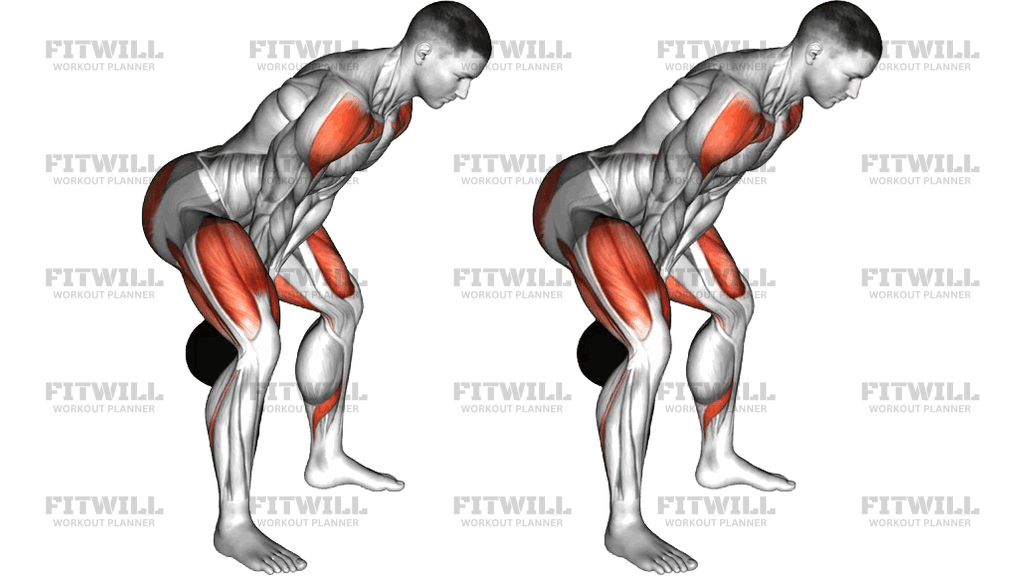
Instructions
- Stand with your feet about shoulder-width apart and place the kettlebell a short step in front of you on the floor.
- Hinge at the hips, keep a neutral spine, and grip the handle with both hands while your shoulders stay packed and your weight stays through the midfoot and heels.
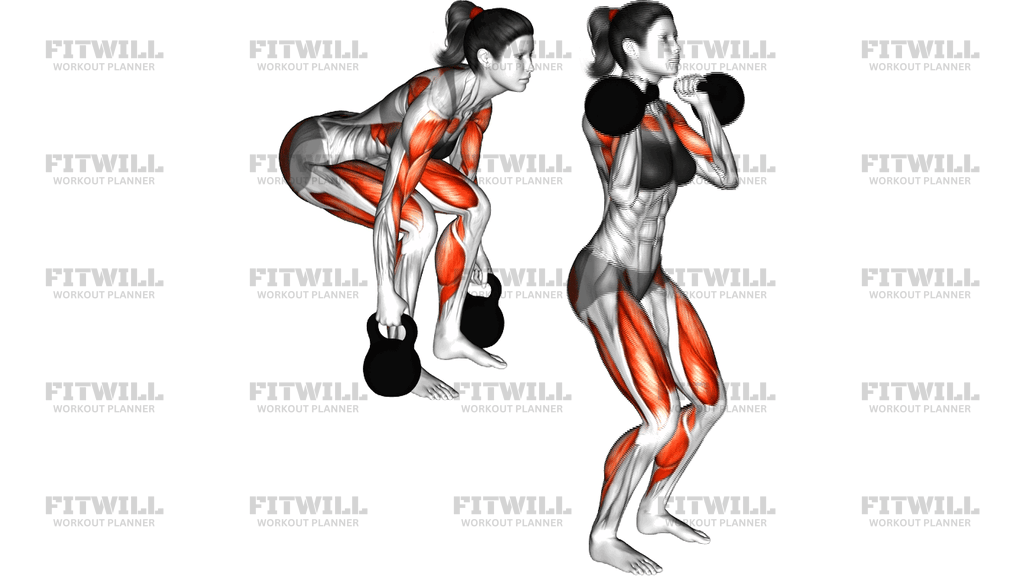
- Hike the bell back between your legs like a football snap, keeping your shins mostly vertical and your chest angled forward without rounding the back.
- Brace your core as the bell reaches the backswing, then drive your hips forward hard to stand tall and send the bell upward.
- Let the arms guide the bell on a long arc while the hips provide the power; do not turn the rep into a front raise or shoulder press.
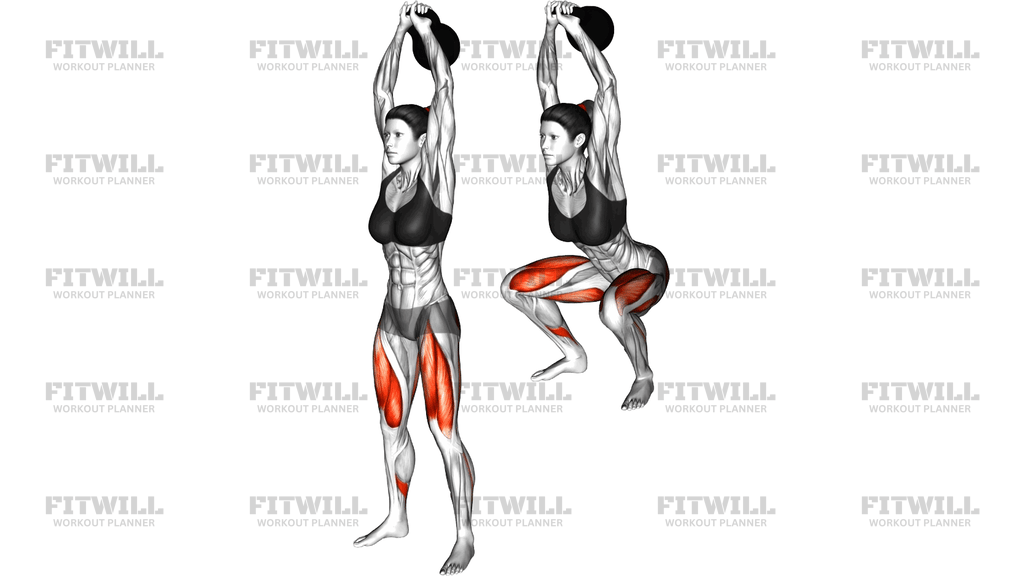
- Finish with the bell stacked overhead, elbows straight, biceps near your ears, glutes squeezed, and ribs down instead of flared.
- Control the descent by letting the bell fall in front of you, then hinge again as it passes back between your thighs.
- Keep the same breathing rhythm for each rep, exhaling on the hip snap and inhaling on the backswing.
- When the set is complete, guide the bell back to the floor by hinging and placing it down between your feet.
Tips & Tricks
- Choose a lighter bell than you would for a chest-height swing; the overhead finish needs more control from the shoulders and trunk.
- If the bell reaches overhead only when you lean back, the load is too heavy or your hip snap is too weak.
- Keep the bell close to your body on the way up and down so it follows one clean arc instead of swinging away from you.
- Let your hips create the pop; your arms should feel like straps connecting your hands to the bell.
- Keep your ribs stacked over your pelvis at lockout so the top position does not turn into a lower-back arch.
- Squeeze the glutes at the top to finish the rep tall and keep the bell centered over your base.
- If your shoulders shrug or your neck tightens, stop the set before the overhead position gets sloppy.
- The backswing should load the hamstrings; if you feel it mostly in the knees or lower back, hinge deeper and sit the hips back more.
- Reset the bell on the floor by hinging, not by rounding and dropping it from the top.
- For conditioning sets, keep the rhythm smooth and repeatable instead of forcing every rep to be maximal.
Frequently Asked Questions
What muscles does Kettlebell Full Swing work most?
It mainly trains the glutes, hamstrings, core, and shoulders, with the upper back and grip helping control the bell.
Can beginners perform this exercise?
Yes, but only after learning a solid hip hinge. Start light and master the backswing before chasing the overhead finish.
How is the full swing different from a regular kettlebell swing?
The full swing finishes overhead, while a standard Russian swing stops around chest height. The overhead version requires more shoulder stability and tighter rib control.
Should I press the kettlebell overhead?
No. The bell should travel overhead because of hip drive and momentum from the hinge, not because you press it with the arms.
Why do I feel this in my lower back?
That usually means you are overextending at the top or hinging too shallow. Keep the ribs down, brace harder, and let the hips do the work.
How high should the kettlebell travel?
In the full swing, the bell finishes stacked directly over the shoulders with the arms straight and the body tall.
Where should the bell be at the bottom of the rep?
It should hike back close to the thighs and pass between the legs, not drop far below the knees or drift away from the body.
What is the best breathing pattern for this lift?
Exhale sharply as the hips snap through and the bell rises, then inhale as it swings back into the next hinge.
Can I substitute a Russian swing if overhead mobility is limited?
Yes. A chest-height swing is the safer variation if you cannot keep the bell stacked overhead without arching your back or shrugging.