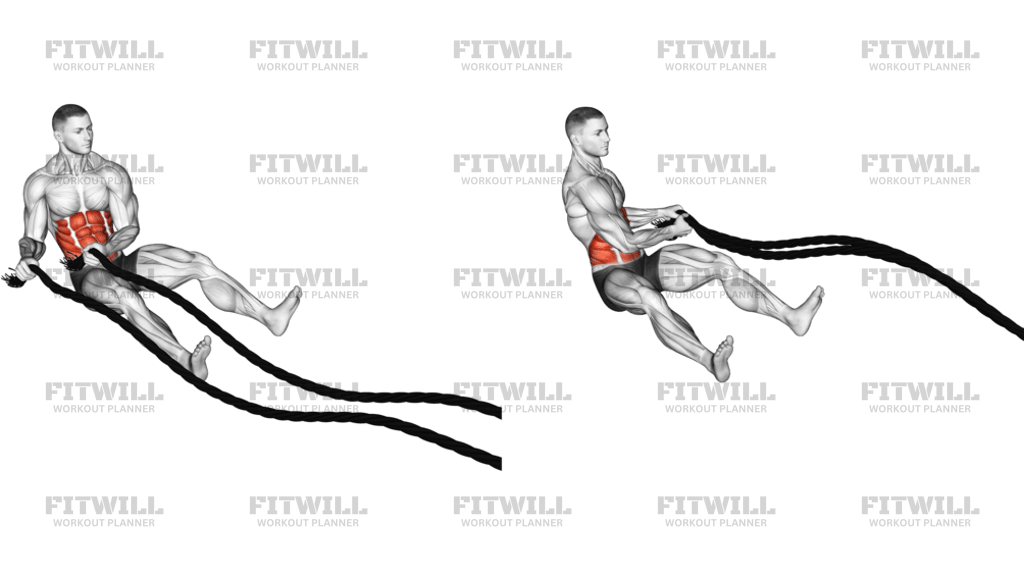
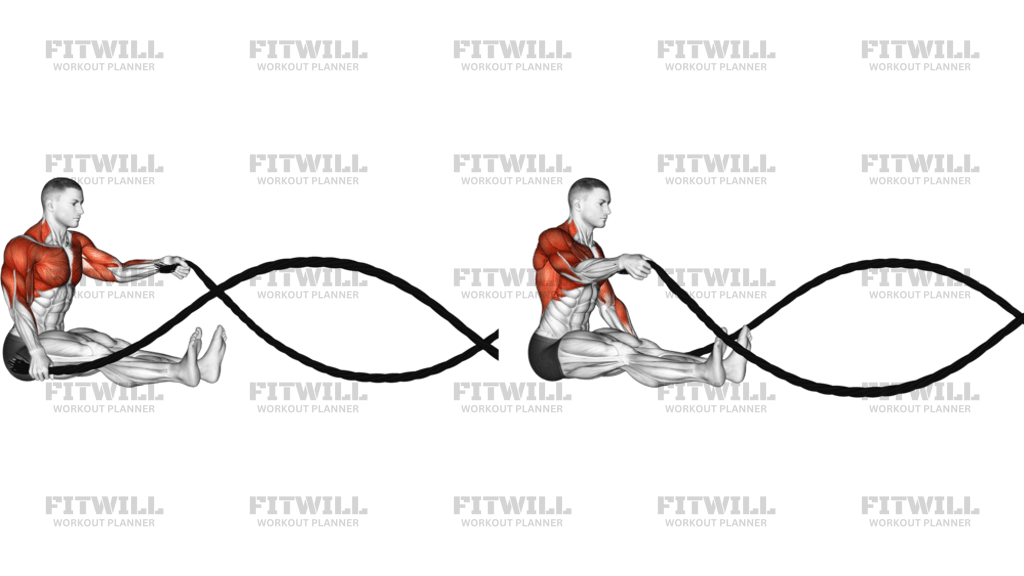
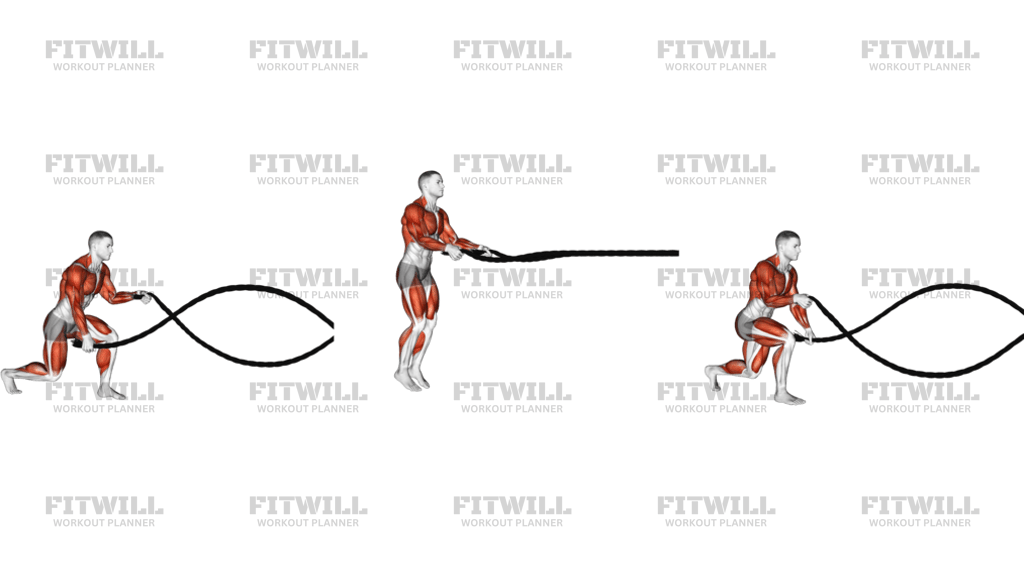
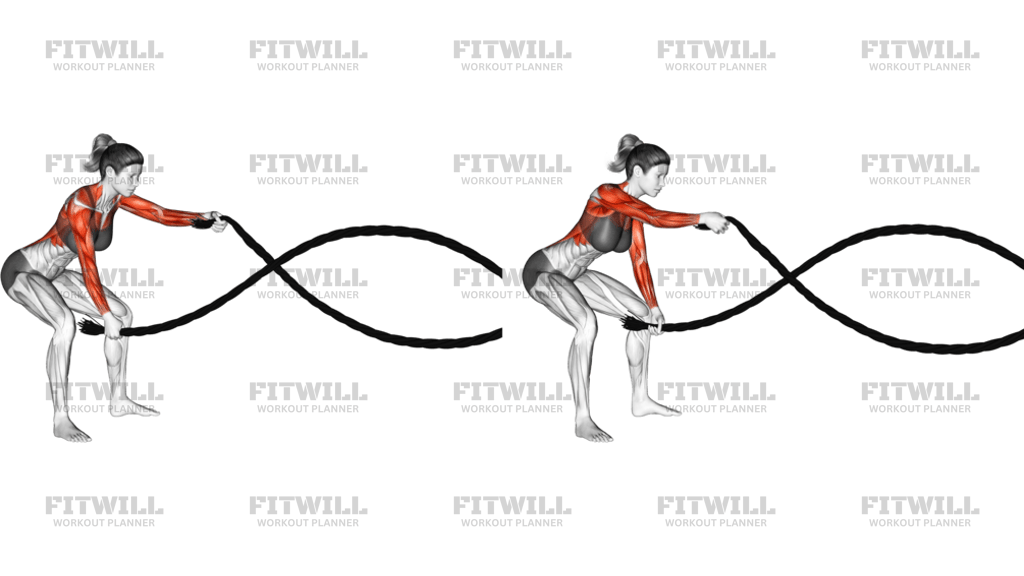
Battling Ropes Alternate Arms Jump Squat
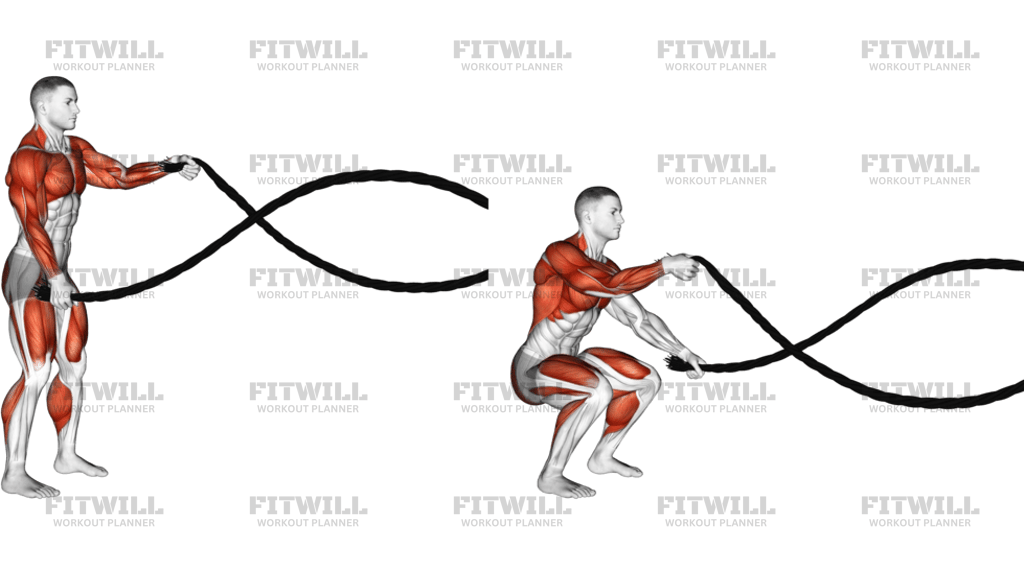
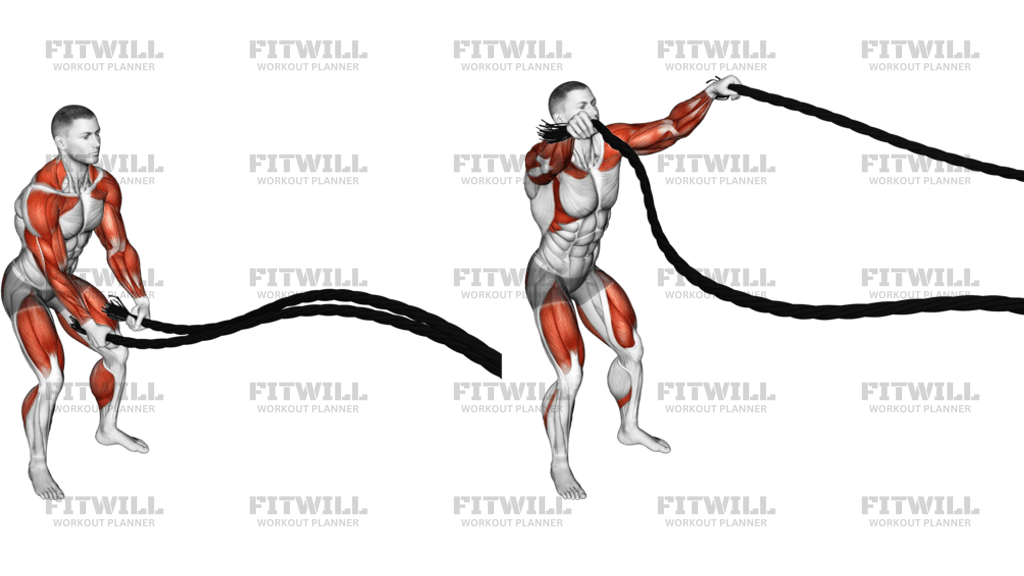
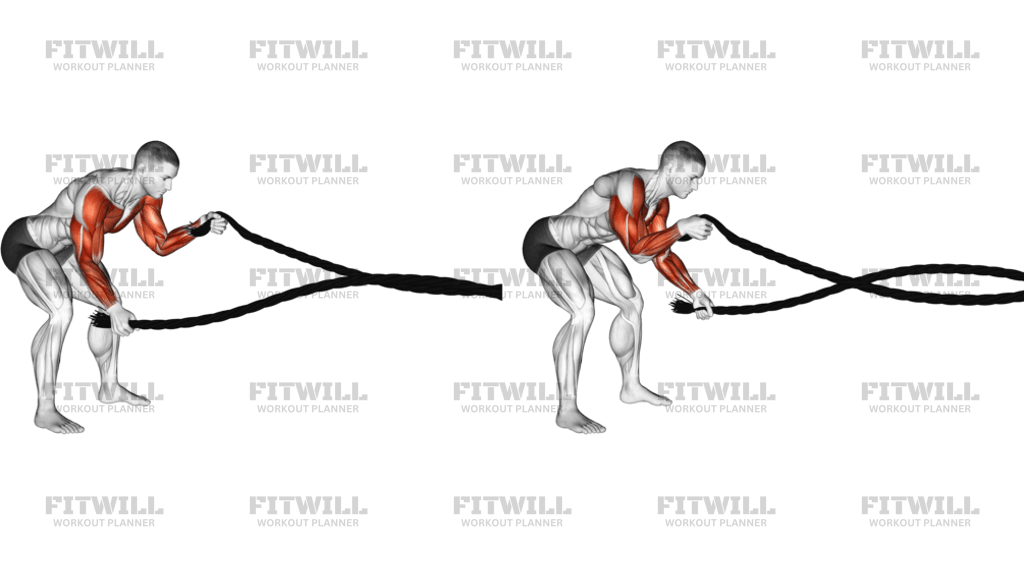
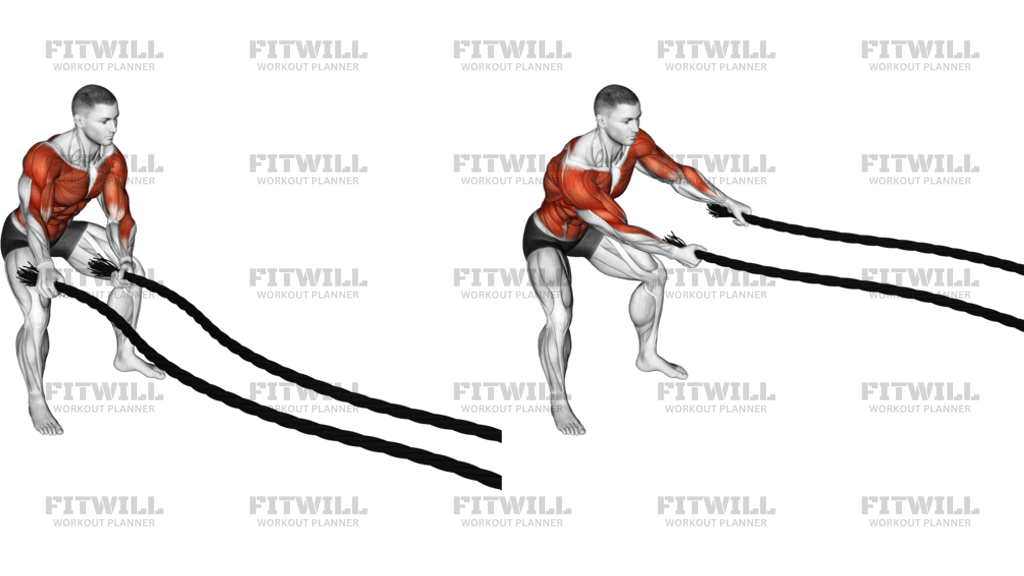
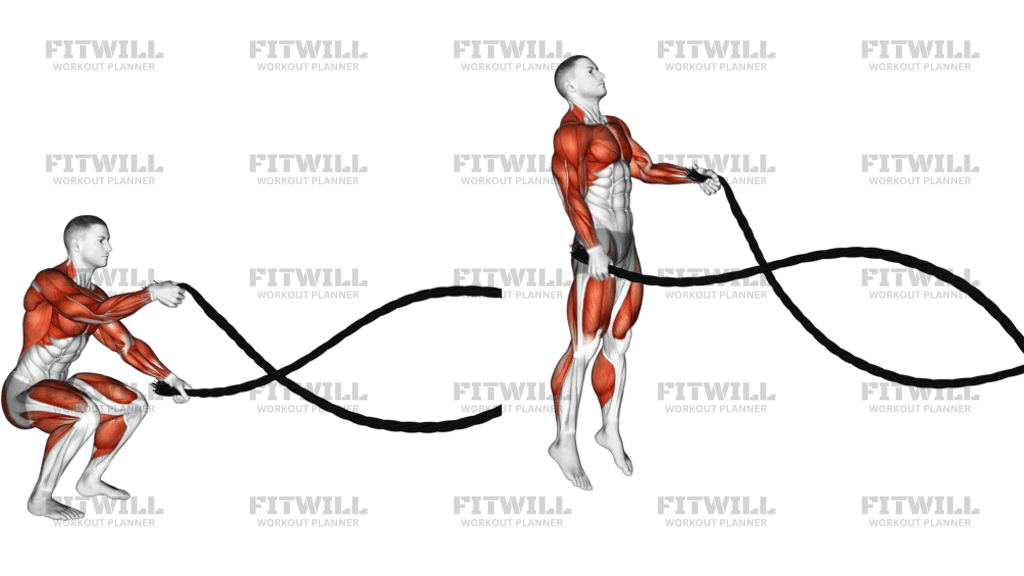
Battling Ropes Alternate Arms Jump Squat is a high-tempo conditioning drill that combines a bodyweight squat jump with alternating rope waves. It asks you to keep the lower body explosive and the upper body organized at the same time, so it is useful when you want a movement that challenges coordination, rhythm, and work capacity rather than pure strength.
The setup matters because the ropes, stance, and landing position determine whether the movement stays sharp or turns into a loose bounce. Stand facing the anchor with one handle in each hand, feet about shoulder-width apart, and enough slack in the rope that your arms can move without yanking the anchor. Lower into a quarter squat first so your chest stays tall, your heels stay grounded, and your hips can load before the jump.
From there, drive up into a small, quick jump while alternating the rope arms so one hand rises as the other drives down. The goal is a clean switch from rep to rep, not a huge jump or a wild rope swing. Keep the elbows softly bent, let the shoulders stay down, and keep the torso facing forward so the waves come from a controlled upper-body action instead of twisting through the spine.
This exercise trains the legs, glutes, core, shoulders, and arms together, with the heart rate climbing fast because the rope work never really stops. It fits well in metabolic circuits, athletic conditioning sessions, or finishers when you want power output with a conditioning demand. Because the movement is repetitive and fast, the best reps look crisp and almost identical, with the same jump height and wave size each time.
Use a smaller jump and a lower squat if your landings get noisy or your knees cave inward. If the rope pulls your shoulders up toward your ears, lighten the pace and shorten the wave. Stop the set when you can no longer keep the alternate arm pattern and the landing mechanics clean, since sloppy reps take the power out of the drill and shift stress to the joints instead of the muscles.
[ Workout Log & Planner ]
Put your next workout in Fitwill
Keep your plan and training log ready when you are.


Instructions
- Stand facing the rope anchor with one handle in each hand, feet about shoulder-width apart, and the rope hanging with even slack on both sides.
- Lower into a quarter squat, keep your chest tall, and hold the handles in front of your thighs with soft elbows and relaxed shoulders.
- Brace your midsection before you move so your ribs stay stacked over your pelvis as you prepare to jump.
- Drive through your feet into a small jump while sending one hand up and the other down to create the first alternating wave.
- Land softly with bent knees and immediately sink back into the same quarter squat without letting your heels peel up.
- On the next rep, switch the arm pattern so the opposite hand is high and the other is low as you leave the floor again.
- Keep the rope waves smooth and the torso square to the anchor instead of twisting side to side.
- Breathe out on the jump and wave, then inhale as you absorb the landing and reload for the next rep.
- Stop the set, stand tall, and reset the rope if your landings get loud or the alternating rhythm starts to break.
Tips & Tricks
- Choose rope slack that lets your hands travel without dragging the handles into the floor at the bottom of the squat.
- Keep the jump small and quick; a higher jump usually makes the rope pattern slower and less controlled.
- Let the shoulders stay down when the arm reaches high so the wave comes from the arm, not a shrug.
- Think of the legs as the engine and the ropes as the rhythm cue, not the other way around.
- If your knees cave in on landing, shorten the jump and focus on tracking the knees over the middle toes.
- Keep the rope waves even from left to right so one side does not become the dominant pattern.
- Use a quarter squat rather than a deep squat so you can rebound fast without losing posture.
- If your low back takes over, reduce the speed and keep your ribs down instead of flaring them as you jump.
- Short bursts of work are usually better than long sets, because rope speed falls off quickly when fatigue builds.
Frequently Asked Questions
What muscles does Battling Ropes Alternate Arms Jump Squat work?
It trains the quads, glutes, calves, core, shoulders, arms, and upper back, with the legs and rope rhythm sharing most of the workload.
Is Battling Ropes Alternate Arms Jump Squat good for beginners?
Yes, if you keep the jump low and the squat shallow. Beginners can also remove the jump and practice the alternating rope pattern first.
How low should I squat in Battling Ropes Alternate Arms Jump Squat?
A quarter squat is usually enough. Going too deep slows the jump and makes it harder to keep the arm pattern sharp.
What is the most common mistake with this exercise?
The biggest mistake is turning it into a noisy bounce with sloppy rope waves and collapsing knees. Keep the landing quiet and the torso square.
Should the rope arms move one at a time or together?
One arm should be high while the other is low, then they switch on the next rep. The alternating pattern is what gives Battling Ropes Alternate Arms Jump Squat its coordination challenge.
Can I do this without leaving the floor?
Yes. A squat plus alternating rope waves is a useful regression if the jump is too demanding or your landing mechanics are not stable yet.
What should I feel first during Battling Ropes Alternate Arms Jump Squat?
You should feel the legs driving the jump and the shoulders, arms, and upper back working to control the rope pattern while your core keeps you centered.
How long should I do this exercise for?
It works best in short intervals, usually as part of conditioning circuits or finishers, because the alternating rope speed drops when fatigue builds.
How do I make Battling Ropes Alternate Arms Jump Squat safer for my knees?
Keep the jump small, land with bent knees, and make sure your knees track over your toes instead of collapsing inward.