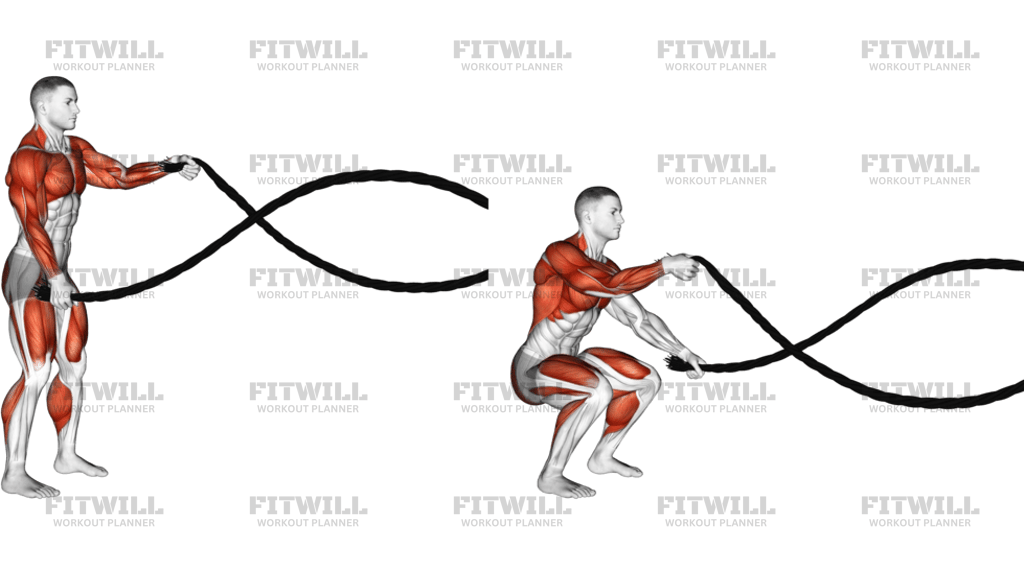
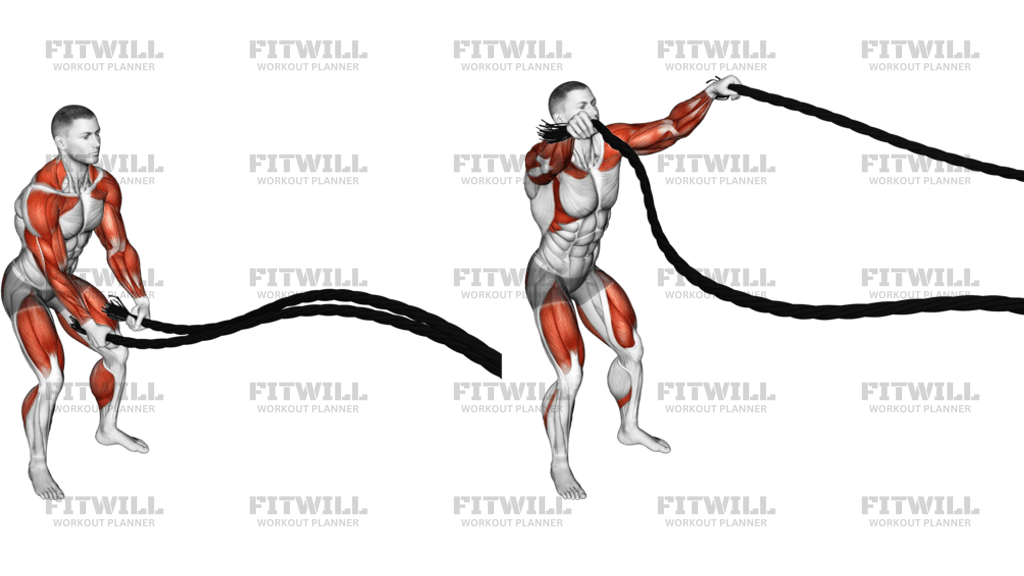
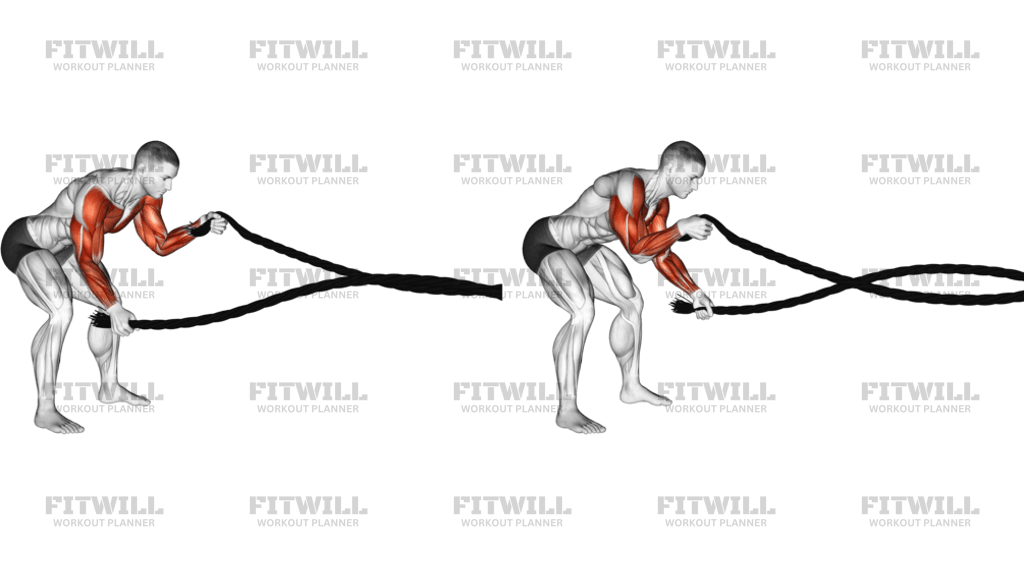
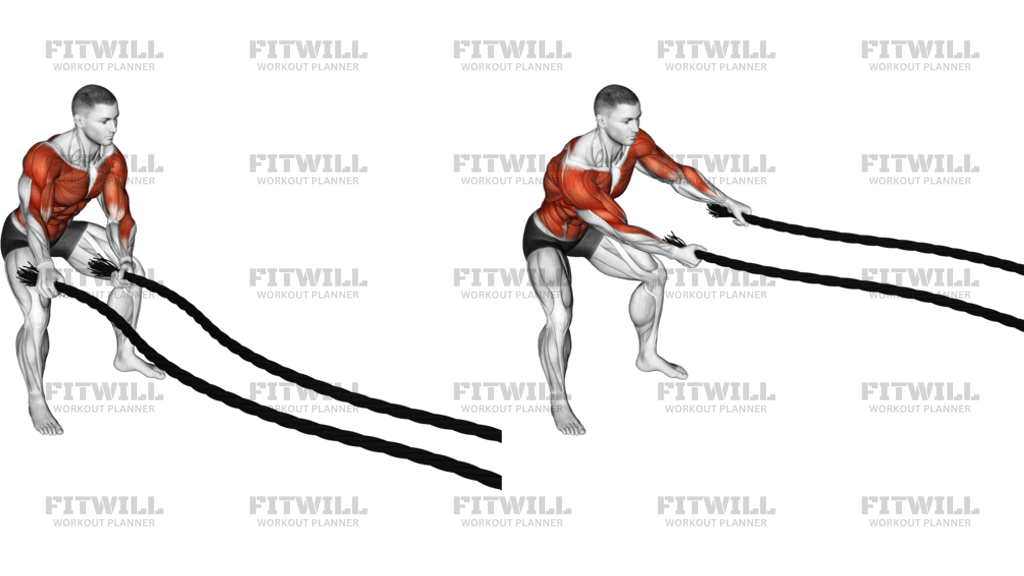
Battling Ropes Power Slam
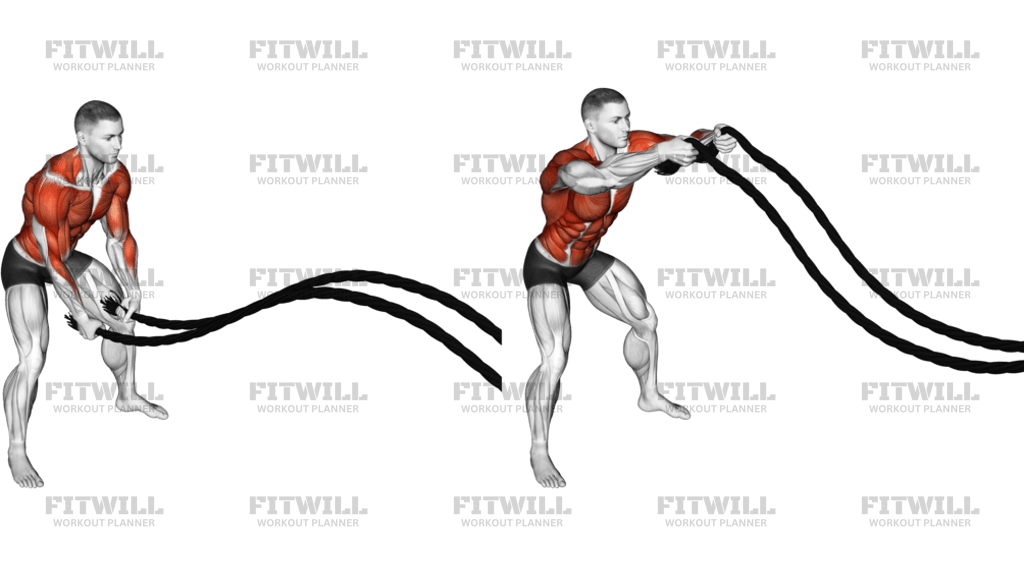
Battling Ropes Power Slam is a fast, two-handed rope drill built around an explosive wave and a hard return to the start. It is less about isolating one muscle and more about teaching the upper body, trunk, and hips to produce force together while staying organized under speed. The exercise works well when you want a conditioning drill that still rewards crisp posture, clean timing, and strong bracing.
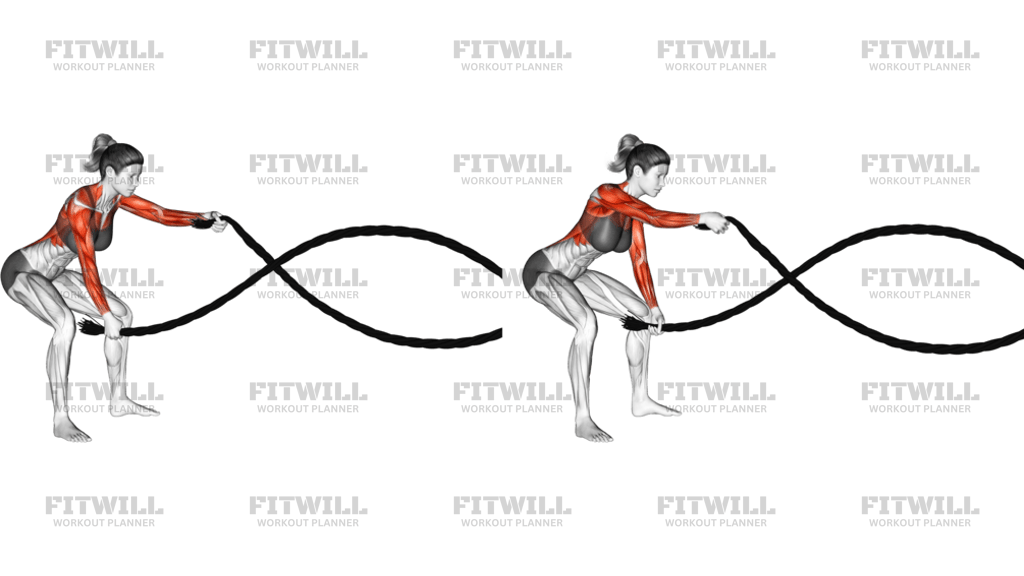
The setup matters because the rope should already have a little tension before the first rep. Stand far enough from the anchor that the handles reach your thighs without the rope going slack, then settle into an athletic hinge with soft knees, a proud chest, and neutral wrists. If you crowd the anchor, the slam becomes cramped; if you stand too far away, the shoulders have to reach and the wave loses power.
From that stance, drive the rope with both hands in one coordinated line. The movement should start from the feet, hips, and trunk, then transfer through the shoulders and arms into the rope. Keep the elbows soft, keep the ribs from flaring, and avoid shrugging as the hands rise and the rope ripples. The best reps look forceful but controlled, with the torso staying set even as the rope moves quickly.
Use the slam to create a clear, repeatable rhythm: brace, drive, snap, reset. Exhale sharply as the rope is whipped down, then let it rebound without losing your hinge or letting your lower back take over. Because the exercise is ballistic, small technique leaks show up quickly, so stop the set when your shoulders start creeping up or your torso starts rocking side to side.
Battling Ropes Power Slam fits well in warmups, power blocks, accessory circuits, and conditioning finishers. Short sets with precise mechanics are usually more useful than long grinders, especially when the goal is power and trunk control rather than just fatigue. Beginners can do it with a lighter rope and shorter bouts, but the standard for every level is the same: clean posture, clean timing, and a forceful rope path that you can repeat.
Fitwill
Log Workouts, Track Progress & Build Strength.
Achieve more with Fitwill: explore over 9600 exercises with images and videos, access built-in and custom workouts, perfect for both gym and home sessions, and see real results.
Start your journey. Download today!




Instructions
- Stand facing the rope anchor with your feet about hip-width apart and a slight stagger if that helps you balance. Hold both rope ends with a neutral grip and let the rope hang in front of your thighs.
- Hinge at your hips with soft knees, a tall chest, and your shoulders stacked over midfoot. Keep your arms long but not locked and your wrists straight.
- Set your ribs down and brace your trunk before the first rep so your torso stays steady when the rope speeds up.
- Drive forcefully through your feet and hips while lifting both hands up and forward to create a strong wave through the rope.
- At the top of the drive, snap the rope down hard toward the floor and let your lats and abs pull the handles back toward the start.
- Keep your shoulders away from your ears as the rope rebounds, and resist the urge to lean back or overextend your low back.
- Exhale sharply on the slam, then reset your brace as the rope returns to tension.
- Continue for the planned reps or interval, then step in carefully and release the handles only after the rope settles.
Tips & Tricks
- Pick a stance that lets you slam without taking a step; if you keep chasing the rope, you are standing too close to the anchor.
- Keep the handles close together so both rope ends move as one unit instead of twisting unevenly.
- Think of the slam as a whole-body snap driven by the hips and trunk, not a shoulder-only raise and drop.
- Let the knees and hips absorb the return, but do not collapse into a squat on every rep.
- Avoid turning the rep into a back extension; your ribs should stay stacked over your pelvis as the rope moves.
- Short, aggressive intervals usually work better than long, sloppy sets for this exercise.
- If your grip fails before your conditioning does, use shorter bouts or a lighter rope rather than opening your hands.
- Keep the neck relaxed and the chin slightly tucked so the head does not lead the movement.
Frequently Asked Questions
What does Battling Ropes Power Slam train?
It trains shoulder and upper-back endurance, grip, trunk stiffness, and full-body power transfer through the rope.
How far should I stand from the rope anchor?
Stand far enough away that the rope has slight tension at the start and the handles still hang near your thighs without pulling your shoulders forward.
Should I stay in a squat or a hinge?
Use a soft-knee athletic hinge. A deep squat makes it harder to create a clean rope snap and usually slows the rep down too much.
Is this exercise more cardio or strength?
It can serve both purposes, but it is usually programmed as a power-conditioning drill with short, intense efforts.
What are the most common mistakes with the rope?
Standing too close, shrugging the shoulders, arching the low back, and letting the hands drift apart are the most common breakdowns.
Can beginners do Battling Ropes Power Slam?
Yes. Start with a lighter rope, shorter intervals, and a controlled hinge before trying to produce faster or harder waves.
What should I feel during the rep?
You should feel the rope work in the shoulders, upper back, arms, core, and legs, with the effort spreading through the whole body rather than one joint.
How can I make this exercise harder?
Use a thicker rope, longer intervals, faster reps, or a farther stance from the anchor as long as you can keep the same clean body position.