Pike Push-Up Between Chairs
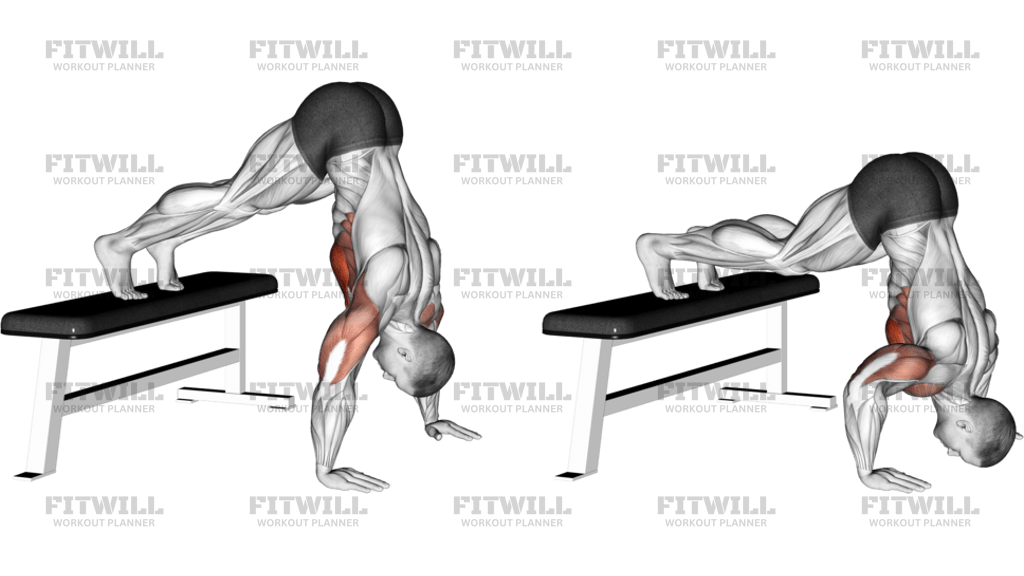
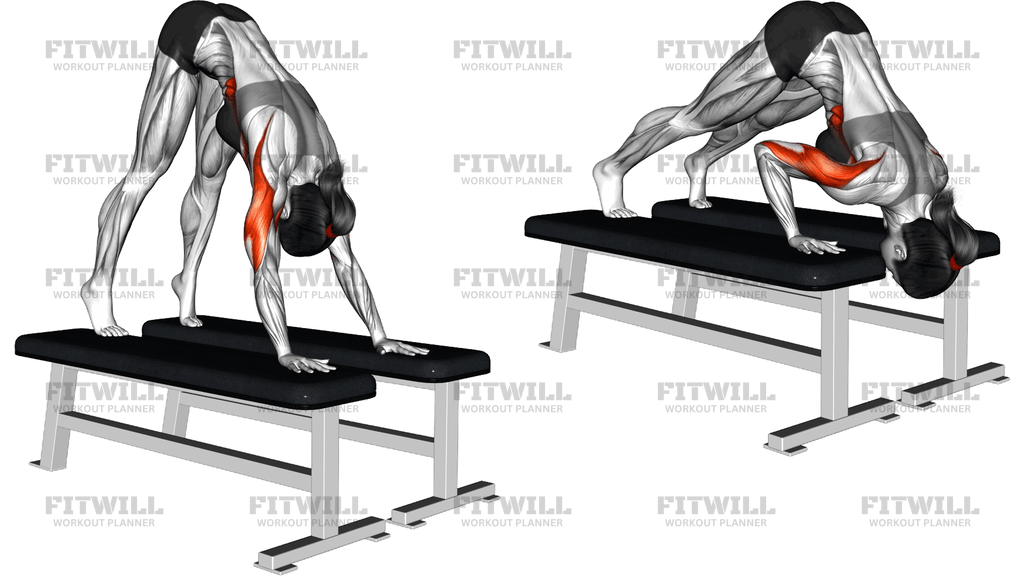
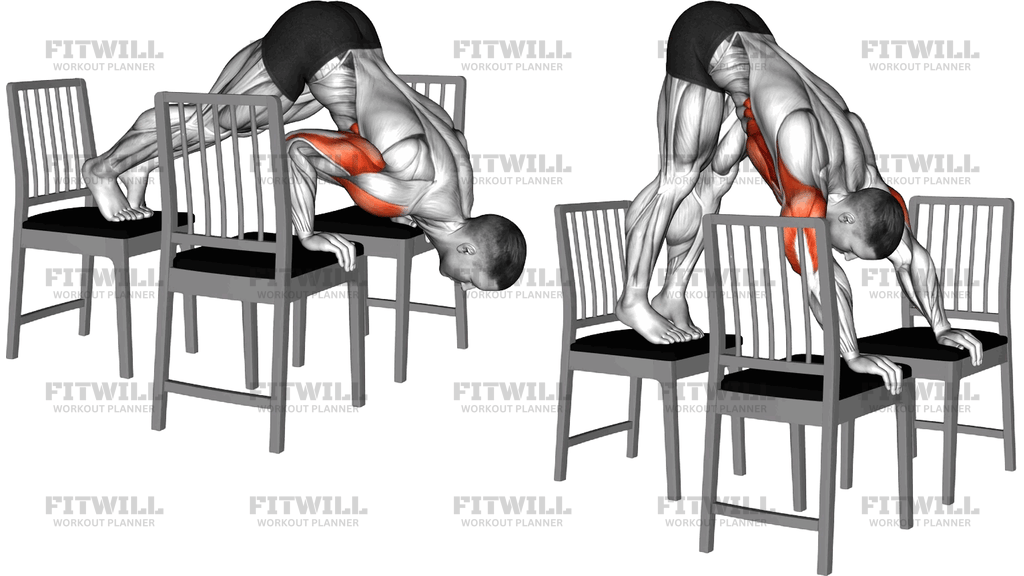
Pike Push-Up Between Chairs is a bodyweight shoulder press variation that uses elevated support to load the delts more directly than a flat push-up. With your feet on one chair and your hands on two separate chairs, the torso shifts into a steep inverted V position, turning each rep into a controlled overhead pressing pattern. It is a useful choice for building shoulder strength, triceps support, and upper-body control without needing a barbell or machine.
The chair setup matters because stability and hand placement determine how cleanly you can press. The hands should be planted firmly on the two chair seats, the feet should stay secure on the rear chair, and the hips should stay high enough that the movement comes from the shoulders rather than from sliding forward. In that position, the body is working like a steep press, so even small changes in elbow angle or torso position make a big difference in how the rep feels.
At the bottom, lower the head between the chairs with control instead of dropping into the shoulders. Keep the forearms as vertical as possible, let the elbows bend naturally, and press the body back up by driving through the chair seats until the arms are straight again. The best reps are smooth and repeatable, with the neck long, the ribs tucked, and the shoulder blades moving in a controlled way rather than shrugging up around the ears.
Pike Push-Up Between Chairs is especially useful as a shoulder-focused accessory when you want more pressing volume but less load than a barbell overhead press. It also works well as a progression toward handstand pushing strength, provided the chairs are stable and the range stays controlled. If the setup feels shaky, shorten the range or lower the feet before adding more intensity.
Safety comes from the setup as much as the pressing motion. Use chairs that do not slide, avoid soft or narrow seats that let the wrists tip, and stop the set if the head path becomes inconsistent or the neck starts taking over. When performed with clean positioning and a controlled tempo, Pike Push-Up Between Chairs gives the shoulders a demanding but very practical training stimulus.
Fitwill
Log Workouts, Track Progress & Build Strength.
Achieve more with Fitwill: explore over 9600 exercises with images and videos, access built-in and custom workouts, perfect for both gym and home sessions, and see real results.
Start your journey. Download today!




Instructions
- Place two sturdy chairs shoulder-width apart in front of you and a third chair behind them for your feet, then check that none of the chairs can slide or tip.
- Put your hands on the two front chair seats with your wrists stacked under your shoulders and your fingers spread for a secure grip.
- Step your feet onto the rear chair, then walk your hands and feet into a high pike so your hips are lifted and your body forms an inverted V.
- Brace your midsection, keep your gaze on the floor between the chairs, and let your elbows angle slightly back instead of flaring straight out.
- Bend your elbows to lower the top of your head between the front chairs, keeping your shoulders active and your neck long as you descend.
- Pause only long enough to stay controlled at the bottom, with your head traveling down between the chairs rather than drifting forward.
- Press through both chair seats to straighten your arms and drive your body back to the top pike position.
- Exhale as you press up, inhale as you lower, and keep the rep smooth instead of bouncing through the bottom.
- Step carefully off the rear chair when the set is finished and reset the chairs before the next set if anything shifted.
Tips & Tricks
- Use chairs with flat, non-slip seats; a lightweight chair that wobbles will turn the set into a balance drill instead of a shoulder exercise.
- Keep your hands centered on the seat so your wrists stay supported and do not roll off the edges under load.
- If your elbows flare wide at the bottom, reduce the depth slightly and aim them back at about a 30 to 45 degree angle.
- Think about lowering the crown of your head between the chairs, not diving your face forward toward the floor.
- Keep your ribs pulled in as you press so the hips do not drift forward and turn the rep into a loose arch.
- A slower lower is usually better than chasing depth; control the descent and press up with purpose.
- If the neck feels compressed, shorten the range and stop just before the bottom position that causes strain.
- When the feet chair is too high, the press becomes harder fast, so adjust foot height before adding more reps or sets.
- Use a spotter or move the chairs against a wall if the setup tends to shift during hard sets.
Frequently Asked Questions
What muscles does Pike Push-Up Between Chairs work most?
The main emphasis is on the shoulders, especially the front and middle delts, with the triceps helping to finish each press.
Is Pike Push-Up Between Chairs harder than a regular pike push-up?
Usually yes, because the elevated chair setup changes the leverage and makes stability more demanding. If you are new to it, shorten the range first.
How high should my hips be in Pike Push-Up Between Chairs?
Your hips should stay high enough to keep an inverted V shape through the whole rep. If your torso starts to flatten, the movement turns into a different press.
Where should my head go at the bottom of Pike Push-Up Between Chairs?
The head should travel down between the two front chairs under control. Do not let it drift far forward, and do not crash into the bottom position.
Can beginners do Pike Push-Up Between Chairs?
Yes, but only if the chairs are very stable and the range is kept short at first. A floor pike push-up is a safer starting point for many beginners.
What if my wrists hurt on the chair seats?
Shift your hands so the wrist is centered on the seat, or use a more stable surface with a flatter edge. Pain usually means the hand position or chair setup is off.
What is a good substitute if I do not have three sturdy chairs?
Use a floor pike push-up or put your feet on a box and your hands on the floor. Those options are easier to stabilize and still train the same pressing pattern.
Should my elbows flare out during Pike Push-Up Between Chairs?
A little flare is normal, but keep the elbows angled back rather than straight sideways. That keeps the press cleaner and usually feels better on the shoulders.