Standing Pelvic Tilt
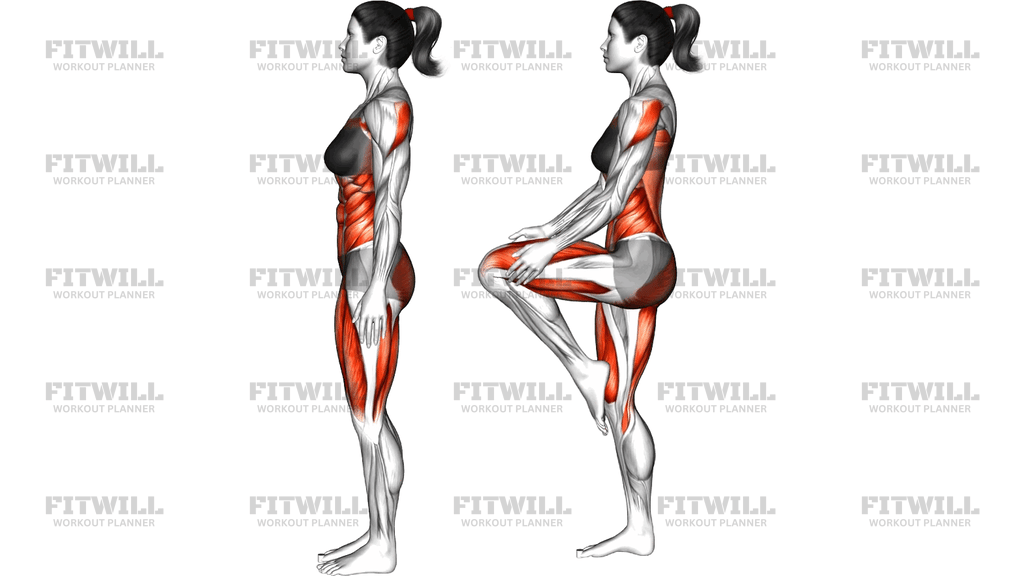
Standing Pelvic Tilt is a bodyweight control drill for learning how to move the pelvis without letting the ribs, knees, or shoulders take over. Stand tall with your feet about hip-width apart, hands on the front of your hip bones, and a soft bend in the knees. The goal is to feel the pelvis tip forward and back in a small, deliberate range while the upper body stays stacked and calm.
It trains the deep core, glutes, and the stabilizers that help organize the hips and lower spine. That makes Standing Pelvic Tilt useful as a warm-up, posture drill, or low-intensity accessory when you want better control before squats, lunges, deadlifts, or running work. Because the movement is so small, the setup matters more than speed or range.
Start from a neutral stance with your weight evenly spread through both feet and your ribs not flared forward. From there, gently tip the pelvis backward so the tailbone tucks under and the lower abs tighten, then reverse the motion by letting the pelvis tilt forward just enough to create a mild arch in the lower back. Keep the change coming from the hips, not from leaning the torso or bending the knees deeper.
A good rep feels smooth and controlled rather than dramatic. The neck stays long, the shoulders remain relaxed, and the hands can stay on the hip bones so you can sense the movement instead of guessing at it. Use a slow inhale as you move toward the more open position and a steady exhale as you tuck the pelvis under, especially if you are using the drill to teach core engagement.
Standing Pelvic Tilt is not about forcing the biggest arch or the biggest tuck; it is about learning where neutral lives and how to return to it on command. That makes it useful for beginners, lifters, and anyone who wants better awareness of the pelvis during standing work. Stop short of any pinching in the low back, and keep the motion clean enough that you could repeat it for several breaths without the rest of the body drifting.
[ Workout Log & Planner ]
Put your next workout in Fitwill
Keep your plan and training log ready when you are.


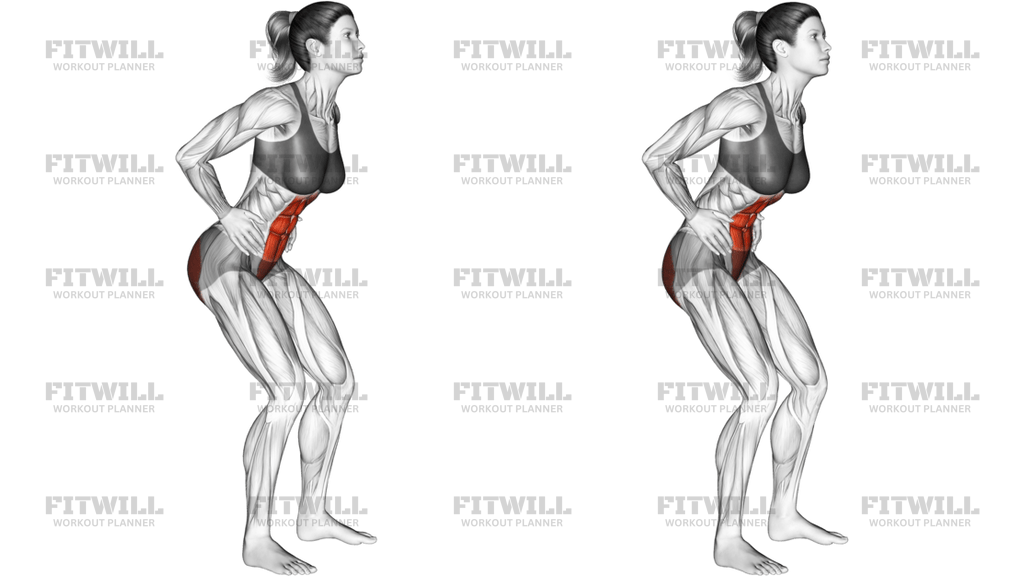
Instructions
- Stand with your feet hip-width apart, knees soft, and your hands resting on the front of your hip bones.
- Stack your ribs over your pelvis and keep your chest from flaring up as you set your posture.
- Inhale and let the pelvis tip slightly forward until the lower back has a small natural arch.
- Exhale and tuck the tailbone under, drawing the pubic bone up and flattening the low back.
- Lightly tighten the glutes at the top of the tuck without locking your knees.
- Alternate between the forward and backward tilt in a slow, controlled rhythm.
- Keep your feet planted and your shoulders level so the movement stays in the pelvis.
- Finish by returning to a neutral stance and taking a relaxed breath before the next set.
Tips & Tricks
- Keep the range small; if your torso starts leaning, the pelvis is moving too far.
- Use your fingertips on the hip bones to feel the pelvis tip instead of guessing at the position.
- The tuck should come from the lower abs and glutes, not from bending the knees deeper.
- If your low back pinches during the forward tilt, shorten that portion and keep the ribs down.
- Hold each end position for a beat when you are learning the pattern.
- Stay even through both feet so the weight does not drift into the heels or toes.
- A slow exhale usually helps the posterior tilt feel smoother and easier to repeat.
- Stop the set when the motion becomes a hip sway instead of a clean pelvic tilt.
Frequently Asked Questions
What does Standing Pelvic Tilt train most?
It mainly trains pelvic control through the deep core, lower abs, glutes, and the small stabilizers around the lower back and hips.
Is Standing Pelvic Tilt good for beginners?
Yes. It is often used as a beginner drill because the motion is small and easy to scale by reducing the range.
Should my knees bend during Standing Pelvic Tilt?
Keep only a soft bend. If the knees keep changing angle, the movement is turning into a squat pulse instead of a pelvic tilt.
How do I know if I am doing it right?
You should feel the pelvis move under the torso while the shoulders, chest, and feet stay mostly still.
Can Standing Pelvic Tilt help my squats or deadlifts?
Yes. Better pelvic awareness often carries over to bracing and position control in other standing lifts.
What if I feel it in my lower back?
Reduce the forward tilt, keep the ribs from flaring, and make the tuck slightly more active.
How many reps should I do?
Small sets of 6-12 slow reps are usually enough for a warm-up or control drill.
Do I need any equipment?
No. Body weight is enough, although touching the hip bones can help you feel the movement more clearly.