Standing Phelps
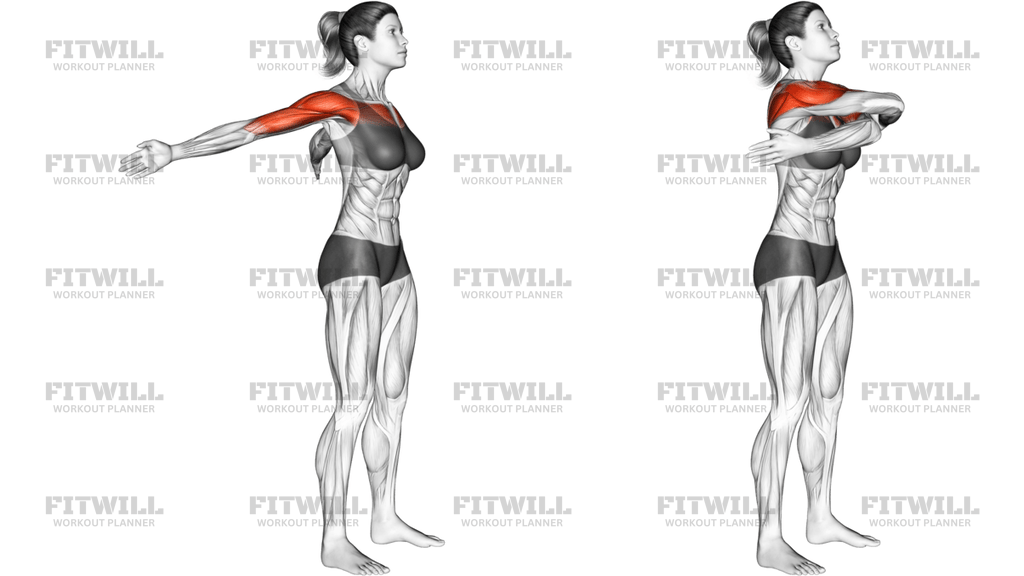
Standing Phelps is a standing bodyweight mobility drill for the chest, front shoulders, and upper back. It uses a smooth arm sweep to open the shoulders and organize the shoulder blades without forcing a hard stretch. The goal is to keep the torso tall, the neck relaxed, and the motion clean enough that each rep feels the same from start to finish.
Although it looks simple, the setup changes how useful the movement feels. Stand with your feet about hip-width apart, soften the knees, and stack the ribs over the pelvis instead of leaning back. Start with the arms opened wide at shoulder height, then sweep them forward in a controlled arc so one arm crosses over the other in front of the chest. That crossing position should feel like a controlled squeeze and stretch, not a shrug or a twist.
The motion is most effective when the shoulders stay down and the chest does not flare aggressively. Let the shoulder blades glide, but do not yank the arms through the range or let the lower back take over. A slow return to the open position is just as important as the crossing phase, because it keeps tension even and helps you find the same path on every repetition.
Standing Phelps is useful as a warmup before pressing, pulling, overhead work, or any session where the shoulders need to move freely. It can also work as a light accessory drill on recovery days when you want to restore smooth shoulder motion without loading the joints. Because it is bodyweight only, beginners can use it easily, but the range should stay pain-free and controlled.
If the front of the shoulder pinches, shorten the arc and keep the arms a little lower than shoulder height. If the neck tightens, slow down and stop shrugging as the hands cross. The best version of Standing Phelps feels deliberate and repeatable: open, cross, breathe, return, and keep the torso organized the whole time.
[ Workout Log & Planner ]
Put your next workout in Fitwill
Keep your plan and training log ready when you are.


Instructions
- Stand tall with your feet about hip-width apart and soften your knees so your lower body stays stable.
- Open both arms out to the sides at shoulder height with a long neck and the ribs stacked over the pelvis.
- Keep your palms open and your shoulders away from your ears before the movement starts.
- Sweep both arms forward in a wide arc until one arm crosses over the other in front of your chest.
- Keep your torso facing forward and avoid twisting your ribcage as the arms come together.
- Pause briefly in the crossed position and feel the stretch and control across the chest and front shoulders.
- Reverse the arc to open the arms back out to the sides under control.
- Exhale as the arms cross, inhale as you reopen, and keep the motion smooth for each rep.
- Lower your arms and reset your posture when the set is complete.
Tips & Tricks
- Keep the arms near shoulder height; dropping them too low changes the feel and reduces the shoulder opening.
- If your shoulders shrug during the cross, slow the rep and think about reaching long through the fingertips.
- Let the ribcage stay stacked instead of flaring the chest forward to fake a bigger stretch.
- A short pause in the crossed position usually works better than forcing the arms farther across.
- If one shoulder is tighter, let that side move at its own pace instead of trying to match the looser side exactly.
- Use a slower return to the open position so the shoulder blades glide instead of snapping back.
- This works well before bench press, push-ups, overhead pressing, or any workout that needs freer shoulder motion.
- If the front of the shoulder pinches, lower the arm path slightly and shorten the sweep.
Frequently Asked Questions
What does Standing Phelps work most?
It mainly targets the chest, front shoulders, and the muscles that control shoulder blade movement. You should feel a controlled opening across the front of the upper body rather than a hard back bend.
Is Standing Phelps a stretch or a strength exercise?
It is mostly a mobility and dynamic stretch drill, but it also asks the shoulder stabilizers to control the arm path. Treat it as a controlled movement, not a passive hold.
Do I need equipment for Standing Phelps?
No, this version is bodyweight only. You just need enough space to open the arms out to the sides and sweep them across the chest.
How high should my arms be during Standing Phelps?
Shoulder height is the best starting point for most people. If your shoulders feel pinchy, lower the line of the arms a little and keep the sweep smaller.
Should my torso twist when my arms cross?
No. Keep your chest facing forward and let the arms move without turning the ribcage, otherwise the stretch turns into a rotation drill.
Can I use Standing Phelps before bench press or overhead work?
Yes, it fits well in a warmup before pressing or any session where the shoulders need to move more freely. Keep the reps smooth and avoid long, tiring holds right before heavy lifting.
What if I feel a pinch in the front of my shoulder?
Shorten the arm sweep, keep the hands a little lower, and slow the tempo. If the pinch stays sharp, stop and switch to a smaller pain-free range.
How many reps should I do?
Use enough reps to open the shoulders without fatigue, usually around 8-15 smooth repetitions. The set should feel like clean preparation, not a burn-out.