Standing Hip Circle
Standing Hip Circle is a standing bodyweight mobility drill that teaches you to move the pelvis in a smooth circle while keeping the feet planted. It is useful for warming up the hips, groin, glutes, and trunk before lower-body lifting, running, or sport work. The goal is not to force a huge range. The goal is to keep the circle clean, even, and controlled so the hips can open and close without the lower back taking over.
The image shows a tall stance with the hands on the hips, a slight knee bend, and the torso traveling through a forward lean, side bend, and return. That setup matters because the pelvis needs space to move while the ribs stay organized over it. If the knees lock out or the chest collapses, the motion usually turns into a sloppy back bend instead of a true hip circle.
Think of tracing a small circle with your belt buckle. Shift forward, around one side, slightly back, then around the other side, keeping both feet flat and the weight balanced. The motion should feel continuous rather than segmented. Breathing should stay calm and steady, with an easy exhale as you move through the tightest part of the circle. Reverse direction to keep both sides honest.
This exercise fits best as a warm-up drill, a movement prep reset between sets, or a low-intensity accessory for people who need better hip control. It can also help lifters who feel stiff when hinging or squatting, because it teaches the hips to separate from the ribcage. Keep the range pain-free and stop short of any pinching in the front of the hip or a cranky feel in the low back.
Because the drill is bodyweight and low load, quality matters more than effort. A good rep looks smooth, quiet, and repeatable. A poor rep looks rushed, twisted through the shoulders, or overly large in the lumbar spine. Use smaller circles first, then widen them only if you can keep the same control from start to finish.
[ Workout Log & Planner ]
Put your next workout in Fitwill
Keep your plan and training log ready when you are.


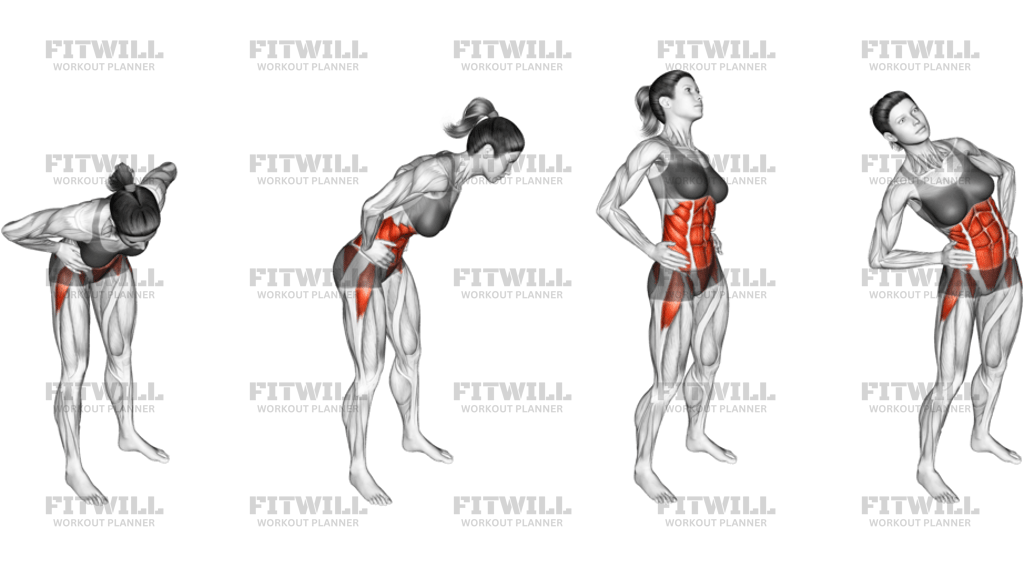
Instructions
- Stand tall with your feet about hip-width apart and your hands resting on your hips.
- Keep a soft bend in both knees so the legs stay relaxed instead of locked out.
- Brace lightly through your midsection and stack your ribs over your pelvis before you move.
- Shift your hips forward and begin drawing a small circle with your pelvis.
- Continue the circle by moving to one side, then around through the back and to the other side.
- Keep both feet planted and let the weight move evenly through the whole foot.
- Let the torso follow the hips, but avoid turning it into a big twist or side bend through the shoulders.
- Complete the planned reps, then reverse the circle direction and repeat with the same control.
Tips & Tricks
- Start with a small circle; if the motion is clean, widen it later.
- Keep the knees softly bent, because locked knees usually force the movement into the low back.
- Think about moving the belt buckle around a smooth loop instead of swinging the chest from side to side.
- If you feel pinching at the front of the hip, shorten the forward part of the circle and stay a little taller.
- Keep the heels down and the toes relaxed so the feet do not spin or lift as you circle.
- Breathe out gently as you pass through the tightest side or back portion of the rep.
- Move slowly enough that you could pause anywhere in the circle without losing balance.
- Reverse directions between sets so one side does not get all the work.
Frequently Asked Questions
What does Standing Hip Circle train?
It mainly trains hip mobility and pelvic control, with the glutes, core, and lower-back stabilizers helping keep the motion smooth.
Is Standing Hip Circle a stretch or an active drill?
It is closer to an active mobility drill. You are moving the hips through control, not just hanging in a static stretch.
Should my shoulders move a lot during this exercise?
No. The shoulders should stay mostly quiet while the pelvis and torso make the circle around them.
How big should the circle be?
As small as needed to stay smooth and balanced. A smaller circle with clean control is better than a large circle with twisting or back pain.
Can beginners do Standing Hip Circle?
Yes. It is a good beginner-friendly warm-up drill because it uses bodyweight and teaches basic hip awareness.
What should I feel while doing it?
You should feel the hips, glutes, and trunk working together. A mild stretch is fine, but sharp pinching or low-back discomfort is not.
What is the most common mistake?
Making the circle too big and letting the ribs flare or the lower back arch. That usually turns the drill into compensation instead of control.
Should I go both directions?
Yes. Reversing the direction helps you keep the hips symmetrical and prevents one pattern from becoming dominant.