Lying Glute Squeeze
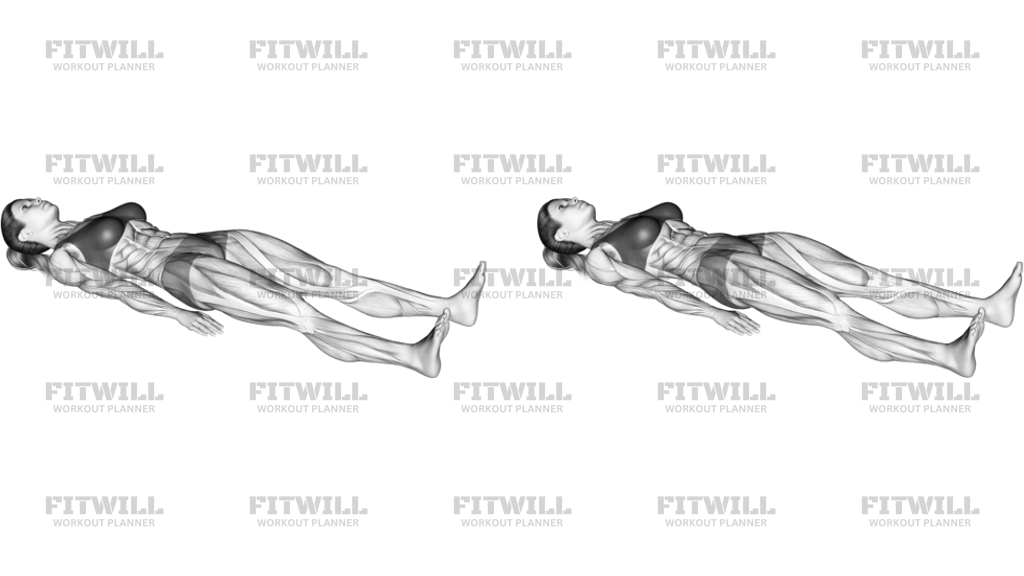
Lying Glute Squeeze is a floor-based glute activation drill that teaches you to contract the hips without relying on momentum or a big range of motion. Because you are lying on your back with only body weight, the exercise is useful when you want a low-fatigue way to wake up the posterior chain before bridges, squats, lunges, or deadlifts. The goal is not to make the movement large. The goal is to create a clean, deliberate squeeze that you can repeat with the same pelvis and rib position every rep.
The setup matters because a small change in pelvic tilt changes where the work goes. When the ribs flare or the low back arches, the squeeze tends to drift into the lower back and hamstrings instead of staying in the glutes. With Lying Glute Squeeze, the torso should stay quiet, the pelvis should stay organized, and the contraction should come from the back of the hips rather than from pushing through the feet or swinging the legs.
Lie face up on a mat or floor with your legs extended, arms resting by your sides, and your head and shoulders relaxed. Exhale to bring the ribs down, then lightly tuck the pelvis so your lower back stays long and neutral against the floor. From there, squeeze both glutes as if you were narrowing the back of the hips toward the floor, hold the peak briefly, and release without losing the stacked rib-and-pelvis position. The rep should feel like a focused isometric contraction, not a hip thrust or a kick.
This exercise is especially useful in warm-ups, activation circuits, recovery days, or accessory blocks where you want better glute awareness without adding more load to the spine. It can also help lifters who struggle to feel their glutes in bigger patterns by giving them a simpler place to practice pelvic control and tension. If the squeeze is clean, the outside of the movement looks almost still while the hips do the work.
Keep the effort strong but not sloppy. If you feel pressure in the low back, cramping in the hamstrings, or a loss of pelvic position, shorten the contraction and reset before the next rep. Lying Glute Squeeze works best when you treat each repetition like a precise cue for the glutes, not like a conditioning exercise where speed matters more than control.
[ Workout Log & Planner ]
Put your next workout in Fitwill
Keep your plan and training log ready when you are.


Instructions
- Lie face up on a mat or floor with both legs extended, arms by your sides, and your head and shoulders relaxed.
- Set your feet and legs still, keep your ribs heavy, and let your lower back settle against the floor without arching.
- Exhale and lightly tuck your pelvis so the front of your hips stays quiet and the back of your pelvis points slightly toward your ribs.
- Squeeze both glutes to create a small posterior pelvic tilt, keeping your thighs and knees still instead of driving through the legs.
- Hold the glute squeeze for one to two seconds while keeping the rib cage down and the neck relaxed.
- Release the contraction slowly until the tension drops, but keep the same body position on the floor.
- Repeat the squeeze for the planned number of reps or holds, keeping each repetition smooth and even.
- Finish by relaxing the pelvis and glutes fully before you get up or move to the next exercise.
Tips & Tricks
- Think about narrowing the back of your hips toward the floor instead of arching your lower back.
- Keep your ribs heavy; if they pop up, the squeeze usually shifts away from the glutes.
- If your hamstrings cramp, soften the effort and slightly bend the knees instead of forcing a harder squeeze.
- Use short holds of one to two seconds so you can repeat the same glute contraction every rep.
- The movement should stay small; if your legs start to move, you are turning it into a leg drill.
- Keep the jaw, neck, and shoulders relaxed so the pelvis can stay organized.
- Both sides should contract evenly; if one hip feels dominant, reset and start the squeeze again.
- This works well as a warm-up before lower-body lifting because it primes glute tension without tiring you out.
Frequently Asked Questions
What muscles does Lying Glute Squeeze work?
It mainly targets the glutes, with the core helping you keep the ribs and pelvis organized. The hamstrings and hip stabilizers assist, but they should not take over the squeeze.
Is Lying Glute Squeeze beginner-friendly?
Yes. It is one of the easier ways to learn glute tension because the exercise uses body weight and a very small range of motion.
How is Lying Glute Squeeze different from a glute bridge?
A glute bridge lifts the hips through a larger range, while Lying Glute Squeeze is mostly an isometric contraction on the floor. That makes this version better for activation and pelvic control.
Why do I feel Lying Glute Squeeze in my lower back?
That usually means your ribs are flaring or your pelvis is arching instead of tucking slightly. Reset with a smaller squeeze and keep the low back long against the floor.
Why do my hamstrings cramp during Lying Glute Squeeze?
The effort is probably shifting into the back of the thighs because the squeeze is too hard or the pelvis is out of position. Reduce the intensity, soften the knees a little, and focus on the glutes contracting first.
Do my feet need to push into the floor?
No. The floor is just a reference point here, not a driving surface. If you press hard through the feet, the exercise starts to look more like a bridge than a glute squeeze.
How long should I hold each rep?
One to two seconds is usually enough to feel a clean squeeze without losing position. Longer holds are fine if you can keep the ribs down and the pelvis steady.
When should I use Lying Glute Squeeze in a workout?
It fits best in a warm-up, activation block, or accessory slot before heavier lower-body work. It is useful when you want glute engagement without adding fatigue.