Swimmer Kicks Version 2
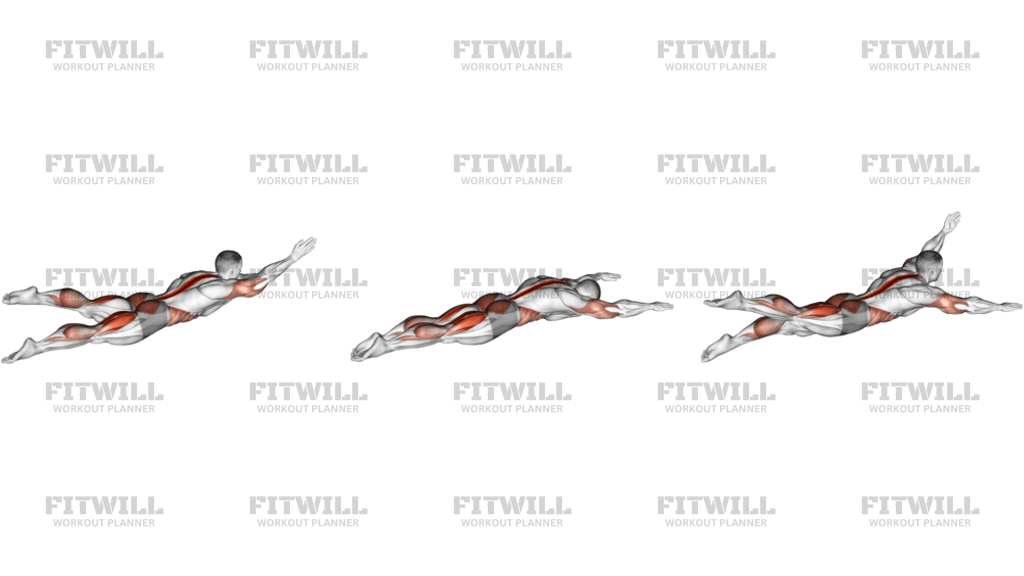
Swimmer Kicks Version 2 is a prone bodyweight back-extension drill that alternates opposite arm and leg reaches while the chest, ribs, and thighs stay lightly lifted off the floor. The exercise is built around controlled, swimming-like kicks rather than speed. Each rep asks you to keep the torso long, the neck neutral, and the movement small enough that the low back never takes over.
The main training value comes from teaching the posterior chain to work without losing position. The lats stay active as the reaching arm lengthens overhead, while the upper back, core, glutes, and hip extensors help you hold the body in one long line. In anatomy terms, the primary target is the latissimus dorsi, with the rhomboids, biceps brachii, and forearm flexors assisting the reach and shoulder control. That makes it useful when you want trunk stiffness, shoulder coordination, and better control through extension.
The setup matters because this is easy to turn into a sloppy low-back arch if you start too high off the floor. Lie face down, extend the arms long, and make enough space for the opposite arm and leg to move without twisting the pelvis. The goal is a steady hover, not a big kick. If the chest is jammed into the floor or the hips are rocking side to side, the repetition has already gotten too fast or too large.
As you move, think of length rather than height. One arm reaches forward as the opposite leg extends back, then you switch sides with a smooth, continuous rhythm. Keep the movement even, breathe through the rep, and lower under control before the next switch. The best version of Swimmer Kicks Version 2 looks calm and repetitive, with the torso staying quiet while the arms and legs alternate.
Use it as low-load accessory work, a warm-up drill, or a core-and-back finisher when you want bodyweight tension without equipment. It is especially useful when you need a floor-based exercise that reinforces posture, shoulder reach, and glute engagement together. The exercise should feel demanding through control and endurance, not impact or momentum.
[ Workout Log & Planner ]
Put your next workout in Fitwill
Keep your plan and training log ready when you are.


Instructions
- Lie face down on the floor with your arms extended overhead and your legs straight behind you.
- Lengthen your neck, tuck your chin slightly, and keep your gaze down so the head stays in line with your spine.
- Lift your chest just enough to clear the floor and lightly brace your midsection before the first kick.
- Reach one arm forward while extending the opposite leg back, keeping both limbs long rather than high.
- Switch sides in a smooth alternating rhythm so the torso stays steady and the hips do not roll.
- Keep the chest hovering and the glutes engaged as you continue alternating swimmer-style kicks.
- Exhale on the reach or kick, and inhale as you switch to the other side without losing position.
- Lower with control and reset if your low back starts to arch or your neck begins to strain.
Tips & Tricks
- Think about reaching long through the fingertips and toes instead of kicking higher off the floor.
- Keep the pelvis heavy and level; side-to-side rocking usually means the alternating pattern is too fast.
- If your lower back feels pinched, reduce the chest lift and make the arm and leg reaches smaller.
- Let the glutes initiate the leg extension so the movement does not turn into a loose knee kick.
- Keep the ribs from flaring by maintaining a light abdominal brace throughout the set.
- Relax the face and shoulders; shrugging turns the drill into a neck and trap endurance exercise.
- Use a slow, even tempo that lets each switch look deliberate instead of splashy.
- Stop the set when you can no longer keep both the hover and the alternating rhythm controlled.
Frequently Asked Questions
What muscles do Swimmer Kicks Version 2 work?
They primarily target the lats, with the upper back, glutes, core, and shoulder stabilizers helping you hold the prone position and alternate cleanly.
Can beginners perform this exercise?
Yes. Beginners should keep the chest lift small, move slowly, and treat it as a coordination drill rather than a max-effort back extension.
How do I know if my range of motion is too big?
If your low back arches hard, your hips twist, or your feet and hands start flinging upward, the reach is too large. Keep the limbs long and the hover low.
Should my chest stay off the floor the whole time?
Yes, but only slightly. A small hover keeps tension in the posterior chain without turning the movement into a stressful backbend.
Is this the same as a superman hold?
Not exactly. A superman hold is usually a static lift, while Swimmer Kicks Version 2 alternates opposite arm and leg reaches in a continuous rhythm.
Where should I feel the work most?
You should feel the lats, upper back, glutes, and deep core working to keep the body long and stable. The low back should support, not dominate, the rep.
Can I do this if I feel neck tension?
Yes, but only if you keep your chin slightly tucked and your gaze on the floor. If the neck still works hard, lower the chest less and shorten the hold.
How can I make the exercise harder without adding weight?
Slow the alternating switches, hold the hover a little longer on each side, or add a brief pause when the opposite arm and leg are fully extended.