Split Jump To Box
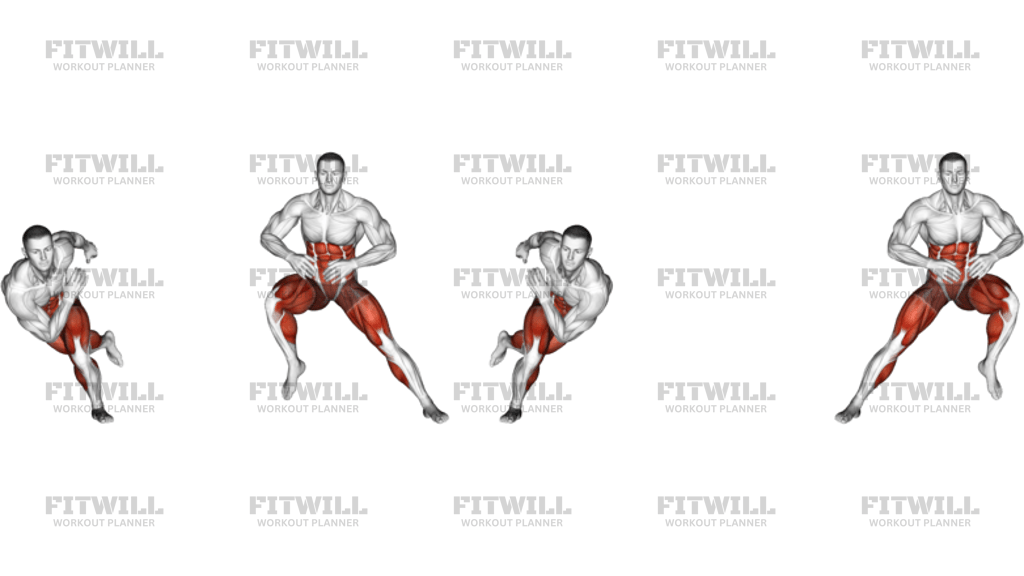
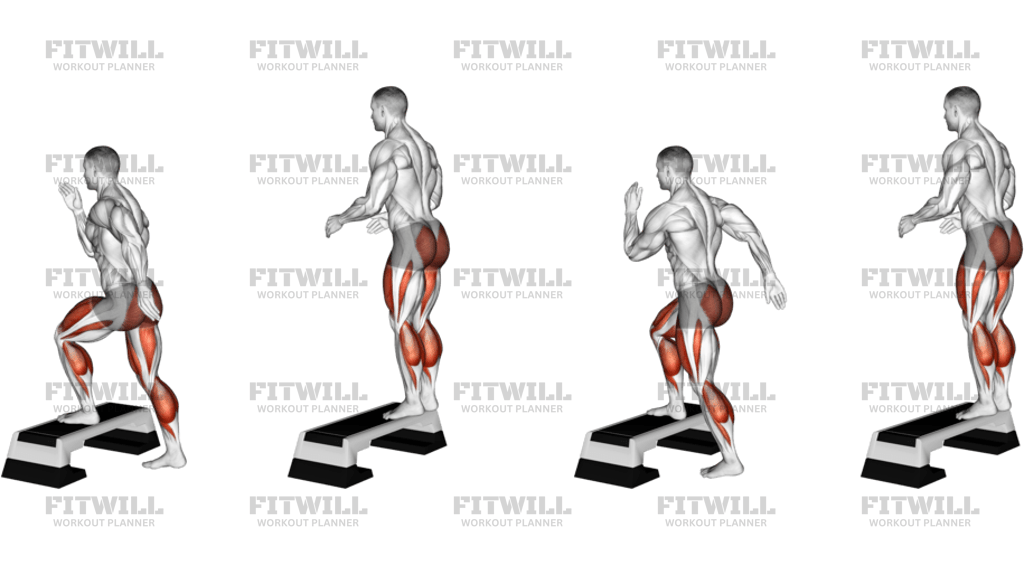
Split Jump To Box is a bodyweight plyometric that combines a split stance with an alternating jump onto and off a low box or step. It trains lower-body power, coordination, and landing control at the same time, so the movement is useful when you want athletic force production without turning the rep into a sloppy bounce. The exercise asks both legs to work, but each landing is still a single-leg balance challenge, which is why the setup matters so much.
The main work comes from the glutes, quads, calves, and hip stabilizers, with the core helping you stay stacked as you switch legs in the air. Because one foot stays on the box while the other stays on the floor, the exercise exposes side-to-side differences quickly. If your hips twist, your front knee caves, or your torso drifts forward, the landing will feel unstable long before the rep looks powerful.
Set the box or step at a height you can control and stand in a split stance with one foot on the platform and the other foot planted on the floor. Keep your feet far enough apart that both knees can bend comfortably, but not so far apart that you have to lunge or lean to reach the box. From that position, load the legs by lowering slightly, then drive through the front foot and the back leg together to leave the platform in a quick switch.
Each rep should feel like an explosive exchange, not a broad jump. Switch legs in the air, land softly with the opposite foot on the box and the other foot on the floor, then absorb the landing through bent hips and knees before repeating. Keep the ribs down, the chest tall, and the arms moving like a sprint pattern to help rhythm without throwing your balance off. Exhale on the jump and reset your breath as soon as the landing is stable.
Split Jump To Box fits best in speed, power, or athletic conditioning work where you want crisp reps and full recovery between efforts. It is not the place to grind for fatigue, and the box should never be high enough that you have to crash into the landing. Start with a low step and short sets, then progress only if every switch stays quiet, balanced, and symmetrical from one side to the other.
[ Workout Log & Planner ]
Put your next workout in Fitwill
Keep your plan and training log ready when you are.


Instructions
- Set a low box or step in front of you and stand in a split stance with one foot on the platform and the other foot on the floor behind it.
- Keep your front foot flat and your back heel lifted, with both knees bent enough that you can lower and spring without losing balance.
- Square your hips and torso to the front edge of the box, then set your arms in a running position beside your body.
- Lower a few inches to load both legs, keeping your chest tall and your front knee tracking over the middle toes.
- Drive through the foot on the box and the foot on the floor at the same time to jump upward and switch leg positions in the air.
- Land softly with the opposite foot on the box and the other foot on the floor, absorbing the impact through bent hips and knees.
- Stabilize for a brief moment if needed, then immediately load the next jump without letting your torso collapse or twist.
- Breathe out as you jump, reset your breath on the landing, and finish the set by stepping down carefully rather than hopping off the box.
Tips & Tricks
- Use a low box first; if the landing gets noisy or rushed, the height is too high for clean switches.
- Keep the front knee pointed over the middle toes on both takeoff and landing so the split stance stays stable.
- Think 'quick switch, soft landing' instead of trying to jump as high as possible.
- Let the arms help the rhythm, but do not throw them so hard that your torso twists away from the box.
- If the back foot keeps dragging or missing the floor, shorten the stance a little and reset the foot placement.
- Stop the set when the landing turns into a stomp; this movement should stay springy and controlled.
- Use short sets with full recovery so each rep stays explosive rather than turning into conditioning fatigue.
- If one side feels less stable, lead that side only after the weaker landing pattern is clean and quiet.
Frequently Asked Questions
What does Split Jump To Box train?
Split Jump To Box trains lower-body power, leg coordination, and single-leg landing control, with the glutes, quads, calves, and core doing most of the work.
How high should the box be for Split Jump To Box?
Use the lowest box or step that lets you switch legs and land quietly. If you have to reach, lean, or crash into the landing, the box is too high.
Is Split Jump To Box good for beginners?
Only if the person already handles basic split squats and jump landings well. Newer trainees should start with a lower step, slower tempo, or plain split squat jumps before adding speed.
Should my back foot stay on the floor or on the box?
In this version, one foot stays on the box and the other stays on the floor, then you switch legs in the air. The goal is to land in the opposite split stance on the next rep.
Why do my knees wobble on Split Jump To Box?
That usually means the stance is too narrow, the box is too high, or you are jumping before the hips are loaded. Widen the base slightly and keep the front knee tracking over the toes.
What is the biggest mistake in Split Jump To Box?
The most common mistake is chasing height instead of a clean switch. A good rep looks fast, but the landing should still be soft, balanced, and under control.
Can I do Split Jump To Box for conditioning?
Yes, but keep the volume low enough that the jumps stay crisp. Once the landings get sloppy, the drill stops training power and starts teaching bad mechanics.
How do I progress Split Jump To Box?
Progress by first making the landings quieter, then slightly increasing speed or box height. You can also add reps only if both sides still switch evenly and the torso stays square.