Seated Flexion And Extension Neck
Seated Flexion and Extension Neck is a bodyweight neck drill performed while sitting upright on a flat bench with the feet planted and the hands lightly supporting the head. The exercise trains controlled movement through cervical flexion and extension, building awareness and strength in the front and back of the neck while the torso stays quiet.
The setup matters because the neck should move without the rib cage, shoulders, or lower back taking over. Sit tall, stack the ribs over the pelvis, and keep the elbows open so the hands cradle the head instead of pulling on it. From there, the head can travel through a small, controlled arc that feels smooth rather than forced.
Each repetition should feel like a deliberate nod forward followed by a controlled return through neutral and into a gentle extension. The crown of the head should lead the motion, not the chin or shoulders. Use the hands as a guide and light support, especially on the way down, so the neck does the work instead of momentum or a hard yank.
This movement is useful as a warm-up, accessory drill, or posture-focused corrective exercise for people who need better neck control for lifting, contact sports, or desk work. Keep the range pain-free, move slowly enough to stay aware of position, and stop if the motion creates sharp pain, dizziness, or any nerve-like symptoms. The goal is clean, repeatable neck motion with steady breathing and no body swing.
[ Workout Log & Planner ]
Put your next workout in Fitwill
Keep your plan and training log ready when you are.


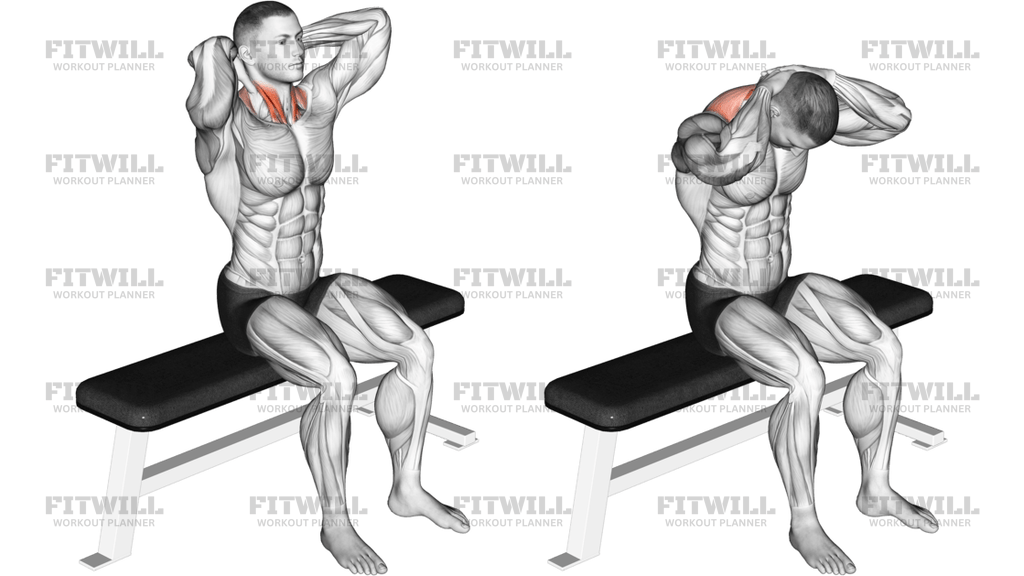
Instructions
- Sit on a flat bench with both feet flat on the floor and your hips centered on the pad.
- Stack your ribs over your pelvis and keep your torso tall before the first rep.
- Place your hands behind your head with your fingers interlaced and your elbows open wide.
- Keep the hands as a light cradle; do not pull hard on the back of your skull.
- Take a breath, then slowly tuck your chin and flex your neck until you feel a gentle stretch.
- Reverse the motion by lifting the crown of your head and extending the neck back toward neutral.
- Keep your chest, shoulders, and low back still so the movement comes only from the neck.
- Repeat the flexion and extension pattern for the planned number of reps with smooth, even breathing.
Tips & Tricks
- Let the head move against your hands; do not turn this into a pull-down with the arms.
- Keep the elbows wide so you do not collapse the chest or squeeze the jaw.
- The neck only needs a small range to be effective; do not chase a huge tuck or a hard backbend.
- If your shoulders start to shrug, lower the effort and keep them heavy on the way up and down.
- Move slowly enough that you can feel each segment of the motion instead of dropping into the bottom.
- A smooth exhale on the flexion phase usually helps keep the ribs from flaring forward.
- Stop short of any pinching at the base of the skull, tingling, or a headache that builds with reps.
- If the front of the neck fatigues quickly, reduce the range before you reduce the quality of the rep.
Frequently Asked Questions
What muscle does Seated Flexion And Extension Neck target most?
It mainly trains the neck flexors and extensors, especially the muscles that control forward nodding and upright head position.
Do I need any equipment for this movement?
No external load is required. A flat bench and your own bodyweight are enough, with the hands only supporting the head lightly.
Should my hands be pushing on my head?
They should only cradle the head and guide the motion. If you feel like you are yanking the neck, the pressure is too high.
How far should I flex and extend my neck?
Only move through a pain-free range. The motion is usually smaller than people expect, especially if the goal is control rather than a stretch.
Can beginners do Seated Flexion And Extension Neck?
Yes, beginners can use it if they keep the range small, move slowly, and avoid any pulling or jerking on the head.
What is the most common mistake?
Most people let the torso or shoulders move instead of keeping the bench seat, ribs, and pelvis quiet while the neck works.
Is this a strength exercise or a mobility drill?
It can serve both roles. In practice it is usually used as a light accessory or warm-up drill to improve neck control and tolerance.
What should I do if I feel dizziness or sharp pain?
Stop the set immediately. Neck movements should feel controlled and comfortable; dizziness, sharp pain, or nerve-like symptoms are not normal.