Side Split
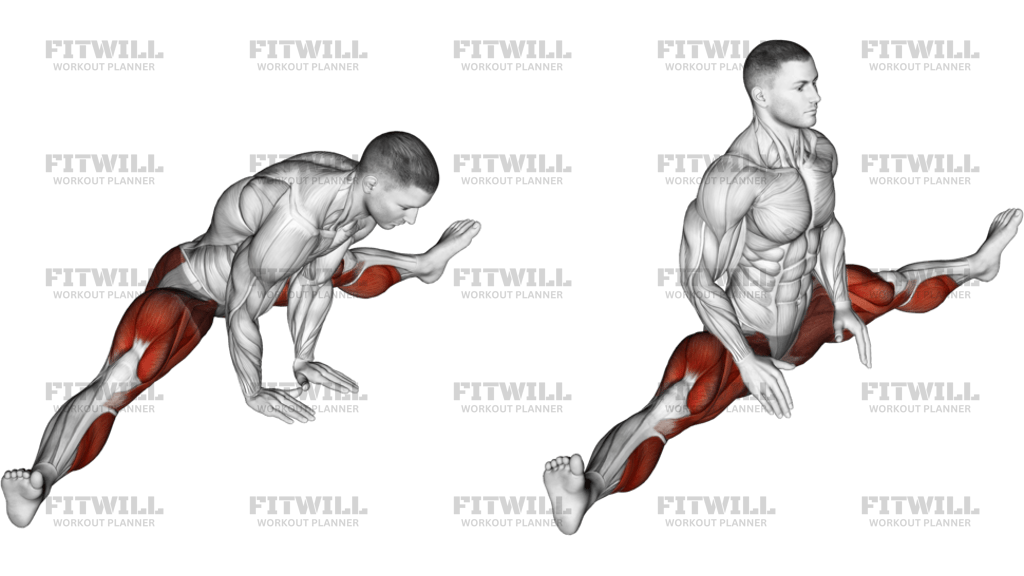
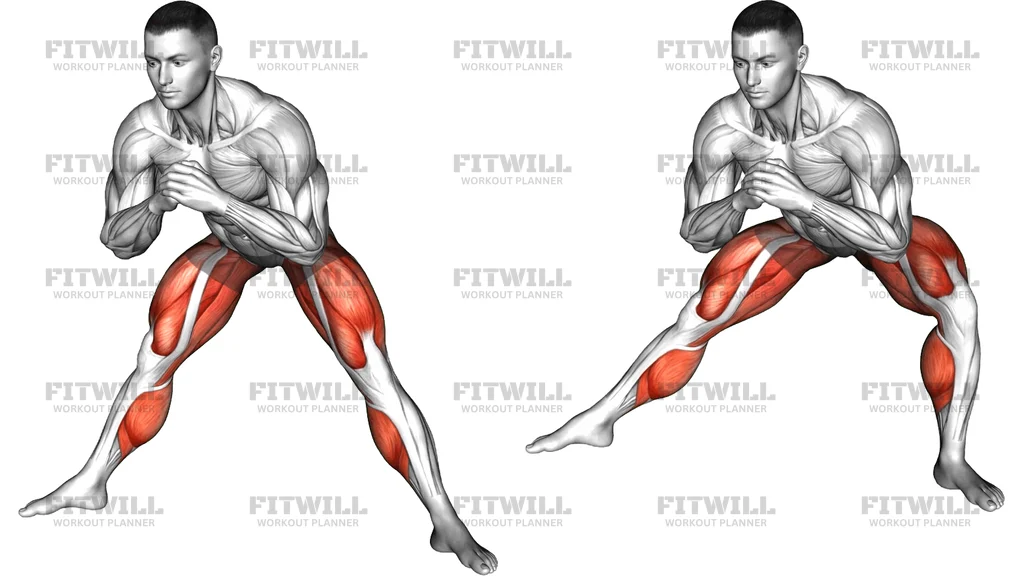
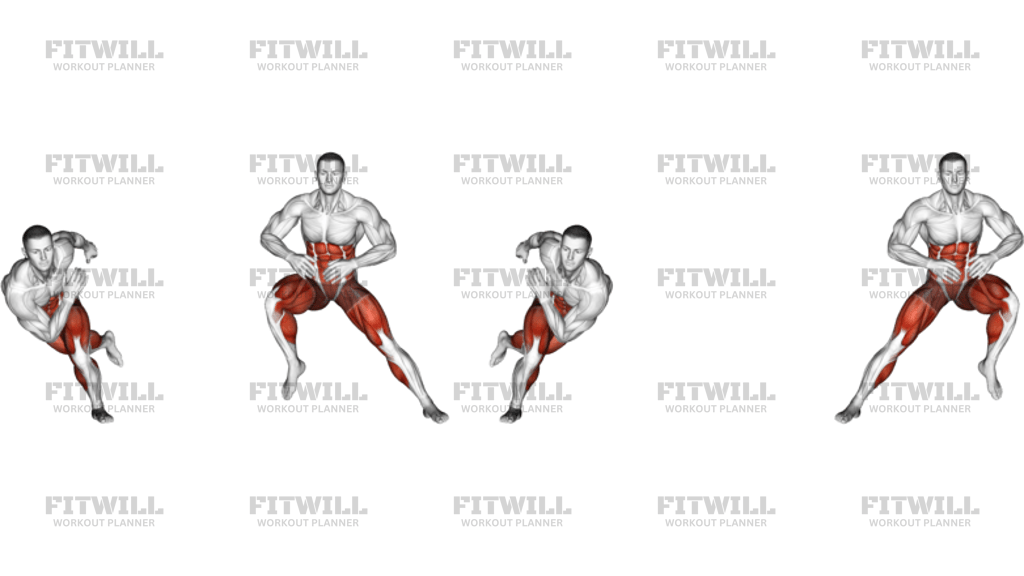
Side Split is a floor-based hip mobility exercise that opens the inner thighs while teaching you how to control end-range hip position. It is useful for dancers, martial artists, gymnasts, and lifters who need better adductor length, cleaner straddle positions, or more comfort settling into a deep wide stance. The image shows the body supported with the hands on the floor, which is a good reminder that this movement is about control first and depth second.
The main training effect comes from loading the adductors, hips, and pelvis in a long, supported position. As the legs open, the inner thighs lengthen under tension and the core has to keep the torso from collapsing or twisting. That is why Side Split work often feels more demanding than a simple static stretch: you are asking the hips to open while the trunk stays organized.
Setup matters a lot because small changes in hand placement, torso angle, and leg angle change where the stretch lands. Start wide enough to feel the adductors, then use your hands to support as much body weight as needed. Keep the kneecaps and toes pointing up when possible, and keep both sit bones grounded or evenly reaching toward the floor so one hip does not dump forward.
A good Side Split rep is slow and patient. Inhale to make space through the spine, then exhale as you ease the hips a little farther open or bring the torso more upright if the range is there. The goal is not to bounce into a bigger split; the goal is to settle into a repeatable position that you can hold without pinching the groin or losing alignment.
Side Split work fits well after a lower-body warmup, at the end of a training session, or in a dedicated mobility block. It can also be used as a checkpoint for hip openness over time. Keep the stretch in a pain-free range, use blocks or a higher hand position if the floor is too low, and come out of the position gradually so the hips do not tighten back up immediately. That slower exit helps the hips keep the new range instead of snapping back to their guarded position.
[ Workout Log & Planner ]
Put your next workout in Fitwill
Keep your plan and training log ready when you are.


Instructions
- Sit on the floor in a wide straddle with your hands on the floor in front of your shoulders for support.
- Lengthen your spine first, then let your hips settle into the split instead of collapsing forward.
- Keep your kneecaps and toes pointing upward when possible so the stretch stays in the inner thighs.
- Press lightly through your hands and sit bones to keep both hips level rather than twisting to one side.
- Exhale and ease the legs a little farther apart only if the position stays smooth and pain-free.
- If you are ready, bring the torso a little more upright without letting the low back round hard.
- Hold the deepest clean position for a steady breath or two, then keep the neck relaxed and the chest open.
- Walk your hands back and bring the legs in slowly to finish the rep without snapping out of the stretch.
Tips & Tricks
- Use your hands on the floor as much as you need; the stretch should open the hips, not overload the lower back.
- If the inner thighs feel hot but the groin feels sharp, reduce the split width immediately.
- Keep the kneecaps facing up so the stretch stays in the adductors instead of twisting the knees.
- A small forward hinge can be useful, but a rounded spine usually means you are taking the torso farther than the hips can support.
- Blocks or yoga bricks can make this more productive if your hands cannot reach the floor comfortably.
- One side often feels tighter than the other; keep both hips aiming forward rather than forcing symmetry.
- Do not bounce at the bottom of the split, especially when the muscles are cold.
- Longer holds work better than repeated forcing, because the goal is to teach the hips to relax under control.
Frequently Asked Questions
What muscles does Side Split work the most?
Side Split mainly stretches the adductors on the inner thighs, with the hips and glutes helping control the position.
Is Side Split the same as a middle split?
Yes, Side Split is essentially a middle split or wide straddle split variation, depending on how the exercise is presented.
Why are my hands on the floor in Side Split?
The hands reduce how much body weight the hips have to support and let you control the depth of the stretch more safely.
Should my knees be straight in Side Split?
Straight knees are the usual goal, but a small bend is fine while you build range. Straighten only as far as you can without twisting the hips or pinching the groin.
Can beginners do Side Split?
Yes, but beginners should stay higher off the floor and use their hands for support. The safest progress is a smaller range held with good control.
What should Side Split feel like?
You should feel a strong stretch along the inner thighs and hips, not a sharp pain in the groin or knee.
How long should I hold Side Split?
Short, repeated holds of about 20 to 60 seconds are common, as long as the stretch stays smooth and your breathing stays calm.
How do I make Side Split harder?
Bring the torso more upright, reduce hand support, or hold the end position longer without letting the pelvis rotate or the low back collapse.