Side Plank Hip Adduction Bent Knee
Side Plank Hip Adduction Bent Knee is a body-weight side plank variation that uses a bench to support the top leg while the lower bent knee moves through hip adduction. It is a controlled strength drill for the inner thigh of the working leg, plus the obliques, glute medius, and shoulder stabilizers that keep the torso from twisting or collapsing. The bent-knee lever makes the movement shorter and more manageable than a straight-leg version, so it is useful when you want clean pelvic control rather than a large, swinging range.
The setup matters because the bench position changes how much support and leverage you get. Your forearm should be under your shoulder, your torso should be stacked in a straight line, and the upper leg should rest securely on the bench so the body can stay lifted while the lower leg moves. If the bench is too high, too low, or too far from your hips, the side plank will feel unstable and the adduction will turn into a hip hike or a trunk rotation instead of a focused leg action.
On each repetition, keep the ribcage down and the pelvis level while the lower knee drives upward toward the bench. The movement should come from the hip joint, not from kicking, swinging, or rolling the whole body backward. A small, precise range is usually enough: lift until you feel the inner thigh working hard, pause briefly, then lower under control without letting the shoulder dump into the floor or the waist sag.
This exercise is a good fit for accessory work, hip stability training, and core sessions where you want unilateral control. It can be especially useful for people who need stronger adductors and better side-to-side pelvic stability for running, field sports, change-of-direction work, or general lower-body training. The fixed bench support also makes it easier to focus on one side at a time and feel whether the pelvis stays stacked.
Treat Side Plank Hip Adduction Bent Knee as a precision movement rather than a max-effort strength test. If the neck tightens, the shoulder shrugs, or the torso starts rotating, the set is too hard or the setup needs to be adjusted. Keep the motion smooth, breathe steadily, and stop the set when you can no longer raise the lower knee without losing the side plank position.
Fitwill
Log Workouts, Track Progress & Build Strength.
Achieve more with Fitwill: explore over 9600 exercises with images and videos, access built-in and custom workouts, perfect for both gym and home sessions, and see real results.
Start your journey. Download today!




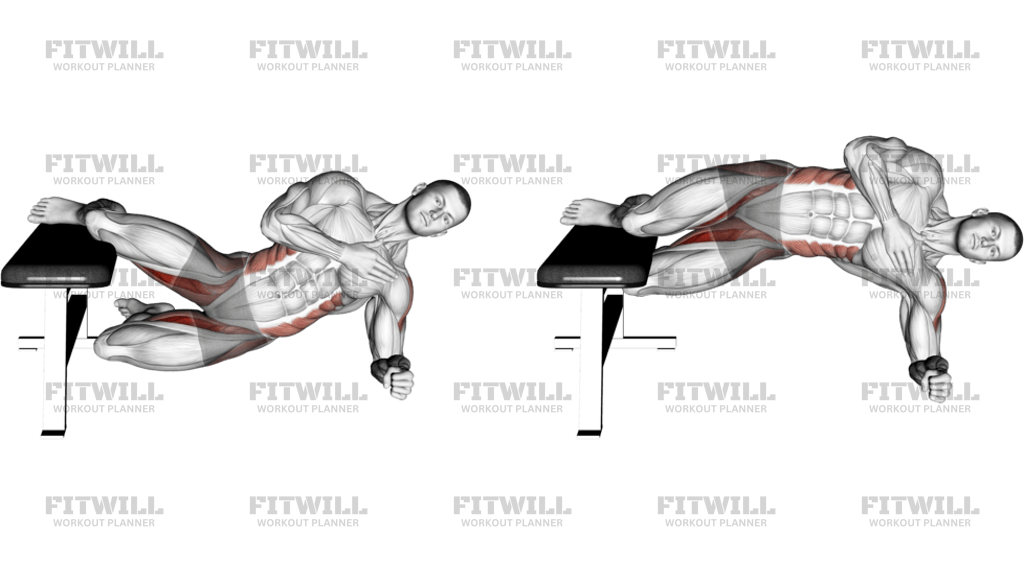
Instructions
- Place your forearm on the floor directly under your shoulder and position a bench beside you so your upper leg can rest on it with the knee bent.
- Stack your torso in a side plank and set the top shin or knee on the bench while the lower leg hangs below you with the knee bent.
- Press the forearm, shoulder, and top leg into position before you lift the hips, keeping the neck long and the ribcage tucked down.
- Raise your hips until your body forms a straight line from shoulder to bottom knee, then hold that stacked position before the first rep.
- Lift the lower bent knee upward toward the bench by squeezing through the inner thigh, keeping the pelvis square instead of rolling backward.
- Pause briefly near the top when the lower knee is as high as you can bring it without losing the side plank shape.
- Lower the knee slowly back to the start under control, letting the inner thigh lengthen without dropping the hips.
- Reset your breath at the bottom, keep the shoulder packed, and repeat for the planned reps before lowering the hips and coming out of the side plank.
Tips & Tricks
- Keep the bench close enough that the top leg stays supported without forcing your waist to bend toward it.
- If your torso twists open, shorten the range and think about moving the lower knee straight up, not forward.
- The forearm should stay vertical under the shoulder; if it slides too far forward, the side plank will feel unstable.
- Drive the rep from the lower inner thigh, not from a quick leg swing or a hip snap.
- A small pause at the top makes the adductors work harder than chasing a bigger, sloppier range.
- Keep the upper hand on your chest or ribcage if that helps you feel whether the rib cage is flaring.
- If the shoulder gets crowded, drop the hips slightly and rebuild the stack before the next rep.
- Stop the set when the lower knee can no longer rise without the pelvis dipping or the bottom waist collapsing.
Frequently Asked Questions
What does Side Plank Hip Adduction Bent Knee work most?
It mainly trains the inner thigh of the lower leg while the obliques and glute medius keep your pelvis stacked in the side plank.
Why is the upper leg placed on a bench?
The bench gives the top leg a stable support point so the lower knee can move through hip adduction without the whole body sagging or spinning.
What should my forearm and shoulder do in Side Plank Hip Adduction Bent Knee?
Set the forearm directly under the shoulder and keep the shoulder packed so you can hold the side plank while the lower leg moves.
Can beginners do this side plank variation?
Yes, but the range should stay small and the hips should remain stacked. If it feels too hard, shorten the lever by making the movement slower and more controlled.
Should the lower knee move forward or straight up?
It should travel mostly straight up toward the bench. If it swings forward, the torso usually rotates and the adductors do less of the work.
How high should I lift the lower leg?
Lift only until you feel the inner thigh working hard and the pelvis starts to want to shift. The top position is usually much smaller than people expect.
What is the most common mistake in Side Plank Hip Adduction Bent Knee?
Letting the bottom waist collapse or the body roll backward is the biggest error. Keep the ribcage down and move the knee without losing the side plank line.
Where should I feel this exercise?
You should feel it in the lower inner thigh, with steady work from the side abs and supporting hip muscles that keep you lifted.
How do I make Side Plank Hip Adduction Bent Knee harder?
Slow the lowering phase, add a brief pause at the top, or move the top leg slightly farther from your torso so the side plank has to work harder.