Warming-Up In Lunge Five
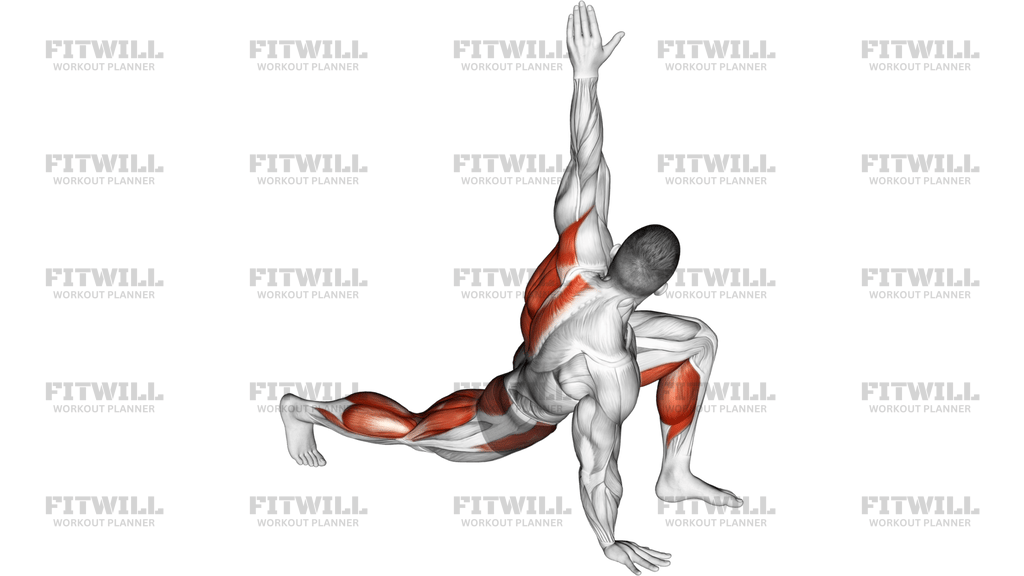
Warming-Up In Lunge Five is a body-weight mobility drill built around a deep split-stance lunge with an overhead rotation. The setup opens the front hip, the rear leg, and the upper back at the same time, making it useful before sessions that ask for hip extension, long strides, overhead work, or trunk rotation. Because the exercise is performed under control rather than speed, the position you start in matters more than how far you force the twist.
The movement is mainly about the hip flexors, glutes, adductors, obliques, and thoracic spine, with the planted shoulder and arm helping support and guide the turn. The front foot stays flat and the front knee tracks over the foot, while the back leg reaches long so the pelvis can settle into the lunge instead of dumping into the lower back. A good rep feels like a stretch through the front of the hip and a clean opening through the ribcage, not a pinch in the lumbar spine.
Set the support hand directly under the shoulder, keep the chest long, and rotate from the ribs as the free arm reaches toward the ceiling. The goal is to stack the shoulder, open the chest, and keep the hips stable enough that the lunge stays organized. If the floor is too low, place the hand on a block or bench so you can keep the spine lengthened and avoid collapsing into the support side.
This exercise fits well in warm-ups, mobility circuits, or recovery sessions before squats, lunges, running, throwing, pressing, and overhead training. It is especially useful when the hips feel stiff after sitting or when the upper back needs a little rotation before heavier work. The movement should stay smooth and repeatable so the tissues warm up without losing alignment.
Use a range you can control on both sides, breathe steadily through the stretch, and stop short of any pinching in the front hip or low back. The exercise is meant to prepare the body for training, not to force a maximal stretch. If you lose balance, shorten the stance, raise the support hand, or reduce the twist until the position feels stable.
[ Workout Log & Planner ]
Put your next workout in Fitwill
Keep your plan and training log ready when you are.


Instructions
- Start in a deep split-stance lunge with the front foot flat, the back leg long, and the hand on the floor just inside the front foot.
- Stack the support hand under the shoulder and keep the front knee over the middle toes.
- Let the hips sink until the front hip and inner thigh feel a mild stretch, but keep the chest long.
- Press the floor away through the planted hand and rotate the ribcage toward the ceiling.
- Reach the free arm straight up, palm open, and keep the eyes following the hand without cranking the neck.
- Hold the top position briefly while breathing out and keeping both hips grounded.
- Return the reaching hand down with control and re-set the lunge before the next rep.
- Repeat on the same side for the planned reps, then switch sides and match the range.
Tips & Tricks
- Keep the front heel heavy so the front knee does not slide forward as you rotate.
- If the support shoulder rounds, raise the hand onto a block or bench instead of forcing depth.
- Think "ribcage turns over pelvis" rather than twisting from the low back.
- The rear leg should stay active and long; do not let it collapse passively.
- Exhale into the overhead reach to help the chest open without over-arching the spine.
- Shorten the stance if you feel the stretch mostly in the groin or low back instead of the hip.
- Keep the planted palm spread wide so the wrist and shoulder share the load.
- Move slowly enough that you can pause in the open position without wobbling.
- If the neck feels strained, keep the gaze forward and rotate a little less.
- Use the same setup on both sides so the drill exposes side-to-side differences.
Frequently Asked Questions
What muscles does Warming-Up In Lunge Five work most?
Primarily the hip flexors, glutes, adductors, obliques, and thoracic spine, with the shoulders and arms helping support the position.
Is this exercise a stretch or a strength drill?
It is mainly a dynamic mobility drill, but the support arm, trunk, and back leg also work isometrically to hold alignment.
Should my back knee touch the floor?
Not necessarily. You can keep it hovering, or let it lightly touch if that helps you maintain balance and a long spine.
Where should I feel the stretch in the lunge?
Most people feel it in the front hip, inner thigh, and upper back on the reaching side, not in the low back.
Can I use a block or bench under the hand?
Yes. Elevating the support hand is a good option if the floor makes you round your shoulders or lose chest position.
What is the most common mistake in this lunge rotation?
Letting the lower back take over the twist instead of moving the rotation through the ribcage and upper back.
Is this a good warm-up before squats or running?
Yes, because it opens the hips and thoracic spine while rehearsing split-stance balance and trunk control.
What should I do if the front hip pinches?
Shorten the stance, lower less deeply, and reduce the twist until the stretch feels clean and smooth.
How do I make the overhead reach feel better?
Keep the reaching shoulder away from the ear and open the chest by turning the ribs, not by leaning backward.
Can beginners do this movement?
Yes, if they keep the stance shorter, use a hand support height that feels stable, and move slowly.