Front Hamstring Stretch
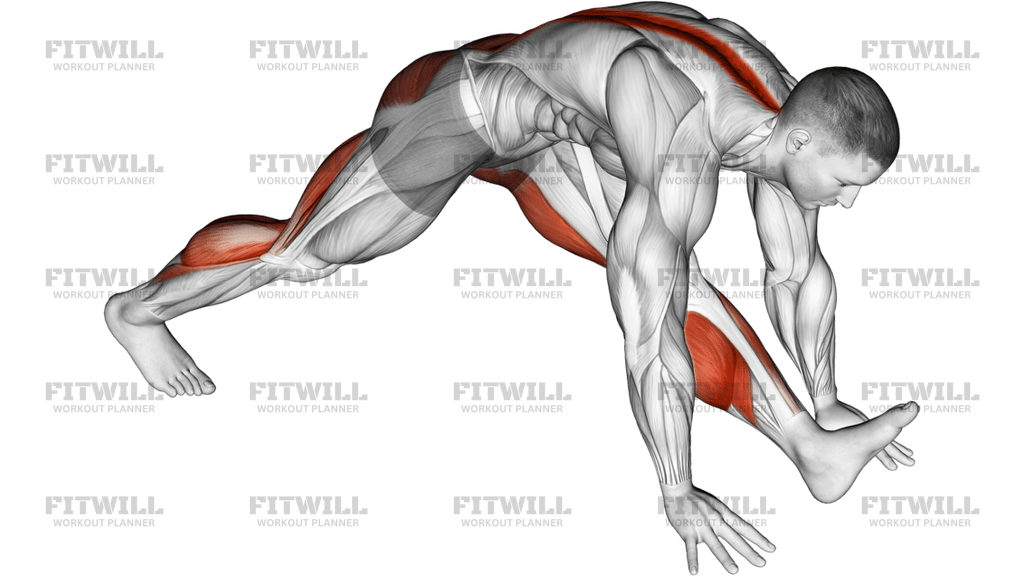
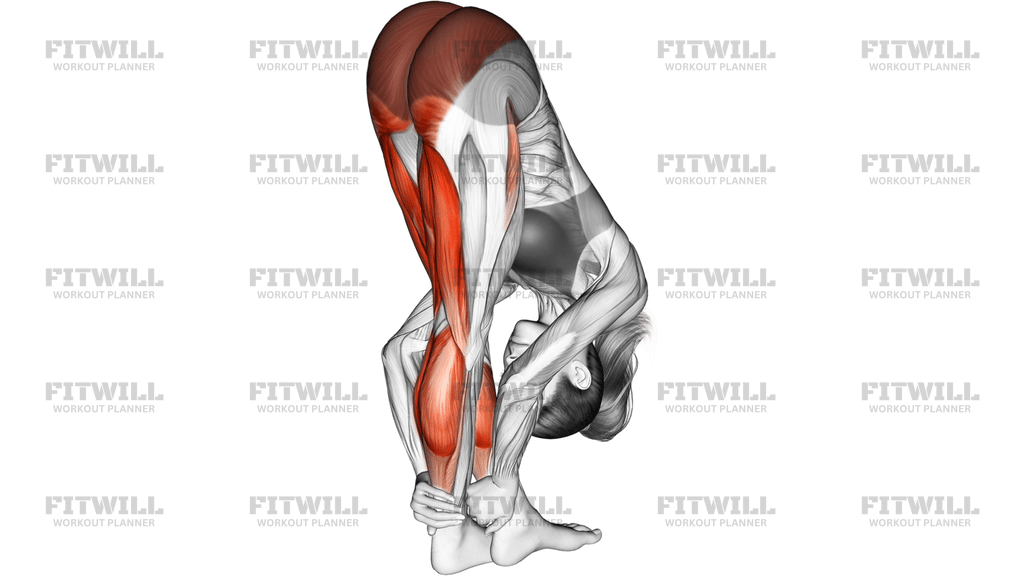
Front Hamstring Stretch is a floor-based single-leg stretch that opens the hamstrings on the straight front leg while teaching the hips and trunk to stay square. The hands on the floor give you support so you can focus on a clean hinge instead of fighting for balance. In practice, it is a controlled mobility drill for the back of the thigh, with the calf, glute, and lower body stabilizers helping keep the position organized.
The setup matters because the stretch changes a lot depending on how you place the front foot, where you set your hips, and how much you let the pelvis rotate. With the front leg extended, heel grounded, and toes lifted, the hamstring and calf of that leg are put on tension. Keeping the chest long and the spine neutral lets the stretch happen through the hips instead of collapsing the low back.
The motion should feel like a deliberate hinge and reach, not a forced fold. Shift your hips back until you feel a strong but manageable line of tension along the back of the extended leg, then breathe and hold. If the stretch turns into pinching, nerve tension, or sharp discomfort behind the knee, back off and shorten the range. A slight bend in the knee is often the fastest way to make the stretch cleaner and more productive.
This exercise is useful before lower-body training when you want to open tight hamstrings, after training when you want to downshift and restore range, or between sets when your goal is better leg positioning. Because the hands stay on the floor, it also works well as a regression for people who cannot yet balance in a standing hamstring stretch.
Treat it as a quality drill rather than a contest for depth. Keep the front foot flexed, hips as square as you can, and breathing smooth while you sink only as far as the position stays controlled. Done well, Front Hamstring Stretch teaches the body to own hamstring length without losing posture, which makes it useful for warm-ups, recovery sessions, and long-term flexibility work.
Fitwill
Log Workouts, Track Progress & Build Strength.
Achieve more with Fitwill: explore over 9600 exercises with images and videos, access built-in and custom workouts, perfect for both gym and home sessions, and see real results.
Start your journey. Download today!




Instructions
- Start on a mat with one leg extended forward, heel on the floor, toes pulled up, and the other leg folded behind you for support.
- Place both hands on the floor beside the extended leg so you can stay balanced without collapsing into the stretch.
- Square your hips toward the front leg and keep your chest long before you move any deeper.
- Take a small breath in, brace lightly, and hinge your hips back toward your heel.
- Keep the front knee straight but not locked, and let the stretch build along the back of the thigh.
- Use your hands only as much as needed for balance; do not press so hard that your shoulders shrug up.
- Hold the end position with smooth breathing and a relaxed neck, then ease a little deeper only if the stretch stays clean.
- Return by shifting your hips forward under control, then repeat on the other side with the same setup.
Tips & Tricks
- Pull the front toes up toward the shin to make the hamstring line clearer and keep the calf from taking over.
- If the stretch feels too sharp behind the knee, soften the front knee a few degrees instead of forcing more hip hinge.
- Keep both hip points facing forward; rotating the pelvis open usually turns the stretch into a different position.
- A long exhale often lets you sink a little deeper without tugging on the low back.
- If your hands are far from the floor, place them on blocks or a bench so the torso can stay long.
- Do not bounce in and out of the bottom position; settle, breathe, and make small changes only.
- If you feel the stretch mostly in the calf, reduce the ankle angle or bring the foot slightly less upright.
- Keep the chest reaching forward rather than folding aggressively over the thigh.
Frequently Asked Questions
What does Front Hamstring Stretch target most?
It mainly targets the hamstrings on the straight front leg, with the calf and glutes helping as secondary tissues.
Can beginners perform this exercise?
Yes. Beginners usually do best with their hands on the floor or blocks and a slight bend in the front knee.
Should the front heel stay down the whole time?
Yes. Keeping the heel planted and the toes lifted helps keep the stretch focused on the back of the thigh.
Why do I feel this stretch in my calf too?
Because the ankle is pulled into dorsiflexion. If the calf dominates, ease the toes up less aggressively or shorten the range.
Should my hips stay square to the front leg?
Yes. Keeping the hips square helps keep the stretch honest and reduces twisting through the low back.
What is the biggest mistake in the floor position?
Rounding the spine and chasing depth. That usually shifts the stretch away from the hamstring and into the back.
How long should I hold each side?
A steady 15 to 30 second hold works well for mobility work, or take 3 to 5 slow breaths if you are using it as a warm-up.
What variation should I use if the floor is too low?
Put your hands on yoga blocks, a step, or a bench so you can keep the torso long without losing balance.
Can I use this after leg day?
Yes. It is often useful after training because it lets you restore hamstring length without bouncing or forcing range.