Front Plank With Leg Lift
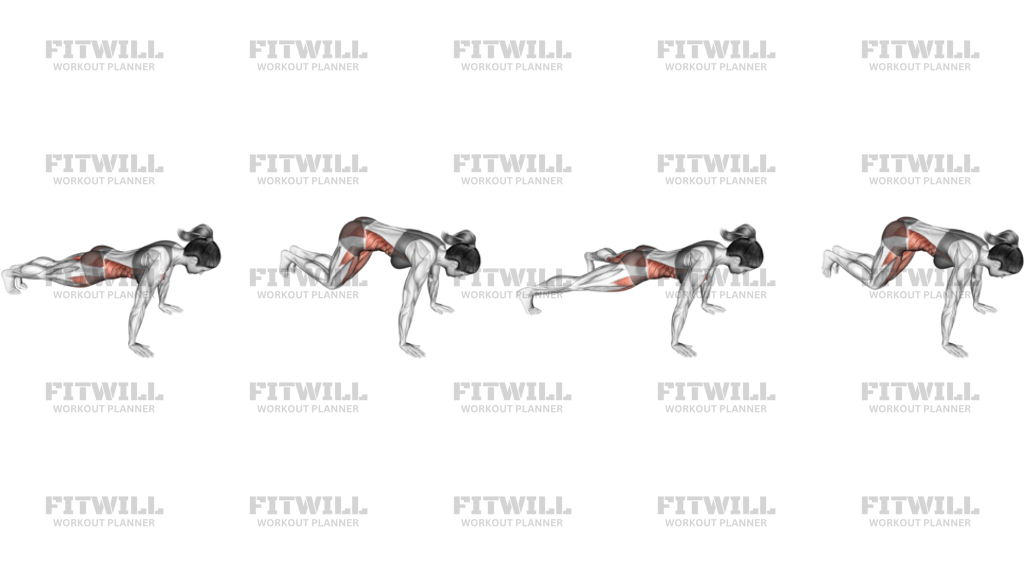
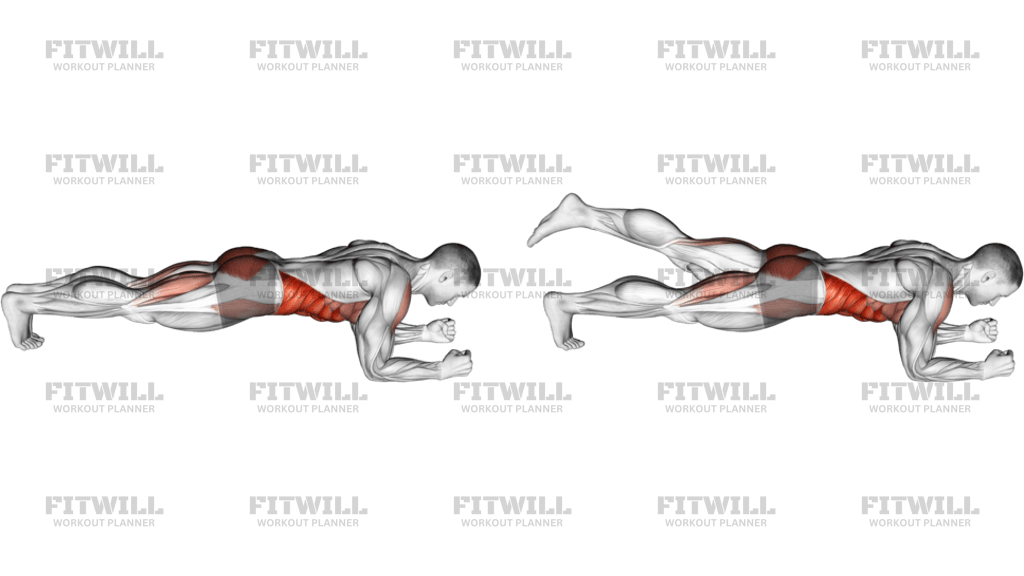
Front Plank With Leg Lift is a bodyweight core and glute stability exercise built around a strict front plank while one leg leaves the floor. The lift adds an anti-rotation challenge, so the trunk has to resist twisting, sagging, and side-to-side shifting while the hip on the working side extends under control. It is less about moving a big load and more about keeping the whole chain organized while the leg moves.
The exercise is most useful when you want to train the deep core, shoulders, glutes, and hip stabilizers together. A clean rep should look calm: ribs down, pelvis level, neck long, and the lifted leg moving without the hips turning open. If the plank position collapses or the lower back takes over, the set becomes more of a compensation drill than a stability exercise.
The setup matters because the plank position decides how much of the work stays in the midsection. Place the forearms or hands under the shoulders, extend both legs, and create a long line from head to heels before the first lift. Brace lightly, squeeze the glutes, and keep pressure evenly distributed through the support points so the body does not rock when the leg comes off the floor.
During each repetition, lift one leg only a few inches while keeping the pelvis square to the floor. The goal is controlled hip extension, not height. Pause briefly at the top, then lower the leg slowly enough that the torso does not shift. Breathe steadily through the set instead of holding tension so hard that the shoulders and neck take over.
Front Plank With Leg Lift fits well in warm-ups, core circuits, athletic prep, and accessory work for people who need better trunk control in running, cutting, jumping, and lower-body training. It is a good option for beginners if the plank itself is solid, but it becomes much more effective when the body can maintain a stable line while the leg moves. If the hips start rotating or the low back arches, shorten the lever, reduce the range, or keep both feet on the floor until the position is strong.
[ Workout Log & Planner ]
Put your next workout in Fitwill
Keep your plan and training log ready when you are.


Instructions
- Set up in a strong front plank on your forearms or hands, with shoulders stacked over elbows or wrists and both legs extended behind you.
- Place your feet about hip-width apart so you can keep the pelvis level when one leg leaves the floor.
- Tuck the ribs slightly, squeeze the glutes, and create one straight line from head to heels before you start.
- Press the floor away and shift most of your weight into the support side without letting the shoulders drift or the torso rotate.
- Lift one straight leg a few inches off the floor by extending the hip, keeping the knee long and the toes pointed down or slightly back.
- Pause briefly at the top while the hips stay square and the lower back stays quiet.
- Lower the leg slowly until both feet are back in the starting plank position, keeping the trunk braced the whole time.
- Alternate legs for the planned reps, or complete all reps on one side before switching if the workout calls for it.
Tips & Tricks
- Keep the leg lift small; height is less important than keeping the pelvis from rolling open.
- Think about pressing the standing foot into the floor so the plank stays steady when the other leg moves.
- If the low back arches, shorten the lift and squeeze the glutes harder before each rep.
- Use a forearm plank if wrist position becomes the limiting factor, then return to hands once the trunk is stronger.
- Avoid letting the head lead the movement; keep your neck in line with the spine and look at the floor.
- Exhale during the leg lift to help the ribs stay down and reduce trunk flare.
- If your hips wobble, widen the feet slightly and slow the lowering phase.
- Stop the set when the shoulders, hips, or lower back can no longer stay stacked and quiet.
Frequently Asked Questions
What does Front Plank With Leg Lift train most?
It trains front-plank core stiffness, glute extension, and anti-rotation control at the hips and torso.
Should I do this on my forearms or my hands?
Either version works. Forearms usually make it easier to keep the shoulders stable, while hands place more demand on the shoulders and wrists.
How high should the lifted leg go?
Only high enough for the foot to clear the floor cleanly. If the hips twist or the low back arches, the leg is going too high.
What is the most common mistake with this exercise?
The biggest mistake is rotating the hips or hiking one side of the pelvis when the leg comes up.
Can beginners do Front Plank With Leg Lift?
Yes, if they can already hold a stable plank. Beginners can start with shorter holds, fewer reps, or a simpler plank before adding the leg lift.
Should I alternate legs every rep?
You can alternate, or you can do all reps on one side first if the workout is written that way. Either method is fine as long as the plank stays square.
Why does my lower back feel this more than my abs?
That usually means the pelvis is dropping or the ribs are flaring. Reset the brace, squeeze the glutes, and lift the leg less aggressively.
How can I make this exercise harder without adding equipment?
Slow the lowering phase, pause longer at the top, or bring the feet closer together so the plank has to resist more side-to-side movement.