Camel Pose
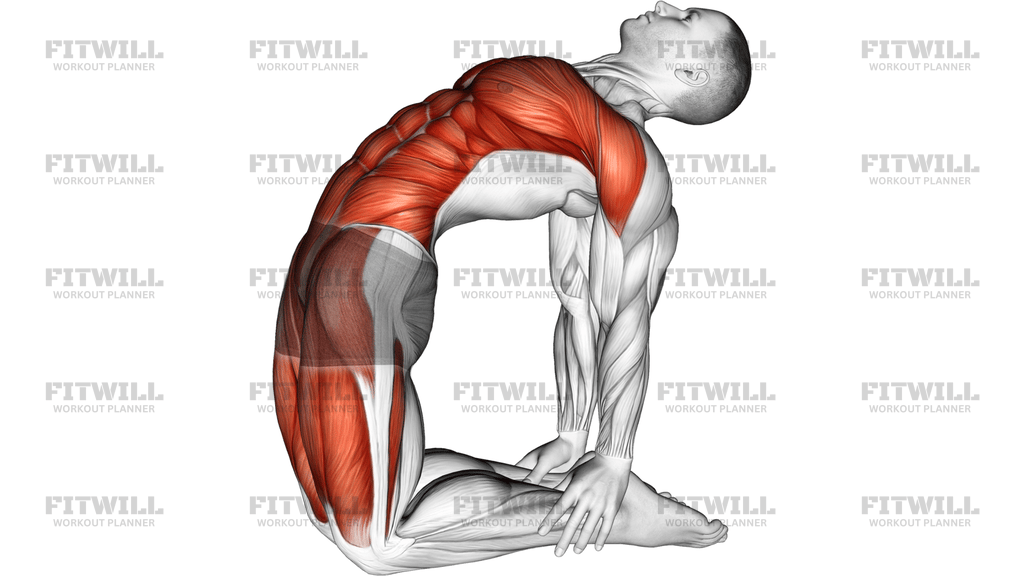
Camel Pose is a kneeling backbend that opens the front of the body while teaching control through the spine, hips, and shoulders. In the image, the lifter is on both knees with the shins and tops of the feet on the floor, chest lifted, hips driving forward, and the hands reaching back to the heels. That setup is what makes the pose useful: it lets you extend the torso without collapsing into the lower back or dumping all of the work into the neck.
This movement is less about raw strength and more about controlled extension, breathing, and posture. The front line of the body gets stretched hard, especially the hip flexors, quadriceps, abdominals, chest, and shoulders, while the glutes, spinal extensors, and upper back work to support the arch. Done well, Camel Pose can improve thoracic mobility, overhead comfort, and the ability to hold an upright posture with less tension.
The exact setup matters. Keep the knees hip-width or slightly narrower, anchor the shins, and place the pelvis over the knees before you lean back. As you reach for the heels, lift the sternum first and let the chest open before you chase depth. The pose should feel long through the front of the body, not compressed in the lumbar spine. If the heels are too far away, keep the hands on the lower back or use blocks until you can maintain a clean line.
On each repetition, move slowly enough that the breath stays smooth. Inhale as you rise and open the chest, then exhale as you settle into the backbend without losing pressure through the shins and thighs. When it is time to exit, bring the hands back to the hips, engage the abdomen, and return to an upright kneel one segment at a time instead of snapping back. A controlled exit is part of the exercise.
Camel Pose is commonly used in yoga, mobility work, warmups, and recovery sessions when you want to open the front of the body and restore spinal extension after lots of sitting or pressing work. It is not a race for maximum range. The best version is the one you can hold with steady breathing, even weight through both knees, and enough control that the lower back never feels pinched or overloaded.
[ Workout Log & Planner ]
Put your next workout in Fitwill
Keep your plan and training log ready when you are.


Instructions
- Kneel on the floor with your knees about hip-width apart and the tops of both feet resting flat behind you.
- Stack your knees under your hips, then place your hands on the back of your pelvis or reach them toward your heels if the range is available.
- Lift your chest first and keep your thighs active so the arch starts through the upper body, not by dumping into the low back.
- Press the hips gently forward while keeping both knees grounded and the neck long as you begin to open into the backbend.
- If you can reach your heels, hold them lightly and use the hands only for balance, not for pulling yourself deeper.
- Breathe into the front of the ribcage and pause in the position only as long as the spine stays smooth and supported.
- To come out, release the heels, bring the hands to the hips, and lift the torso back to vertical in a controlled line.
- Reset your breath and repeat for the planned number of holds or repetitions.
Tips & Tricks
- Keep the knees directly under or slightly behind the hips so the pelvis does not drift too far forward before the chest opens.
- Think about lifting the sternum toward the ceiling before you reach farther back for the heels.
- If the heels are out of reach, stay with the hands on the lower back or use yoga blocks instead of forcing the shoulders.
- Spread the weight evenly through both knees and shins so the pose does not twist to one side.
- Keep the glutes gently engaged to support the pelvis, but do not squeeze so hard that the ribs flare aggressively.
- Let the neck stay long; looking straight up is optional and should never create a pinch at the base of the skull.
- Use slow nasal breathing or calm, steady breaths so the front-body stretch softens instead of turning into a strain.
- Back off immediately if you feel sharp pain in the lower back, knees, or shoulders.
Frequently Asked Questions
What does Camel Pose train most?
It mainly trains spinal extension control and front-body opening, with strong stretch work through the hip flexors, quads, abdominals, chest, and shoulders.
Do I need to reach my heels for Camel Pose to count?
No. Reaching the heels is one version, but beginners can keep their hands on the lower back or use blocks if the backbend is not there yet.
Why do my lower back and neck feel more stressed than my chest?
Usually the pose is being taken too deep too early. Lift the chest first, keep the hips stacked over the knees, and reduce the range until the front body opens smoothly.
What should I feel in the kneeling position?
You should feel a long stretch through the thighs, hips, abdomen, chest, and shoulders, with the spine working evenly rather than collapsing into one painful spot.
Can Camel Pose be used as a warmup?
Yes. It works well in a mobility-focused warmup if you keep the hold short and the range conservative.
What is the biggest mistake in Camel Pose?
Forcing the hands to the heels before the chest and hips are ready. That usually turns the pose into a low-back bend instead of a full-body opening.
Is Camel Pose supposed to be painful?
No. A strong stretch is normal, but sharp pain, numbness, or pinching in the lumbar spine means the pose should be reduced or stopped.
How can I make Camel Pose easier?
Keep the hands on the lower back, reduce the lean, and keep the hips stacked over the knees instead of driving far backward.