Shoulder Backbend Stretch
Shoulder Backbend Stretch is a standing bodyweight mobility drill that opens the shoulders, lats, triceps, chest, and upper back through an overhead reach and a small controlled backbend. The mat is there for footing and comfort, but the work comes from how well you stack the ribcage, pelvis, and shoulders while you hold the stretch.
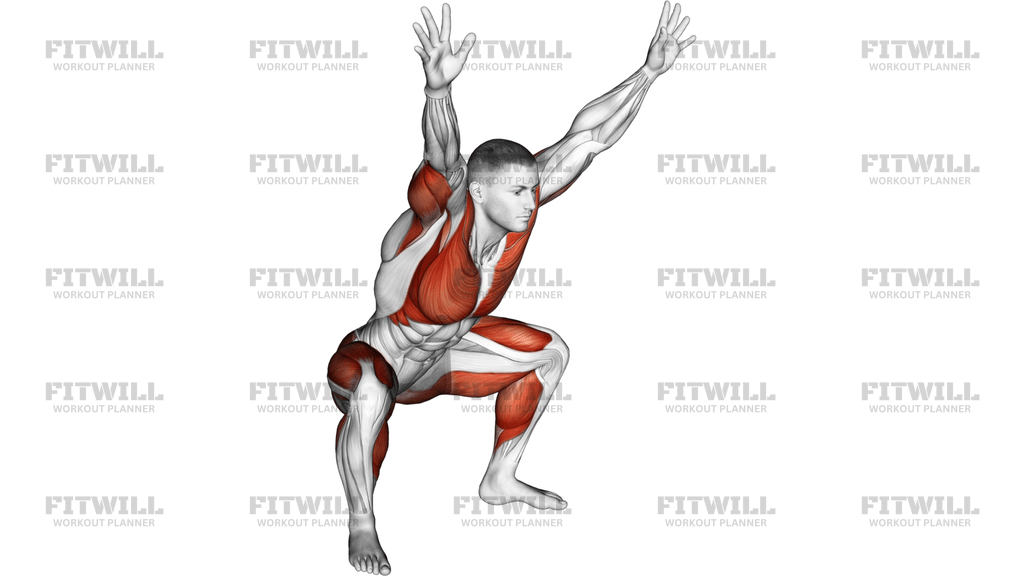
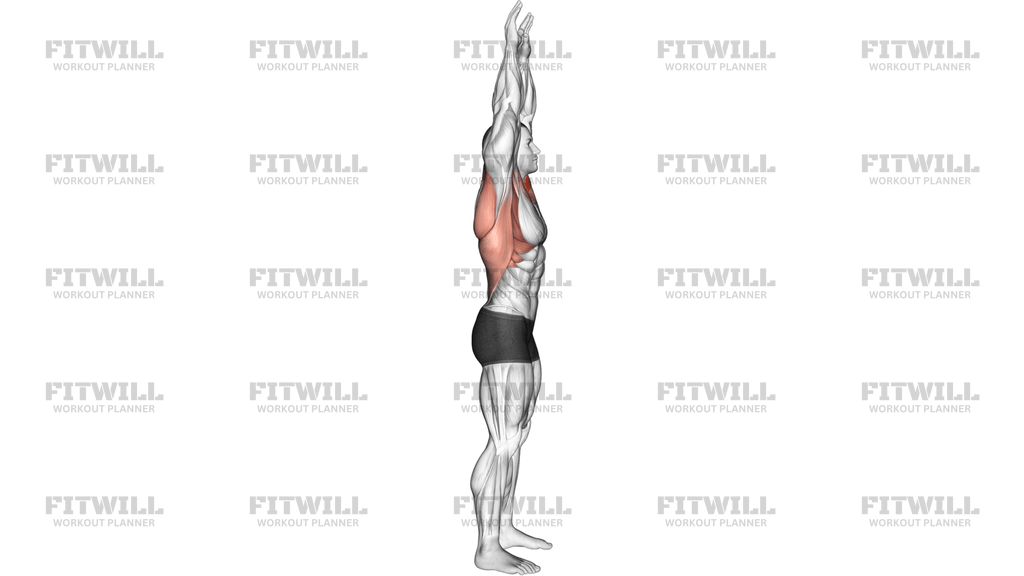
The image shows a tall upright start with both arms reaching overhead, which is the key setup for this exercise. Start by standing with your feet grounded, glutes lightly on, and your torso long before you lean back. The stretch should feel like length through the front of the body and the sides of the torso, not a collapse through the lower back. That distinction matters because a sloppy backbend turns this into lumbar extension instead of a shoulder-opening stretch.
As you move, keep the arms active and the elbows long so the shoulders stay in the line of the reach. Let the upper back open gradually, breathe into the ribs, and only take the backbend as far as you can keep the neck relaxed and the shoulders out of your ears. A small, clean arc is more useful than a big shape that steals tension from the intended muscles. If the front of the shoulders pinches, shorten the range and slightly separate the hands rather than forcing the position.
This stretch is most useful after pressing work, during a warm-up for overhead training, or as a reset after long periods of sitting and reaching forward. It can help restore overhead range, ease tightness in the chest and triceps, and remind you how to extend the upper back without cranking the low back. Beginners can use it easily because there is no load, but it still needs control: breathe steadily, keep the ribs organized, and come out of the backbend as smoothly as you entered it.
[ Workout Log & Planner ]
Put your next workout in Fitwill
Keep your plan and training log ready when you are.


Instructions
- Stand tall on the mat with your feet about hip-width apart and your weight centered over both feet.
- Reach both arms straight overhead and bring the palms close together or facing each other, with the elbows long.
- Lift through the crown of your head, soften your shoulders away from your ears, and keep your ribs stacked over your pelvis.
- Take a slow inhale to lengthen the spine before you move into the stretch.
- Exhale and gently lean into a small backbend from the upper back while keeping the hips mostly over the heels.
- Keep the glutes lightly engaged so the lower back does not take over the movement.
- Hold the end range for the prescribed time and breathe slowly into the ribs, chest, and side body.
- Come back to a tall neutral stance by stacking the ribcage over the pelvis and lowering the arms with control.
Tips & Tricks
- If your shoulders pinch overhead, keep the hands a little wider instead of forcing the palms together.
- Think about lifting your chest and upper back, not pushing your hips far forward to fake a bigger backbend.
- A light glute squeeze helps keep the stretch out of the lumbar spine and into the shoulders and upper torso.
- Keep the elbows straight but not aggressively locked so the arms stay long without feeling jammed.
- Breathe into the side ribs during the hold; that usually helps the thoracic spine open more smoothly.
- If balance feels off, set one foot a half-step in front of the other while keeping both heels down.
- Do not shrug at the top of the reach; long neck and relaxed traps make the shoulder stretch cleaner.
- Stop the rep if you feel sharp pinching at the front of the shoulder or a compressed feeling in the low back.
Frequently Asked Questions
What does Shoulder Backbend Stretch target most?
It mainly targets the shoulders, lats, triceps, chest, and upper back through an overhead opening position.
Is this a strength exercise or a mobility stretch?
It is a mobility stretch. The goal is better overhead range and cleaner upper-back extension, not loading.
Should my hands stay together overhead?
They can stay close together or slightly apart. Use the hand position that lets you keep the shoulders smooth and pain-free.
Where should I feel the stretch?
You should feel it through the front of the shoulders, chest, triceps, lats, and upper back, not as a sharp pinch in the low back.
Why do I need to keep my ribs down?
Keeping the ribs stacked over the pelvis prevents the lower back from doing all the work and makes the shoulder stretch cleaner.
Can beginners do this stretch safely?
Yes. Beginners usually do well with a smaller backbend, relaxed breathing, and a gentle reach instead of a deep arch.
When should I use Shoulder Backbend Stretch?
It fits well in a warm-up before overhead work, after pressing sessions, or as a desk-break mobility reset.
What is the most common mistake?
The most common mistake is dumping into the lower back instead of keeping the extension controlled through the upper back and shoulders.