Dumbbell Incline T-Raise
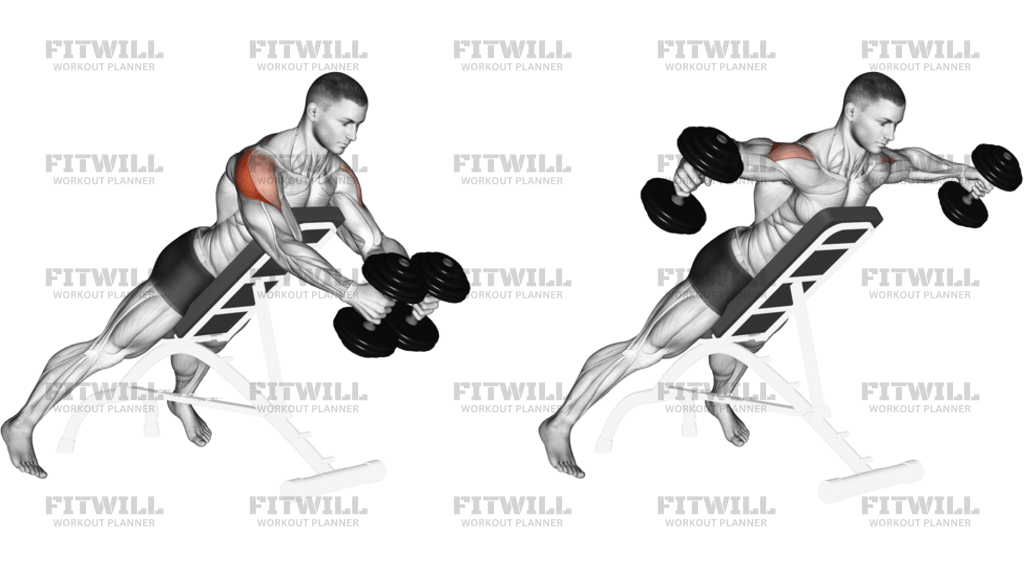
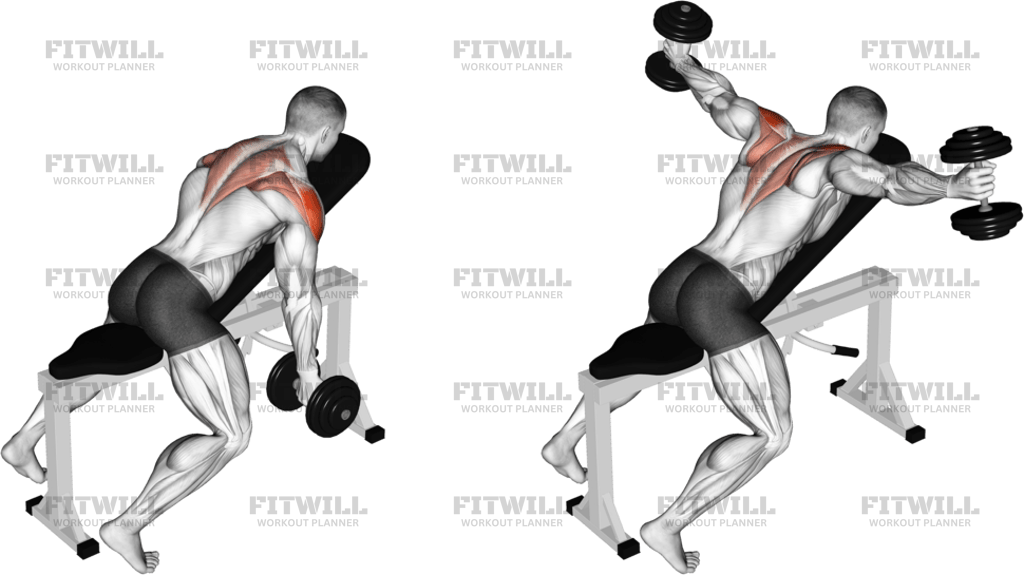
Dumbbell Incline T-Raise is a chest-supported dumbbell raise for the rear shoulders and upper back. In the image, the torso is fixed on an incline bench while the arms sweep out to the sides until the body forms a T. That support is the point of the exercise: it reduces cheating, removes leg drive, and lets the shoulders and scapular stabilizers do the work with much cleaner tension.
This movement emphasizes the rear delts, mid traps, rhomboids, and lower traps, with the upper back helping to control the shoulder blades. The dumbbells should travel in a wide arc, not a row. If the elbows bend too much or the chest comes off the bench, the exercise starts to turn into a different pattern and the rear delt work drops off. A light load is usually enough, because the range is short and the position is strict.
Bench angle matters. A moderate incline, usually around 30 to 45 degrees, keeps the chest supported while still letting the arms move across the line of the shoulders. Lie face down with the sternum and upper abdomen on the pad, feet planted for balance, neck neutral, and dumbbells hanging straight down. From there, initiate the lift by raising the upper arms out to the side, keeping the wrists quiet and the shoulders away from the ears.
At the top, the dumbbells should reach about shoulder height and create a clear T shape without turning into a shrug. Pause briefly, then lower the weights slowly until the arms are long again and the shoulders are reset. Breathing should stay controlled: exhale as you lift, inhale as you return. This is a strong accessory exercise for posture, shoulder balance, and rear-delt hypertrophy, especially when pressing work or desk posture leaves the back of the shoulder undertrained.
Keep the rep quality strict. If the neck tightens, the low back arches, or the traps take over, the load is too heavy or the bench angle is too steep. The cleanest versions are deliberate, smooth, and symmetrical, with each rep ending under control rather than dropping back into the start. That makes the exercise useful for beginners learning shoulder mechanics and for experienced lifters who want precise upper-back tension without momentum.
[ Workout Log & Planner ]
Put your next workout in Fitwill
Keep your plan and training log ready when you are.


Instructions
- Set an incline bench to about 30 to 45 degrees and lie chest-down with your sternum and upper abdomen supported by the pad.
- Plant your toes on the floor for balance and let the dumbbells hang straight down from your shoulders with a neutral wrist position.
- Keep your neck long, chin slightly tucked, and ribs gently against the bench so your low back stays quiet.
- Unlock the elbows just enough to keep tension on the rear delts and upper back without turning the movement into a row.
- Raise the dumbbells in a wide arc out to the sides until your upper arms are about in line with your shoulders and your body forms a T.
- Lead the lift with your elbows and keep your shoulders down instead of shrugging toward your ears.
- Pause briefly at the top and squeeze the rear shoulders and mid-back without bouncing.
- Lower the dumbbells slowly back to the hanging start position, then reset before the next rep while breathing out on the lift and in on the return.
Tips & Tricks
- Choose very light dumbbells at first; this exercise rewards position more than load.
- If the bench is too steep, the movement becomes easier to shrug, so keep the incline moderate.
- Think about moving the upper arms out and slightly back, not swinging the hands upward.
- A small elbow bend is fine, but do not turn the rep into a bent-arm reverse row.
- Keep your thumbs level or slightly up if that feels better on the shoulders.
- Stop the lift when the dumbbells reach shoulder height; going higher often just adds trap tension.
- Lower the weights more slowly than you raise them to keep tension on the rear delts and rhomboids.
- If your chest lifts off the pad or your lower back starts helping, reduce the load and shorten the set.
Frequently Asked Questions
What muscle does Dumbbell Incline T-Raise target most?
The main emphasis is on the rear delts, with the mid traps, rhomboids, and lower traps helping control the motion.
Can beginners perform this exercise?
Yes. It is beginner-friendly if you use a light load, keep your chest on the bench, and avoid shrugging the shoulders.
How steep should the incline bench be for this raise?
A moderate incline of about 30 to 45 degrees usually works best. Too steep and the movement becomes harder to keep strict.
Should my palms face down or in during the T-raise?
Most lifters do well with a neutral grip or thumbs slightly up. That keeps the shoulders in a friendlier position and makes the top more controlled.
Why do my traps take over on this movement?
Usually the dumbbells are too heavy or the shoulders are creeping up during the lift. Keep the neck long, stop at shoulder height, and think about spreading the arms wide instead of shrugging.
Is this the same as a reverse fly?
It is very similar, but the T-raise uses a chest-supported arm path that is more directly level with the shoulders. Both train the rear delts and upper back.
What should I do if I feel this in my neck or upper traps?
Reduce the load, lower the bench angle if needed, and keep the shoulders down throughout the rep. If the neck still takes over, shorten the range and slow the tempo.
Where does this fit best in a workout?
It works well as accessory work after pressing or pulling exercises, or in a rear-delt and posture-focused session.