Quick Feet Version 2
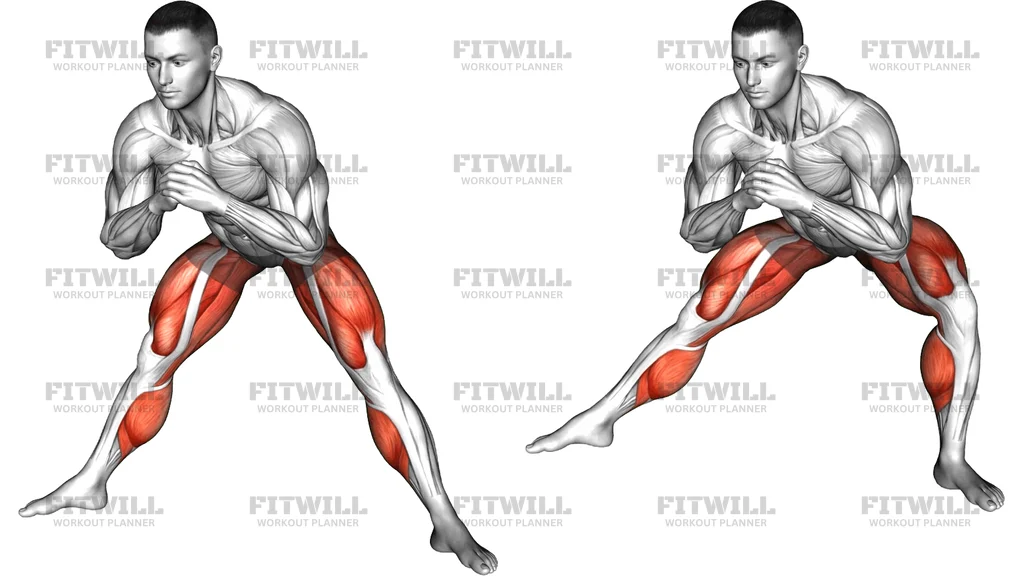
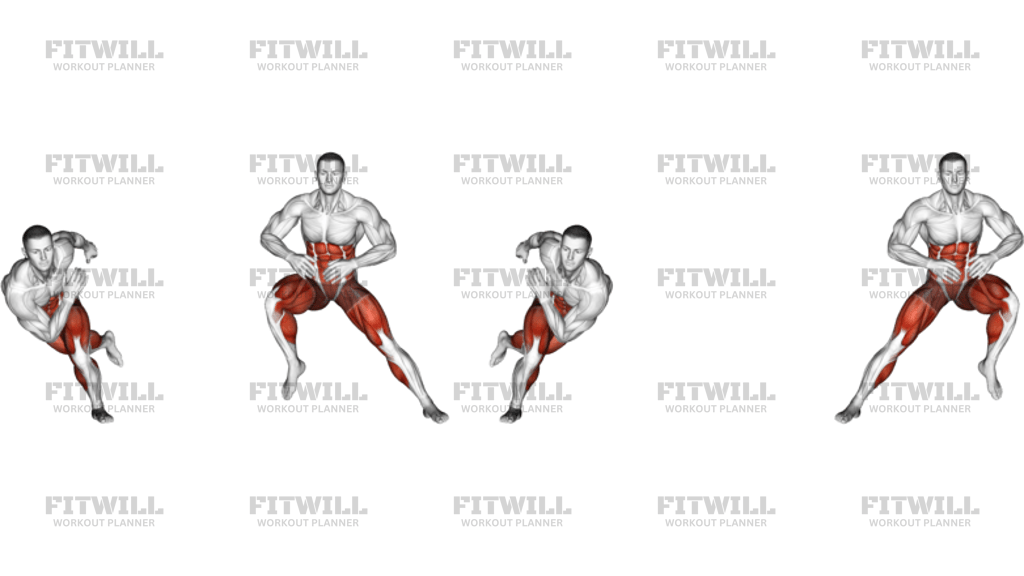
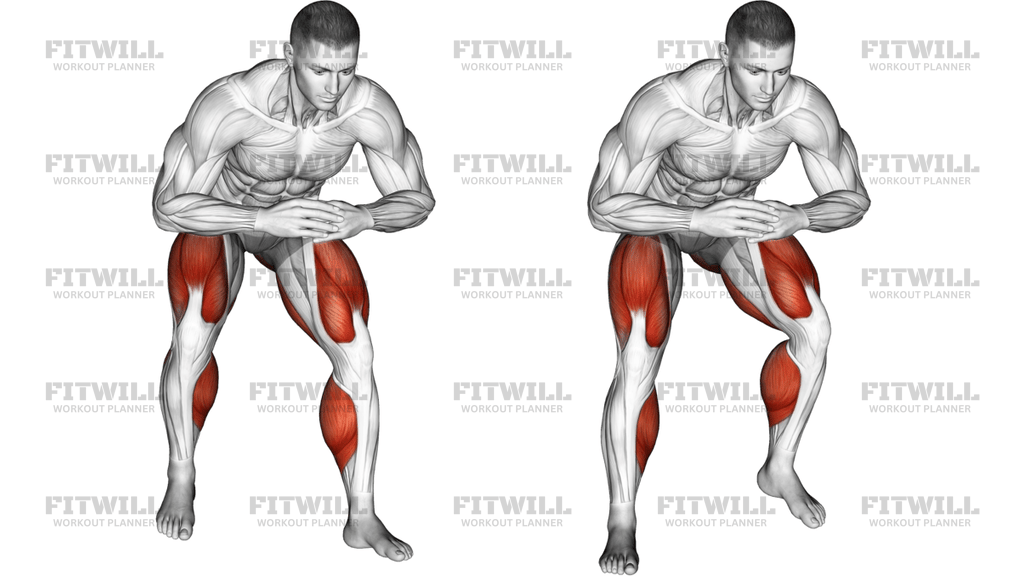
Quick Feet Version 2 is a bodyweight agility drill built around rapid foot switches in a low athletic stance. The image shows a forward-leaning position with the hips back, knees bent, and the feet changing positions quickly while the torso stays quiet. The goal is not to jump high or travel far; it is to keep the feet fast, the base reactive, and the upper body steady while the legs do the work.
This drill challenges coordination, foot speed, hip control, and lower-body stiffness through the quads, glutes, calves, and trunk. Because the movement is performed from a split stance, the setup matters: if you stand too upright or too wide, the drill becomes slow and choppy. A short, springy stance lets you switch feet quickly without losing balance or letting the knees cave inward.
Each rep should look crisp and controlled. Start in the low stance, brace lightly through the trunk, then switch the feet with quick, small steps so the opposite foot becomes the lead foot. Land softly on the balls of the feet, keep the heels light, and keep the knees tracking in line with the toes. The torso should stay angled forward but stable, with the head and shoulders quiet while the legs cycle underneath.
Use Quick Feet Version 2 for warmups, conditioning blocks, speed training, or any session where you want sharper lower-body reactivity without heavy loading. It is especially useful when you want a bodyweight drill that raises heart rate and reinforces fast, efficient footwork. Keep the effort snappy rather than sloppy, and stop the set when your stance gets tall, your feet start crossing poorly, or the rhythm breaks down.
Fitwill
Log Workouts, Track Progress & Build Strength.
Achieve more with Fitwill: explore over 9600 exercises with images and videos, access built-in and custom workouts, perfect for both gym and home sessions, and see real results.
Start your journey. Download today!




Instructions
- Stand in a split athletic stance with one foot slightly ahead, knees bent, hips back, and your torso leaned forward; keep your hands clasped in front of your chest.
- Stay light on the balls of both feet with the rear heel relaxed and the front foot ready to push.
- Brace your midsection and keep your head, chest, and shoulders quiet before you start moving.
- Drive off both feet to switch positions quickly so the opposite foot becomes the lead foot.
- Land softly with short steps under your hips instead of reaching far forward or back.
- Keep the knees tracking in line with the toes and avoid letting them collapse inward as you switch.
- Maintain a fast, even rhythm while keeping the torso angled forward and stable.
- Breathe in a short rhythm as you move and exhale through the effort of each switch.
- Slow the cadence and finish in a balanced athletic stance before resetting for the next set.
Tips & Tricks
- Keep the stance low enough that the drill feels springy, not upright and stiff.
- Think quick and quiet foot contacts; loud stomps usually mean you are losing rhythm.
- If the feet start crossing too far, shorten the switch instead of trying to move faster.
- Let the rear heel stay light so the forefoot can drive the change of direction.
- Keep your arms calm and compact; big arm swings can throw off balance.
- Use a smooth cadence before you try to add speed or shorten the rest period.
- If the knees cave inward, widen the stance a little and reduce the pace.
- Stop the set when the torso starts bobbing or the steps get sloppy.
- This is a speed drill, so quality matters more than forcing extra reps.
Frequently Asked Questions
What muscles does Quick Feet Version 2 work?
It mainly trains the quads, glutes, calves, hip stabilizers, and core while the feet move quickly under a stable torso.
Do I need any equipment for this drill?
No. It is a bodyweight footwork drill, so you only need a little floor space and a stable surface.
How low should my stance be?
Low enough to stay springy, but not so low that you sink and lose speed. Your hips should stay back and your knees should remain bent.
Where should my feet land during the switch?
They should land softly on the balls of the feet, with the steps staying short and underneath the hips.
Is this more of a cardio or strength exercise?
It is mostly an agility and conditioning drill, but it also builds lower-body stiffness, coordination, and trunk control.
Can beginners do Quick Feet Version 2?
Yes. Beginners should move at a slower cadence, keep the stance narrow and controlled, and avoid chasing speed before balance.
What is the most common mistake with this movement?
Standing too tall or taking big, reaching steps. That usually makes the drill choppy and kills the quick rhythm.
How can I make the drill harder?
Increase the cadence, shorten the rest between sets, or use longer work intervals while keeping the same clean foot pattern.