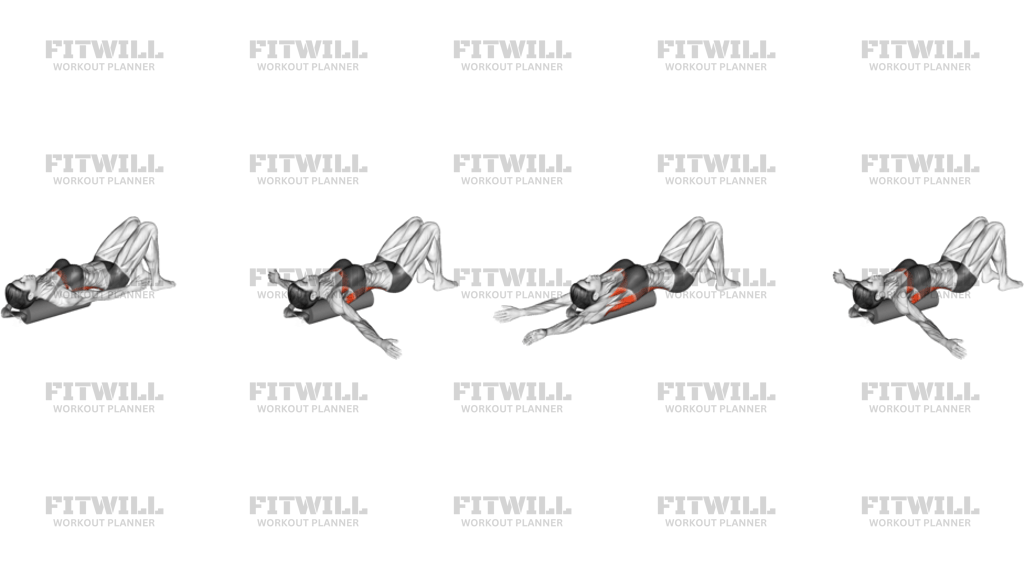
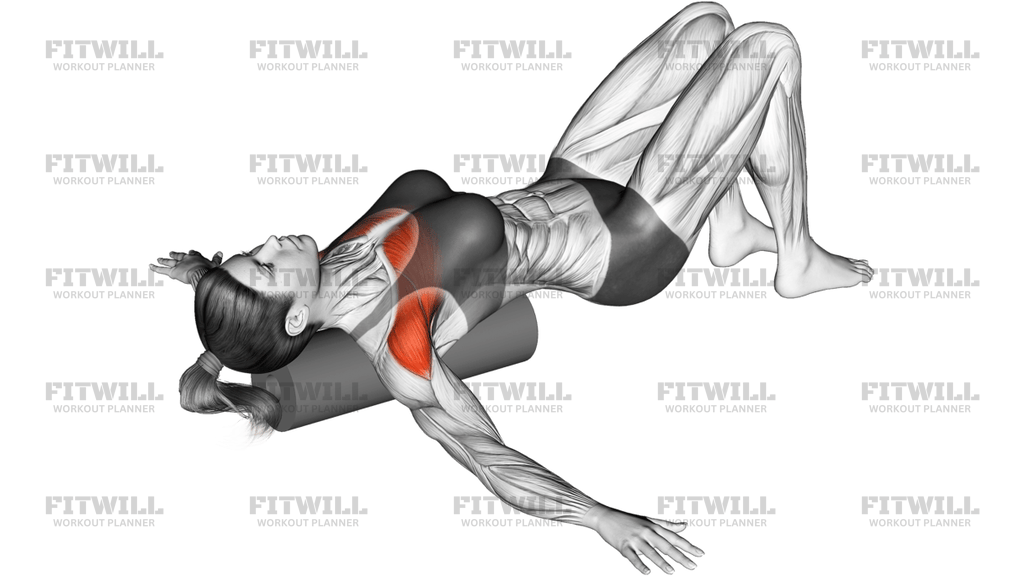
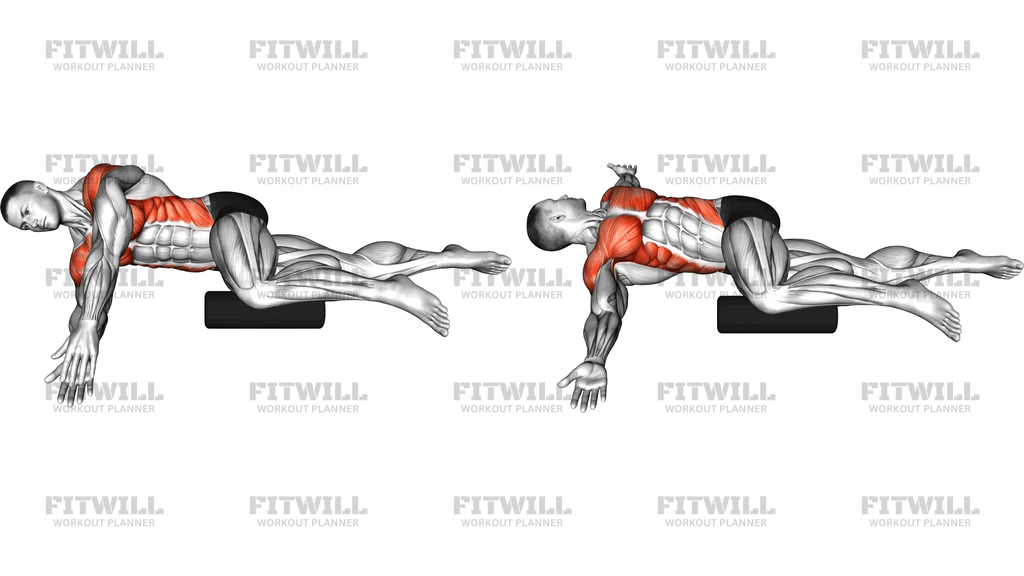
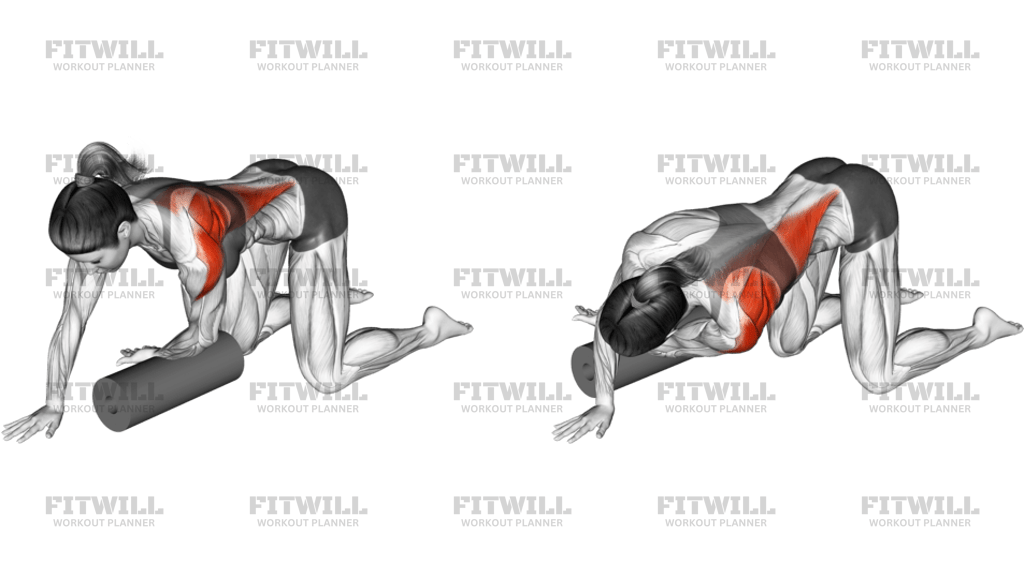
Roll Upper Back
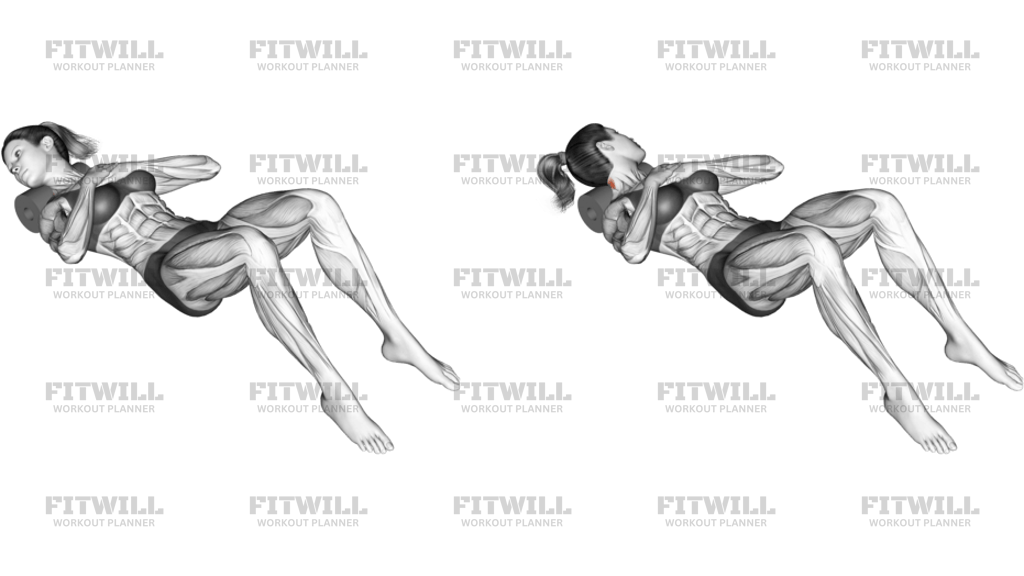
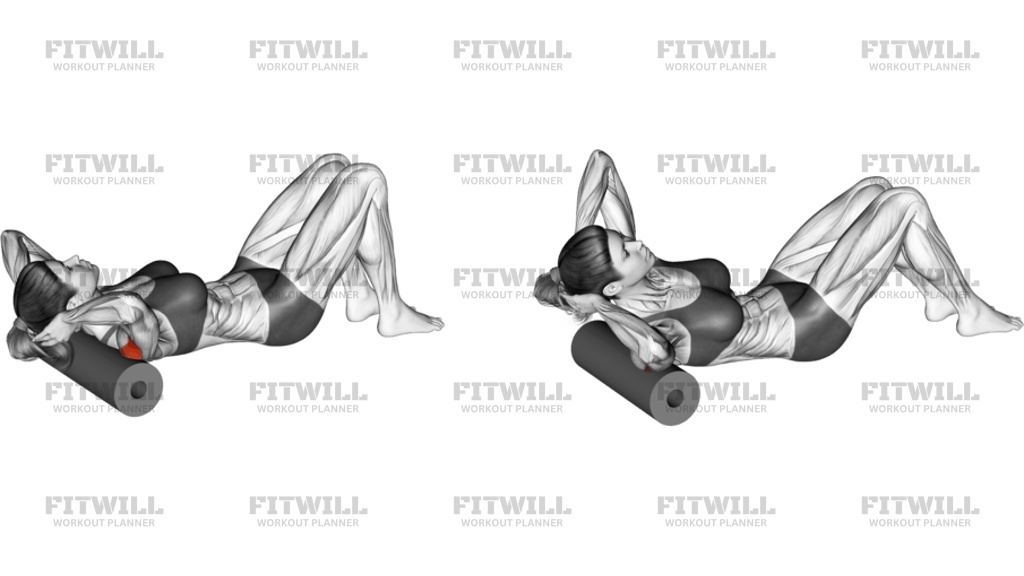
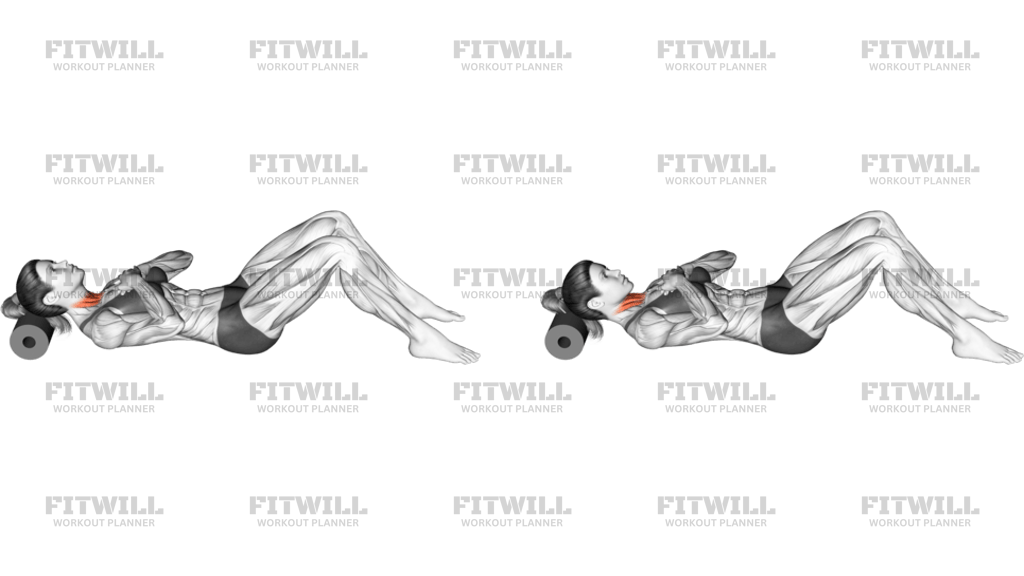
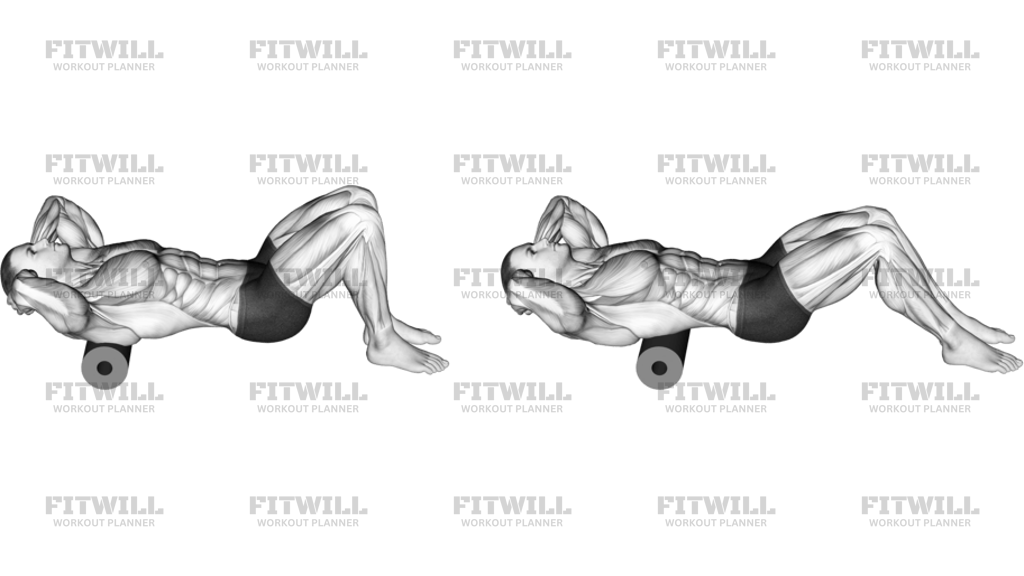
Roll Upper Back is a foam roller mobility drill for the thoracic spine and upper back. You lie on the roller with your knees bent, feet planted, and hands supporting your head while you gently roll across the upper back to find stiff segments and open the chest. The goal is not to chase a big, dramatic arch. It is to create controlled motion through the ribcage and upper back without dumping into the lower back or straining the neck.
This exercise is most useful when your thoracic spine feels stiff from sitting, pressing, overhead work, or general training fatigue. The upper back, rear shoulder area, and trunk stabilizers help keep the body organized while the roller creates pressure and feedback along the thoracic spine. Done well, the movement should feel like a targeted release and mobility drill, not a lower-back extension exercise.
Setup matters because the roller should sit across the upper back, not under the neck or lumbar spine. Keep the feet flat so you can control how much pressure you place on the roller and how far you travel. Your hands should support the head lightly rather than pull on the neck, and your ribs should stay controlled so the extension comes from the mid and upper back instead of flaring through the front of the torso.
Use slow, short passes and breathe out as you move over tighter spots. If one segment feels especially stiff, pause there for a few breaths and let the upper back soften around the roller before continuing. The best results come from small, repeatable motions and relaxed breathing, not from forcing a large range or rolling aggressively.
Roll Upper Back is a good warm-up or recovery drill before pressing, pulling, or overhead work, and it also fits well between sets when your upper back starts to feel locked up. Keep the pressure comfortable, stop if you feel pinching in the neck or low back, and reduce the range if the roller position feels too intense. Beginners can use it easily as long as they keep the motion gentle and controlled.
[ Workout Log & Planner ]
Put your next workout in Fitwill
Keep your plan and training log ready when you are.


Instructions
- Sit on the floor and place the foam roller across your upper back, then lie back with your knees bent and your feet flat on the floor.
- Support your head lightly with your hands and keep your elbows relaxed, avoiding any pull on the neck.
- Set your ribs down and brace lightly so the movement comes from the thoracic spine instead of the lower back.
- Use your feet to shift your body a few inches so the roller travels along the upper back, chest, and shoulder-blade area.
- Slowly extend over the roller as you inhale, then soften into the roller without forcing your spine into a big arch.
- Pause for a breath on tight spots or stiff segments, keeping the pressure comfortable and the neck relaxed.
- Exhale as you roll or reset to the starting point, keeping the movement smooth and controlled.
- Repeat for the planned number of passes, then sit up carefully before standing.
Tips & Tricks
- Keep the roller across the thoracic spine, not under the neck or lower back.
- Support your head lightly so the hands do not turn the drill into a neck pull.
- If the pressure feels sharp, reduce how far you travel and keep more weight in your feet.
- Let the exhale soften the ribs instead of forcing a hard lumbar arch.
- Use short passes of a few inches rather than chasing a long rolling range.
- Pause on one tight segment for a few breaths before moving on.
- Keep the chin slightly tucked so the neck stays long and relaxed.
- Stop if you feel pinching, numbness, or pain that does not feel like normal stretching pressure.
Frequently Asked Questions
What does Roll Upper Back train most?
It mainly trains thoracic extension and upper-back mobility while the trunk and shoulders help keep the body organized.
Where should the foam roller sit during Roll Upper Back?
Place it across the upper back around the thoracic spine, not under the neck and not down on the lower back.
Should I lift my hips off the floor?
Only enough to control pressure and move smoothly. The goal is a gentle roll across the upper back, not a big bridge.
Why do my neck and hands get tired?
That usually means you are pulling on your head. Let the hands support the skull lightly and keep the neck relaxed.
What should I feel during the movement?
You should feel pressure and a stretch across the upper back and ribcage, with the chest opening a little as you move.
Is Roll Upper Back supposed to stretch my lower back?
No. If your lower back is taking over, move less and keep your ribs controlled so the extension stays in the thoracic spine.
Can beginners use this exercise?
Yes. Beginners should keep the roll short, the pressure light, and the breathing slow and relaxed.
When is the best time to do Roll Upper Back?
It works well in a warm-up, during recovery sessions, or between sets of pressing and overhead work when the upper back feels stiff.