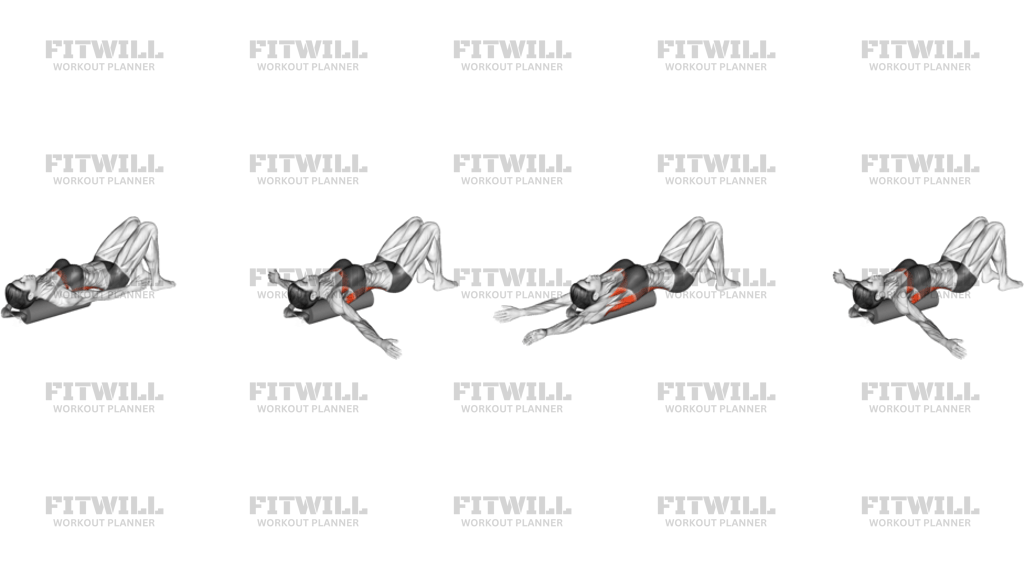
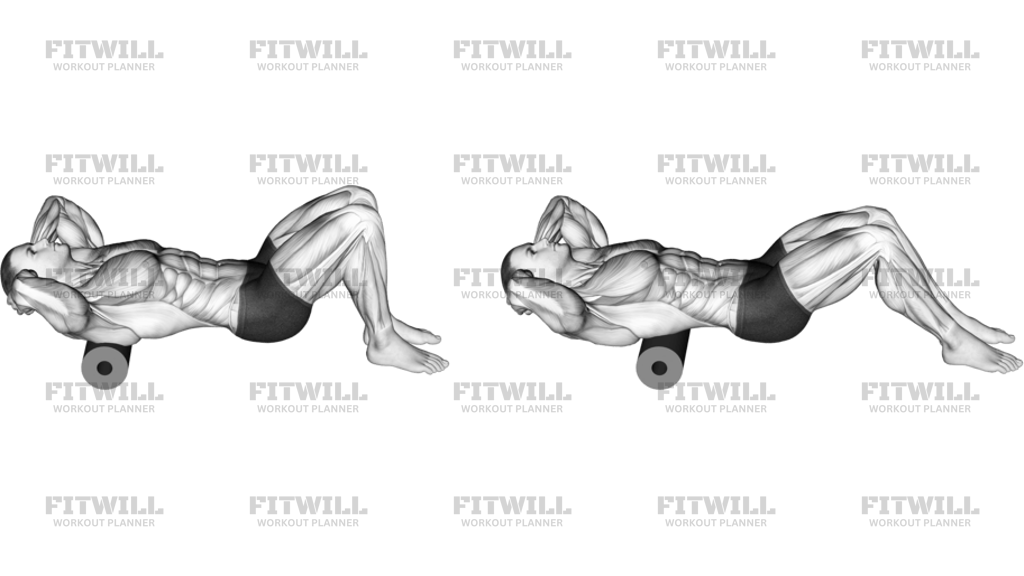
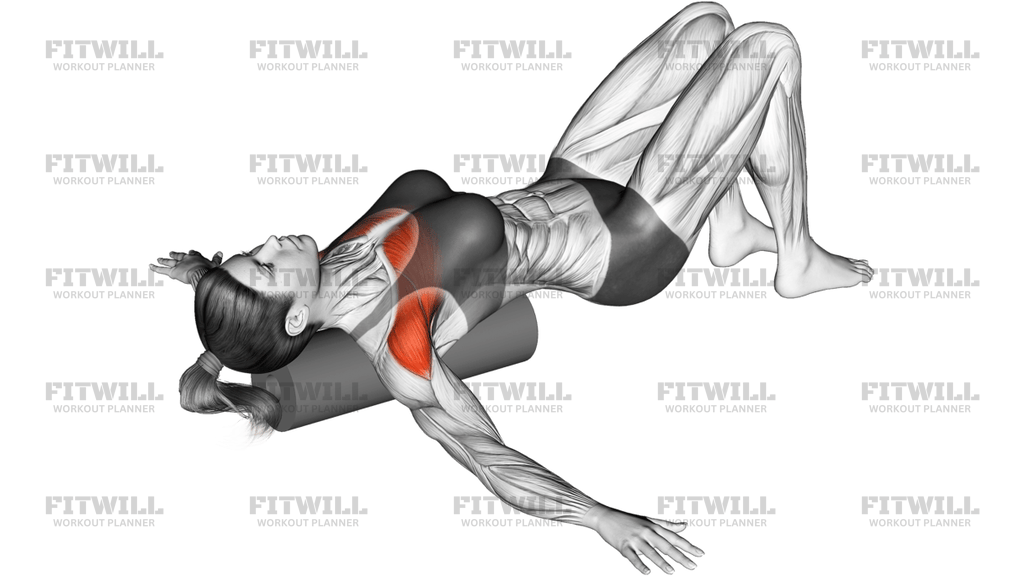
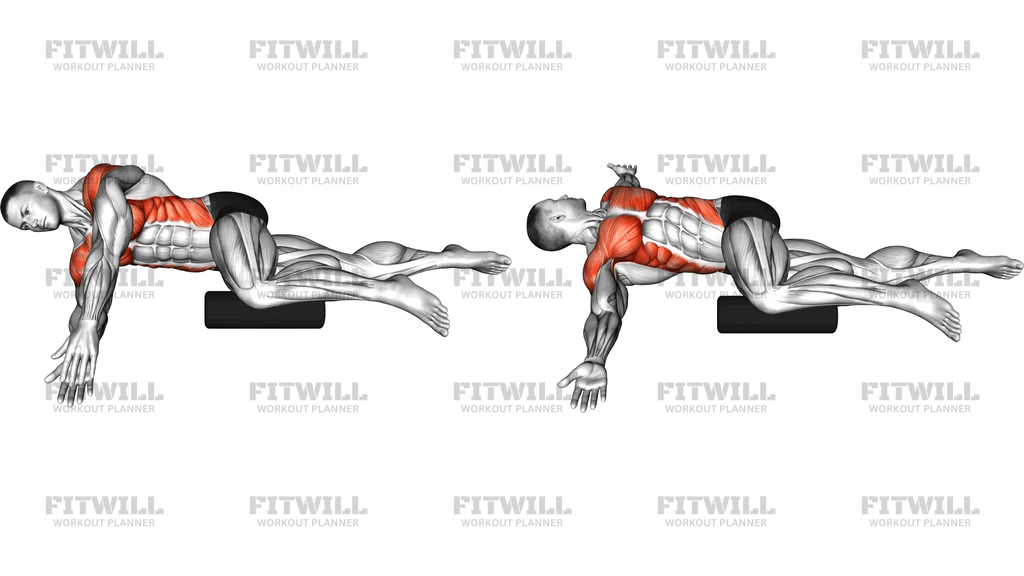
Roll Kneeling Upper Back Rotation
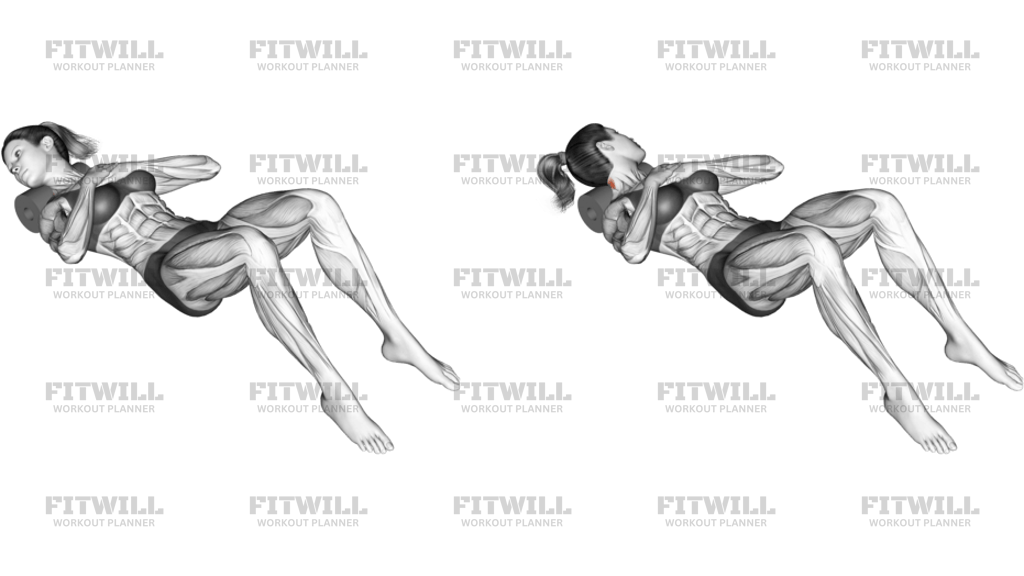
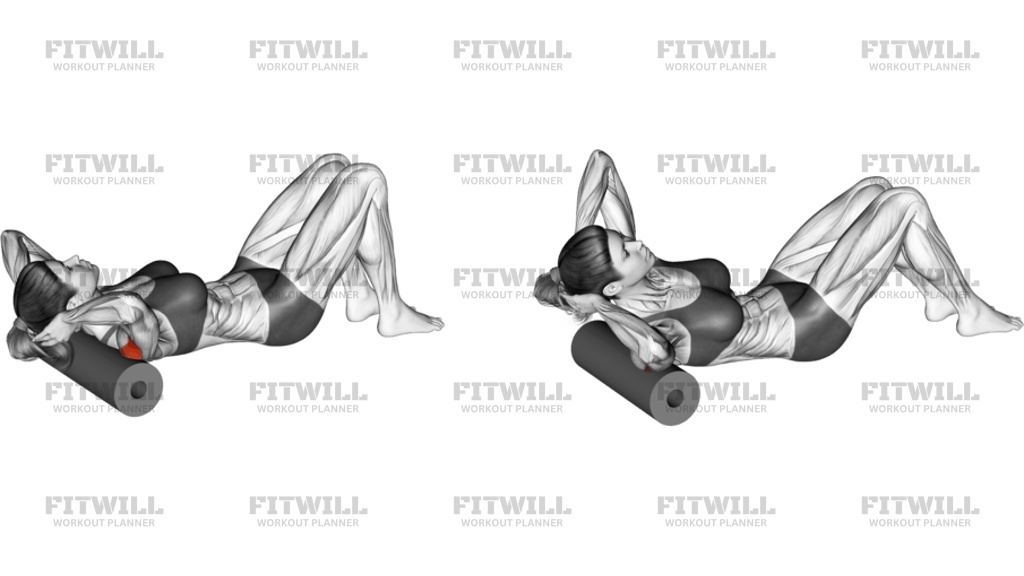
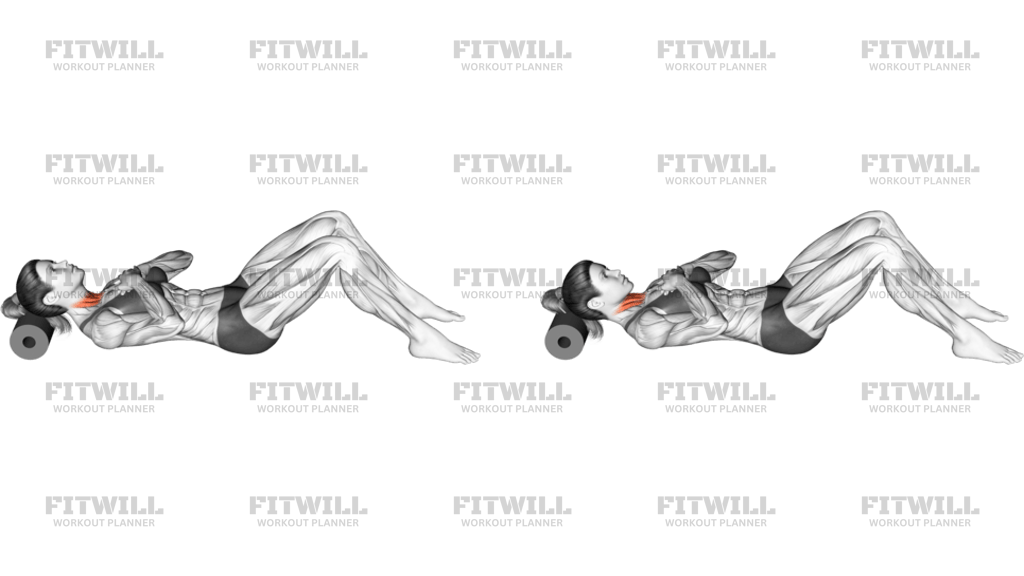
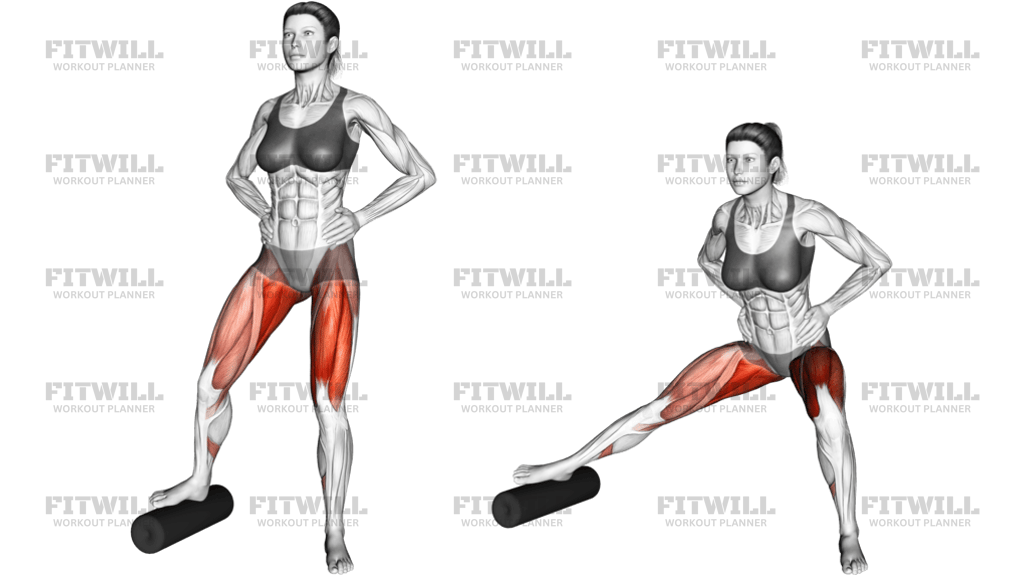
Roll Kneeling Upper Back Rotation is a foam-roller mobility drill for the thoracic spine, upper back, and shoulder girdle. The movement is built around controlled rotation through the ribcage while the knees and hands keep the lower body anchored. It is less about generating load and more about finding a smooth, repeatable upper-back turn without dumping the motion into the low back.
The roller changes how the upper back moves because it gives you a rounded contact point to rotate over. That makes setup important: if the roller sits too low, the lumbar spine tends to take over; if it sits too high, the neck and shoulders can tense up. The best version of the exercise feels like the chest and ribs are turning around a stable pelvis while the shoulders stay relaxed and heavy.
Use this drill when you want better thoracic rotation for pressing, overhead work, reaching, or general warm-up quality. It can also help restore movement after long periods of sitting or after training sessions that leave the upper back stiff. Because the range is guided by the roller, the goal is not to force a huge twist. Instead, let the upper back open gradually and keep the breath slow enough that the ribcage can move with control.
On each repetition, keep the spine long, the head quiet, and the rotation smooth. Exhale as you turn, pause briefly in the open position, and come back without collapsing into the floor or bouncing off the roller. If you feel pinching in the shoulder or a strong bend in the low back, reduce the range and reposition the roller until the movement stays in the upper back where it belongs.
[ Workout Log & Planner ]
Put your next workout in Fitwill
Keep your plan and training log ready when you are.


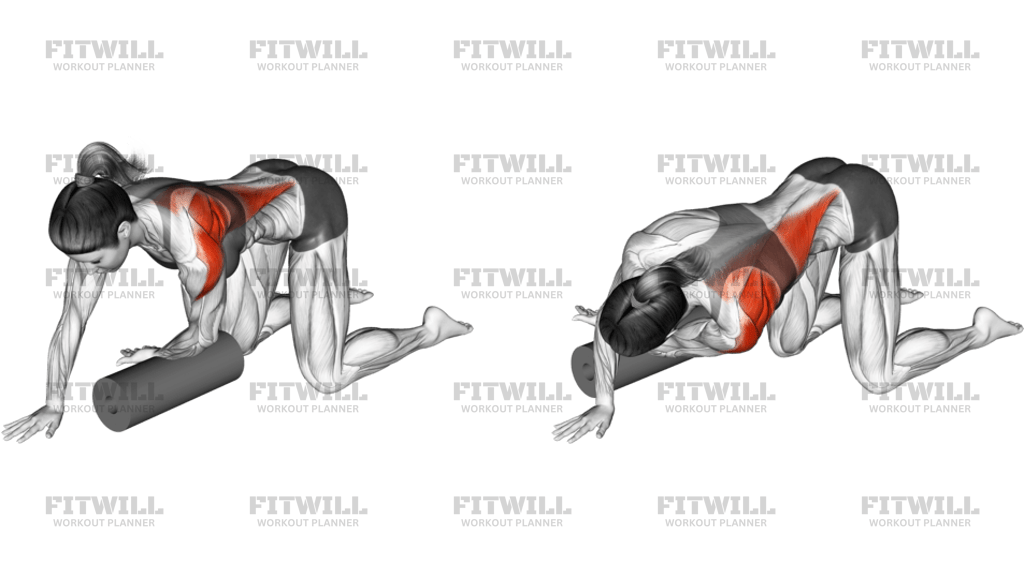
Instructions
- Place the foam roller across your upper back, just below the shoulder blades, and come into a kneeling position with one or both hands available for support on the floor.
- Stack your knees under your hips and keep the pelvis quiet so the rotation stays in the ribcage, not the lower back.
- Set your chest and shoulders over the roller, then soften the neck and let the head follow the torso instead of leading the twist.
- Inhale to expand the ribs, then begin rotating your upper back toward the open side in a slow, controlled arc.
- Let the supported shoulder and upper ribs move over the roller until you reach a comfortable end range without pinching.
- Pause briefly at the open position and exhale so the ribs can settle into the stretch.
- Reverse the motion smoothly and return through center without bouncing or shifting the hips.
- Repeat for the planned reps on one side or alternate sides if that is how your program is written.
Tips & Tricks
- Keep the roller on the upper thoracic area; if it slides down toward the low back, reset before continuing.
- Rotate from the ribs and mid-back, not by cranking the pelvis open or arching the lumbar spine.
- Use a small range first and earn a bigger turn only if the shoulder and neck stay relaxed.
- Let the exhale help the ribs rotate; holding your breath usually makes the chest and upper traps tighten.
- Do not shrug into the roller at the top of the rep, especially if the shoulders are already tense.
- If one side feels much tighter, stay patient and repeat the same controlled arc rather than forcing symmetry.
- Keep the supporting hand light; too much arm pressure turns the drill into a brace exercise instead of a rotation drill.
- Stop short of any sharp shoulder pinch, rib discomfort, or low-back compression.
Frequently Asked Questions
What does Roll Kneeling Upper Back Rotation train?
It mainly trains thoracic rotation and upper-back mobility, with the shoulders and trunk stabilizers helping to keep the movement controlled.
Where should the foam roller sit on my body?
Set it across the upper back, around the area just below the shoulder blades. If it sits too low, the lower back will try to do the work.
Should I feel this in my low back?
No. You should feel the rotation in the upper back and ribcage, not compression or twisting in the lumbar spine.
Can beginners use this drill?
Yes. It works well as a beginner mobility drill if you keep the range small and move slowly over the roller.
What should my head and neck do during the rotation?
Keep the neck long and relaxed, and let the head follow the torso. Avoid jutting the chin forward or looking around to create extra range.
How is this different from a standard thoracic rotation stretch?
The foam roller gives the upper back a rounded surface to rotate over, which can make the movement smoother and easier to control than a floor-only version.
When should I use this exercise?
It fits well in a warm-up, recovery block, or mobility circuit before pressing, overhead work, or any session that needs better upper-back rotation.
What is the most common mistake?
The biggest mistake is forcing the twist by arching the low back or shrugging into the roller instead of rotating through the ribcage.