Barbell Straight Leg Deadlift
Barbell Straight Leg Deadlift is a barbell hip-hinge exercise built around a long hamstring stretch and a controlled return to standing. In the image, the bar starts in the hands with the arms straight, the knees only softly bent, and the torso folding forward as the hips travel back. That makes the movement useful for building posterior-chain strength, hinge mechanics, and trunk position without turning the rep into a squat.
This version emphasizes the hamstrings and glutes most, with the lower back, upper back, lats, and grip working hard to keep the bar path tight and the torso organized. The name and the pictured setup point to a straight-leg style hinge rather than a knee-dominant lift, so the quality of the rep depends on how well you keep the bar close, the spine long, and the pelvis under control. If the bar drifts away from the legs, the load shifts quickly into the back and the movement becomes less effective.
Set your feet about hip width, stand tall with the bar in front of the thighs, and take a balanced overhand grip before you start the first hinge. The knees should stay slightly unlocked, not locked rigidly, so the hips can travel back while the shins stay nearly vertical. From there, the torso lowers under control until the hamstrings reach a strong stretch and the back can still stay neutral. The exact depth depends on your mobility; the goal is not to force the bar to the floor, but to keep tension where it belongs.
As you come up, drive the hips forward and squeeze the glutes to return to a tall standing position. The bar should stay close to the legs on the way down and the way up, almost brushing the thighs and shins as it moves. Breathing should stay deliberate: brace before the descent, hold pressure through the hinge, then exhale as you finish the rep. Used well, this exercise fits lower-body strength work, posterior-chain accessory training, and hinge-pattern practice, especially when you want strict control instead of speed or momentum.
Fitwill
Log Workouts, Track Progress & Build Strength.
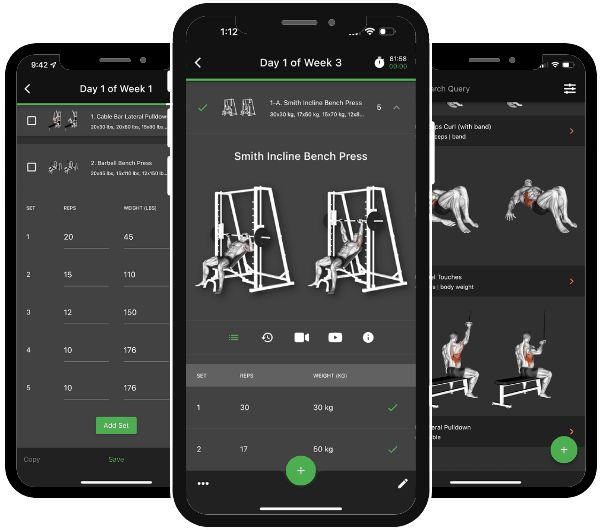
Achieve more with Fitwill: explore over 5000 exercises with images and videos, access built-in and custom workouts, perfect for both gym and home sessions, and see real results.
Start your journey. Download today!


Instructions
- Stand with your feet about hip-width apart and hold the barbell in front of your thighs with an overhand grip just outside your legs.
- Keep your knees softly bent, chest tall, and weight centered over the midfoot before the first rep.
- Take a breath, brace your torso, and pull your shoulders down so the bar starts close to your body.
- Push your hips straight back and hinge forward, letting the bar slide down your thighs as your torso folds.
- Keep your shins nearly vertical and maintain the same slight knee bend throughout the descent.
- Lower until you feel a strong hamstring stretch and can still keep a long, neutral spine.
- Pause for a moment at the bottom without relaxing your grip or letting the bar drift away from your legs.
- Drive your hips forward to stand back up, squeeze your glutes at the top, and finish tall without leaning back.
- Reset your brace before the next rep and repeat for the planned number of repetitions.
Tips & Tricks
- Keep the bar almost touching your legs on every rep; if it drifts forward, the load moves out of the hamstrings and into the low back.
- Do not lock the knees straight; the small bend should stay consistent so the hinge comes from the hips, not from letting the knees unlock and re-bend.
- Stop the descent when your spine is still flat and the hamstrings are the limiter, even if that is well above the floor.
- Think about sending the hips back rather than reaching the bar down; that cue usually keeps the torso and bar path organized.
- Keep your neck neutral and your gaze a few feet in front of you instead of cranking the head up to chase a taller chest.
- Use straps if grip starts failing before your hamstrings do, especially on heavier sets or longer tempos.
- Lower the bar under control for two to three seconds so you can feel the stretch and keep tension through the entire range.
- If you feel the movement mostly in your lower back, reduce the depth and load until you can hinge without losing your torso angle.
Frequently Asked Questions
What muscles do barbell straight leg deadlifts work most?
They mainly train the hamstrings and glutes, with the lower back, upper back, lats, and grip helping stabilize the bar.
Can beginners perform this exercise?
Yes. Beginners should start with a light bar or very small plates, keep the knees softly bent, and stop the descent before the back rounds.
How is this different from a Romanian deadlift?
The setup is very similar, but a straight leg deadlift usually keeps the knees a little straighter and places even more emphasis on the hamstring stretch.
How low should the bar go?
Lower it only as far as you can keep the bar close to your legs and your spine neutral. For many lifters that means around the knees or mid-shin, not all the way to the floor.
Should the bar touch my shins?
Light contact is fine and often helpful. The bar should stay close enough that you can feel it track along the legs instead of swinging forward.
Why do I feel this in my lower back?
Usually the hinge is too deep, the bar is drifting away from the body, or the knees are locking hard at the bottom. Shorten the range and keep the bar path tight.
Can I use dumbbells or kettlebells instead of a barbell?
Yes, the same hinge pattern works with dumbbells or kettlebells, although the barbell version usually makes it easier to keep both sides even.
What is the most common form mistake?
Rounding the back to reach a lower bottom position is the biggest one. The depth should come from hip motion and hamstring length, not from spinal flexion.