Dumbbell Sumo Squat Back On Stability Ball Wall
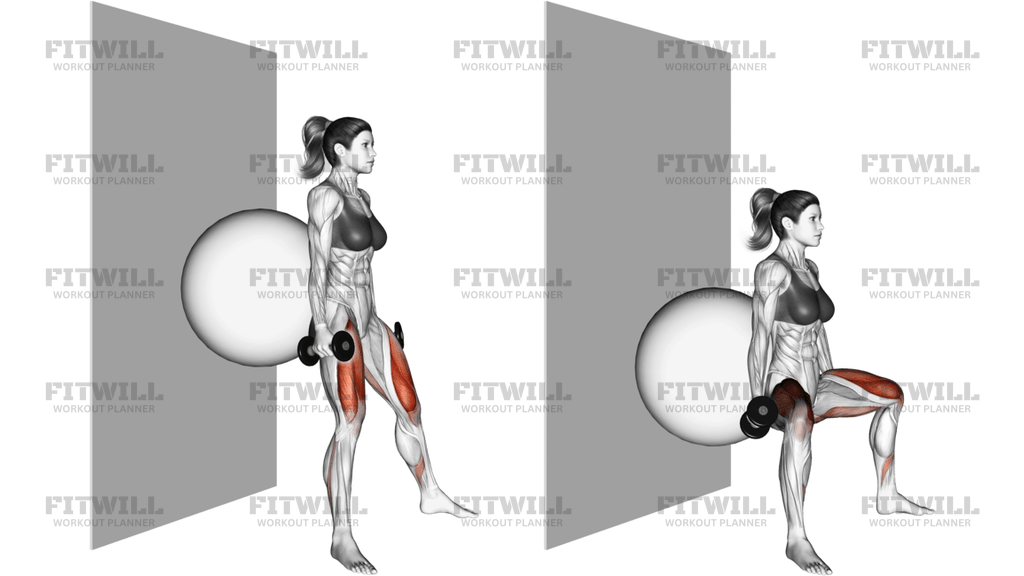
Dumbbell Sumo Squat Back On Stability Ball Wall is a supported lower-body squat that combines a wide sumo stance with a stability ball braced against the wall. The ball helps guide the torso and gives you a smoother path through the rep, while the dumbbells add loading without forcing you to balance the way you would in a free squat. It is a useful choice when you want direct work for the glutes, quads, and inner thighs with less technical demand than a barbell squat.
The back support changes how the movement feels. Instead of fighting to hold your torso up against a heavy external load, you can focus on sitting between the hips, keeping the knees tracking with the toes, and driving evenly through both feet. That makes Dumbbell Sumo Squat Back On Stability Ball Wall a practical accessory exercise for building leg strength, adding volume after a main lift, or training squat mechanics with a little more feedback from the wall and ball.
Your setup matters more here than in a standard squat because the ball is part of the movement pattern. Place it high enough on the mid to upper back to keep the chest open, then step the feet wide enough that the knees can bend out over the toes without the heels lifting. The dumbbells should hang naturally at the sides, close to the outer thighs, so the arms stay relaxed while the legs do the work.
Lower under control until the thighs approach parallel or until your hips and knees reach a comfortable depth that still lets the knees stay aligned. Keep the weight spread through the heel and midfoot, avoid collapsing into the ball, and do not bounce out of the bottom. On the way up, drive the floor away, squeeze the glutes, and finish tall without leaning back or shrugging the shoulders.
Dumbbell Sumo Squat Back On Stability Ball Wall works best as a controlled strength or hypertrophy movement rather than a speed exercise. Use it when you want a stable squat variation that still challenges the lower body and trunk, but stop the set if the ball starts slipping, the knees cave inward, or the lower back takes over the effort. Clean reps matter more than chasing depth or load.
[ Workout Log & Planner ]
Put your next workout in Fitwill
Keep your plan and training log ready when you are.


Instructions
- Place a stability ball between your mid to upper back and a wall, then stand with your feet set wide and your toes turned slightly out.
- Hold a dumbbell in each hand at your sides with your arms straight and the weights hanging just outside your thighs.
- Walk your feet forward until the ball supports your back and you can sit down without your heels lifting.
- Brace your torso, keep your chest tall, and let your knees open in the same direction as your toes.
- Sit your hips down and slightly back so the ball rolls with you while the dumbbells stay quiet at your sides.
- Lower until your thighs are near parallel or until your hips can no longer stay stacked over your feet.
- Pause briefly at the bottom without relaxing onto the ball or letting your knees cave inward.
- Drive through your heels and midfoot to stand, squeezing your glutes as you return to the top.
- Exhale as you rise, then reset your stance before the next rep or step away carefully after the set.
Tips & Tricks
- Keep the ball high on the back, not down on the low spine, so the chest stays open as you squat.
- Turn the toes out only as far as your knees can follow without caving inward or twisting the feet.
- If the dumbbells brush the insides of your thighs, widen the stance a little or let the hands sit just outside the legs.
- A smaller step away from the wall usually makes the squat shallower; step out farther if the knees feel crowded at the bottom.
- Do not sit so far back that you slide down the ball or lose pressure through the heels.
- Keep the descent smooth and controlled so the ball guides the path instead of bouncing you out of the bottom.
- Choose lighter dumbbells than you would for a free sumo squat if the ball makes you feel less stable.
- Drive the knees out on the way up, but keep the feet planted flat so the rep finishes through the hips instead of the toes.
- Stop the set if the ball shifts sideways or the shoulders start rolling forward against the wall.
- Treat the rep like a leg exercise, not a balance drill: the torso should stay organized while the legs create the movement.
Frequently Asked Questions
What muscles does Dumbbell Sumo Squat Back On Stability Ball Wall work?
Dumbbell Sumo Squat Back On Stability Ball Wall mainly works the glutes, quads, and inner thighs, with the hamstrings and core helping stabilize the position. The wide stance shifts a lot of the work into the hips and adductors.
Why use the stability ball against the wall for Dumbbell Sumo Squat Back On Stability Ball Wall?
The ball gives your back a guided track so you can focus on leg drive and knee position instead of fighting for balance. It also makes it easier to keep the torso upright in the sumo stance.
How wide should my feet be in Dumbbell Sumo Squat Back On Stability Ball Wall?
Wide enough that your knees can open over the toes without your heels lifting or your hips tucking under at the bottom. If your knees feel cramped, step your feet a little farther forward and slightly wider.
Where should the dumbbells stay during the squat?
The dumbbells should hang at your sides, close to the outer thighs, with straight arms. If you have to curl them forward to clear your knees, the stance is probably too narrow.
Is Dumbbell Sumo Squat Back On Stability Ball Wall good for beginners?
Yes, if you start with light dumbbells or even bodyweight first. The wall and ball reduce balance demands, but the wide stance still requires your knees and hips to move cleanly.
How low should I go in Dumbbell Sumo Squat Back On Stability Ball Wall?
Go as low as you can while keeping the feet flat, the knees tracking with the toes, and the ball steady on your back. Stop before your pelvis tucks hard under or the lower back starts taking over.
What is the most common mistake in Dumbbell Sumo Squat Back On Stability Ball Wall?
Letting the knees cave inward or bouncing off the ball at the bottom is the biggest issue. Both usually mean the stance is off or the load is too heavy.
Can I do Dumbbell Sumo Squat Back On Stability Ball Wall if the ball feels unstable?
Yes, but use a lighter load and shorten the range until the ball stays planted. If it keeps slipping, move the feet a little farther from the wall and slow the descent.
What should I feel more: glutes or quads?
You should feel both, with the glutes and inner thighs doing a lot of the work because of the wide stance. If the quads dominate too much, open the stance a little wider and sit back more deliberately.