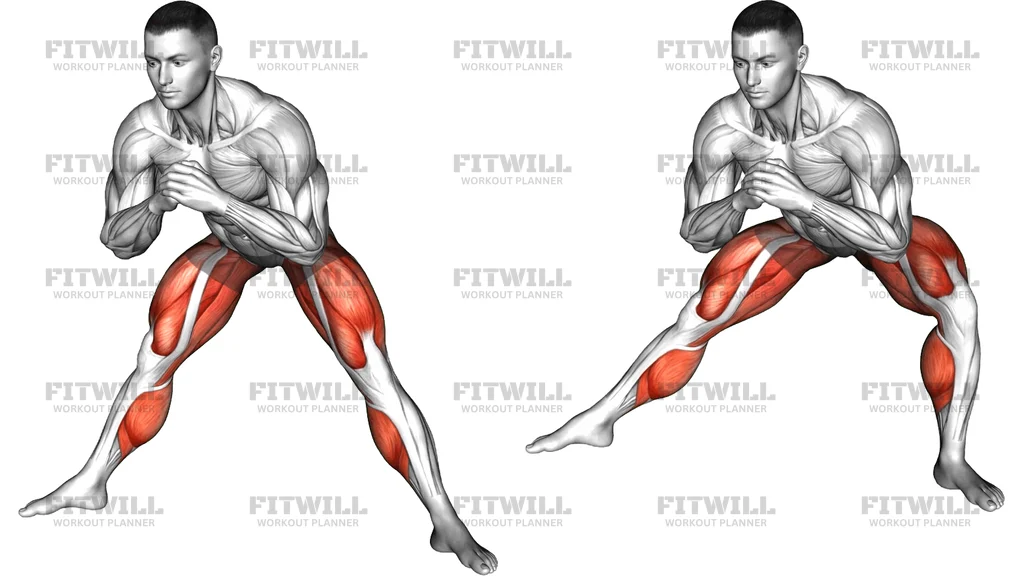
Standing Archer
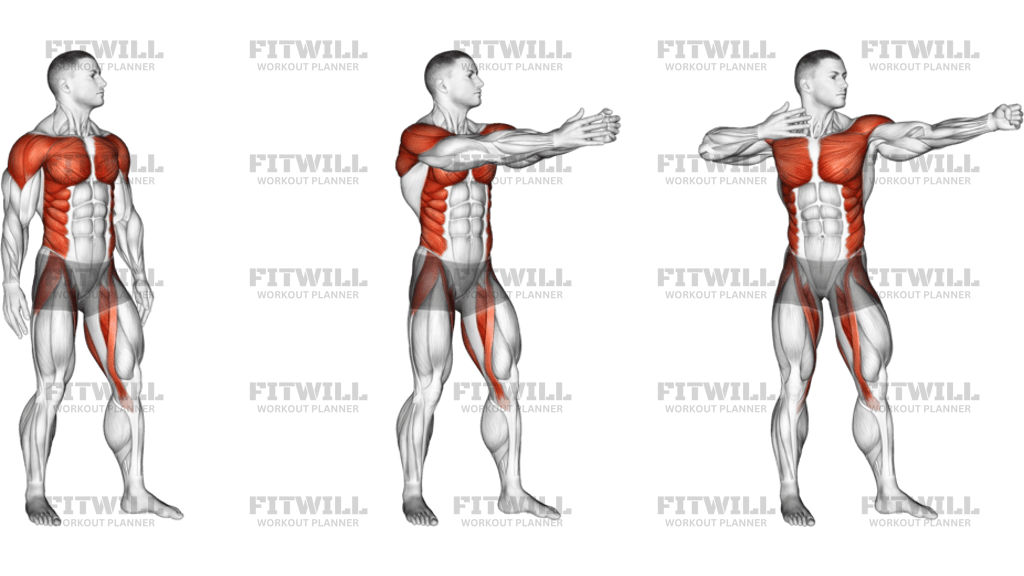
Standing Archer is a bodyweight upper-body control drill that trains you to reach long with one arm while drawing the other arm back as if you were aiming a bow. It is a simple-looking movement, but it asks the shoulders, upper back, arms, and trunk to stay organized while the arms move in opposite directions. That makes it useful as an activation drill, a warm-up for pulling or pushing work, or a light accessory movement when you want cleaner shoulder mechanics.
The main benefit of Standing Archer is coordination. The reaching side should stay long without shrugging, while the pulling side should open the chest and let the shoulder blade move back without twisting the torso or flaring the ribs. When those pieces stay under control, you get work through the rear delts, upper back, chest, and core without relying on momentum. That is also why this exercise is often more valuable when performed slowly than when performed for speed.
Start from a tall standing position with your feet about hip-width apart and your knees soft. Lift both arms to about shoulder height, then set one arm forward and the other back so the body looks like a drawn archer position. Keep your neck relaxed, your chin level, and your ribs stacked over your pelvis. The setup matters because if you begin by shrugging, leaning back, or reaching too high, the shoulders will take over and the movement will stop feeling clean almost immediately.
Each repetition should move between mirrored archer positions under control. Reach the front hand long, draw the back elbow behind your torso, and keep both shoulders down as the arms switch sides. Use a smooth tempo so the torso stays quiet and the movement comes from the shoulders and upper back rather than from a sway through the hips. Exhale as you draw back or open, inhale as you return, and pause briefly in the strongest position when the chest and back are aligned.
Standing Archer works well in warm-ups before upper-body sessions, shoulder-prep circuits, or light conditioning blocks where posture and control matter more than load. Keep the range pain-free and make the reps symmetrical from side to side. If the front of the shoulder pinches, the lower back arches, or the neck starts to tense, shorten the reach and slow the transition so the rep stays clean and repeatable.
[ Workout Log & Planner ]
Put your next workout in Fitwill
Keep your plan and training log ready when you are.


Instructions
- Stand tall with your feet about hip-width apart and keep a soft bend in both knees.
- Lift both arms to shoulder height, with one arm reaching straight forward and the other arm drawn back near the side of your face or chest.
- Stack your ribs over your pelvis, keep your chin level, and keep your neck long before you start moving.
- Reach the front hand long as you draw the back elbow behind your torso without letting the shoulder shrug.
- Keep the chest open and the torso quiet while the shoulder blades do the work.
- Pause for a moment in the fully opened archer position, then reverse the arms with control.
- Switch sides smoothly instead of swinging through the transition or leaning back to cheat the range.
- Breathe out as you draw back and breathe in as you return to the other side.
- Lower both arms and reset your stance after the planned repetitions are complete.
Tips & Tricks
- Keep the reaching arm at shoulder height; if it climbs too high, the upper traps will take over and your neck will tense.
- Think about pulling the back elbow with the shoulder blade, not yanking with the hand.
- If your lower back arches when you open the chest, shorten the reach and keep the ribs stacked.
- Use a small pause on each side so you can feel whether both shoulders are moving evenly.
- Let the back elbow stay level with or slightly below the shoulder instead of cranking it high behind you.
- Move slower on the return than on the reach to keep tension on the upper back and rear delts.
- Keep the wrists neutral and relaxed so the arms do not become the limiting factor.
- Stop the set if the front of the shoulder feels pinchy or the torso starts swaying from side to side.
Frequently Asked Questions
What does Standing Archer train most?
It trains the shoulders, upper back, arms, and core to work together while one arm reaches and the other arm pulls back.
Is Standing Archer a mobility drill or a strength exercise?
It can serve as both, but it is usually best treated as a control and activation drill rather than a heavy strength movement.
Do I need any equipment for Standing Archer?
No. It is a bodyweight movement, so you only need enough floor space to stand tall and move your arms freely.
Should my torso rotate during Standing Archer?
A tiny amount of natural turn is fine, but your hips and ribcage should stay mostly stacked so the shoulders do the work instead of the trunk.
Why do my shoulders shrug during Standing Archer?
Usually the reach is too high or the pull is too aggressive. Lower both arms to shoulder height and keep your neck long.
Can beginners do Standing Archer safely?
Yes, if they keep the range small, move slowly, and avoid forcing the chest open or leaning backward.
What should I do if the front of my shoulder pinches?
Shorten the reach, slow the transition, and stop the set if the pinch remains. This should feel like muscular work, not joint irritation.
How many reps should I use for Standing Archer?
Use moderate reps with strict control, such as 8-15 per side or as part of a warm-up circuit, and stop when the movement starts getting sloppy.