Dumbbell Incline Alternate Bicep Curl
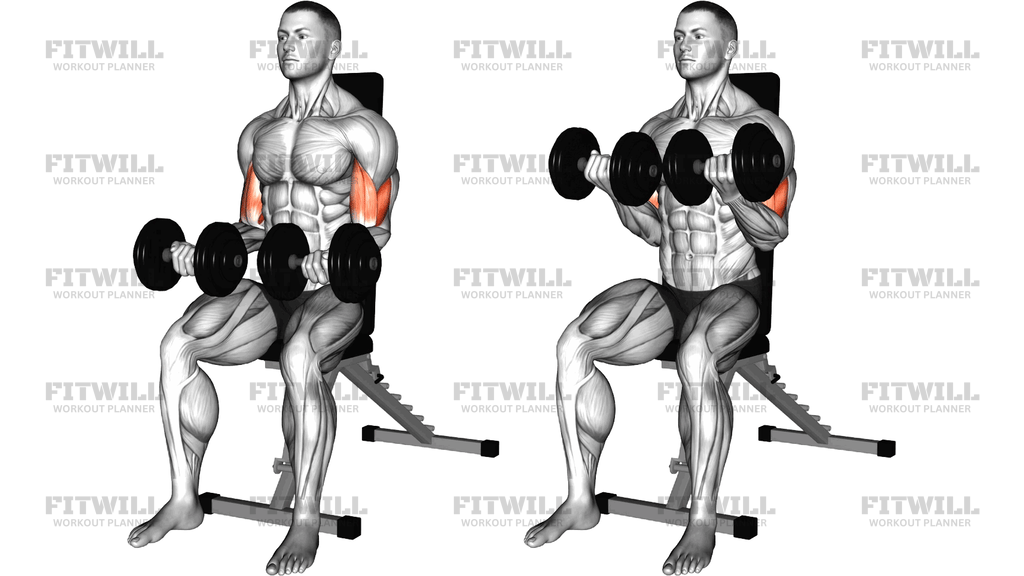
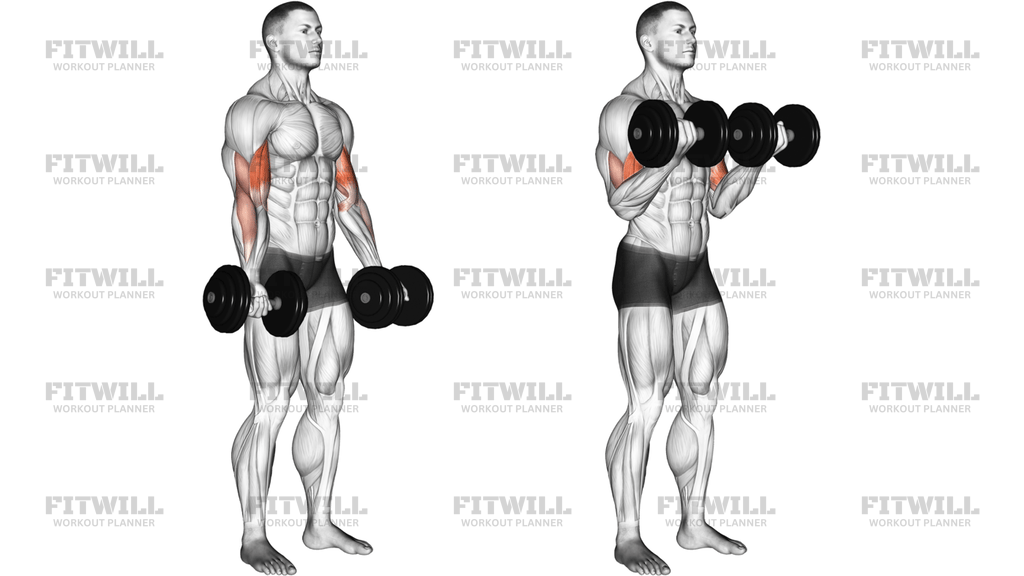
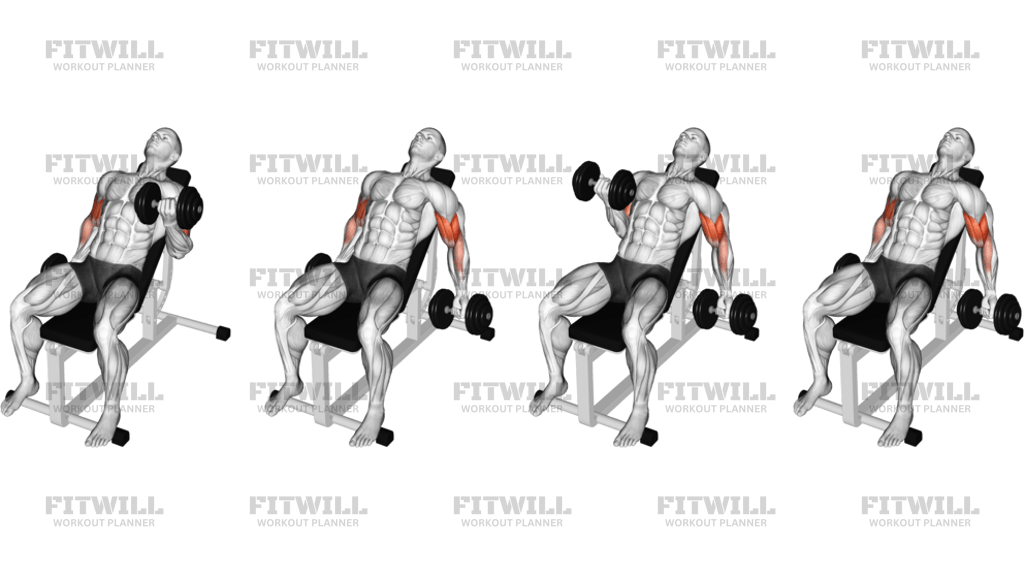
Dumbbell Incline Alternate Bicep Curl is a seated curl variation that places the upper arms behind the torso on an incline bench, creating a longer starting position for the biceps than a standing curl. The exercise is built around alternating one arm at a time while the other arm stays quiet, so each rep asks for elbow control, wrist position, and shoulder stability instead of body swing.
The setup changes the training effect in an important way. Because the shoulders are extended on the bench, the biceps have to produce force from a stretched position, which makes the bottom half of the curl feel harder and usually reduces the amount of weight you can use compared with other curl variations. That longer lever also means sloppy reps show up quickly if the upper arm drifts forward or the wrist starts bending back.
This movement primarily targets the biceps brachii, with the brachialis, brachioradialis, and forearm flexors assisting through elbow flexion and grip control. The incline position tends to emphasize the long head of the biceps because the shoulder stays open behind the torso throughout the rep. It is a good accessory choice for arm hypertrophy work, controlled strength training, and tempo-based curl sets where strict form matters more than load.
For clean execution, keep your back and head supported on the bench, let the dumbbells hang fully before each rep, and curl one side without rocking the torso or shrugging the shoulder. The non-working arm should stay extended and relaxed until its turn comes around. At the top, finish the curl without rolling the shoulder forward; then lower the dumbbell slowly until the elbow is nearly straight and the biceps are loaded again.
Use this exercise when you want a strict biceps isolation movement that reduces momentum and forces honest reps. It fits well after heavier pulling work or as a finishing movement for arm day. Keep the bench angle moderate, the load conservative, and the range pain-free. If the front of the shoulder feels pinched or the lower position feels too aggressive, shorten the range slightly or reduce the incline before adding weight.
[ Workout Log & Planner ]
Put your next workout in Fitwill
Keep your plan and training log ready when you are.


Instructions
- Set an incline bench to a moderate angle and sit with your back and head supported, feet planted flat on the floor.
- Hold a dumbbell in each hand with your arms hanging straight down and slightly behind your torso, palms facing forward.
- Let your shoulders stay back on the bench and keep your elbows fixed in place before you start the first curl.
- Curl one dumbbell toward the front shoulder without swinging your torso or drifting the elbow forward.
- Squeeze the biceps near the top, keeping the wrist stacked over the forearm instead of bending it back.
- Lower that dumbbell slowly until the arm is almost straight and the biceps are loaded in the stretched position.
- Alternate to the other arm and repeat the same path, keeping the non-working arm still until its turn.
- Continue alternating for the planned reps, breathing out as you curl up and breathing in as you lower.
Tips & Tricks
- Choose a lighter pair of dumbbells than you would use for a standing curl; the incline stretch makes the bottom half much harder.
- Keep your upper arm anchored and avoid letting the elbow travel forward as the dumbbell rises.
- Let the dumbbell start slightly behind the line of your torso so the biceps work from a true stretched position.
- Keep your wrist neutral and your knuckles stacked over the forearm to avoid dumping tension into the wrist.
- Do not shrug the shoulder at the top; the movement should finish with elbow flexion, not a shoulder roll.
- Lower the weight under control for the full eccentric instead of dropping it once the curl is complete.
- Alternate sides cleanly, but keep the resting arm quiet so the set stays strict and symmetric.
- If the front of the shoulder feels irritated, reduce the bench angle before you change the range or add load.
Frequently Asked Questions
What does the incline bench change in Dumbbell Incline Alternate Bicep Curl?
The incline puts the upper arm behind the torso, so the biceps start in a longer, harder position and the movement stays stricter.
Which muscle works hardest in this curl variation?
The biceps brachii does most of the work, with the brachialis and forearm flexors helping to finish the rep and control the dumbbell.
Why alternate arms instead of curling both at the same time?
Alternating lets you focus on one clean rep at a time and keep the non-working arm relaxed while the other side curls through the full range.
How high should I curl the dumbbell?
Curl until the forearm is close to vertical and the biceps are fully shortened, but do not let the shoulder roll forward to chase extra height.
Is Dumbbell Incline Alternate Bicep Curl beginner friendly?
Yes, if the load is light and the bench angle is moderate. Beginners usually need less weight here than on a standing curl.
Why does the bottom of the rep feel so hard?
At the bottom, the biceps are working from a stretched shoulder position, which increases tension and makes control more important.
What is the most common mistake with the bench setup?
Setting the bench too upright or letting the torso slide forward. Both reduce the stretch and make it easier to cheat the curl.
Can I use a neutral grip instead of palms forward?
You can, but that becomes a different curl emphasis. The palms-forward version shown here keeps the classic biceps curl path.