Dumbbell Chest Supported Lateral Raises
Dumbbell Chest Supported Lateral Raises is a chest-supported shoulder isolation exercise that uses an incline bench and two dumbbells to load the side delts without asking the torso to stabilize against a standing swing. The support from the bench makes the movement more honest: the shoulders have to do the lifting, while the upper back and arms mostly help you hold position and keep the path smooth. That makes it a useful choice when you want to train the delts with less cheating and less lower-back involvement than a standing lateral raise.
The exercise is most strongly associated with the Deltoids, especially the lateral fibers that create shoulder width, with Trapezius, Rhomboids, and Triceps brachii contributing to position, control, and grip. Because the chest is pinned to the bench, the exercise also discourages excessive torso sway and lets you feel where the shoulder joint is doing the work. The result is usually a cleaner contraction, a better stretch at the bottom, and a more repeatable rep pattern from set to set.
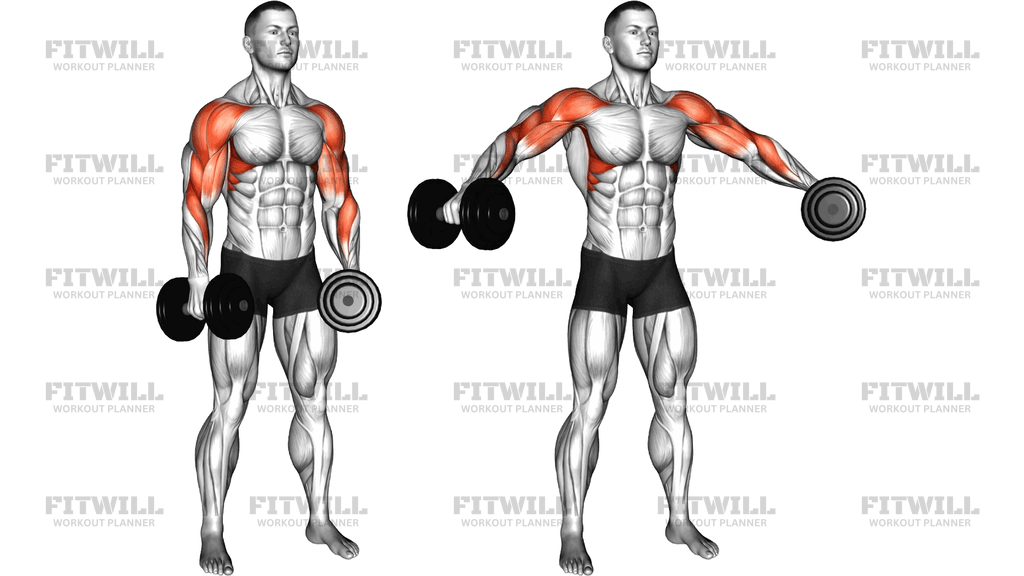
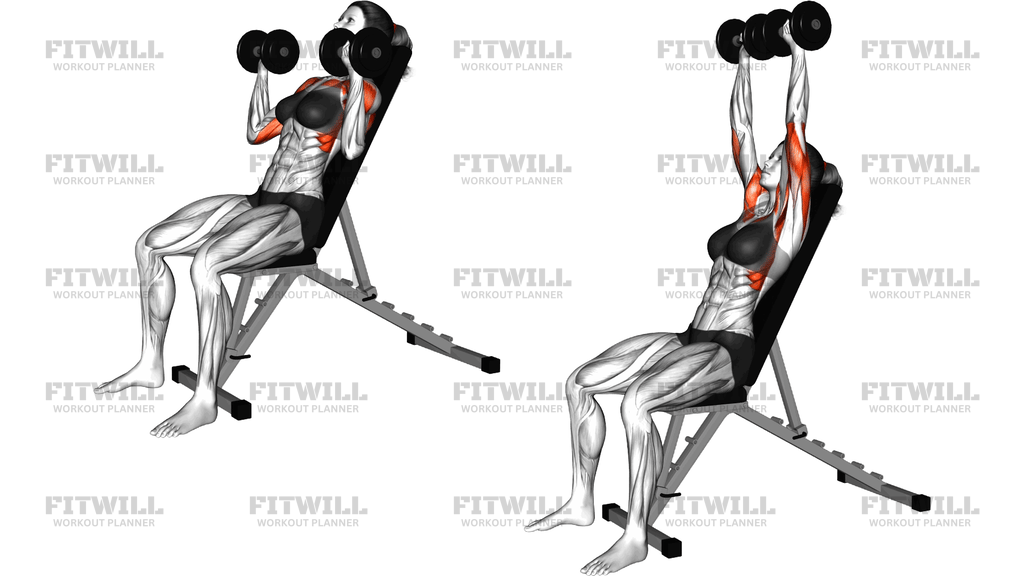
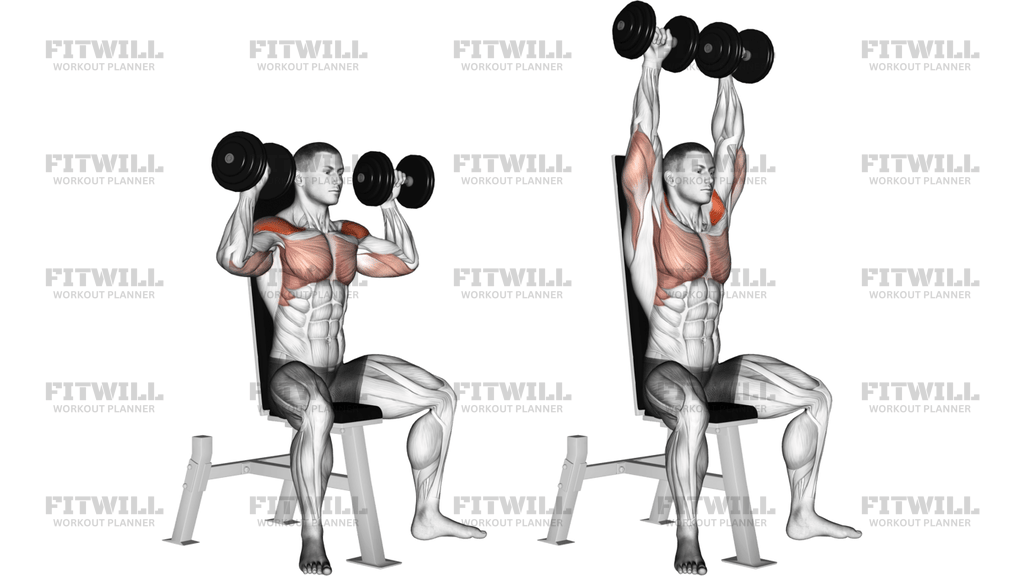
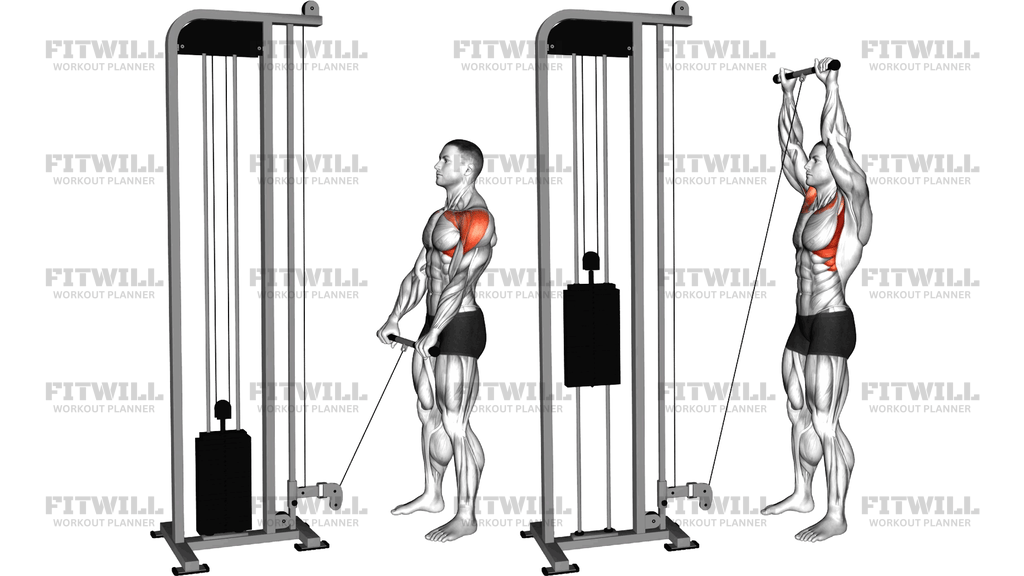
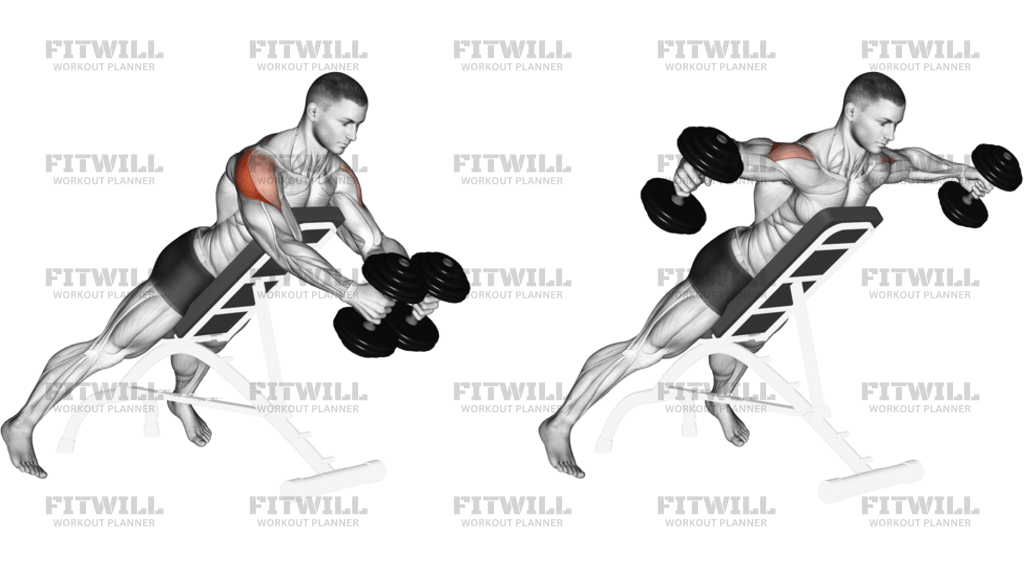
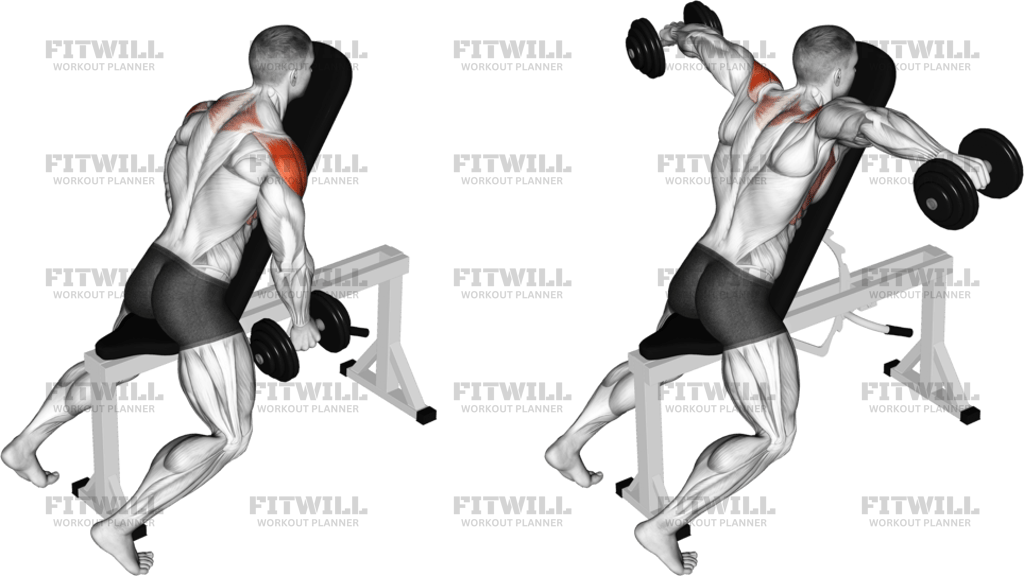
The setup matters. An incline bench gives you the chest support that changes the lift from a momentum-driven swing into a controlled raise. If the bench is too low, you lose the support advantage; if it is too steep, the movement can become more like a rear-delt or upper-back drill. The image shows the torso braced against the pad with the dumbbells hanging below shoulder level, which is the key start position: stable trunk, long arms, and shoulders ready to lift out to the sides.
During each rep, raise the dumbbells out and slightly forward in a wide arc until the upper arms are around shoulder height, then lower them slowly back to the hang. Keep the elbows softly bent, wrists neutral, and neck relaxed. Breathing should stay calm and predictable so you can avoid shrugging or arching to finish the rep. If the dumbbells start traveling behind your body, bouncing off the bottom, or turning into a row, the load is probably too heavy or the bench angle is too aggressive.
This is a strong accessory choice for shoulder-focused training, upper-body hypertrophy work, and any session where you want direct lateral-delt tension without standing body English. It is also a good option for lifters who struggle to keep standing lateral raises strict, because the bench support removes a lot of the usual compensation. Use a controlled tempo, choose a load you can lift without jerking, and stop each set when the shoulder path starts to change.
[ Workout Log & Planner ]
Put your next workout in Fitwill
Keep your plan and training log ready when you are.


Instructions
- Set an incline bench so your chest can rest firmly on the pad, then hold a dumbbell in each hand and straddle or brace your lower body behind the bench.
- Let your chest, sternum, and upper abdomen stay in contact with the pad while your arms hang straight down from the shoulders with a slight bend in the elbows.
- Set your shoulders down away from your ears and keep your wrists neutral before the first rep starts.
- Brace your midsection against the bench so your torso stays fixed when the dumbbells leave the bottom position.
- Raise both dumbbells out to the sides in a wide arc, leading with the elbows and keeping the hands slightly below elbow height.
- Lift until your upper arms are about level with your shoulders or just below, without shrugging or twisting your trunk.
- Pause briefly at the top and feel the side delts finish the rep instead of the traps or lower back.
- Lower the dumbbells slowly back to the hanging start until you feel a controlled stretch through the shoulders.
- Repeat for the planned reps, breathing out as you lift and inhaling as you lower, then set the dumbbells down carefully.
Tips & Tricks
- Set the bench angle around mid-incline; too flat reduces the chest-support effect, while too steep turns the lift into a different shoulder angle.
- Keep your chest glued to the pad so the dumbbells cannot be lifted by torso extension or a quick hip drive.
- Think about moving the elbows out and up rather than trying to fling the dumbbells with your hands.
- Stop the ascent when your upper arms reach shoulder height; going much higher usually turns into upper-trap shrugging.
- Use a lighter pair than you would for standing lateral raises, because the support makes the target muscle work more honestly and more continuously.
- Keep a soft elbow bend from start to finish so the shoulder stays in control and the joint is not locked out under load.
- Lower the dumbbells under control for a full stretch instead of dropping them to the bottom and bouncing off the dead hang.
- If your neck tightens first, reset with your shoulders depressed and choose a smaller load.
- Hold the dumbbells in a neutral grip or with a slight thumb-up angle if that feels better on the shoulder.
- Treat the set as a deltoid isolation drill, not a rear-delt row; if your hands drift behind your torso, the path is drifting.
Frequently Asked Questions
What muscles do Dumbbell Chest Supported Lateral Raises work most?
The side delts are the main target, with the upper traps, rhomboids, and triceps helping mainly with position and control.
Why use a chest-supported version instead of a standing lateral raise?
The bench support removes a lot of torso swing, so the shoulder has to do more of the work and the reps stay cleaner.
How high should I raise the dumbbells?
Lift until your upper arms are about level with your shoulders or just below. Going much higher usually turns the set into shrugging.
What does the bench do in this exercise?
The incline bench supports the chest and torso so the dumbbells move in a more controlled side-raise pattern instead of a full-body swing.
Can beginners do Dumbbell Chest Supported Lateral Raises?
Yes. Beginners usually do best with a light load and a bench angle that lets them keep the chest fixed without reaching or twisting.
What grip works best on the dumbbells?
A neutral or slightly thumbs-up grip is usually the most comfortable, as long as the wrists stay straight and the elbows lead the lift.
What is a common mistake with this movement?
Shrugging the shoulders or letting the chest come off the pad are the biggest mistakes, because both reduce delt tension.
Where does this fit in a workout?
It works well as accessory shoulder work after your main presses or pulls, when you want direct delt volume without much fatigue from stabilization.