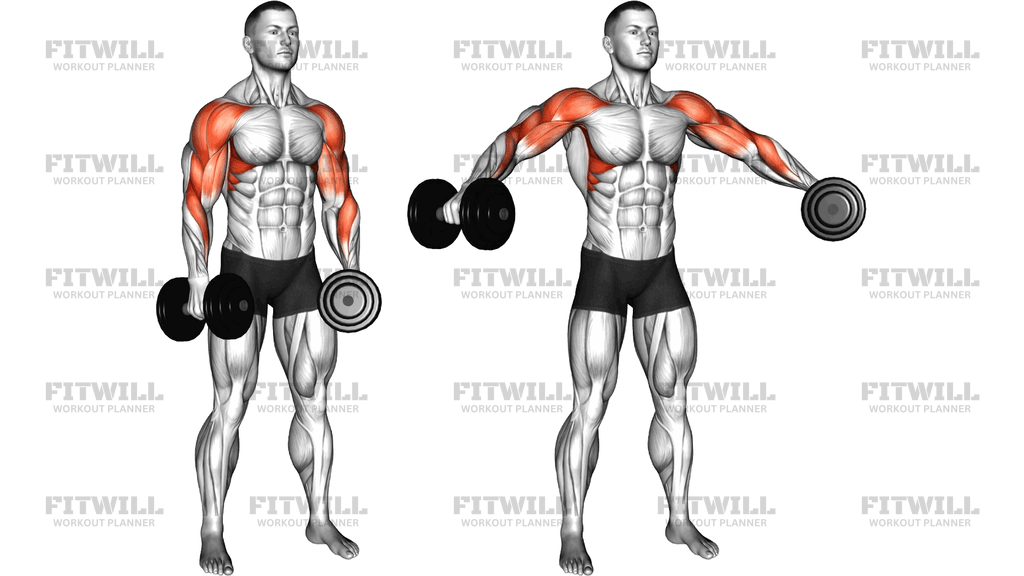
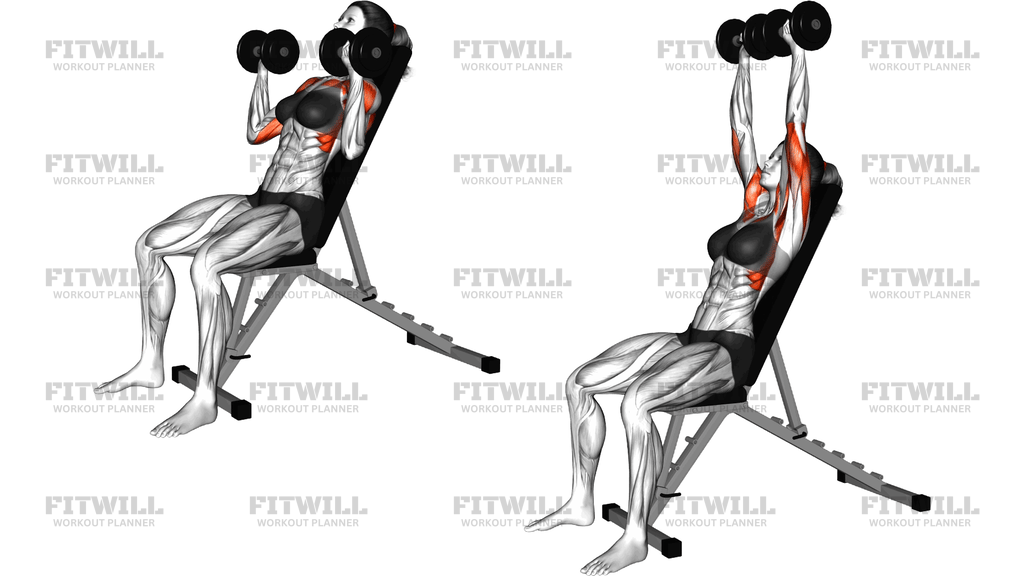
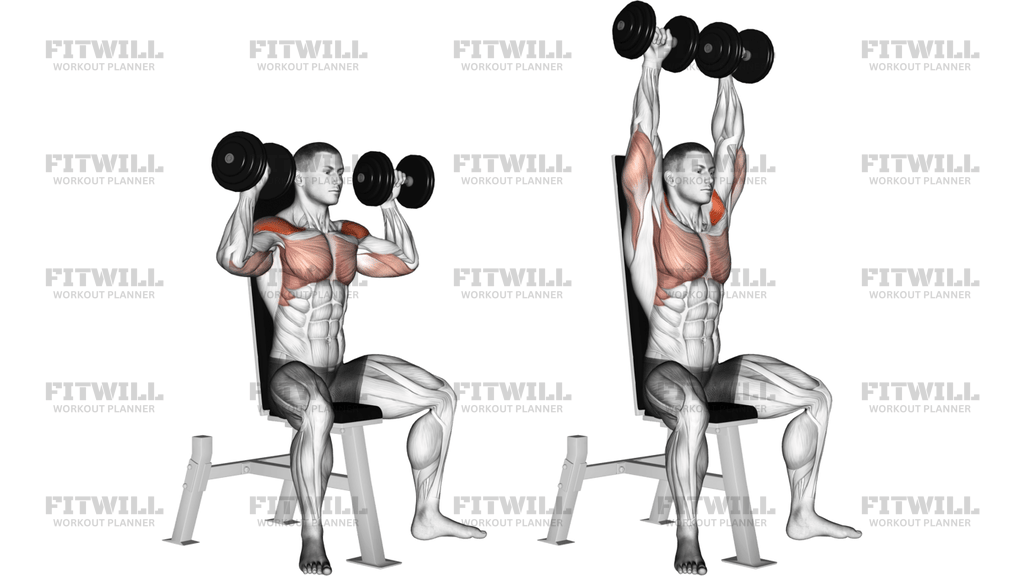
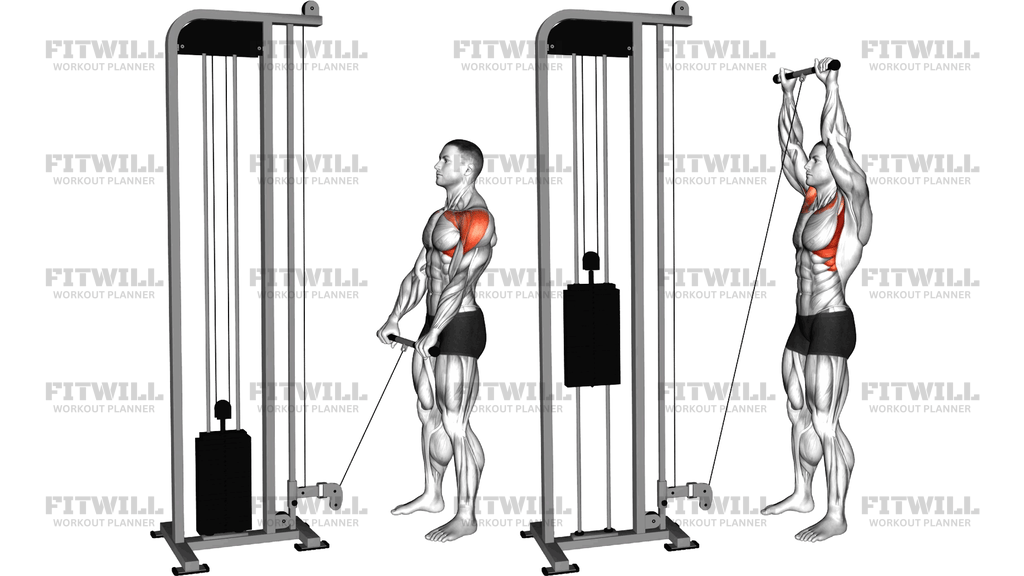
Dumbbell Seated One-Arm Front Raise
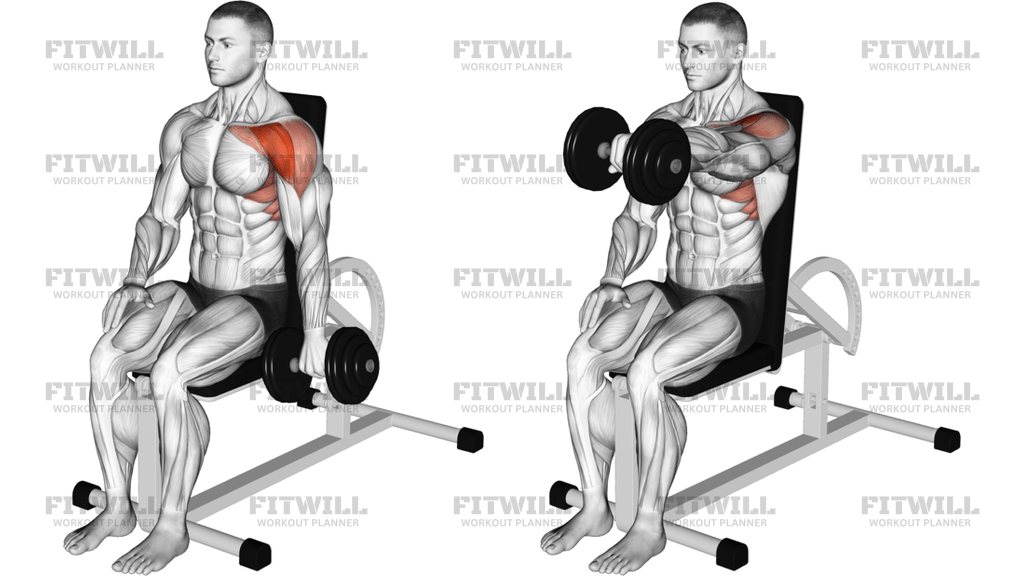
Dumbbell Seated One-Arm Front Raise is a shoulder isolation exercise that emphasizes the front of the delt while the bench backrest limits cheating. The seated setup makes the rep path easier to repeat because your torso stays anchored, so the dumbbell travels in a clean forward arc instead of turning into a swing. It is a practical accessory movement for building shoulder size, improving front-delt control, or adding focused volume without needing a machine.
The primary work comes from the deltoids, especially the anterior fibers, with the trapezius, rhomboids, and triceps helping steady the shoulder and keep the arm path organized. Because you are lifting one arm at a time, the nonworking side can stay quiet while you concentrate on smooth scapular control and a level torso. That makes this version useful when you want to reduce momentum and notice side-to-side strength differences.
The bench matters here. Keep your upper back in contact with the pad, feet flat, and ribs stacked over the pelvis so the raise comes from the shoulder rather than from leaning back. Start with the dumbbell beside the thigh, palm facing in or slightly down, then lift in a controlled arc to roughly shoulder height. The elbow should stay softly bent and nearly fixed, and the wrist should stay neutral so the hand does not drift ahead of the elbow.
At the top, the arm should stop where the front delt is fully loaded but the shoulder is not shrugging toward the ear. Lower the dumbbell slowly to the starting point and let the weight settle before the next rep. If the load makes you swing, arch your back, or twist toward the working arm, it is too heavy. This exercise works best with deliberate reps, moderate-to-light loading, and a smooth lowering phase.
Use Dumbbell Seated One-Arm Front Raise as a shoulder accessory, warm-up primer, or a unilateral correction drill when one side tends to take over. It is beginner-friendly when the weight is light and the rep stays strict, but it is also easy to make sloppy if you chase height or load. Keep the movement compact, controlled, and pain-free, and treat the bench as support rather than an excuse to lean into the lift.
[ Workout Log & Planner ]
Put your next workout in Fitwill
Keep your plan and training log ready when you are.


Instructions
- Sit tall on a bench with back support, feet flat on the floor, and a dumbbell hanging beside one thigh.
- Plant the working-side shoulder down and keep your chest stacked over your hips before the first rep.
- Hold the dumbbell with a neutral or slightly pronated grip and keep a soft bend in the elbow.
- Brace your trunk without leaning back or twisting toward the working arm.
- Raise the dumbbell in a smooth front arc until your upper arm reaches about shoulder height.
- Keep the wrist stacked over the elbow and avoid shrugging as the dumbbell rises.
- Pause briefly at the top, then lower the weight slowly back to the thigh.
- Reset the shoulder and repeat for the planned reps before switching sides.
Tips & Tricks
- Keep your upper back in contact with the bench so the front raise does not turn into a seated cheat rep.
- Stop the dumbbell around shoulder height; going higher usually shifts work into the upper traps.
- Think about lifting the elbow and knuckles together instead of curling the weight with the biceps.
- Use a lighter dumbbell than you would for a standing front raise, because the strict seated position removes momentum.
- Keep the nonworking side still to avoid rotating the torso toward the active arm.
- Let the dumbbell travel just in front of the thigh on the way down, not far across the body.
- Exhale as the arm rises and inhale as you lower so the trunk stays quiet.
- If the shoulder pinches at the top, shorten the range slightly and keep the rep smooth.
Frequently Asked Questions
What muscle does Dumbbell Seated One Arm Front Raise target most?
It mainly targets the front delts, with the traps and upper back helping stabilize the shoulder.
Why do it seated instead of standing?
The backrest reduces torso swing, so the dumbbell has to move from the shoulder instead of from body momentum.
Should I hold the dumbbell with a palm-up grip?
A neutral or slightly pronated grip is usually easier on the shoulder and keeps the raise path cleaner.
How high should the dumbbell come up?
Bring it to about shoulder height. Higher than that often turns the rep into a shrug and reduces front-delt tension.
Can I alternate arms during the set?
Yes. Alternating works well if you keep the resting arm quiet and maintain the same trunk position on both sides.
What if I feel it mostly in my traps?
Lower the weight, stop at shoulder height, and keep the shoulder from shrugging as the dumbbell rises.
Is this good for beginners?
Yes, as long as the load is light and the rep stays strict against the backrest.
Can I use this as a warm-up movement?
Yes. Light sets are useful for waking up the front delts before pressing or other shoulder work.