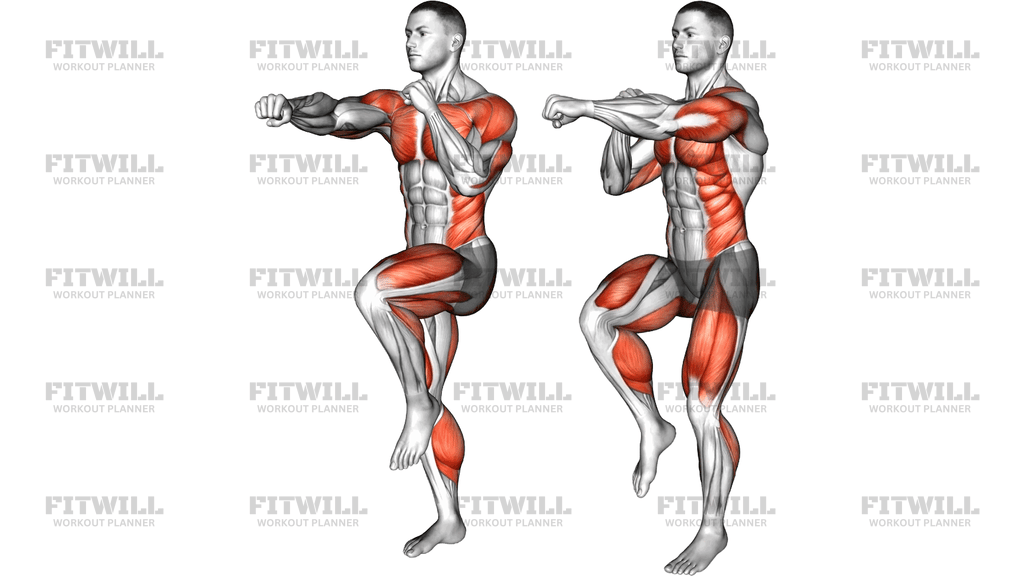
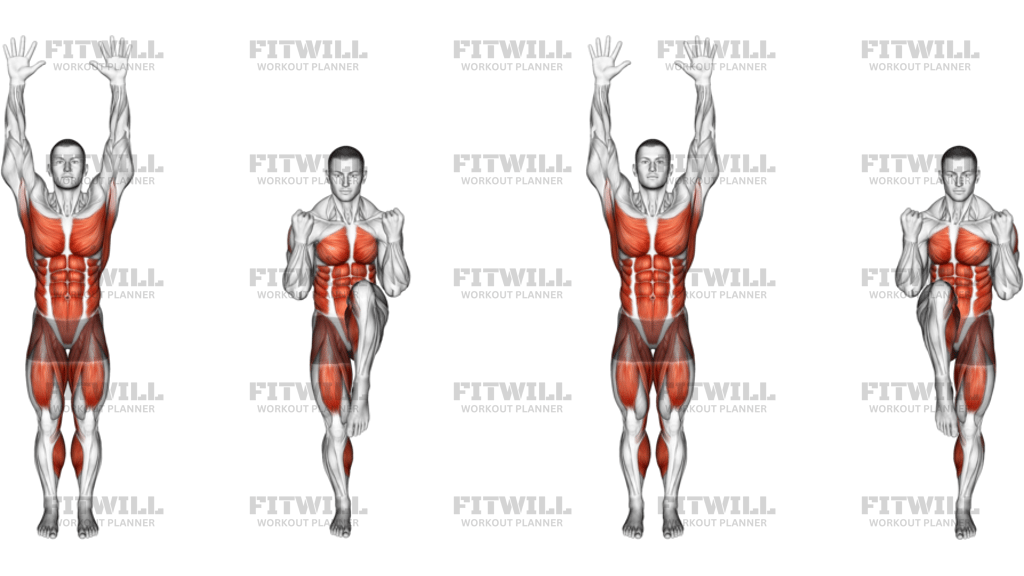
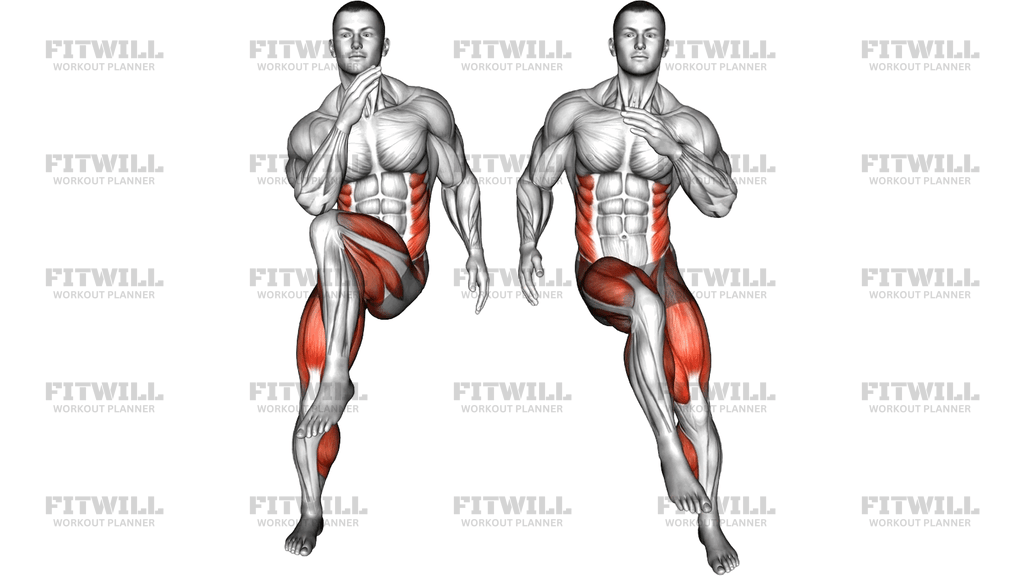
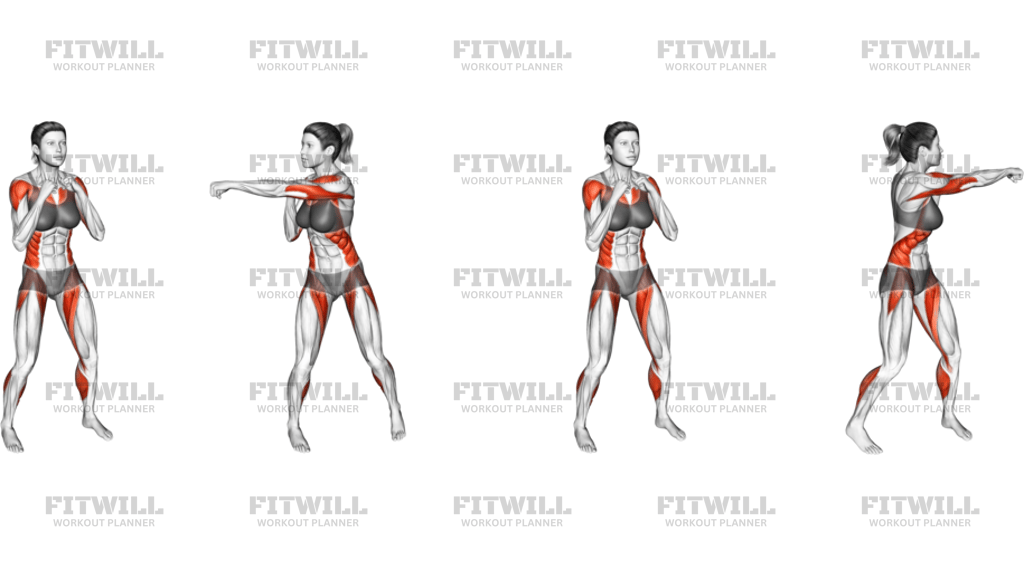
Tuck Jump Version 2
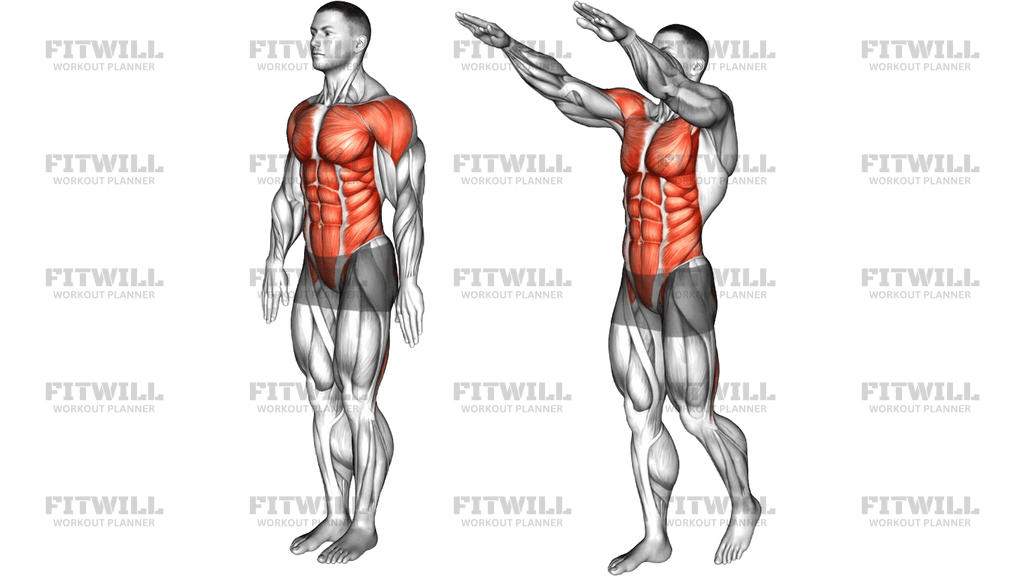
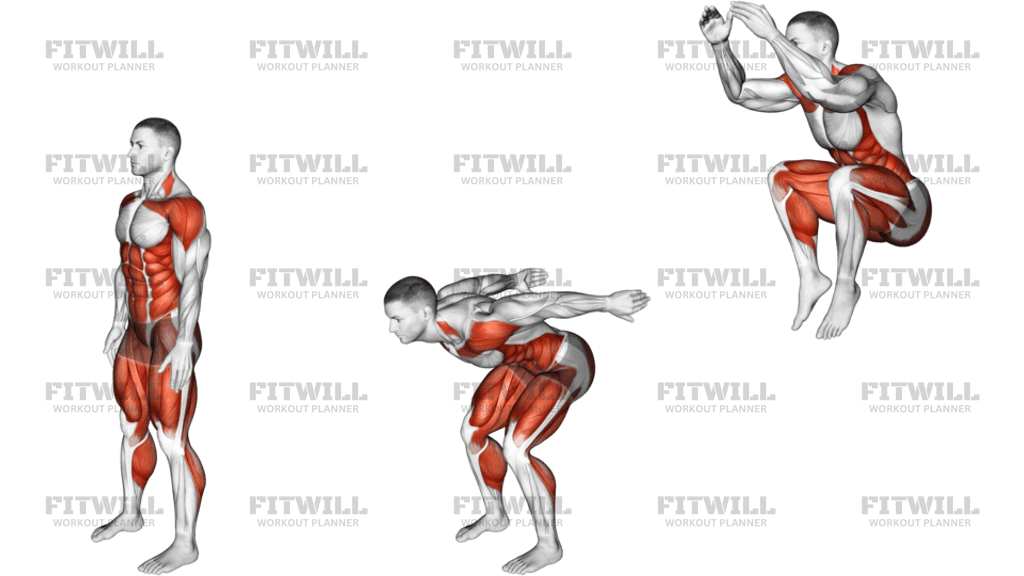
Tuck Jump Version 2 is a bodyweight plyometric jump built to develop lower-body power, coordination, and landing control. The movement starts from a tall standing position, drops into a quick athletic dip, then drives into a vertical jump where the knees tuck toward the chest before the feet return to the floor. The pictured version emphasizes a compact, explosive takeoff with the arms sweeping to help create momentum and balance.
This exercise trains the quads, glutes, calves, hip flexors, and core while also challenging ankle stiffness and the ability to absorb force on landing. Because the setup and landing pattern are repeated quickly, the quality of the first rep matters just as much as the last. A clean tuck jump should look springy and controlled, not chaotic or rushed.
Set up with feet about hip-width apart, torso stacked over the hips, and a soft bend in the knees. Use a small countermovement, swing the arms to load the jump, then explode straight up. At the top, pull the knees toward the chest only as far as you can without folding hard through the low back or drifting forward. Land quietly on the balls of the feet, let the knees bend to absorb impact, and reset into the next rep.
Tuck jumps are useful in warm-ups, power blocks, conditioning circuits, and athletic prep when you want a bodyweight drill that teaches fast force production. Keep the effort snappy, the contacts short, and the landings consistent. If the jump height drops, the landings get loud, or the torso starts tipping, end the set and rest.
This version is best treated as a high-quality plyometric drill rather than a fatigue exercise. Start with a conservative rep count, build only as long as the jump stays vertical and crisp, and scale back to squat jumps or low pogo hops if you cannot keep the tuck and landing pattern clean.
[ Workout Log & Planner ]
Put your next workout in Fitwill
Keep your plan and training log ready when you are.


Instructions
- Stand tall with your feet about hip-width apart, arms relaxed by your sides, and your weight centered over the midfoot.
- Bend your knees and hips slightly to load the jump, then swing your arms back behind you to help create momentum.
- Brace your trunk and keep your chest proud as you drive forcefully through the floor.
- Jump straight up instead of forward, using the arms to help the body rise vertically.
- At the top of the jump, pull both knees toward your chest as tightly as you can while staying balanced.
- Keep the torso controlled and avoid folding hard at the waist as the knees come up.
- Land softly on the balls of your feet with the knees bent and the hips ready to absorb impact.
- Reset into the next rep only after you have full balance and can repeat the same takeoff and landing pattern.
Tips & Tricks
- Treat this as a vertical jump, not a broad jump; drifting forward usually means you are losing force or control.
- Use a quick countermovement rather than a deep squat, because a big dip slows the takeoff.
- Swing the arms with purpose, but do not let them throw your torso out of position.
- Pull the knees only as high as you can without rounding the low back or losing your landing position.
- Land quietly; loud foot contact usually means you are absorbing impact with stiff knees or locked ankles.
- Keep the rep count low enough that every jump looks the same from the first to the last repetition.
- If you cannot land in the same spot, reduce the jump height and focus on a cleaner takeoff.
- Stop the set as soon as the jump becomes slow, the knees stop tucking well, or the landing gets unstable.
Frequently Asked Questions
What does Tuck Jump Version 2 train?
It is mainly a lower-body plyometric drill that trains the quads, glutes, calves, hip flexors, and core for explosive jumping and landing control.
Is this exercise beginner-friendly?
Only if you can already land softly and keep your balance. Beginners usually do better with squat jumps or low pogo hops first.
How high should I tuck my knees?
Pull the knees up only as high as you can while staying vertical and landing cleanly. A smaller, well-controlled tuck is better than a high, sloppy one.
Should my arms move like the picture?
Yes. The arm swing helps load the jump and balance the tuck, but it should stay coordinated with the torso instead of whipping you forward.
What is the most common mistake with this jump?
The biggest issue is turning it into a forward leap or a sloppy knee drive. The jump should be vertical, compact, and quiet on the landing.
How many reps should I use?
Use a small set size that lets every rep stay explosive. Once the jump height or landing quality drops, the set is done.
Where should I feel it most?
You should feel the takeoff in the legs and hips and the landing in the quads, glutes, calves, and trunk as the body absorbs force.
What can I do if the landing feels hard on my joints?
Reduce the tuck height, shorten the set, and switch to a lower-impact jump variation until you can land quietly and consistently.