Squat Tuck Jump
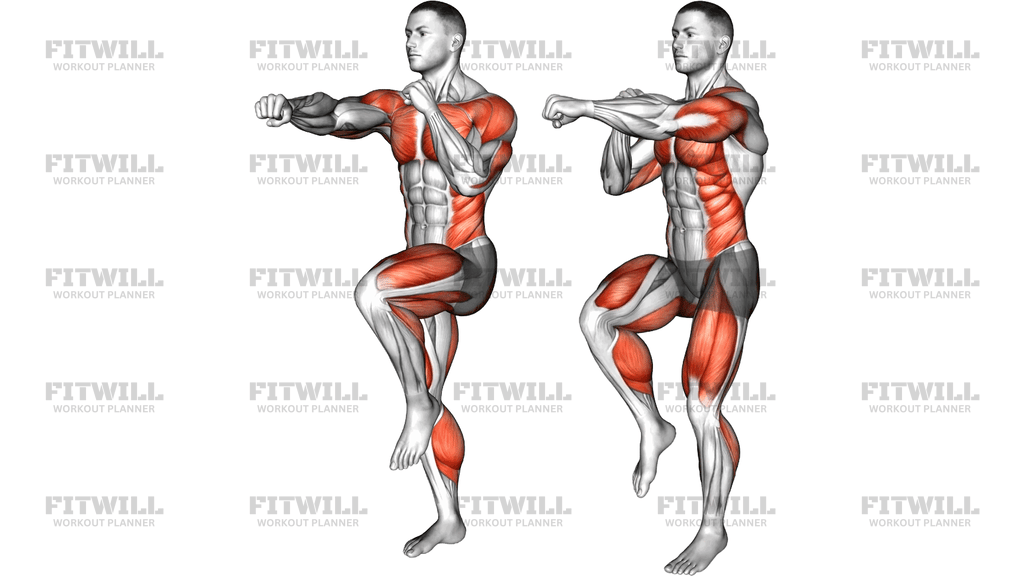
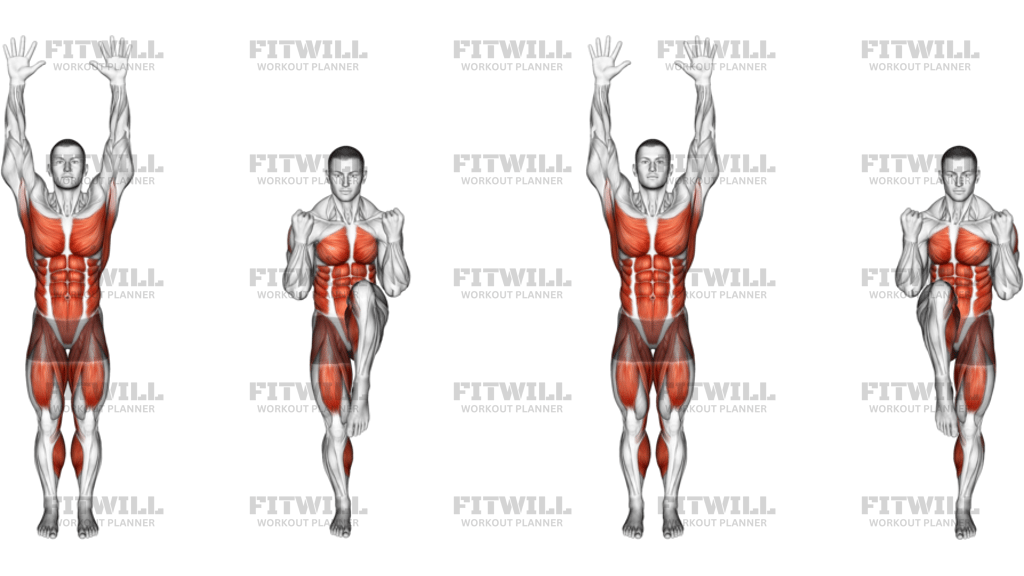
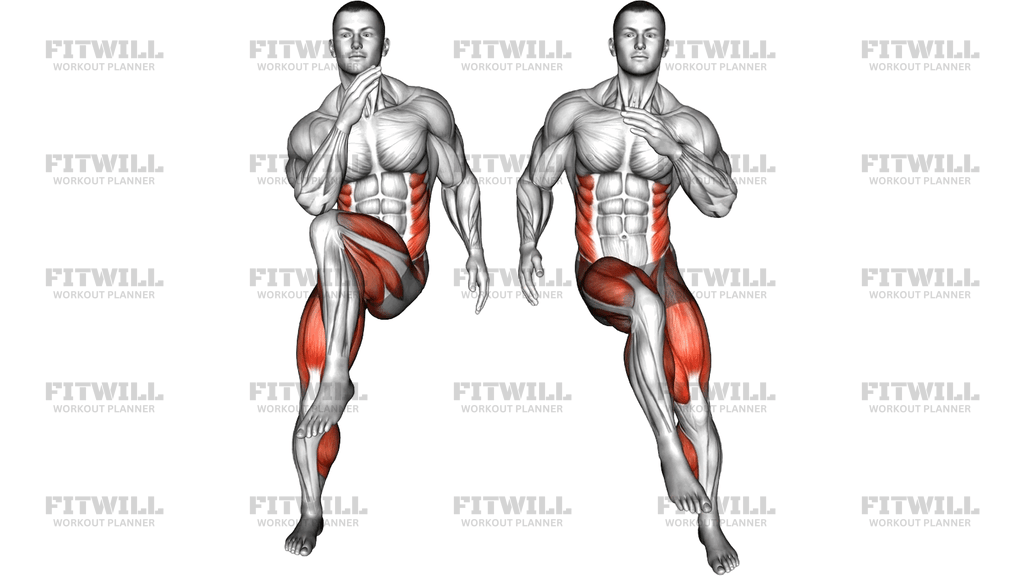
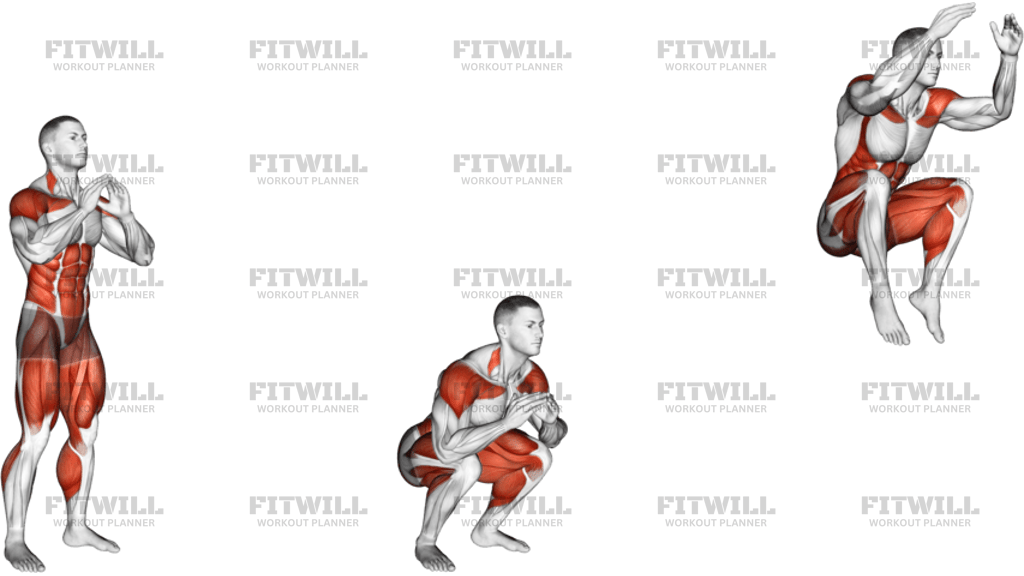
Squat Tuck Jump is a bodyweight plyometric exercise that combines a squat descent, an explosive vertical jump, and a tucked landing. It is built to train lower-body power, coordination, and landing control rather than pure muscle endurance. The image shows a tall standing start, a compact squat, and a high knee-tuck position in the air, so the key skill is generating force quickly and then absorbing it cleanly when you land.
Because this movement is fast and elastic, the setup matters more than it does in a slow squat. Your feet need a stable base, your torso needs enough forward lean to load the hips, and your arms need a repeatable position so they do not throw you off balance. Squat Tuck Jump is useful for athletes, field-sport work, conditioning sessions, and general plyometric training when the goal is to build spring and body control.
A good rep starts with a controlled squat that loads the hips, knees, and ankles together. From there, drive hard through the floor, extend the hips and knees, and pull the knees upward at the top of the jump if you have the coordination and air time to do it safely. The landing should be quiet and organized: feet under the hips or slightly wider, knees tracking in line with the toes, and the chest staying up enough to catch the force without collapsing forward.
Do not turn Squat Tuck Jump into a continuous hop if the landing is sloppy. Every repetition should include a deliberate reset, because the value of the exercise comes from force production and deceleration control, not just from bouncing as fast as possible. If the tuck makes you lose height, shorten the jump and practice a regular squat jump first. If the landing makes your heels pop up or your knees cave inward, reduce the speed until the body can absorb force in one piece.
This exercise is most appropriate when you are fresh and want a high-quality plyometric stimulus. It is not a great choice for max-volume fatigue work or for anyone who cannot land softly yet. Used well, Squat Tuck Jump teaches you to produce power from a stable squat position and to regain balance immediately after takeoff, which carries over well to sprinting, jumping, and change-of-direction work.
[ Workout Log & Planner ]
Put your next workout in Fitwill
Keep your plan and training log ready when you are.


Instructions
- Stand with your feet about shoulder-width apart, toes slightly turned out, and your arms in front of your chest for balance.
- Lower into a squat by sending your hips back and down until your thighs are roughly parallel to the floor or as low as you can control.
- Keep your chest lifted, heels rooted, and knees tracking over the middle toes as you load the jump.
- Drive through your whole foot and explode upward, extending the hips, knees, and ankles at the same time.
- As you leave the floor, tuck your knees toward your chest without rounding hard through the upper back.
- Land softly on the balls of your feet and let the heels settle as you absorb the impact with a quick squat.
- Hold the landing for a moment so you can reset your balance before the next repetition.
- Repeat for controlled reps, then finish by standing tall and stepping away from the landing area safely.
Tips & Tricks
- Treat the squat as a preload, not a deep strength rep; a clean quarter to half squat is often better for jump height.
- Keep the landing quiet. If the impact sounds heavy, reduce the jump height and focus on absorbing through the hips and knees.
- Only pull the knees up as high as you can while still landing in control. A sloppy tuck is worse than a smaller jump.
- Use your arms consistently from rep to rep so the jump pattern stays repeatable instead of turning into a wild swing.
- If your heels lift early on the landing, shorten the jump and think about meeting the floor with the whole foot.
- Let the knees travel in line with the toes. Caving inward at takeoff or landing usually means the jump is too aggressive.
- Keep the set short and explosive. Once the takeoff loses pop, the exercise becomes conditioning instead of plyometrics.
- If the tuck bothers your low back, swap it for a regular squat jump until your air control improves.
Frequently Asked Questions
What does Squat Tuck Jump train?
It trains lower-body power, elastic strength, coordination, and landing control. The squat loads the legs, the jump develops explosiveness, and the landing teaches you to absorb force safely.
Do I need equipment for Squat Tuck Jump?
No. It is a bodyweight plyometric, so all you need is enough floor space to jump and land without hitting anything.
How is Squat Tuck Jump different from a regular squat jump?
A squat jump goes straight up and down, while Squat Tuck Jump adds a knee tuck in the air. The tuck makes the movement more demanding on coordination and body control.
Can beginners do this exercise?
Yes, but many beginners should start with squat jumps first. If the tuck causes a hard landing or poor balance, keep the jump smaller until the landing feels solid.
What muscles work the most in Squat Tuck Jump?
The glutes, quadriceps, and calves do most of the work, with the core helping to stabilize the torso during takeoff and landing.
How low should I squat before jumping?
Use a depth that lets you stay balanced and explode cleanly. For most people, a quarter to half squat is enough; going too deep usually slows the jump and makes the landing messier.
What is the biggest mistake to avoid?
The biggest mistake is landing stiff and loud. If you cannot absorb the impact quietly, reduce the jump height and keep your chest and knees more organized.
How many reps should I do?
Keep the reps low enough that every jump stays sharp, usually short sets of explosive efforts rather than long fatigue sets. Stop the set as soon as jump height or landing quality drops.