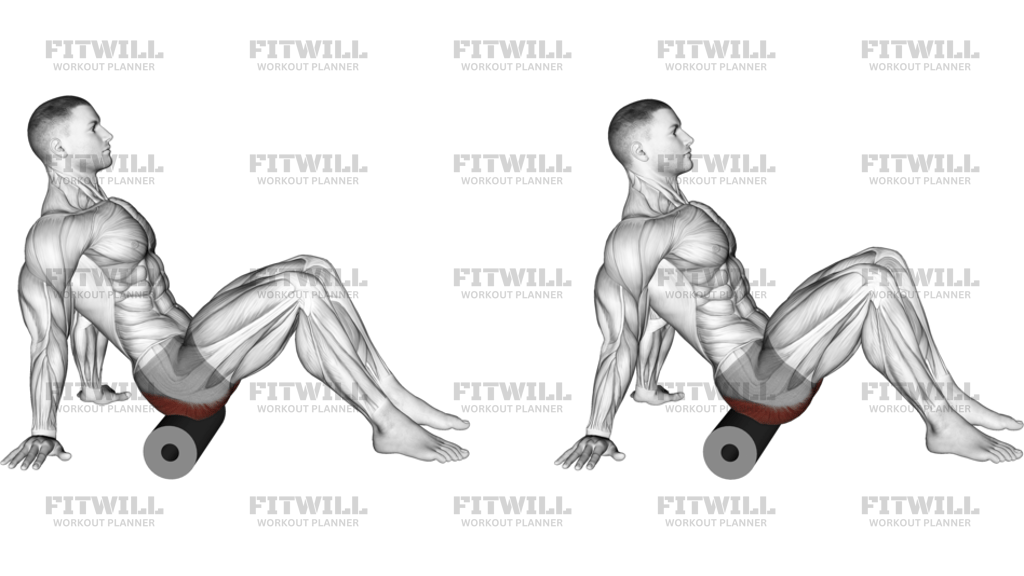
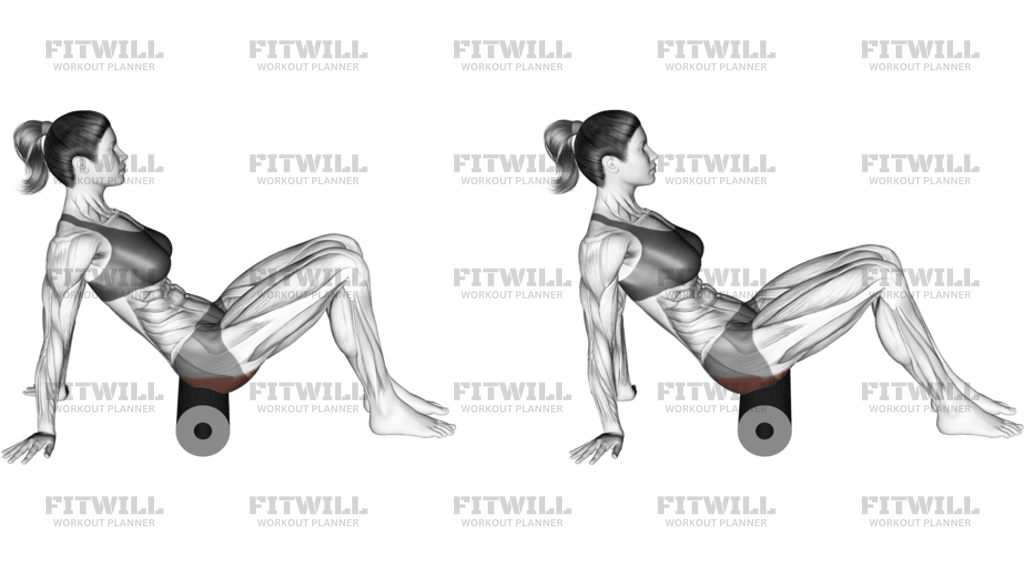
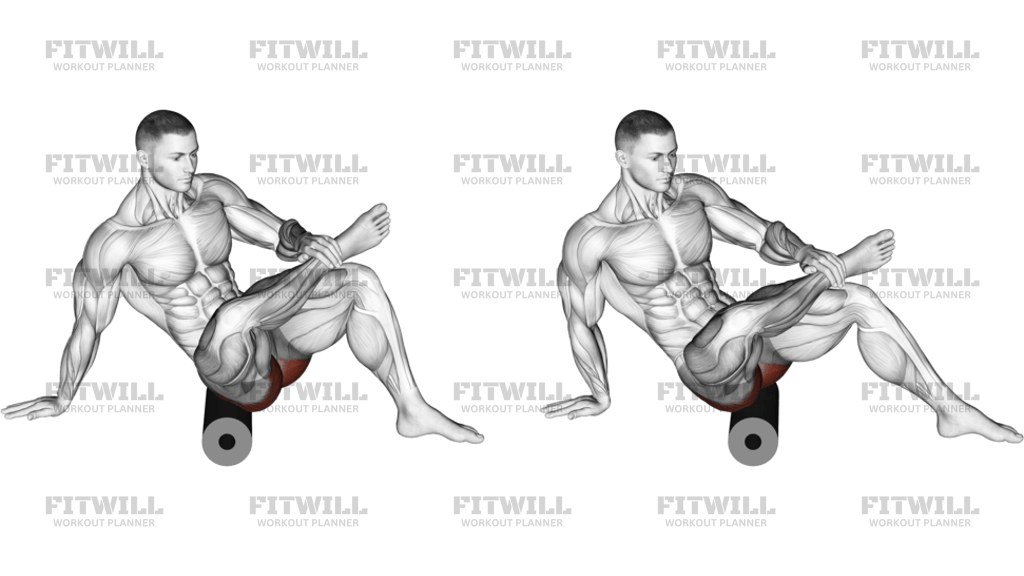
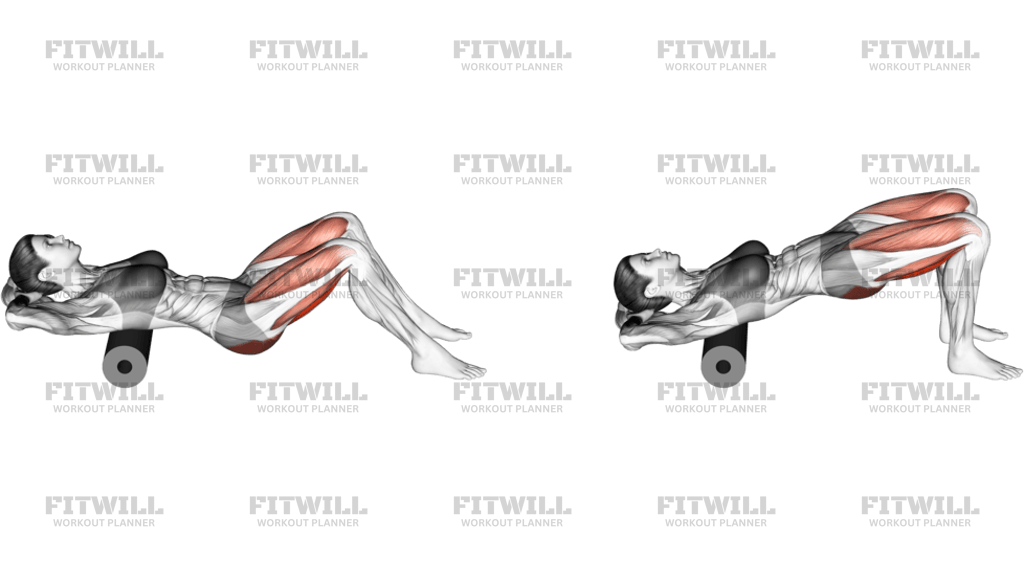
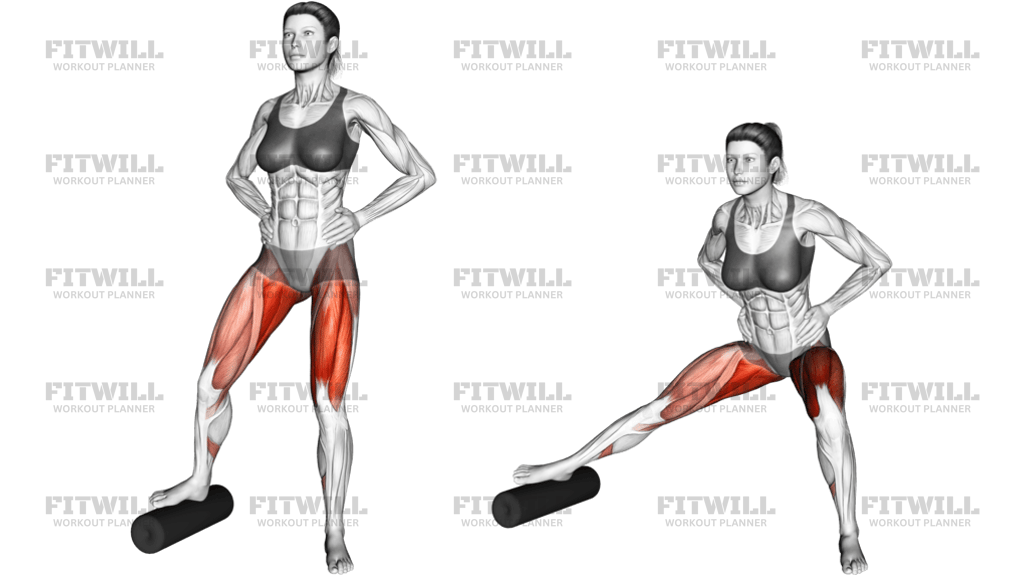
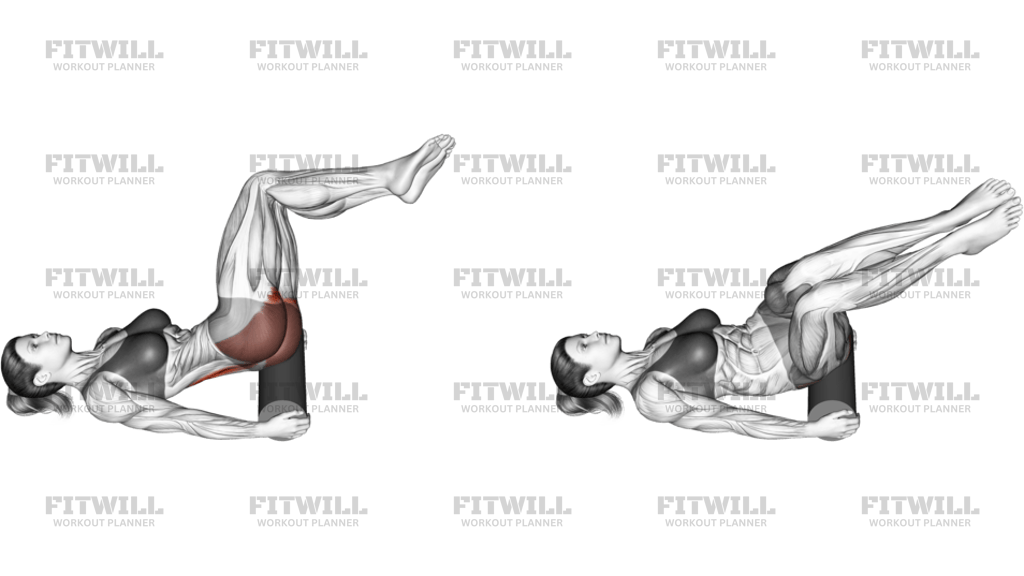
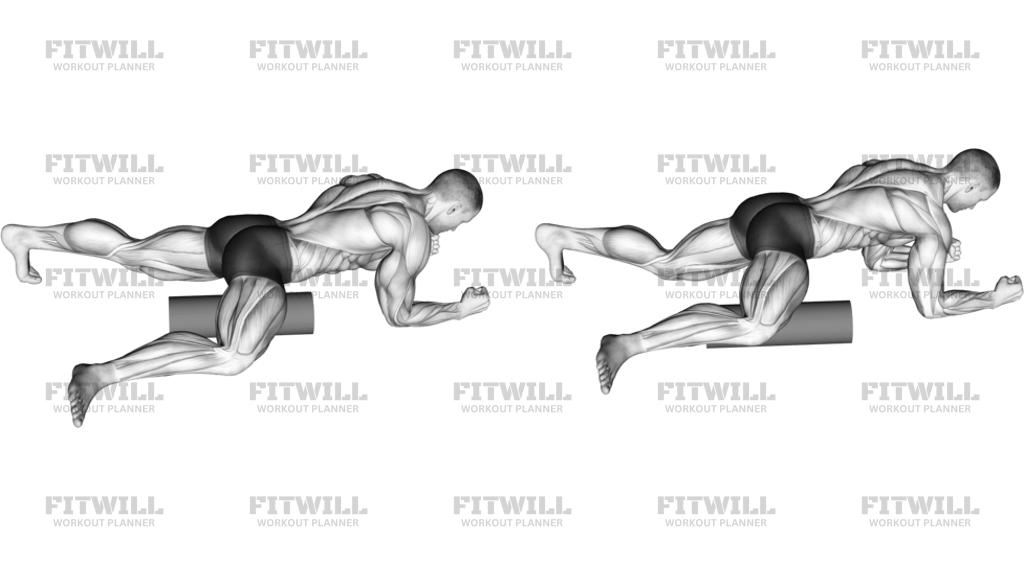
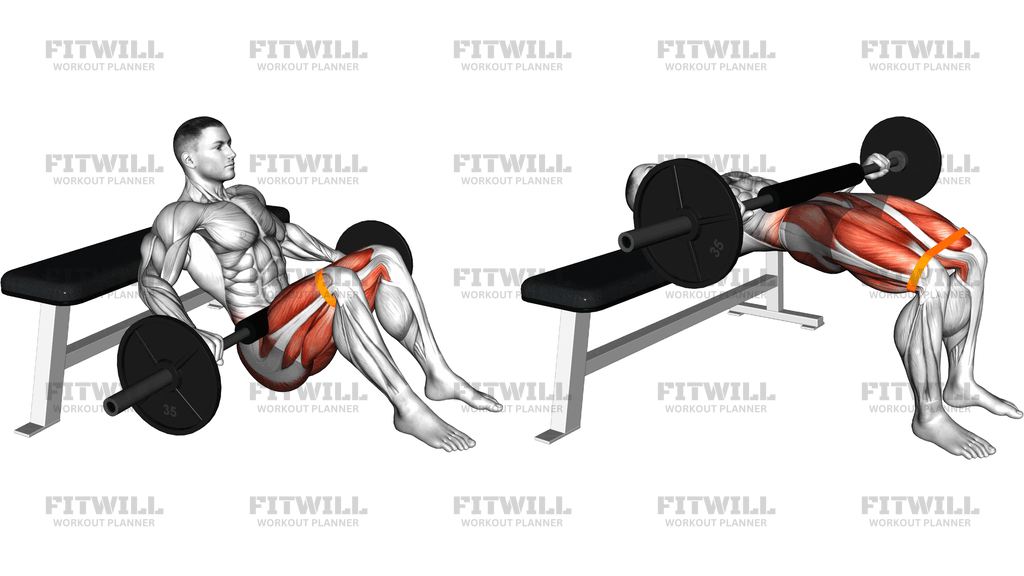
Split Squat With Roll
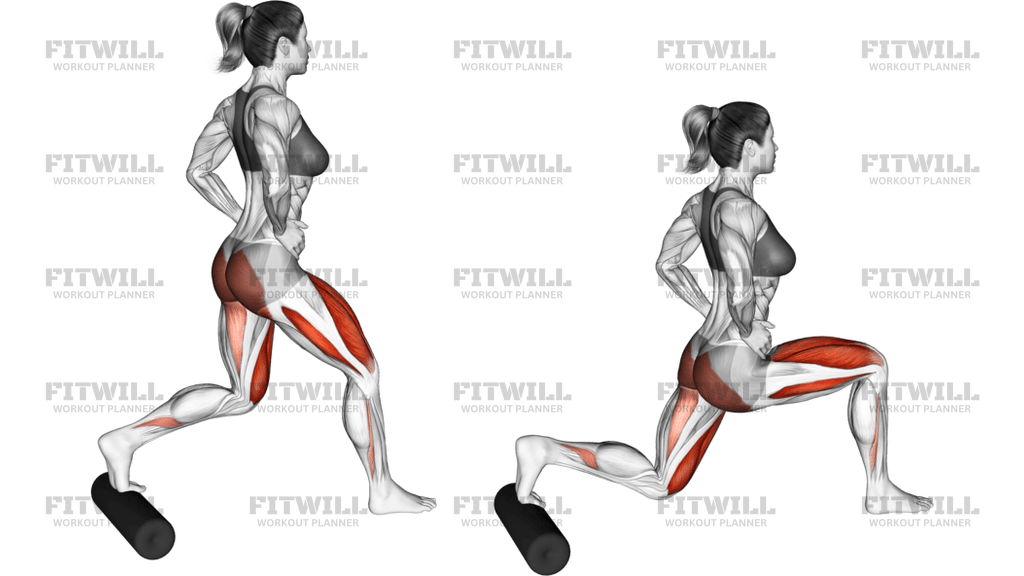
Split Squat With Roll is a split-stance lower-body exercise that places the rear foot on a foam roll to add instability and make the front leg work harder. The foam roll changes the exercise from a standard split squat into a balance-and-control drill, so each rep asks you to own the position instead of simply dropping and standing back up. That makes the movement useful for building unilateral leg strength, hip stability, and cleaner knee tracking without needing a heavy external load.
The front leg does most of the work. Expect the glute, quad, and adductor on that side to take the load, while the rear leg mainly helps you stay balanced and maintain the split position. The unstable rear foot also asks the core and hip stabilizers to keep the pelvis level. If the torso twists, the knee caves inward, or the rear foot slides around on the roll, the exercise stops training the quality it is meant to build.
Set the front foot far enough forward that you can lower straight down without lifting the heel or losing balance. The rear foot should rest lightly on the foam roll, with enough contact to keep the setup organized but not so much pressure that you turn the back leg into the driver. As you descend, keep your chest tall, hips square, and front knee tracking in line with the toes. The back knee should move toward the floor in a controlled path rather than swinging forward or outward.
Use a smooth tempo and a range of motion you can repeat on every rep. The best version of this exercise feels controlled at the bottom and stable on the way up, with the front heel staying rooted and the pelvis staying level. Because the foam roll makes the setup less stable than a normal split squat, this is usually better as an accessory or technique exercise than as a maximal-strength lift. If the rear foot instability makes the movement noisy, rushed, or painful, shorten the stance, reduce depth, or remove the roll and build back up from there.
It is a good choice for warmups, single-leg strength work, and lower-body sessions where you want more control than load. Beginners can use it with bodyweight first, but only if they can keep the front foot planted and the back leg light on the roll. When performed well, it teaches you to own the bottom of a split squat, keep the knee aligned, and produce force through the front leg without wobbling through the trunk or hips.
Fitwill
Log Workouts, Track Progress & Build Strength.
Achieve more with Fitwill: explore over 9600 exercises with images and videos, access built-in and custom workouts, perfect for both gym and home sessions, and see real results.
Start your journey. Download today!




Instructions
- Place a foam roll on the floor behind you and step into a split stance with the rear instep or shoelaces resting lightly on the roll and the front foot flat on the floor.
- Position the front foot far enough ahead that you can lower straight down without the front heel lifting or the torso collapsing forward.
- Square your hips to the front, keep your front toes pointing slightly forward, and let the rear leg stay light on the roll.
- Brace your torso and stand tall before each rep, with your hands on your hips or held in front for balance if needed.
- Lower your body by bending both knees at the same time, letting the rear knee travel toward the floor in a controlled path.
- Keep the front knee tracking over the second and third toes while the front heel and midfoot stay planted.
- Use only enough pressure on the foam roll to stay balanced; do not drive off the back leg or let it swing around.
- Pause briefly near the bottom if you can keep the pelvis level and the front foot stable.
- Drive back up through the front heel and midfoot until both legs are straight, then reset the roll contact before the next rep.
- Breathe in as you lower and exhale as you stand, keeping the movement smooth and repeatable.
Tips & Tricks
- Treat the foam roll as a balance challenge, not a platform to push hard against; the front leg should still do most of the work.
- If the roll keeps sliding or tipping, shorten the stance slightly and slow the descent before changing load.
- A small forward torso lean is acceptable, but the ribs should stay stacked over the pelvis and the low back should not arch.
- Keep the front heel glued down; if it wants to lift, your stance is usually too short or your descent is too deep.
- Let the rear knee travel down, not forward into the front heel line, so the split stance stays organized.
- Choose bodyweight or a very light load first; the instability of the roll makes heavy loading unnecessary for most goals.
- Use a controlled 2- to 3-second lowering phase to reduce wobble and improve hip control.
- If your front knee caves inward, think about pressing the front foot tripod into the floor and keeping the hip centered over it.
Frequently Asked Questions
What does the foam roll change in Split Squat With Roll?
It makes the rear foot unstable, so the front leg and hips have to control the rep instead of relying on a fixed support.
Can beginners perform this exercise?
Yes, but start with bodyweight and a short range of motion until you can keep the front foot planted and the pelvis level.
Which leg should feel the main effort?
The front leg should carry most of the load, especially the glute and quad on that side. The rear leg should mainly help with balance.
Should I press hard into the foam roll with the back foot?
No. Keep light contact on the roll and resist the temptation to push off it, or the exercise turns into a less useful split squat.
Why does my front heel lift during the rep?
Your stance is probably too short, or you are dropping too deep for your current mobility and balance. Step the front foot farther forward and reduce depth.
Is it normal to wobble a little on the roll?
Yes, some instability is expected. The goal is to keep the wobble small and controlled, not to fight for a perfectly rigid setup.
What is a common mistake with this movement?
Letting the front knee cave inward or letting the torso twist away from the split stance. Both usually mean the load or range is too aggressive.
Can I hold dumbbells or a kettlebell?
Yes, once you can keep the rear foot quiet on the roll with bodyweight. Add load only if your balance and knee tracking stay clean.