Dumbbell Rear Delt Row
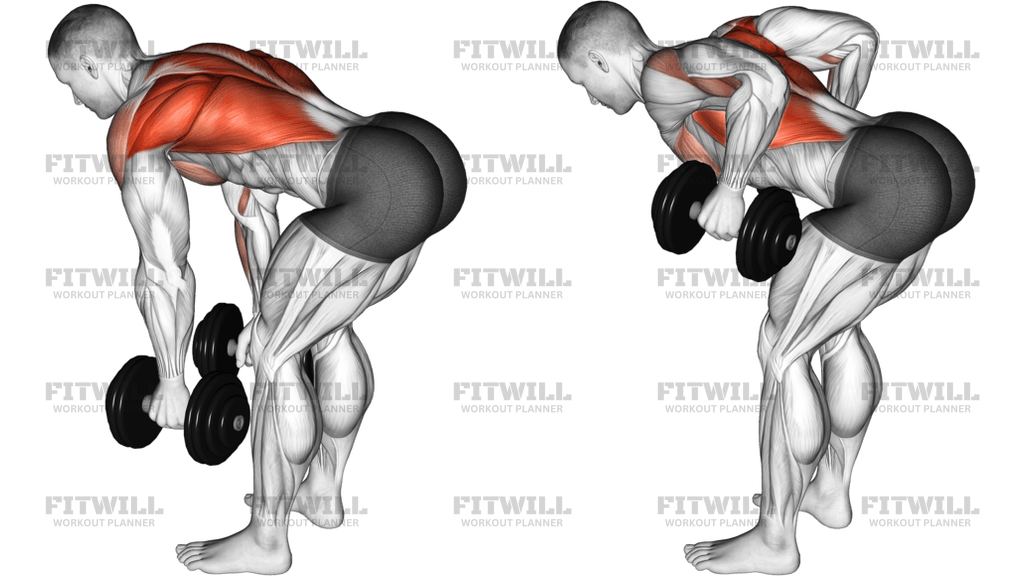
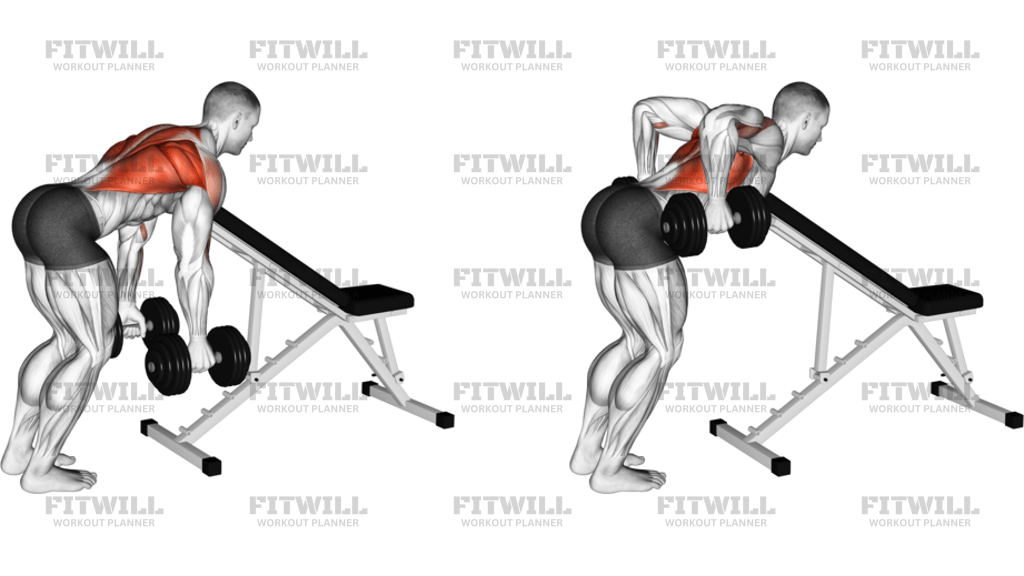
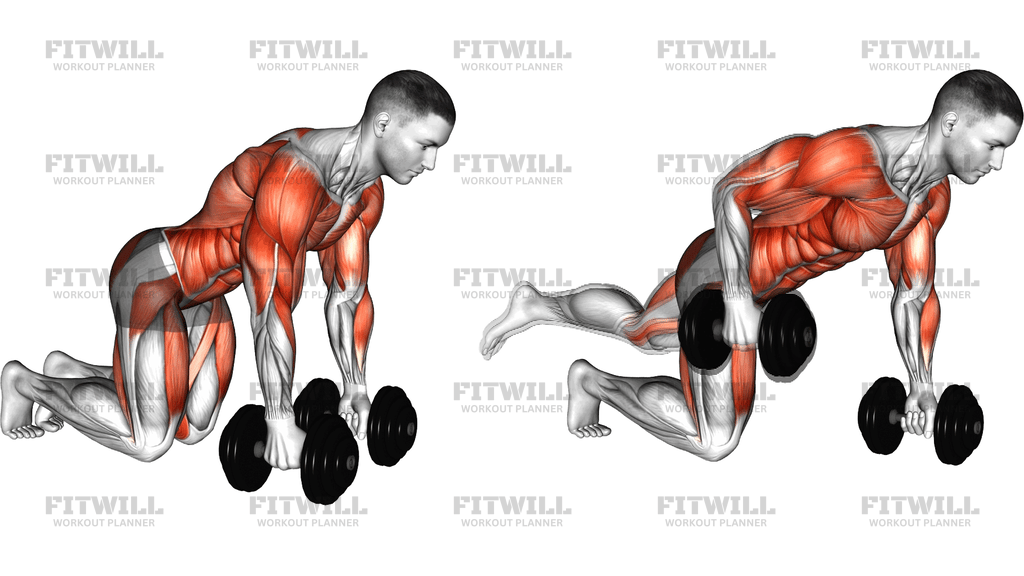
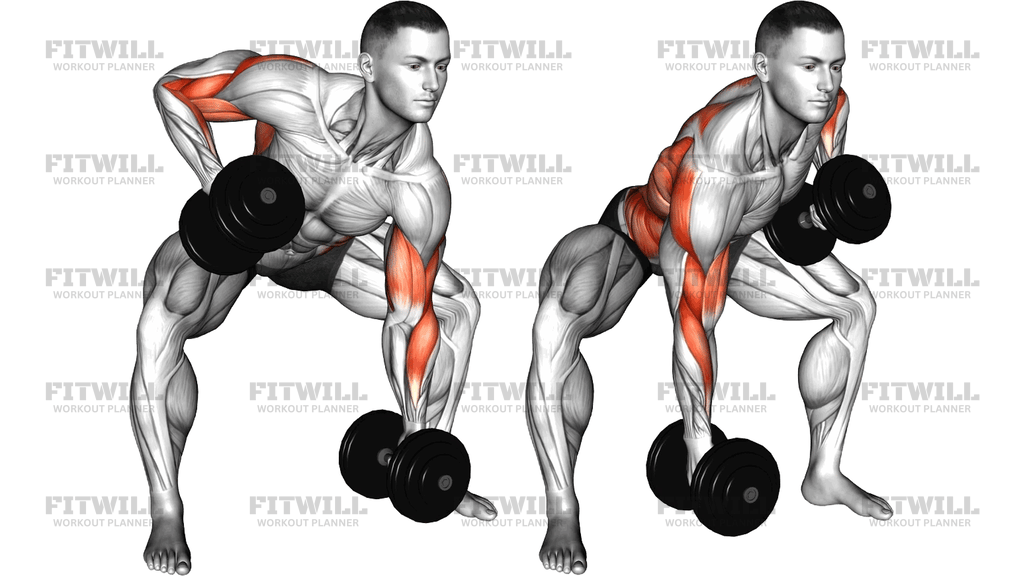
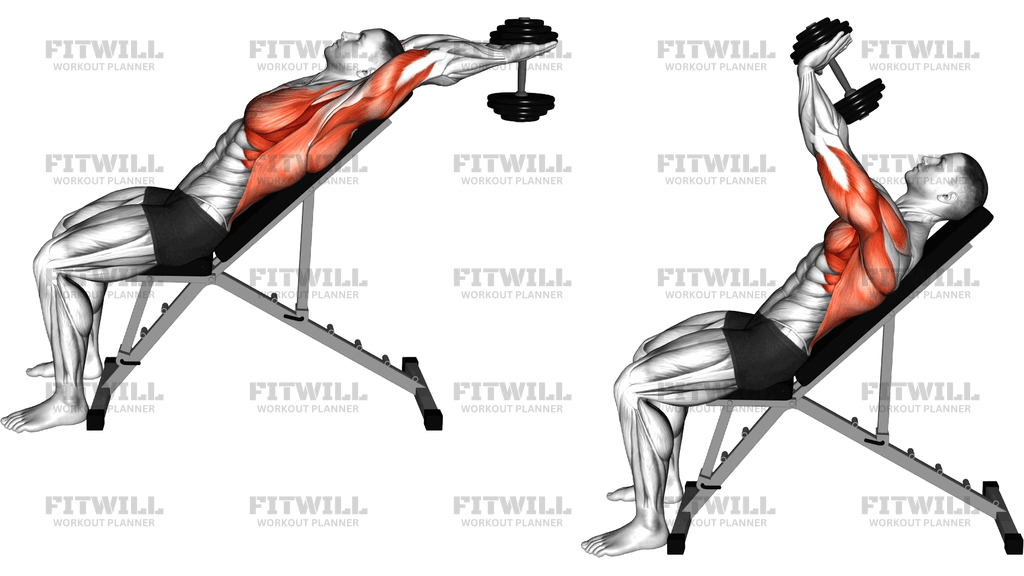
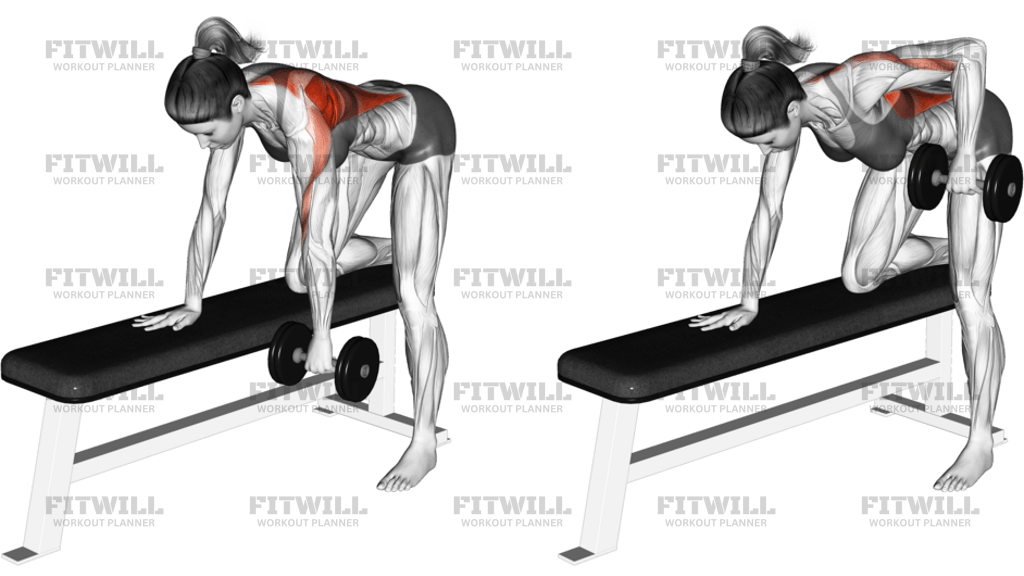
Dumbbell Rear Delt Row is a bench-supported one-arm row that uses a dumbbell to train the rear shoulder, upper back, and arm muscles with a very controlled pulling path. The torso stays hinged over a flat bench while one hand and knee take the support, which gives you a stable base to pull without turning the set into a full-body heave. That stability is what makes the exercise useful for building cleaner scapular control and stronger pulling mechanics.
The movement is called a rear delt row because the elbow travels out from the body instead of staying tucked tight to the ribs. That wider arm path shifts more of the effort toward the rear delts, rhomboids, and upper back while the lats, biceps, and forearms still help finish the rep. When the elbow drifts too close to the torso, the set starts to look like a standard one-arm row rather than a rear-delt-biased pull.
Set your supporting hand and knee firmly on the bench, keep the non-working foot planted on the floor, and let the working arm hang straight down with the shoulder slightly reaching forward. A neutral spine matters here: your chest should stay long, your ribs should not flare, and your neck should stay in line with the rest of your back. From that start, the exercise should feel stable before the first rep even begins.
Pull the dumbbell in a smooth arc toward the outside of your ribcage or lower chest, leading with the elbow and keeping it slightly out from your side. At the top, the shoulder blade should squeeze back without the torso twisting open or the shoulder shrugging toward the ear. Lower the weight slowly until the arm is long again and the shoulder can reach forward under control, then repeat with the same path and tempo on every rep.
Dumbbell Rear Delt Row is a strong accessory choice on upper-body or pull days when you want more rear-shoulder work without needing cables or machines. It also fits well when you want to clean up asymmetries between sides, because each arm has to earn its own range and balance point. Keep the load honest, because this exercise gets less effective as soon as momentum, torso rotation, or a sloppy shrug starts taking over the rep.
[ Workout Log & Planner ]
Put your next workout in Fitwill
Keep your plan and training log ready when you are.


Instructions
- Place a flat bench in front of you and set one hand and the same-side knee on the pad, with the other foot planted on the floor for balance.
- Hold a dumbbell in the free hand with a neutral grip and let it hang straight under your shoulder before you start the pull.
- Hinge your torso until your back is close to parallel with the floor, keep your neck long, and brace so your ribs stay quiet.
- Let the working shoulder reach slightly forward at the bottom without rounding your lower back.
- Pull the dumbbell up in a smooth arc toward the outside of your lower ribs or lower chest, leading with the elbow instead of the hand.
- Keep the elbow flared away from your torso so the rear delt and upper back stay involved through the top of the rep.
- Squeeze for a brief pause at the top without shrugging, twisting open, or yanking the dumbbell higher.
- Lower the dumbbell slowly until the arm is long again and the shoulder blade can move forward under control.
- Complete the planned reps on one side, set the weight down safely, then switch sides and repeat with the same body position.
Tips & Tricks
- Think about pulling the elbow out and back, not straight up, so the rear delt stays more involved than the lat-dominant version of a row.
- Keep the bench-side shoulder packed but not jammed; if you shrug, the upper traps will take over the top of the rep.
- A slight shoulder reach at the bottom is useful, but do not let the lower back round just to gain a longer stretch.
- If your torso rotates toward the dumbbell, lower the load until you can keep your chest square to the floor.
- Use a brief squeeze at the top rather than a long hold; this exercise works best as a controlled row, not a static isometric.
- A neutral wrist keeps the pull cleaner and usually makes it easier to keep the elbow path consistent rep to rep.
- Choose a weight that lets you lower the dumbbell quietly; a fast drop usually means the rear delt tension is already gone.
- Stop the set when the elbow starts tucking tight to the ribs, because that usually means the movement has turned into a standard one-arm row.
Frequently Asked Questions
What muscles does Dumbbell Rear Delt Row work most?
It emphasizes the rear delts and upper back while the lats, biceps, and forearms still assist during the pull.
Can beginners perform this exercise?
Yes. Beginners usually do best with a light dumbbell and a slow tempo so the torso stays fixed on the bench.
Should my elbow stay close to my side?
No. For Dumbbell Rear Delt Row, let the elbow travel slightly out from the body so the rear shoulder and upper back stay loaded.
Where should the dumbbell go at the top of the rep?
Aim toward the outside of your lower ribs or lower chest, not straight to the hip like a pure lat row.
What is the biggest mistake in Dumbbell Rear Delt Row?
The biggest mistake is twisting the torso or shrugging the shoulder to finish the rep instead of keeping the pull strict.
Can I use this instead of a regular one-arm dumbbell row?
Yes, but it is a different emphasis. This version puts more work on the rear delts and upper back, while a tucked-elbow row biases the lats more.
How heavy should Dumbbell Rear Delt Row be?
Use a load that lets you pause at the top and lower under control. If the weight makes you yank, it is too heavy.
Do I need to keep my chest perfectly parallel to the floor?
Close to parallel is ideal, but the more important point is keeping your back long, your ribs quiet, and your torso from rotating.
What should I feel if Dumbbell Rear Delt Row is set up correctly?
You should feel the rear shoulder and upper back doing most of the work, with the arm finishing the pull rather than leading it.