Band High Fly
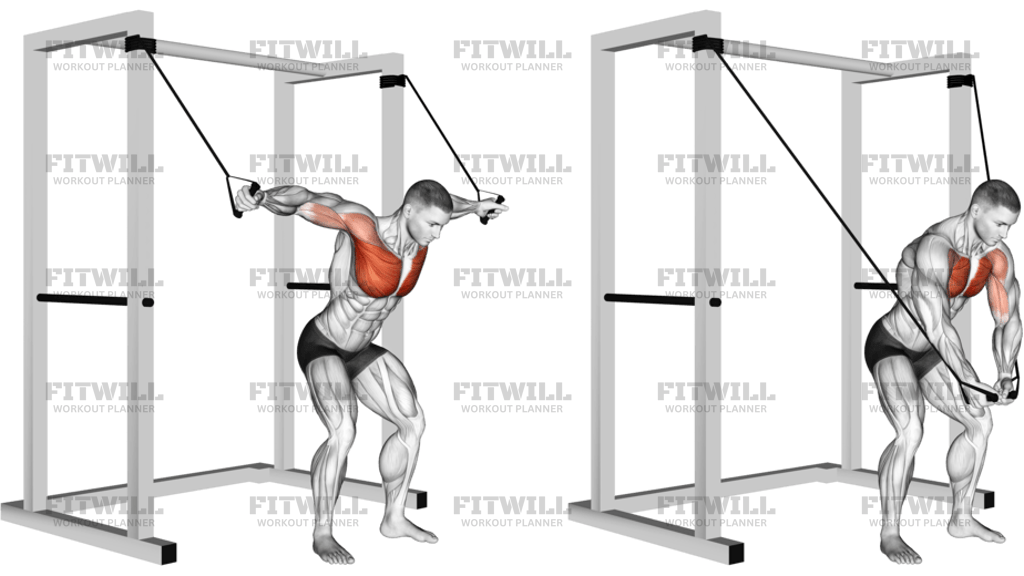
Band High Fly is a standing high-to-low chest fly that uses band tension from overhead anchors to load the pecs through a long, controlled arc. The exercise is built around horizontal adduction: your arms open wide at shoulder level, then sweep down and in to finish in front of the lower chest or upper sternum. That path keeps the chest under tension while the shoulders, triceps, and trunk help you stay organized.
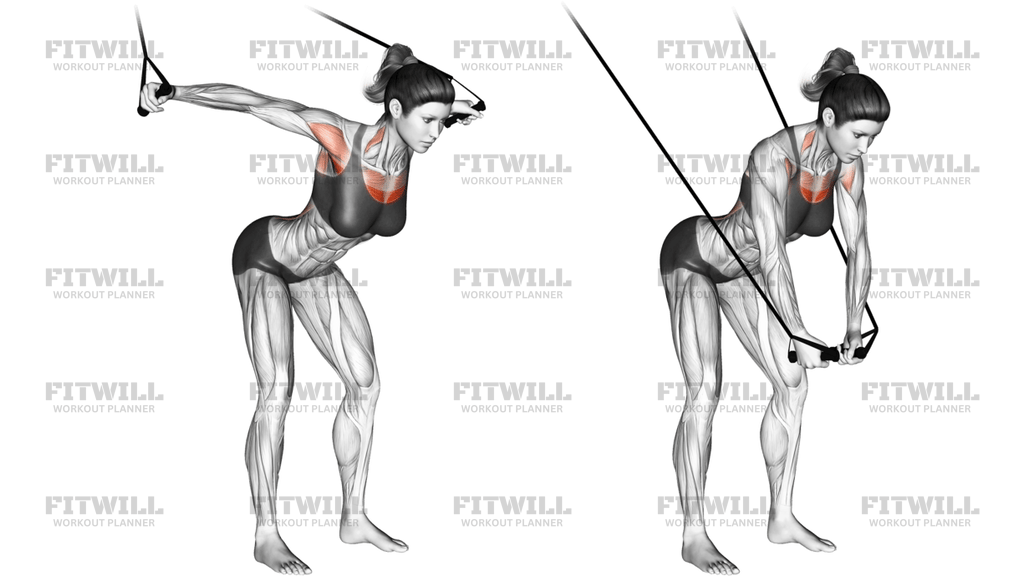
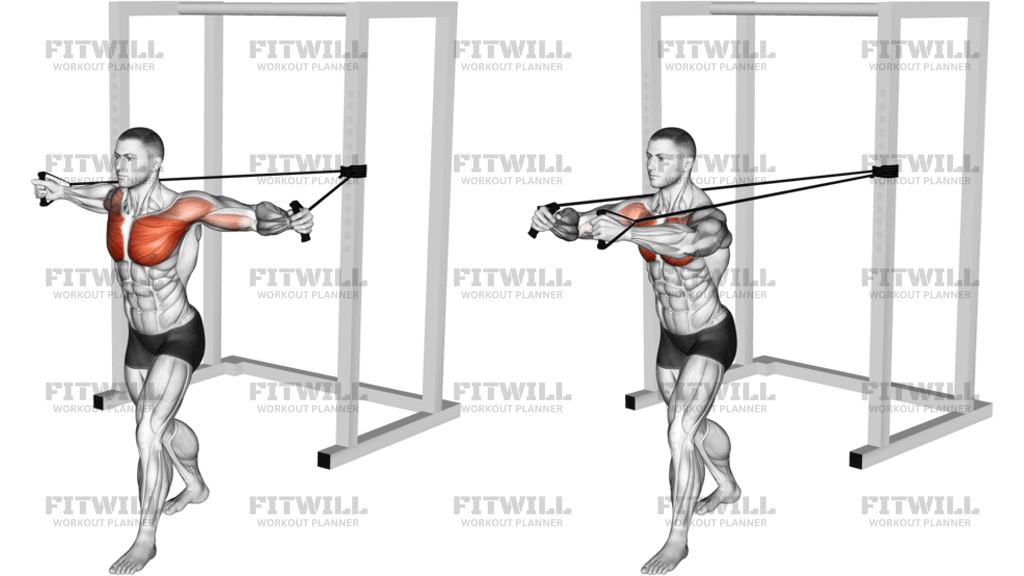
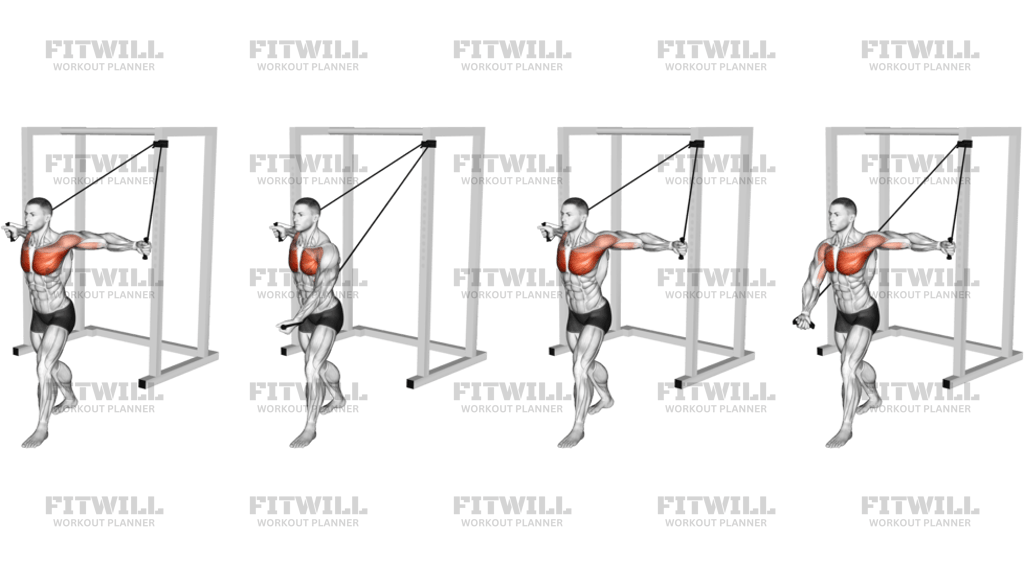
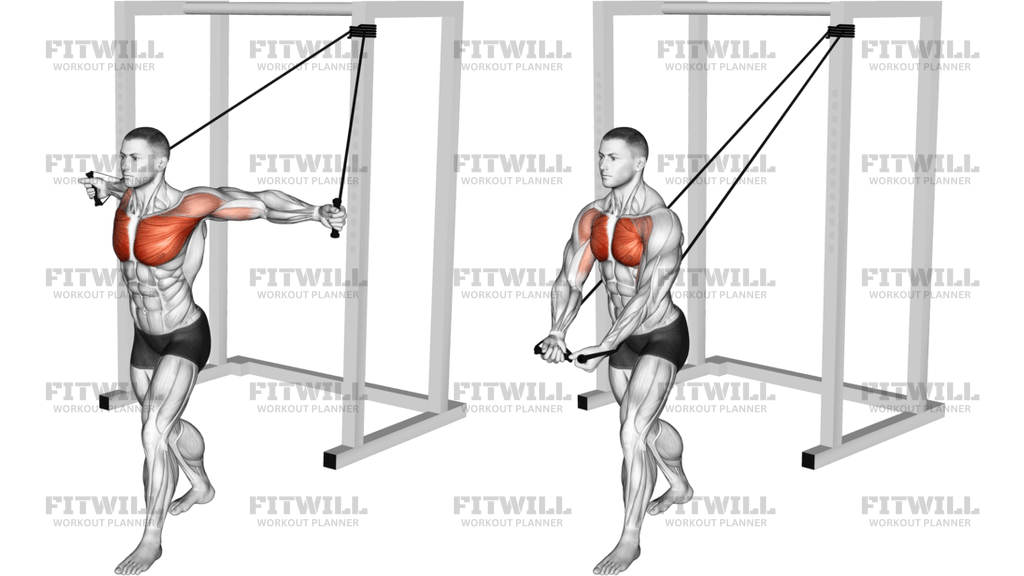
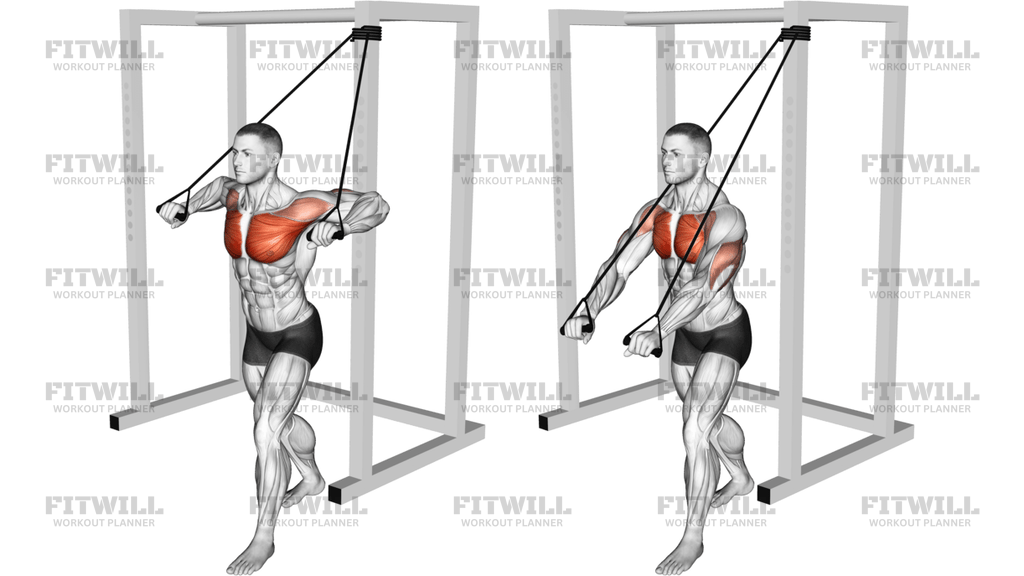
The setup matters because the band angle determines where the resistance feels strongest. With the handles anchored high, the fly starts in a stretched position across the chest and front shoulders, then becomes hardest as you bring the hands together. A slight hip hinge and soft elbow bend help keep the load on the chest instead of turning the movement into a front-delt raise or a pressing motion. The image shows a staggered, athletic stance with the torso tipped forward, which is a good default when you want to keep tension continuous.
Use this movement when you want chest work with less joint stress than heavy pressing and more direct control than a fast cable crossover. It fits well as accessory work after presses, as a warm-up for chest activation, or as higher-rep hypertrophy work when you want to focus on the squeeze and the stretched start position. Because the band tension rises as the handles come together, clean positioning and a smooth tempo matter more than how far you can force the hands to overlap.
Keep the ribs from flaring and avoid jerking the handles downward. If you stand too upright, the movement can drift into the shoulders; if you hinge too far or bend the elbows too much, it becomes a sloppy pulldown. The goal is a controlled, repeatable arc with the chest doing the work, the scapulae stable, and the return phase slow enough to keep tension on the band. Use a lighter band if you cannot keep the same torso angle and arm path from rep to rep.
Beginners can learn this exercise safely with light resistance, a short range, and a deliberate pause near the finish. More advanced lifters can use it to add volume without loading the elbows or shoulders heavily. The best reps feel like the chest is sweeping the hands inward and slightly downward while the body stays braced and still.
[ Workout Log & Planner ]
Put your next workout in Fitwill
Keep your plan and training log ready when you are.


Instructions
- Anchor the band handles high above shoulder level and stand centered between the two attachments.
- Take the handles with a neutral grip, step one foot slightly forward, and hinge your torso a little so your chest is angled toward the floor.
- Keep a soft bend in both elbows and let your arms open out and back until you feel a stretch across the chest.
- Brace your midsection and keep your shoulders down and slightly set, not shrugged up toward your ears.
- Sweep both hands down and inward in a wide arc until they meet in front of your lower chest or upper sternum.
- Squeeze the chest for a brief moment at the finish without bouncing the handles together.
- Return the handles slowly along the same path until the chest is open again and the band is under control.
- Inhale on the way back and exhale as you bring the hands together.
- Repeat for the planned reps, then step forward carefully and release the band tension.
Tips & Tricks
- Keep the handles traveling slightly downward as they come together; a flat chest fly path often turns this into a shoulder-dominant movement.
- A small elbow bend should stay almost unchanged from the stretch to the finish so the band does not become a triceps press.
- Set the torso angle before the first rep and keep it the same; drifting upright or deeper into the hinge changes the resistance curve a lot.
- Think about bringing the upper arms across the body, not just the hands toward each other.
- Stop the finish when the chest is fully squeezed; forcing the hands far past the midline usually adds momentum instead of tension.
- Let the band pull you back slowly so the chest stays loaded on the return.
- If your shoulders roll forward at the bottom, shorten the range and reset your shoulder blades before the next rep.
- Use a lighter band if the handles snap back faster than you can control, especially near the stretched starting position.
Frequently Asked Questions
What muscle does Band High Fly target most?
The chest, especially the pectoralis major, is the primary mover.
Can beginners perform this exercise?
Yes. Beginners should use a light band, a small hinge, and a slow return until the path feels smooth.
Where should my hands finish on the rep?
Finish with the hands together in front of the lower chest or upper sternum, not up near the face.
Why are the bands anchored high?
A high anchor creates a downward-and-inward fly path that keeps tension on the chest through the full rep.
Should I keep a bend in my elbows?
Yes. Keep the bend small and fixed so the movement stays a fly instead of becoming a press or pull.
What is the biggest form mistake?
Usually it is shrugging the shoulders and letting the torso swing to finish the rep.
Is this more of a strength or hypertrophy exercise?
It is usually better as controlled accessory work for chest size, activation, and joint-friendly volume.
Can I use it after bench pressing?
Yes. It works well after presses because it lets you keep loading the chest without using a heavy barbell.