Crunch On A Bench
Crunch On A Bench is a bench-supported abdominal crunch with the feet anchored under the padded roller or foot support at the end of the bench. The setup lets you isolate spinal flexion without having to balance your body through a larger sit-up pattern, so the exercise is useful when you want the abs to do the work and the lower body to stay quiet. It is a simple movement on paper, but the quality of the repetition depends heavily on how you position the head, ribs, and pelvis before you start.
The main training target is the rectus abdominis, with the obliques and transversus abdominis helping control the curl and keep the torso from twisting. The hip flexors can assist, especially if you over-crunch into a sit-up or pull yourself up with momentum, which is why the bench and foot support matter. In practical terms, Crunch On A Bench is best when the goal is focused trunk flexion, cleaner abdominal tension, and a controlled contraction rather than total-body effort.
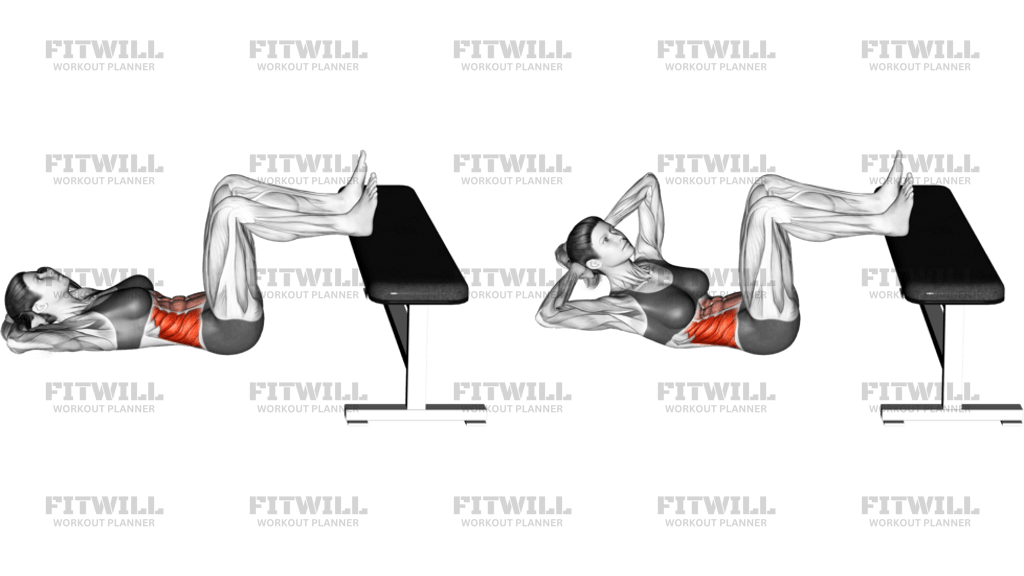
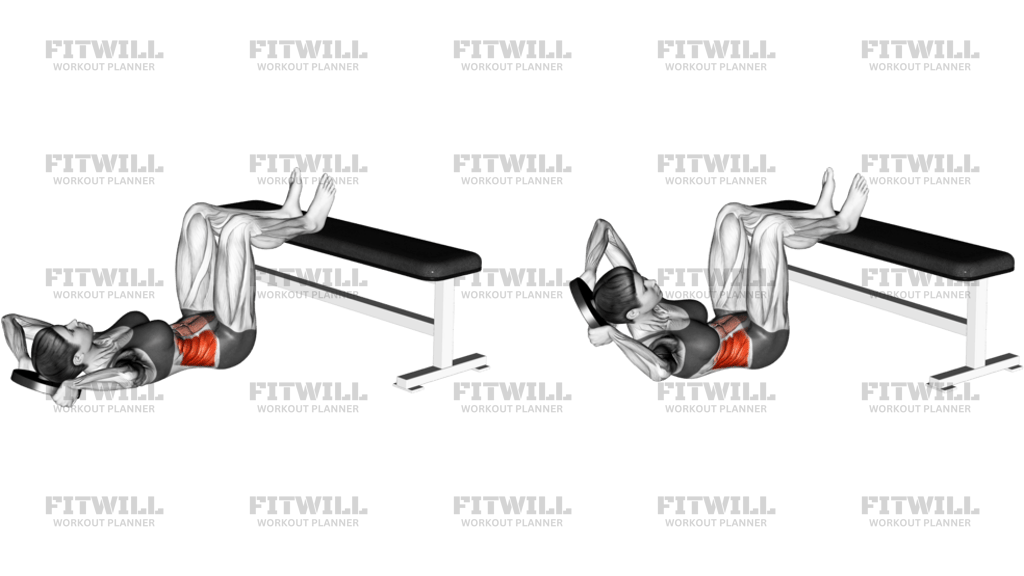
The bench position should let your upper back and shoulders move freely while your lower body stays anchored. Lie back with your feet secured under the roller, knees bent, and your hands lightly behind your head or at your temples. Set your ribs down, lightly brace your midsection, and keep your chin slightly tucked so the neck stays long as you begin each rep. That start position should feel stable enough that the only thing moving is your ribcage curling toward your pelvis.
From there, Crunch On A Bench is driven by a short, deliberate curl of the shoulders and upper back off the bench. You do not need to sit all the way up; the useful part of the range is the part where the abs shorten and the ribcage folds toward the hips. A controlled return matters just as much as the lift, because the descent is where the abs stay under tension and where most people either rush or let the head lead the movement. Breathing should stay rhythmic: exhale as you crunch, then inhale as you lower with control.
This exercise fits well into warm-ups, accessory blocks, and direct core work for people who want a straightforward bench crunch that is easy to load with attention rather than weight. It is also a good option for beginners who need a smaller range and a clear anchor point for the feet. Keep the movement honest, keep the neck relaxed, and stop the set when the repetition turns into a bounce or a hip-flexor pull instead of an abdominal curl.
[ Workout Log & Planner ]
Put your next workout in Fitwill
Keep your plan and training log ready when you are.


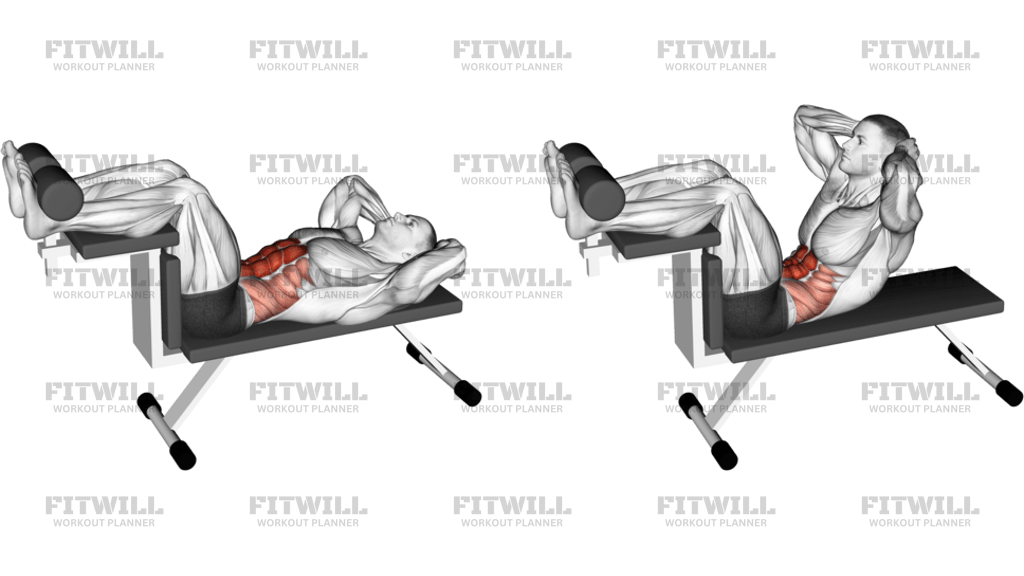
Instructions
- Lie back on the bench with your feet hooked under the padded roller or foot support and your knees bent comfortably.
- Place your fingertips lightly behind your ears or at your temples and keep your elbows open instead of pulling on your head.
- Set your lower back and ribcage down on the bench, then brace your abs before each rep.
- Exhale and curl your head, shoulders, and upper back off the bench by folding your ribs toward your pelvis.
- Keep the motion short and deliberate so your hips stay quiet and the bench, not momentum, anchors the movement.
- Pause briefly at the top when your shoulder blades clear the bench and your abs are fully shortened.
- Lower your shoulders and upper back back to the bench under control while keeping tension in the abs.
- Reset your ribs and neck at the bottom before starting the next rep.
- After the final rep, lower fully to the bench and release your feet from the roller only when you are stable.
Tips & Tricks
- Keep your chin slightly tucked so the neck stays long and does not lead the rep.
- Think about bringing your sternum toward your pelvis instead of trying to sit all the way up.
- If you feel your hip flexors taking over, shorten the crunch and keep the lower back heavier on the bench.
- Do not pull hard on your head; the hands should only guide the head position.
- A slow lowering phase makes the bench crunch far more effective than bouncing back down.
- Stop the rep when your shoulder blades leave the bench; that is usually enough range for the abs.
- Keep the feet firmly under the roller so your pelvis does not slide as you curl up.
- Exhale as the ribs close and inhale as you return to the bench.
- If the bench edge digs into your spine, shift slightly so your torso is supported from the upper back through the hips.
Frequently Asked Questions
What muscles does Crunch On A Bench work?
It mainly trains the rectus abdominis, with the obliques and deep core muscles helping control the curl. The hip flexors can assist if you let the movement turn into a sit-up.
Why are my feet hooked under the roller on Crunch On A Bench?
The roller anchors your lower body so you can focus on curling the torso instead of sliding around on the bench. If your feet slip, adjust the setup before adding reps or load.
How high should I crunch on the bench?
Only curl until your shoulder blades clear the bench and your abs are fully shortened. If you sit all the way up, the hip flexors usually take over.
Is Crunch On A Bench good for beginners?
Yes, it is beginner-friendly because the bench gives you a clear setup and a small, controlled range of motion. Start with body weight and keep the range short.
What is the most common mistake with Crunch On A Bench?
The biggest mistake is yanking the neck or swinging through a sit-up. Keep the hands light, the chin tucked, and the curl deliberate.
Can I add weight to Crunch On A Bench?
Yes, but only after your bodyweight reps stay smooth and the bench setup stays stable. A light plate or small dumbbell held at the chest is usually safer than forcing a bigger range.
How do I keep Crunch On A Bench from becoming a hip-flexor exercise?
Use a shorter crunch, keep the lower back and ribs controlled on the bench, and avoid pulling your knees or thighs into the rep. The torso should curl, not rock.
What should I do if the bench feels uncomfortable on my back?
Move so your upper back is supported cleanly and reduce the range if the bench edge presses into you. If it still feels awkward, switch to a floor crunch or a padded decline setup.