Resistance Band Plank March
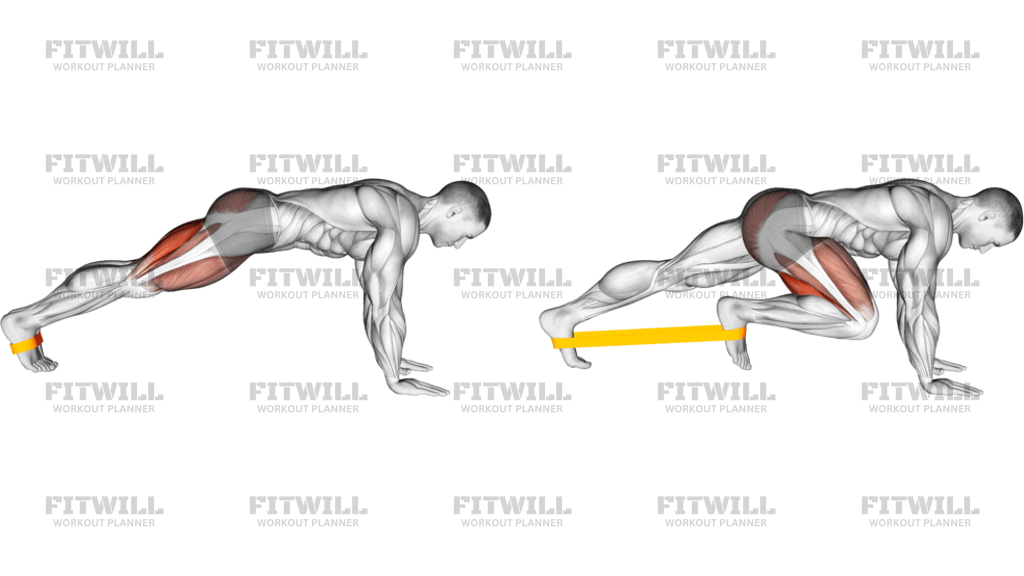
Resistance Band Plank March is a high-plank core and lower-body stability drill that adds band tension to each marching step. With the band looped around the feet or ankles, the exercise asks the hamstrings, glutes, abs, shoulders, and hip stabilizers to work together while one knee lifts and the other leg stays long. The goal is not speed. It is to keep the torso quiet while the legs alternate under a steady band load.
The setup matters because the band changes the entire feel of the march. Hands should be planted under the shoulders, elbows straight but not locked, and the feet set far enough apart to keep the band flat and the hips level. If the feet are too close or the band is too heavy, the pelvis will sway, the low back will arch, and the march turns into a compensation drill instead of a controlled stability exercise.
Each rep should look like a clean knee drive from a stable plank. Shift a little weight into the supporting hand, draw one knee forward under the torso, then return that leg to the floor without letting the hips rotate or pike. The opposite leg stays long and active so the band keeps tension on the back of the legs and the glutes. A short pause at the top makes the drill harder without needing a bigger range.
Resistance Band Plank March works well in warm-ups, core circuits, athletic conditioning blocks, or accessory work for runners and lifters who need better trunk control under moving legs. It teaches you to hold plank position while one leg is in motion, which carries over to sprinting mechanics, crawling patterns, and any exercise that asks the trunk to resist rotation. If the shoulders or wrists fatigue first, reduce the band tension or shorten the set before form breaks.
Keep the movement strict enough that each march starts from the same plank position. If the hips drop, the rib cage flares, or the band starts to roll, the set is too hard for the current load or tempo. A lighter band and slower cadence usually produce better training than forcing more reps with a shaky plank. Finish by lowering both knees to the floor and removing the band carefully so it does not snap back against the feet.
[ Workout Log & Planner ]
Put your next workout in Fitwill
Keep your plan and training log ready when you are.


Instructions
- Loop the resistance band around the tops of both feet or just above the ankles, then get into a straight-arm high plank with your hands under your shoulders.
- Step your feet back until the band is lightly stretched and both feet are set far enough apart to keep the band flat and even.
- Stack your shoulders over your wrists, press the floor away, and hold a straight line from head to heels.
- Brace your ribs down and set your pelvis before the first march so your lower back does not take over.
- Shift a small amount of weight into one hand and drive the opposite knee forward under your torso.
- Keep both hips facing the floor while the marching knee moves, and stop before the low back starts to arch or twist.
- Return the marching foot back to the plank position under control, then repeat on the other side.
- Alternate legs with a steady march rhythm, exhaling as each knee comes in and inhaling as it reaches back.
- When the set is done, lower both knees to the floor and release the band carefully.
Tips & Tricks
- Use a light-to-moderate band first; if the band yanks your hips up, the load is too heavy for this plank pattern.
- Keep the band sitting flat on both feet or ankles so one side does not pull harder than the other.
- Think about sliding the knee forward under the ribs instead of lifting it high; that keeps the march from turning into a pike.
- Widen your feet slightly if the band keeps rolling or your hips sway side to side.
- Press through the whole hand, especially the index finger and thumb, to keep the wrists from collapsing under the plank hold.
- A short pause when the knee is forward makes the drill much harder without needing a bigger range.
- If your low back arches before your abs fail, shorten the march and slow the pace instead of chasing more reps.
- Keep the opposite leg long and active so the hamstrings stay loaded instead of letting the knee sag slack into the floor.
Frequently Asked Questions
What muscles does Resistance Band Plank March work?
It trains the hamstrings and glutes through the banded leg action while the abs, obliques, shoulders, and hip stabilizers keep the plank from rotating.
Where should the band sit during Resistance Band Plank March?
The band should sit flat around both feet or just above the ankles, with even tension on each side. If it twists or digs into one foot, reset before the next rep.
Is Resistance Band Plank March good for beginners?
Yes, but only with a light band and a short marching range. Beginners should be able to hold a steady high plank before adding the band.
How do I keep my hips from rocking during the march?
Set your feet a little wider, slow the cadence, and think about keeping both hip bones aimed at the floor. If the sway continues, reduce the band tension.
Should Resistance Band Plank March feel more like core work or leg work?
Both. The legs create the marching motion, but the trunk and shoulders have to resist the band pulling you out of alignment.
What is the most common mistake with this exercise?
Letting the low back sag or twisting the pelvis as the knee comes forward is the main error. The march should stay small and controlled enough to keep the plank shape.
Can I use Resistance Band Plank March instead of mountain climbers?
Yes, it is a slower and more controlled alternative. This version usually shifts the challenge toward anti-rotation control and hamstring tension rather than speed.
How can I make Resistance Band Plank March harder without rushing it?
Use a stronger band, slow each march, or pause briefly when the knee is forward. Those changes increase tension without turning the movement into a sloppy sprint.