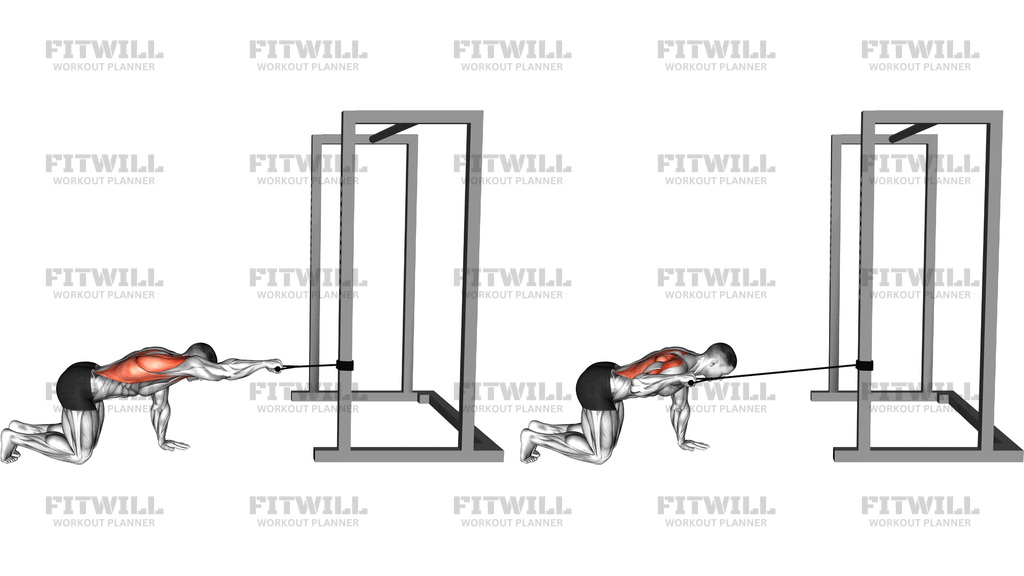
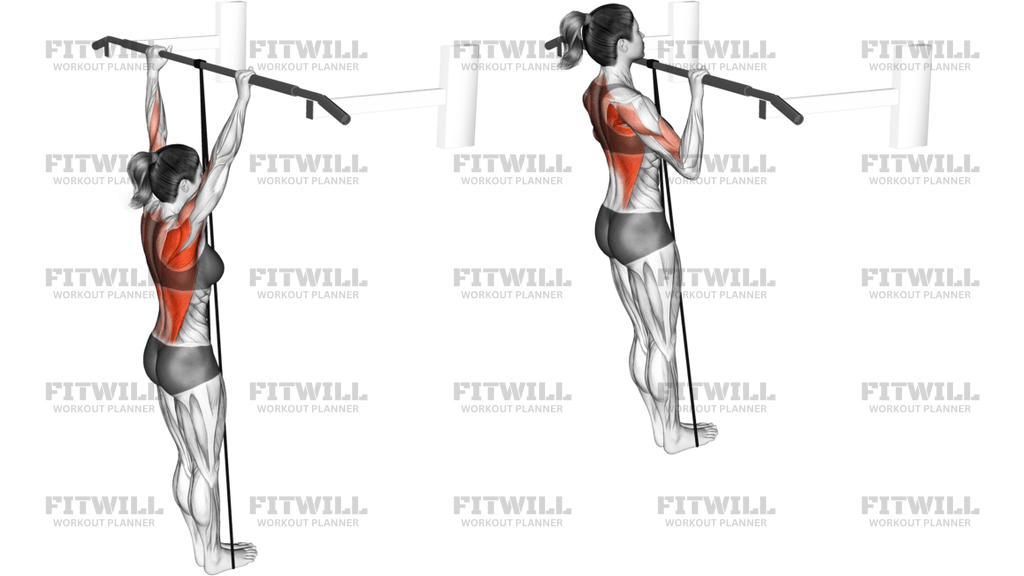
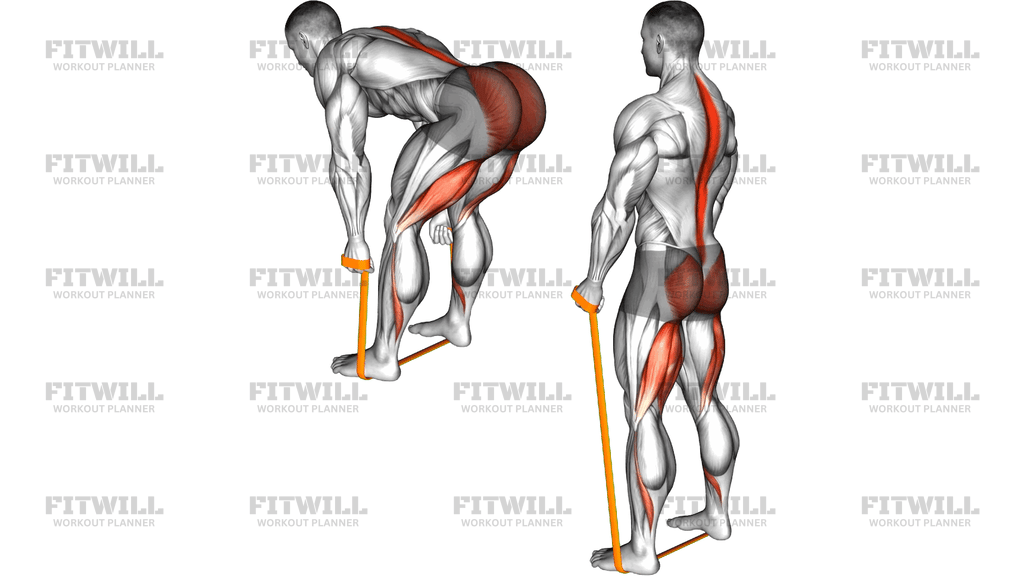
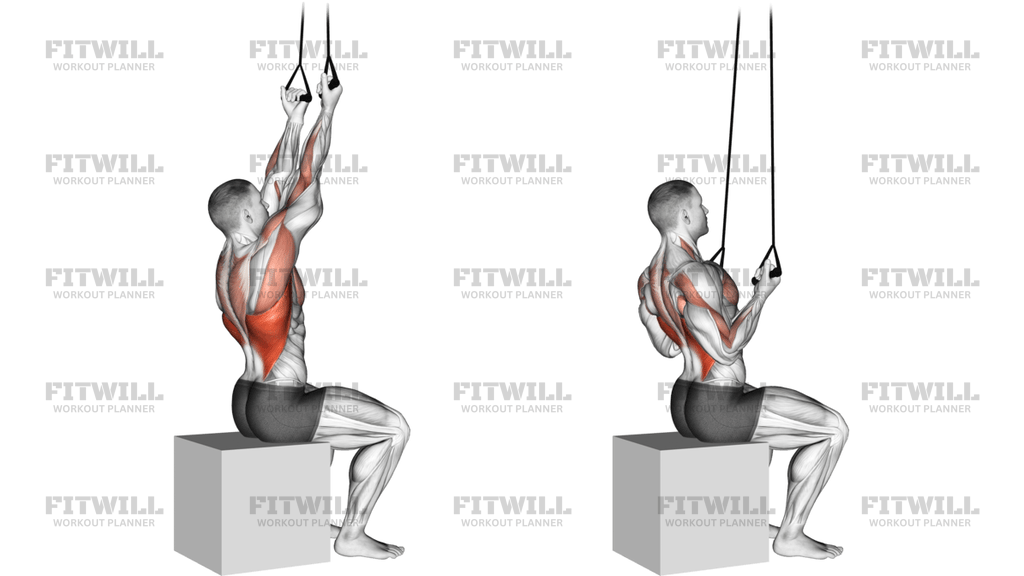
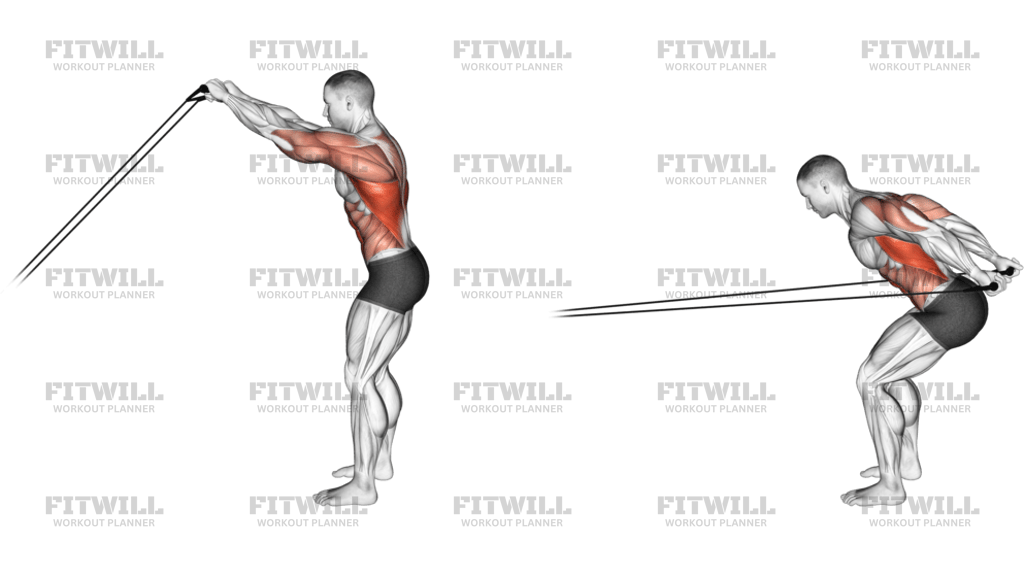
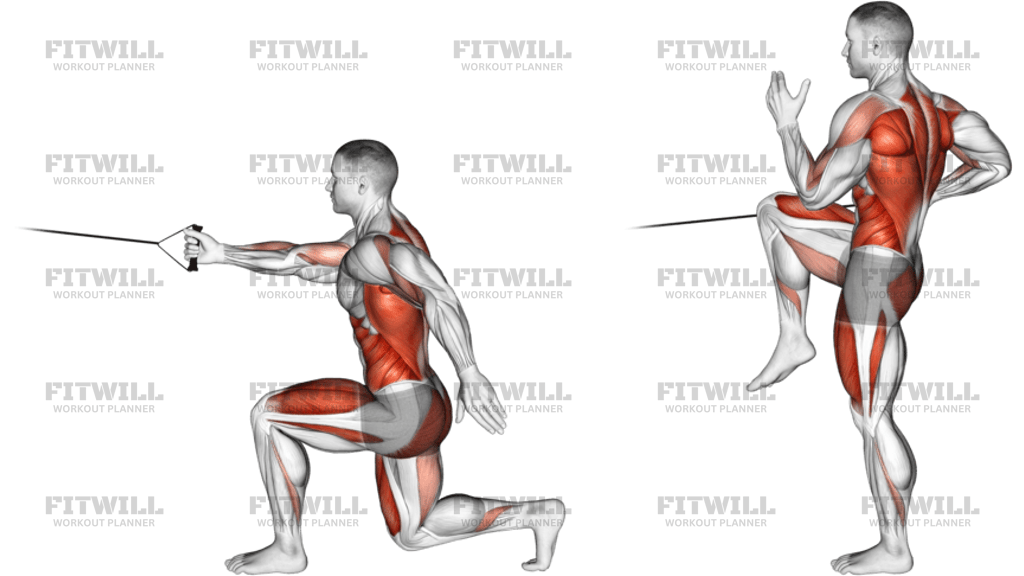
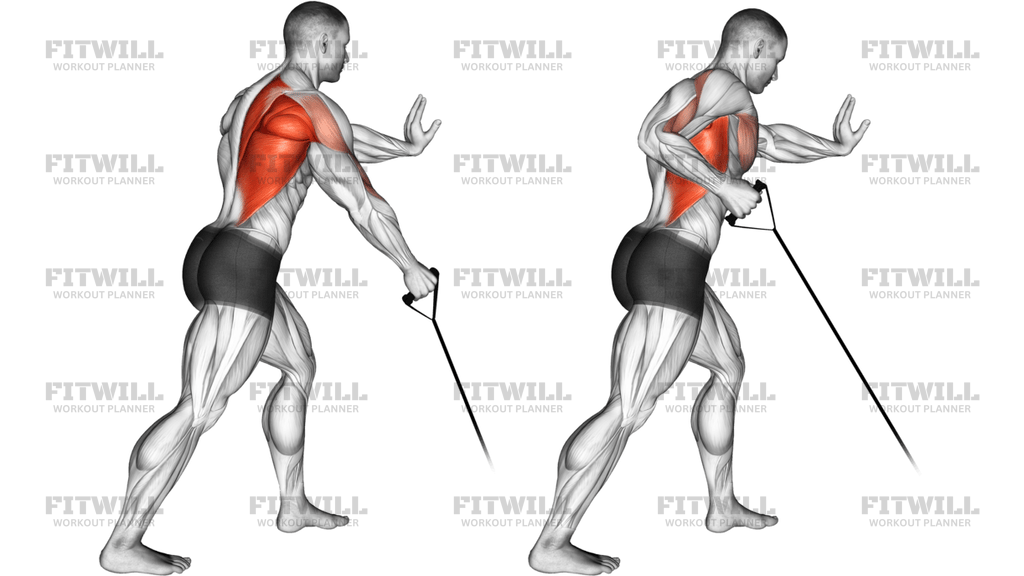
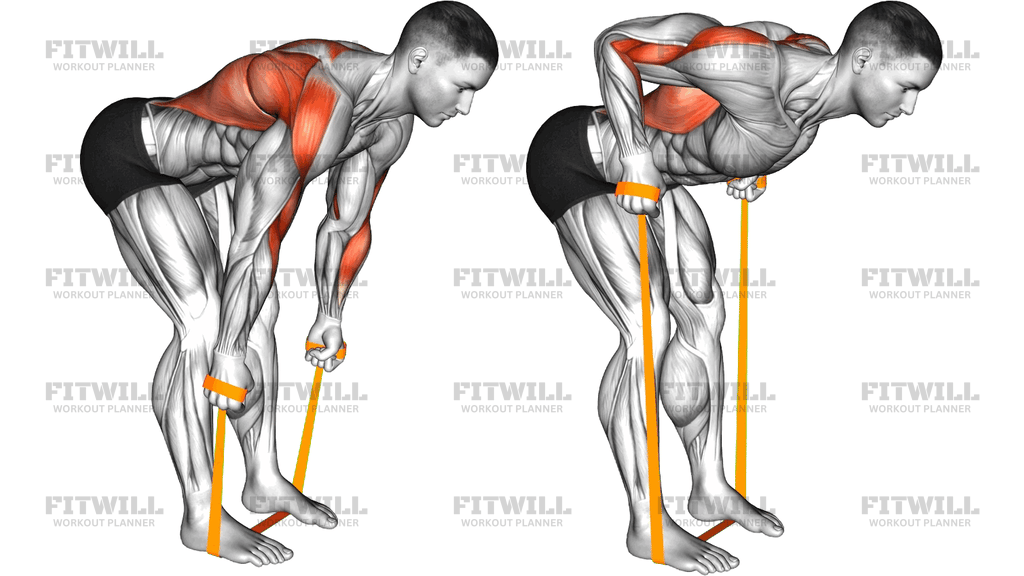
Band Kneeling One-Arm Pulldown
Band Kneeling One Arm Pulldown is a kneeling vertical pulling exercise that trains the lats through a single-arm path against band tension. The movement gives you a simple way to practice shoulder depression, elbow drive, and scapular control without needing a machine, which makes it useful for home training, warmups, and accessory back work.
The exercise is built around one clean line of pull: the band starts overhead and the working arm pulls down toward the side of the torso or the front pocket. That path shifts the load toward the latissimus dorsi while the upper back, biceps, forearms, and trunk help keep the body organized. Because it is unilateral, it also exposes side-to-side differences in shoulder position, rib flare, and pulling strength.
The kneeling setup matters because it reduces cheating and makes it easier to keep the ribs stacked over the pelvis. Anchor the band securely above head height, kneel on a mat, and take the handle or band end with a grip that lets the wrist stay neutral. Before each rep, set the shoulder down away from the ear, then pull the elbow toward the hip without letting the torso twist or lunge forward to finish the rep.
At the bottom, squeeze the lat briefly, then return the band slowly until the arm is back overhead and the shoulder stays controlled. The goal is not to yank the band through a big range, but to keep tension smooth from the stretched start to the finished pull. Exhale as you pull, inhale as you let the arm rise, and reset the shoulder before the next repetition.
This movement works well as an accessory after heavier rows or pulldowns, or as a lighter technique drill when you want to reinforce a strong lat contraction. It is also a good option when a full lat pulldown machine is unavailable. Keep the resistance light enough that you can stay tall in the kneeling position, finish each side evenly, and stop if the band setup pulls your shoulder forward or causes discomfort in the front of the shoulder.
[ Workout Log & Planner ]
Put your next workout in Fitwill
Keep your plan and training log ready when you are.


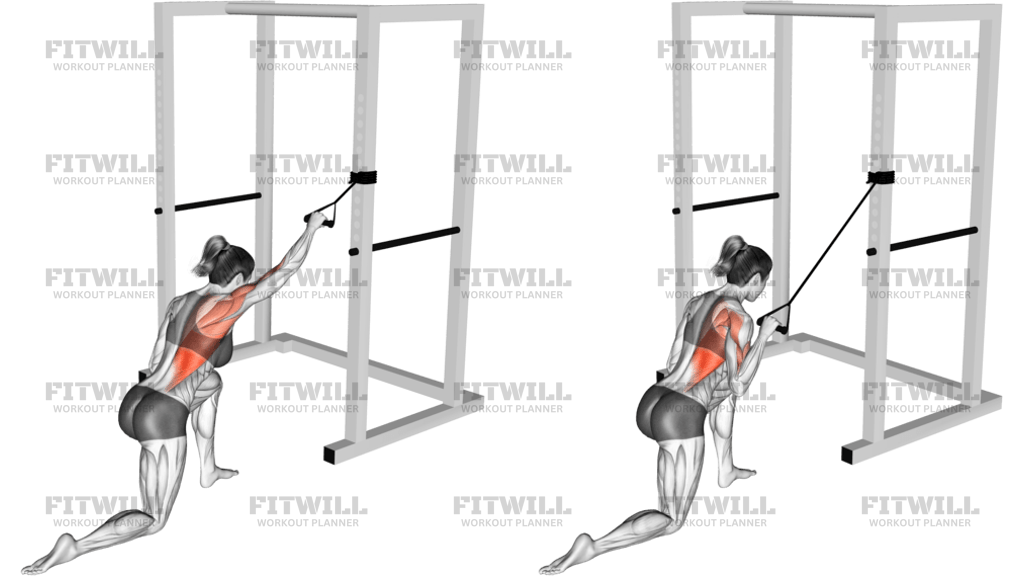
Instructions
- Anchor the band overhead and kneel on a mat facing the anchor with your working-side knee and hips square to the front.
- Reach up and grab the band with one hand so the arm starts overhead with a slight bend in the elbow and the shoulder relaxed away from the ear.
- Set the ribs over the pelvis, tighten your abdomen, and keep your free hand on your thigh or floor for balance if needed.
- Pull the elbow down and slightly in toward your hip or front pocket, keeping the chest tall and the torso from rotating.
- Finish the rep when the hand reaches the side of your ribs and the lat is fully shortened, not when the shoulder rolls forward.
- Pause briefly at the bottom and feel the pulling side of the back do the work instead of the arm or neck.
- Return the band slowly until the arm is overhead again, letting the shoulder blade rise only as far as you can control.
- Keep your wrist stacked and your neck long as you breathe out on the pull and breathe in on the return.
- Complete all reps on one side, reset your posture, then switch arms and repeat with the same range and tempo.
Tips & Tricks
- Set the anchor high enough that the band gives tension as soon as your arm reaches overhead; if it is too low, the pull will turn into a row.
- Think about pulling the elbow into the back pocket, not yanking the hand straight down in front of your chest.
- Keep the shoulder blade down before the elbow moves so the lat starts the rep instead of the upper trap.
- If your torso leans back or twists toward the band, shorten the range and lighten the resistance.
- A slight pause at the bottom makes the lat contraction easier to feel and keeps the rep from turning into a bounce.
- Use a slower return than pull so the band does not snap your arm overhead and lose tension.
- Keep the nonworking hand planted on your thigh or the floor if your trunk wants to drift.
- The wrist should stay neutral; a bent wrist usually means the grip is too hard and the forearm is taking over.
- Stop the set if the front of the shoulder feels pinched at the top, because the overhead start should feel controlled, not jammed.
- Match both sides rep for rep and tempo for tempo so the weaker side does not get rushed.
Frequently Asked Questions
What does the Band Kneeling One Arm Pulldown train most?
It primarily trains the lats, with help from the upper back, biceps, forearms, and core for stability.
Why kneel instead of standing for this pulldown?
Kneeling removes a lot of lower-body cheating and makes it easier to keep your ribs stacked while you pull.
Where should I pull the band on each rep?
Pull the elbow down toward your hip or front pocket so the lat finishes the rep, not the shoulder and arm alone.
How high should the band anchor be?
High enough that your arm starts near full overhead reach with tension already on the band. If the anchor is too low, the motion stops feeling like a true pulldown.
Can beginners use this exercise?
Yes. Start with light resistance and a short, clean range so you can learn the shoulder path before adding load.
What is the most common form mistake?
Twisting the torso or shrugging the shoulder up to fake more range. The pull should stay smooth and the shoulder should move down first.
Should I hold the bottom position?
A short pause works well because it teaches you to finish the lat contraction without bouncing the band.
How do I make the exercise harder without losing form?
Use a stronger band, increase the pause at the bottom, or slow the return. Do not add body sway or lean-back momentum.
Is this a good accessory after rows or pull-ups?
Yes. It fits well after heavier pulling work when you want more lat volume without needing a machine.