Resistance Band Jump Squat
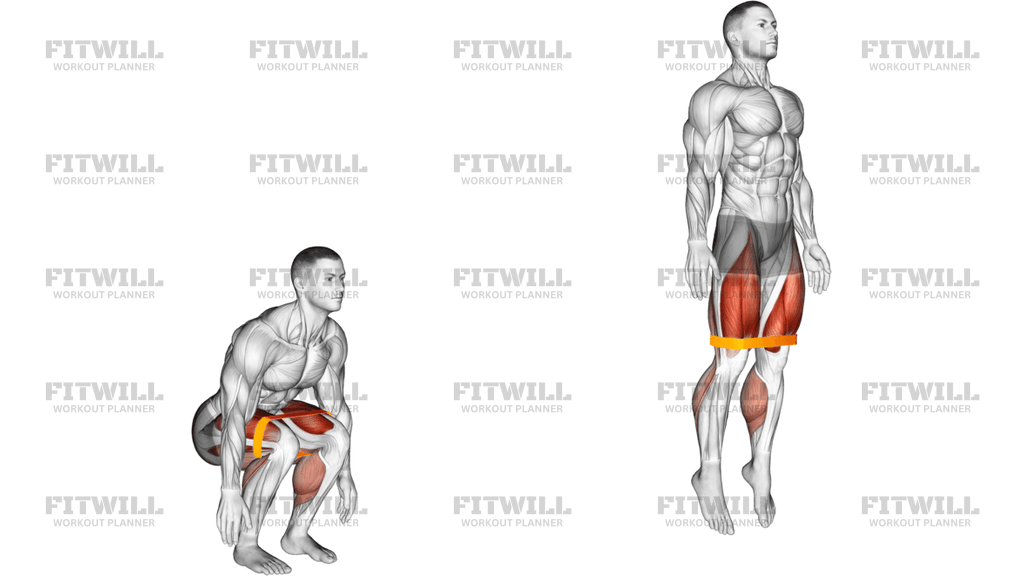
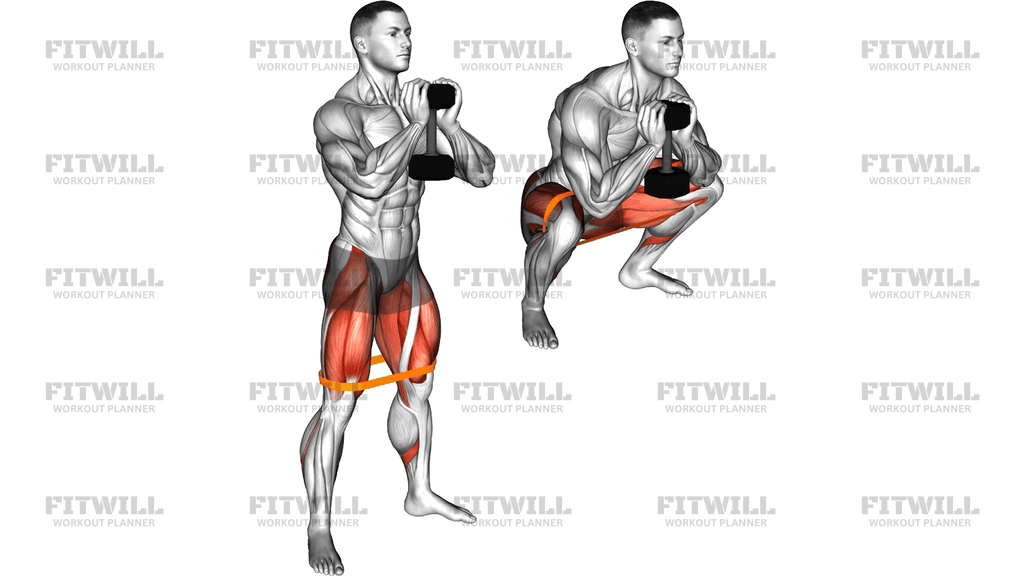
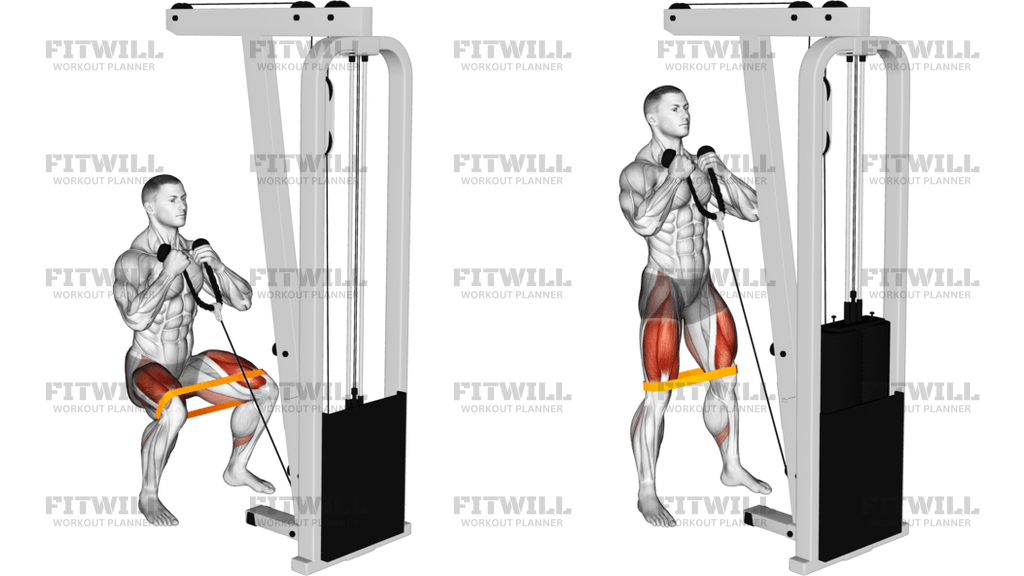
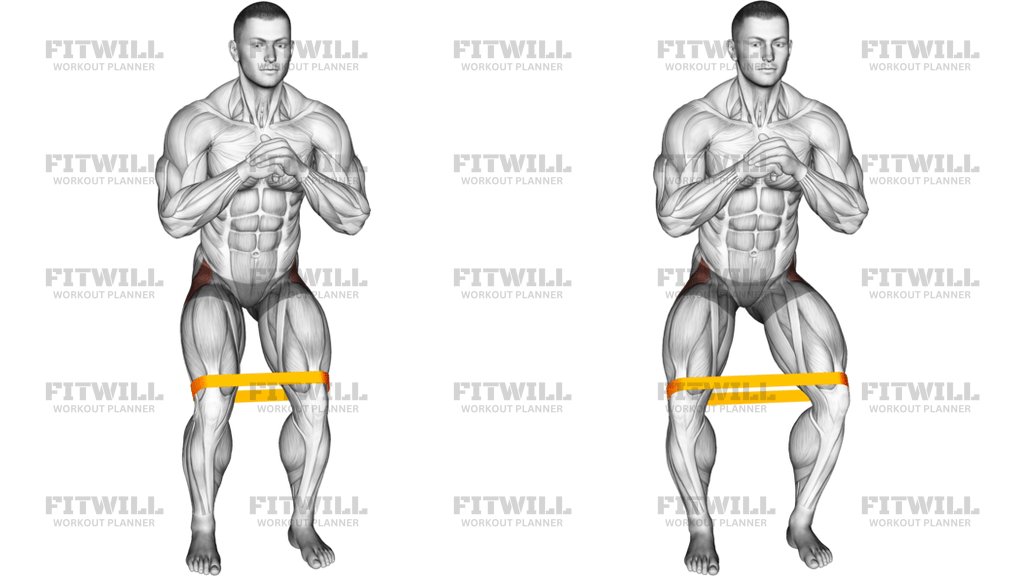
Resistance Band Jump Squat is a lower-body plyometric exercise performed with a loop band around the thighs, usually just above the knees. The band adds outward tension while you squat and jump, which makes the movement more demanding for the glutes, quadriceps, calves, and the muscles that keep the knees tracking cleanly over the feet.
This is a power-and-conditioning drill, not a slow strength squat. The goal is to create an explosive takeoff from a compact athletic squat while keeping the band under control, the torso stacked, and the landing quiet. If the knees cave inward or the band rolls, the exercise loses its main benefit.
Set the band snugly above the knees, stand with feet about shoulder width, and sit into a shallow squat before each jump. From there, drive through the floor, extend the hips, knees, and ankles together, and jump only as high as you can land well. At the top, stay long through the body without leaning back or kicking the feet forward.
Land on the balls and midfoot with a soft bend in the knees and hips, then absorb the impact back into the next squat. Reps should look springy and repeatable, with even spacing, consistent stance width, and the band staying flat the whole time. Use this exercise in warm-ups, athletic circuits, or conditioning work when you want lower-body power with an extra hip-stability challenge.
Fitwill
Log Workouts, Track Progress & Build Strength.
Achieve more with Fitwill: explore over 9600 exercises with images and videos, access built-in and custom workouts, perfect for both gym and home sessions, and see real results.
Start your journey. Download today!




Instructions
- Loop the resistance band above your knees and stand with your feet about shoulder-width apart and your toes slightly turned out.
- Hold your arms in front of your chest or at your sides, soften your knees, and lower into a shallow squat until the band is lightly stretched.
- Keep your chest tall, your ribs down, and your weight spread across your heel, big toe, and little toe.
- Press your knees gently outward so the band stays taut and your thighs do not collapse inward.
- Drive through the floor and jump explosively, extending your hips, knees, and ankles at the same time.
- Stay stacked through your torso as you leave the ground and avoid leaning back or swinging your arms to fake extra height.
- Land quietly on your midfoot, bend your knees and hips to absorb the impact, and keep your knees tracking over your toes.
- Reset into the squat under control and repeat for the planned reps, stopping if your landings become loud or the band shifts.
Tips & Tricks
- Use a light band first; if it pulls the knees inward or twists on the thighs, it is too strong for this drill.
- Keep the jump height modest; the goal is crisp power and quiet landings, not maximum airtime.
- A quarter to half squat is usually enough to load the legs without turning the rep into a slow grind.
- Press the floor apart on both takeoff and landing so the band stays flat and your knees stay aligned.
- Keep the band just above the knees so it does not slide down toward the calves during repeated jumps.
- Exhale as you leave the floor, then inhale as you absorb the landing and reset into the next rep.
- Use a stable surface and shoes with good grip; a slippery floor makes this exercise much less controlled.
- Stop the set when your landings get stiff, noisy, or uneven, because that is usually the first sign fatigue is taking over.
Frequently Asked Questions
What muscles does Resistance Band Jump Squat work most?
The quads, glutes, calves, and hip stabilizers do most of the work, with the core helping keep the torso stacked.
Why is the band placed above the knees?
That position adds outward tension at the thighs and helps you keep the knees from collapsing inward during the jump and landing.
How deep should I squat before jumping?
A shallow to moderate squat is usually enough. You do not need a deep squat to get a strong, athletic jump.
Should my knees stay straight ahead?
They should track in line with your toes, with gentle outward pressure so the band stays controlled and the thighs do not cave in.
Is this more of a strength exercise or a conditioning exercise?
It is usually programmed as a plyometric or conditioning drill, although it also builds lower-body power and coordination.
Can beginners do a resistance band jump squat?
Yes, but they should start with a light band, smaller jumps, or even a banded squat without leaving the ground.
What is the most common mistake with the band?
Letting the knees cave in, using too much band tension, or letting the band roll down the thighs are the biggest issues.
What should I do if the landing feels noisy or harsh?
Reduce the jump height, soften the knee bend on contact, and stop the set when you can no longer land quietly and in control.