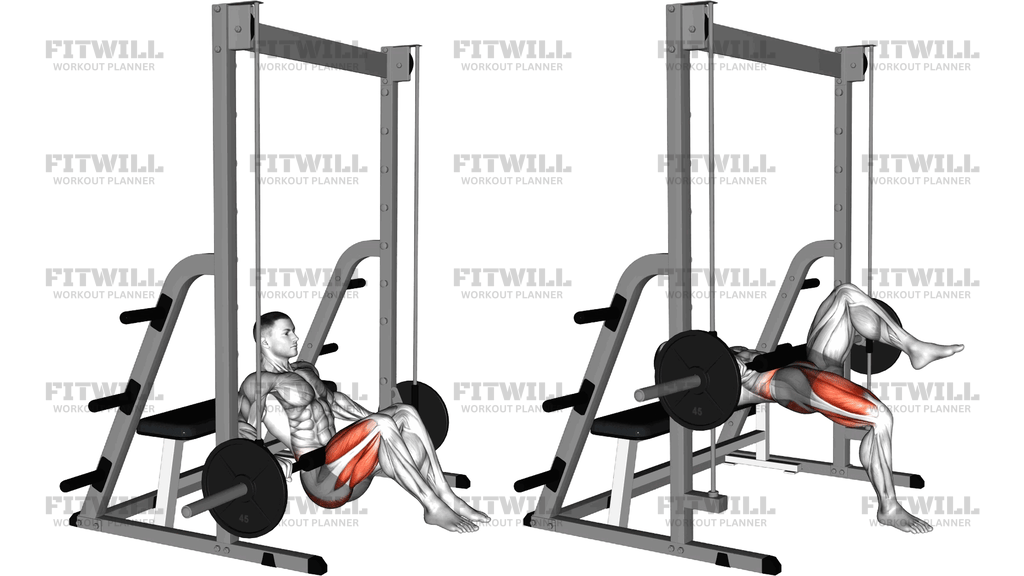
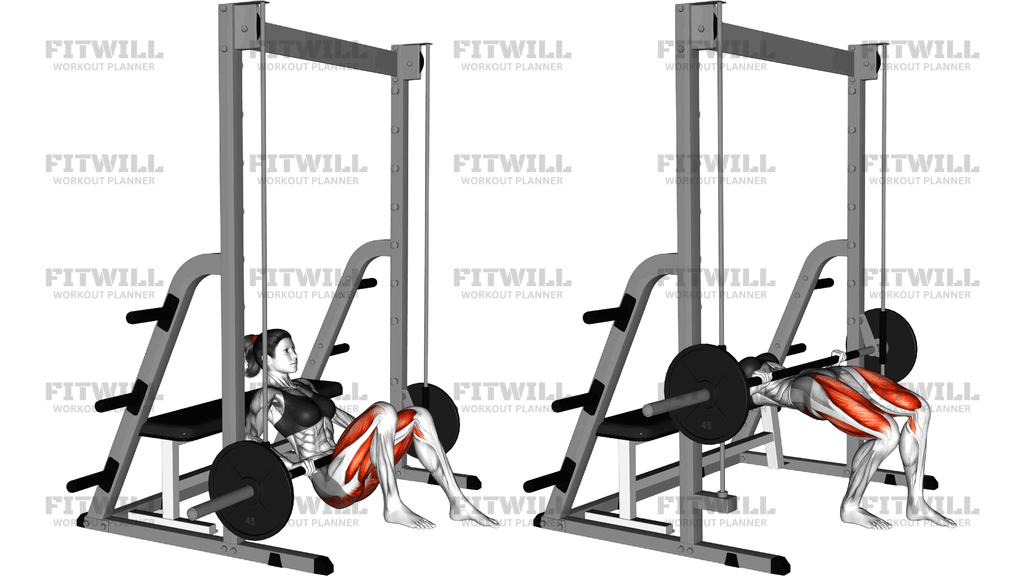
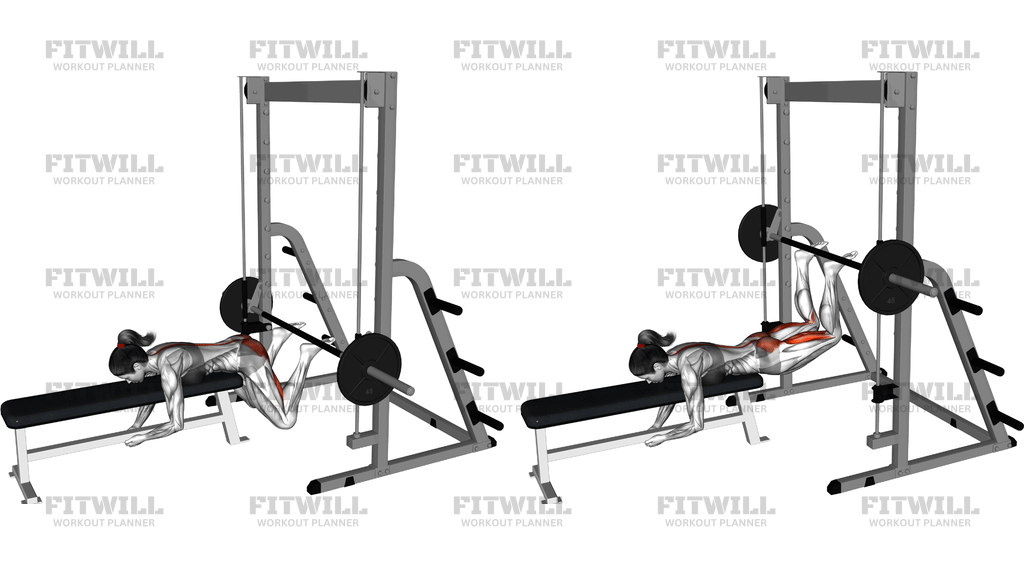
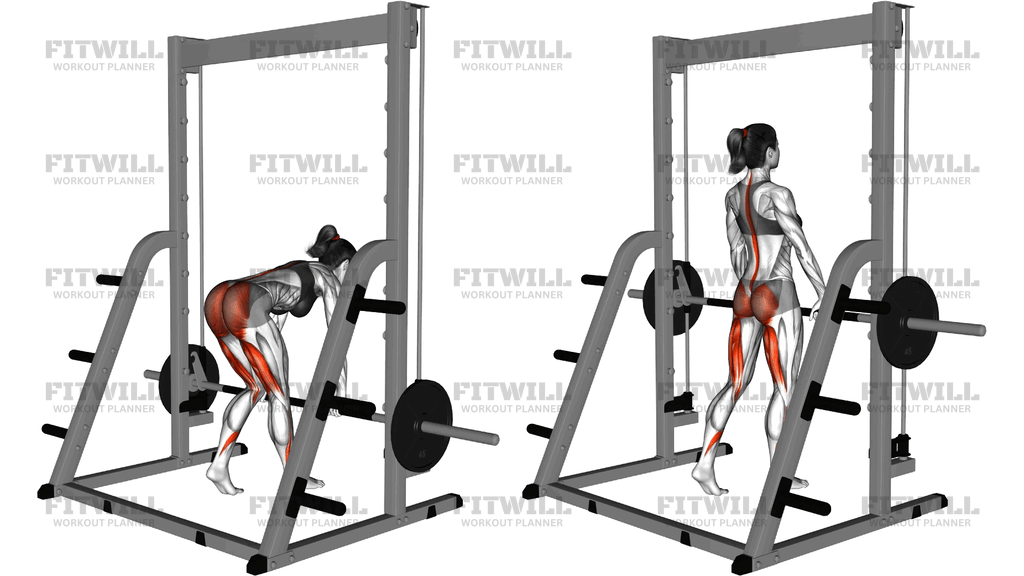
Smith Kneeling Hip Thrust
Smith Kneeling Hip Thrust is a guided glute exercise built around a fixed bar path on the Smith machine. You kneel under the bar and extend the hips against the machine's straight track, which lets you focus on squeezing the glutes without having to balance a free bar. It is useful when you want a hip-dominant movement that feels more controlled than standing variations and keeps the torso more upright than a traditional thrust.
The main work comes from the glutes, with the hips, core, and upper back helping keep the body organized as you move. Because the bar is resting across the upper traps and shoulders, the setup matters a lot: if the bar sits too high on the neck or the knees are too far forward or back, the repetition can turn into a low-back movement instead of a hip extension. A stable kneeling position lets the glutes do the work while the spine stays stacked.
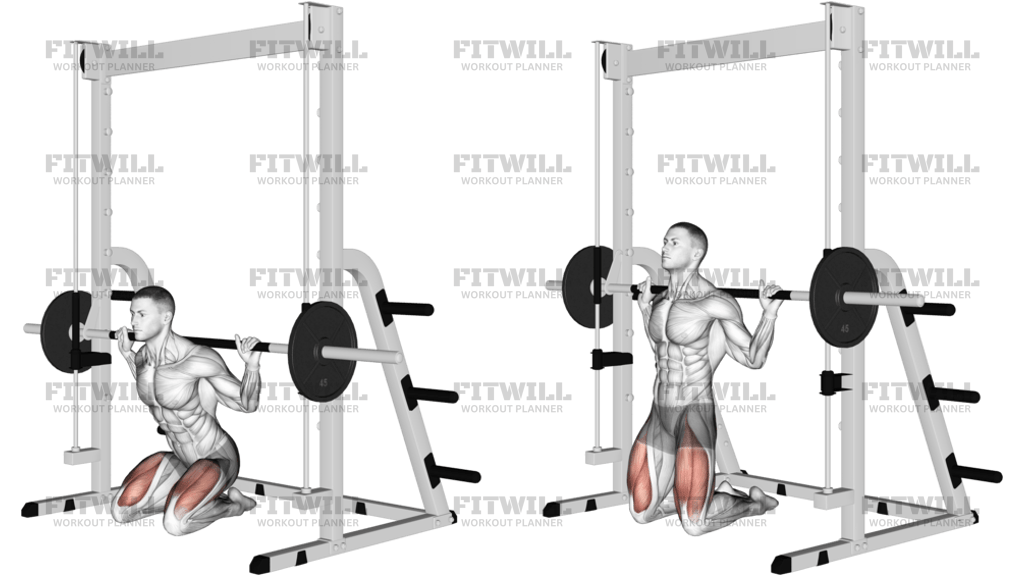
At the start of each rep, the hips are flexed and the torso leans forward slightly under the bar. From there, drive the hips forward by squeezing the glutes and bringing the torso to a tall kneeling finish without over-arching the lower back or flaring the ribs. The bar should travel in the Smith machine's fixed line while your body stays controlled around it, so the movement feels smooth rather than jerky.
This exercise is often used as a glute accessory after heavier lower-body lifts, or as the main lower-body pattern when you want less spinal loading than a barbell hinge. It works well for moderate reps with a steady tempo and a brief squeeze at the top. Beginners can use it with light load and a pad under the knees, but they should keep the range honest and stop the set if the bar position, knee comfort, or low-back tension starts to drift.
The best reps feel like a deliberate hip extension, not a bounce off the floor or a lean-back finish. Keep the chin tucked slightly, the hands steady on the bar, and the ribs stacked over the pelvis as you come up. If the movement turns into a back bend, shorten the range and reset the bar placement before adding load.
[ Workout Log & Planner ]
Put your next workout in Fitwill
Keep your plan and training log ready when you are.


Instructions
- Set the Smith bar at a height that lets it rest across your upper traps and shoulders while you kneel on a pad beneath it.
- Kneel on the floor with your knees about hip-width apart, shins and toes pointed back, and the bar centered across the back of your shoulders.
- Grip the bar just outside shoulder width, tuck your chin slightly, and brace your midsection before you start the rep.
- Begin with your hips bent and your torso angled forward under the bar, keeping your chest lifted and your ribs stacked.
- Drive your hips forward by squeezing your glutes, letting the Smith bar travel straight on its track as you come to a tall kneeling position.
- Finish the rep with your hips fully extended and your glutes tight, without leaning back or flaring your lower ribs.
- Lower your hips under control until you feel the start position again, keeping the bar stable on your upper back.
- Reset your breath, keep the knees planted, and repeat for the planned number of reps.
Tips & Tricks
- Place the bar on the meaty part of the upper traps, not on the base of your neck, or the pressure will feel sharp very quickly.
- Use a pad under the knees; the set should feel like glute work, not a floor-contact test.
- Keep your hands on the bar only for guidance, since yanking with the arms can pull you off the Smith track.
- Think about bringing the hips forward under the rib cage instead of leaning the chest back to finish the rep.
- A small posterior pelvic tilt at the top helps the glutes finish the rep without turning it into a low-back arch.
- If your low back takes over, shorten the top range and squeeze harder at lockout rather than forcing more height.
- Keep the descent slow enough that you can feel the glutes lengthen before you reverse direction.
- Choose a load that lets you keep the bar quiet and stable; wobbling usually means the set is too heavy.
- Exhale as the hips extend, then inhale as you return to the bottom and reset your brace.
Frequently Asked Questions
What muscles does Smith Kneeling Hip Thrust work most?
The glutes do most of the work, with the hips and core helping stabilize the kneeling position and keep the torso organized.
Is Smith Kneeling Hip Thrust a good glute exercise?
Yes. It keeps tension on the glutes through a short, controlled hip extension and is a solid choice when you want a more guided setup than a free bar.
Where should the Smith bar sit for Smith Kneeling Hip Thrust?
It should rest across the upper traps and back of the shoulders, not on the neck. If the bar sits too high, the pressure and bar path become awkward fast.
How far apart should my knees be?
Start about hip-width apart so you can extend the hips straight forward without rolling to one side. Going too wide usually makes the setup less stable.
Should I feel Smith Kneeling Hip Thrust in my lower back?
No, the set should be led by the glutes. If your lower back is taking over, shorten the top range and stop finishing with a big lean-back.
Can beginners do Smith Kneeling Hip Thrust?
Yes, as long as the load is light and the knees are padded. Beginners should focus on a smooth hip drive before adding weight.
What is the difference between this and a regular hip thrust?
This version is kneeling rather than seated or lying on a bench, so it emphasizes a more upright hip extension and a shorter, more controlled range.
How heavy should I go on Smith Kneeling Hip Thrust?
Use a load that keeps the bar stable and lets you pause cleanly at the top. If you have to jerk the bar or shift your torso to finish, it is too heavy.
What if the kneeling position bothers my knees?
Use a thicker pad, reduce the load, or switch to a floor glute bridge or bench-based hip thrust if the kneeling setup still feels uncomfortable.