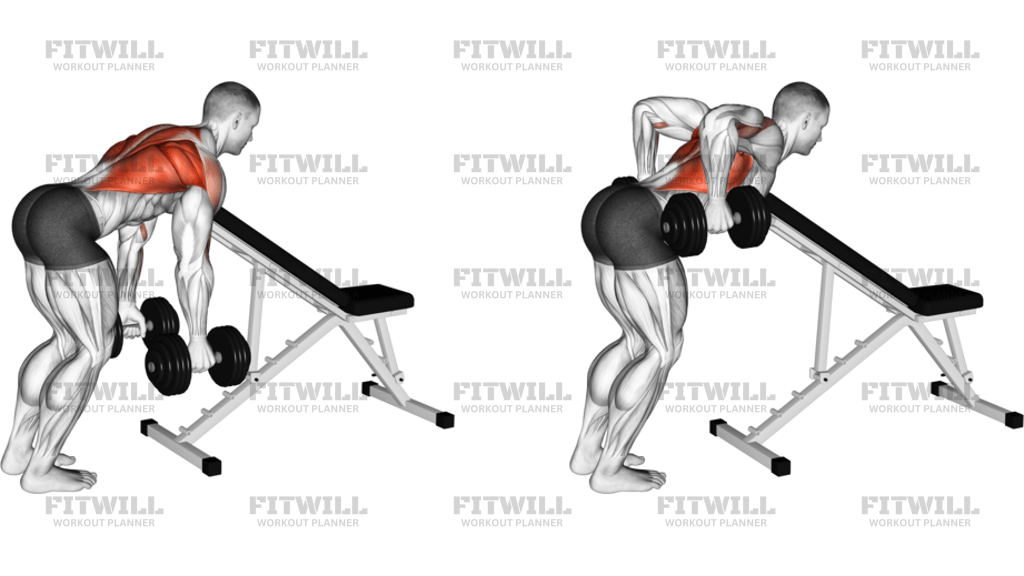
Dumbbell Hammer Grip Incline Bench Two Arm Row
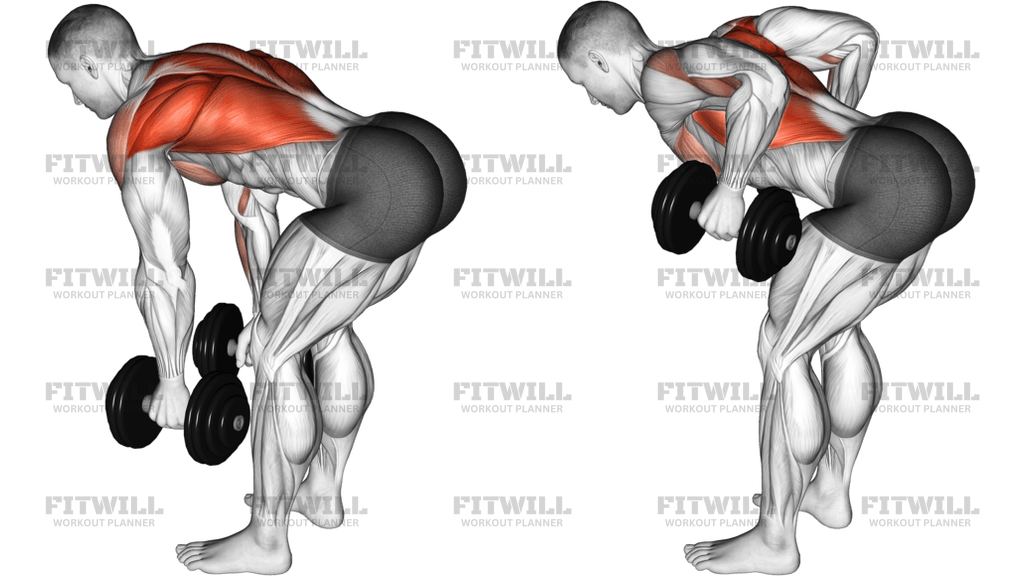
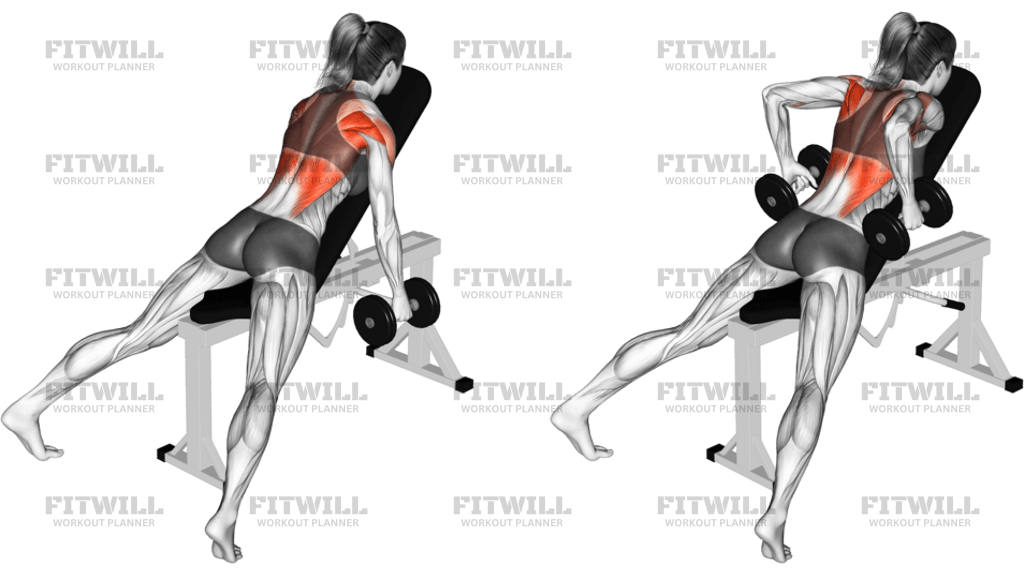
Dumbbell Hammer Grip Incline Bench Two Arm Row is a chest-supported rowing exercise that trains the lats, mid-back, rear shoulders, and arm flexors with a neutral grip. The incline bench removes most of the torso hinge, so the row is driven by the upper back rather than by body swing or lower-back endurance. That makes the setup important: if the chest is not anchored to the pad and the feet are not stable, the movement turns into a loose dumbbell pull instead of a strict row.
The hammer grip places the palms facing each other, which usually feels friendly on the wrists and shoulders while still letting the elbows travel back into strong lat and upper-back work. The dumbbells should hang straight down under the shoulders at the start, then move in a smooth arc toward the lower ribs or upper waist. The goal is not to yank the weights as high as possible; it is to keep the shoulder blades organized, the neck relaxed, and the torso pinned to the bench while the elbows do the work.
Because the chest is supported, this row is useful when you want a lot of pulling volume without loading the low back. It fits well in back-focused sessions, upper-body hypertrophy work, or accessory strength blocks after a heavier press or deadlift pattern. A moderate incline usually gives enough room for the dumbbells to clear the bench while still keeping the chest firmly supported. If the bench is too steep, the row becomes more upright and less lat-focused; if it is too flat, the shoulders may feel crowded and the range can get messy.
Perform each rep by pulling the elbows back under control, pausing briefly at the top, and lowering the dumbbells until the arms are long without losing shoulder position. Avoid shrugging, twisting, or arching to finish the rep. Light to moderate loading is usually best until the path feels repeatable. When executed well, this variation gives a clean posterior-chain upper-body stimulus with less balance demand than free standing rows and less lower-back fatigue than bent-over pulling.
[ Workout Log & Planner ]
Put your next workout in Fitwill
Keep your plan and training log ready when you are.


Instructions
- Set an incline bench to a moderate angle and lie chest-down with your sternum supported and your feet planted wide for balance.
- Hold a dumbbell in each hand with a neutral, palms-facing grip and let the arms hang straight under the shoulders.
- Keep the neck long, ribs down, and abdomen braced before the first rep starts.
- Pull both elbows back and slightly out until the dumbbells travel toward the lower ribs or upper waist.
- Keep your chest in contact with the bench as you row, and avoid lifting the torso to help the weights up.
- Squeeze the shoulder blades back only as far as you can without shrugging the shoulders toward the ears.
- Lower the dumbbells slowly until the arms are long and the shoulder blades can reach forward under control.
- Exhale as you pull, inhale as you lower, and reset your upper back before each repetition.
- At the end of the set, place the dumbbells down carefully before sitting up.
Tips & Tricks
- A 30 to 45 degree bench angle usually gives enough room for the dumbbells to clear the pad without turning the row into an incline shrug.
- Keep the palms facing each other the whole time; if the wrists start turning, the weight is probably too heavy.
- Think about driving the elbows back rather than curling the dumbbells up with the hands.
- Let the bottom position reach a real stretch, but do not let the shoulders dump forward off the bench.
- If your neck tightens, lower the load and keep your gaze toward the floor instead of looking ahead.
- Pause for a beat at the top only if you can do it without losing chest contact or shoulder position.
- Use a smooth lowering phase so the lats stay loaded instead of letting the weights drop.
- Choose dumbbells that let both arms move at the same pace; uneven reps usually mean the torso is twisting.
- Stop the set when you start needing momentum from the hips or low back to finish the pull.
Frequently Asked Questions
What muscles does Dumbbell Hammer Grip Incline Bench Two Arm Row train most?
It mainly works the lats and mid-back, with the rear shoulders, biceps, and forearms helping on every rep.
Why use a chest-supported incline bench for this row?
The bench removes most of the torso hinge, so you can focus on strict pulling without turning the movement into a lower-back endurance test.
Where should the dumbbells finish each rep?
They should travel toward the lower ribs or upper waist, not up toward the shoulders or away from the torso.
Should my elbows stay close to my sides?
A slightly tucked path is best for most lifters, but the elbows can flare a little if that is what keeps the shoulders comfortable and the chest planted.
Is this exercise beginner-friendly?
Yes, as long as the bench is stable and the load is light enough to keep the chest on the pad and the rep path smooth.
What is the most common mistake on this row?
Most people shrug the shoulders or swing the torso to cheat the dumbbells upward instead of keeping the chest glued to the bench.
Can I use this instead of a bent-over row?
Yes, it is a good substitute when you want row volume with less lower-back loading and more chest support.
What grip should I use?
Use a neutral hammer grip with the palms facing each other; that is the defining hand position for this variation.